



Community hub
Recent from talks
Knowledge base stats:
Talk channels stats:
Members stats:
Royal Institution
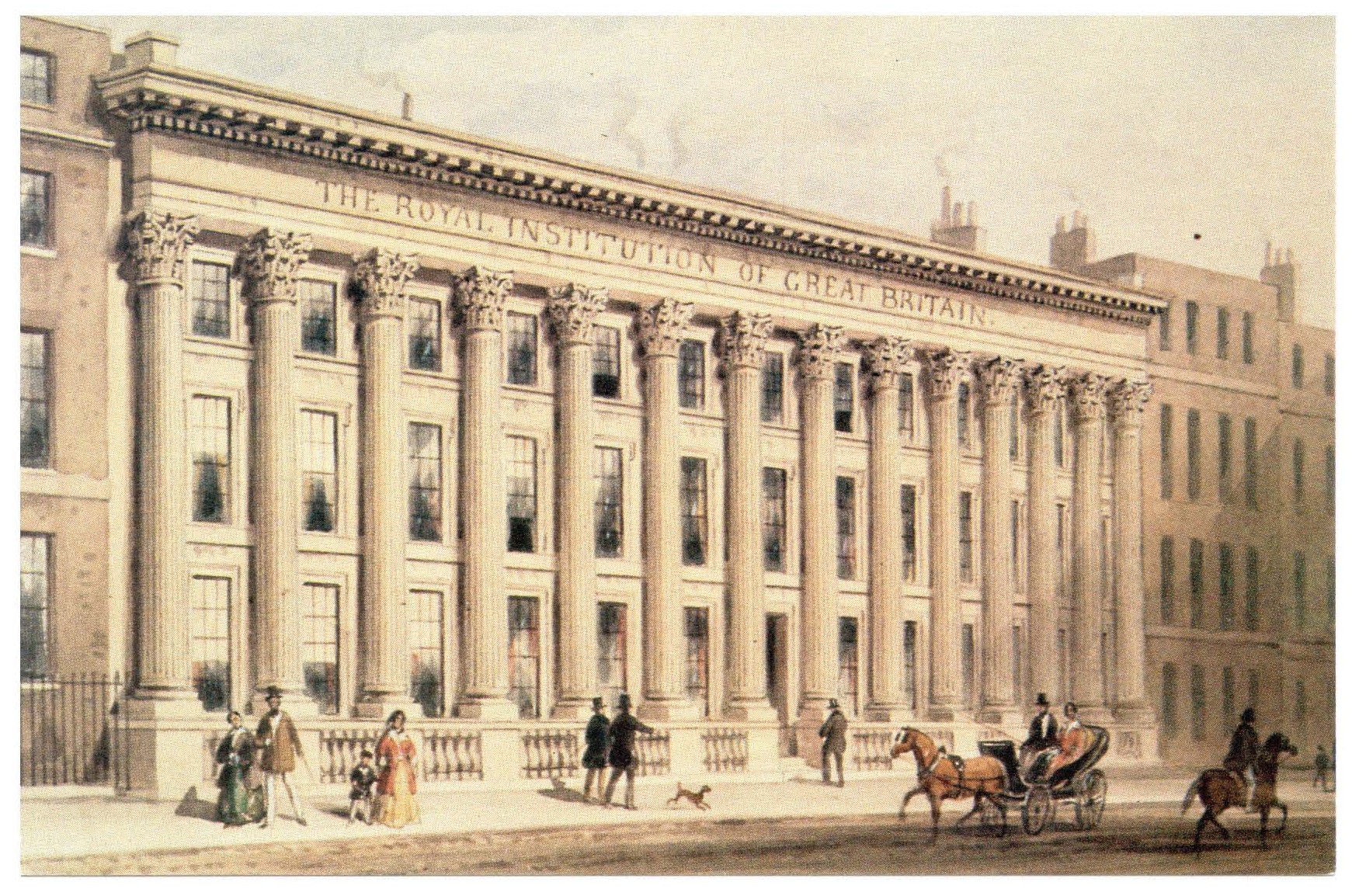
The Royal Institution of Great Britain (often the Royal Institution, abbreviated Ri or RI) is an organisation for scientific education and research, based in the City of Westminster. It was founded in 1799 by the leading British scientists of the age, including Henry Cavendish and its first president, George Finch. Its foundational principles were diffusing the knowledge of, and facilitating the general introduction of useful mechanical inventions and improvements, as well as enhancing the application of science to the common purposes of life (including through teaching, courses of philosophical lectures, and experiments).
Much of the Institution's initial funding and the initial proposal for its founding were given by the Society for Bettering the Conditions and Improving the Comforts of the Poor, under the guidance of philanthropist Sir Thomas Bernard and American-born British scientist Sir Benjamin Thompson, Count Rumford. Since its founding it has been based at 21 Albemarle Street in Mayfair. Its Royal Charter was granted in 1800.
The Royal Institution was founded as the result of a proposal by Sir Benjamin Thompson (Count Rumford) for the "formation by Subscription, in the Metropolis of the British Empire, of a Public Institution for diffusing the Knowledge and facilitating the general Introduction of useful Mechanical Inventions and Improvements, and for the teaching by courses of Philosophical Lectures and Experiments, the application of Science to the Common Purposes of Life".
Rumford's proposal led to a 7 March 1799 meeting at the house of Joseph Banks, then president of the Royal Society, a similar but much older learned society. A follow-up meeting on 9 March saw the first meeting of the managers of the Institution. In June of that year, the society elected George Finch, 9th Earl of Winchilsea as its first president, and in July it purchased the 21 Albemarle Street, Mayfair building that has served as its home ever since. Renovations began immediately on the building to provide appropriate meeting, office, and laboratory space for the Institution's mission.
The first Professor and Public Lecturer in Experimental Philosophy, Mechanics and Chemistry was Dr Thomas Garnett, whom Rumford poached from the newly founded Andersonian Institute in Glasgow in October 1799.
The steep-sided main lecture hall that has become the building's most publicly visible feature, as the home of its Christmas lectures, was completed in 1800, the same year that the institution received its royal charter from George III. The lecture hall was put to use immediately; the first lecture given in it was by Garnett in March 1800.
Throughout its history, the Institution has supported public engagement with science through a programme of lectures, many of which continue today. The most famous of these are the annual Royal Institution Christmas Lectures, founded by Michael Faraday in 1825.
Despite Garnett's first lectures being a great success, his salary was frozen, he was not allowed to practise as a doctor, and Humphry Davy was appointed as his assistant, so he resigned. Humphry Davy was an even greater success, as was his assistant and successor Michael Faraday. Davy's immediate successor was William Thomas Brande.
Hub AI
Royal Institution AI simulator
(@Royal Institution_simulator)
Royal Institution
The Royal Institution of Great Britain (often the Royal Institution, abbreviated Ri or RI) is an organisation for scientific education and research, based in the City of Westminster. It was founded in 1799 by the leading British scientists of the age, including Henry Cavendish and its first president, George Finch. Its foundational principles were diffusing the knowledge of, and facilitating the general introduction of useful mechanical inventions and improvements, as well as enhancing the application of science to the common purposes of life (including through teaching, courses of philosophical lectures, and experiments).
Much of the Institution's initial funding and the initial proposal for its founding were given by the Society for Bettering the Conditions and Improving the Comforts of the Poor, under the guidance of philanthropist Sir Thomas Bernard and American-born British scientist Sir Benjamin Thompson, Count Rumford. Since its founding it has been based at 21 Albemarle Street in Mayfair. Its Royal Charter was granted in 1800.
The Royal Institution was founded as the result of a proposal by Sir Benjamin Thompson (Count Rumford) for the "formation by Subscription, in the Metropolis of the British Empire, of a Public Institution for diffusing the Knowledge and facilitating the general Introduction of useful Mechanical Inventions and Improvements, and for the teaching by courses of Philosophical Lectures and Experiments, the application of Science to the Common Purposes of Life".
Rumford's proposal led to a 7 March 1799 meeting at the house of Joseph Banks, then president of the Royal Society, a similar but much older learned society. A follow-up meeting on 9 March saw the first meeting of the managers of the Institution. In June of that year, the society elected George Finch, 9th Earl of Winchilsea as its first president, and in July it purchased the 21 Albemarle Street, Mayfair building that has served as its home ever since. Renovations began immediately on the building to provide appropriate meeting, office, and laboratory space for the Institution's mission.
The first Professor and Public Lecturer in Experimental Philosophy, Mechanics and Chemistry was Dr Thomas Garnett, whom Rumford poached from the newly founded Andersonian Institute in Glasgow in October 1799.
The steep-sided main lecture hall that has become the building's most publicly visible feature, as the home of its Christmas lectures, was completed in 1800, the same year that the institution received its royal charter from George III. The lecture hall was put to use immediately; the first lecture given in it was by Garnett in March 1800.
Throughout its history, the Institution has supported public engagement with science through a programme of lectures, many of which continue today. The most famous of these are the annual Royal Institution Christmas Lectures, founded by Michael Faraday in 1825.
Despite Garnett's first lectures being a great success, his salary was frozen, he was not allowed to practise as a doctor, and Humphry Davy was appointed as his assistant, so he resigned. Humphry Davy was an even greater success, as was his assistant and successor Michael Faraday. Davy's immediate successor was William Thomas Brande.