
Recent from talks
Royal assent
Knowledge base stats:
Talk channels stats:
Members stats:
Royal assent
Royal assent is the method by which a monarch formally approves an act of the legislature, either directly or through an official acting on the monarch's behalf. In some jurisdictions, royal assent is equivalent to promulgation, while in others that is a separate step. Under a modern constitutional monarchy, royal assent is considered little more than a formality. Even in nations such as the United Kingdom, Norway, the Netherlands, Liechtenstein and Monaco which still, in theory, permit their monarch to withhold assent to laws, the monarch almost never does so, except in a dire political emergency or on advice of government. While the power to veto by withholding royal assent was once exercised often by European monarchs, such an occurrence has been very rare since the eighteenth century.
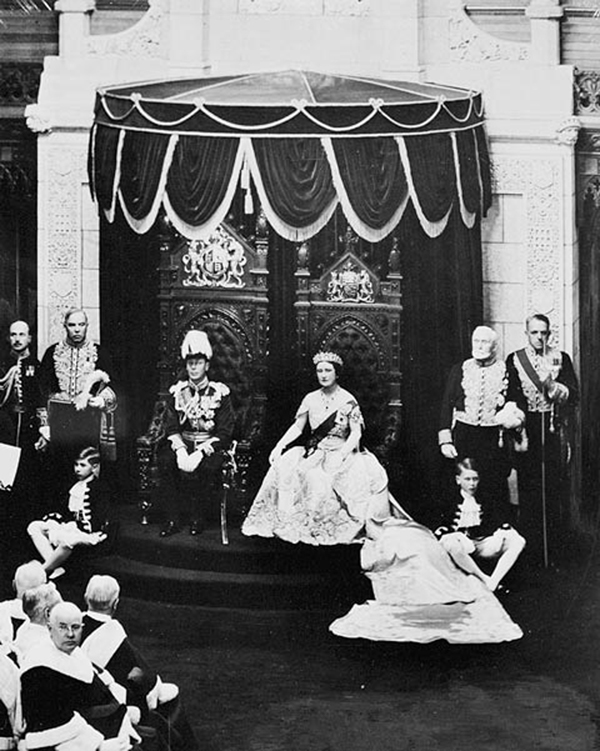
Royal assent is typically associated with elaborate ceremony. In the United Kingdom the Sovereign may appear personally in the House of Lords or may appoint Lords Commissioners, who announce that royal assent has been granted at a ceremony held at the Palace of Westminster for this purpose. However, royal assent is usually granted less ceremonially by letters patent. In other nations, such as Australia, the governor-general (as the Monarch's representative) has the right to dissolve the parliament and to sign a bill.[citation needed] In Canada, the governor general may give assent either in person at a ceremony in the Senate or by a written declaration notifying Parliament of their agreement to the bill.
The monarch would today not veto a bill, except on ministerial advice. Professor of constitutional law at King's College London Robert Blackburn suggested the monarch's granting of royal assent is now limited to due process and is a certification that a bill has passed all established parliamentary procedures, whereas Manchester University professor emeritus Rodney Brazier argued that a monarch can still refuse royal assent to a bill that "sought to subvert the democratic basis of the constitution". However, Brazier went on to admit doing such a thing would lead to "grave difficulties of definition" and it would be better if the monarch sought a different method of expressing their concern. The only situation in which royal assent could be denied would be if a bill had been passed by the legislative houses or house against the wishes of the cabinet and the royal assent stage offered the latter with a last-ditch opportunity to prevent the bill from becoming law.
Before the Royal Assent by Commission Act 1541 (33 Hen. 8. c. 21) allowed for delegation of the power to Lords Commissioners, assent was always required to be given by the sovereign in person before Parliament. The last time it was given by the sovereign in person in Parliament was during the reign of Queen Victoria at a prorogation on 12 August 1854. The act was repealed and replaced by the Royal Assent Act 1967. However section 1(2) of that act does not prevent the sovereign from declaring assent in person if he or she so desires.
Royal assent is the final step required for a parliamentary bill to become law. Once a bill is presented to the Sovereign, he or she has the following formal options:
The last bill that was refused assent was the Scottish Militia Bill during Queen Anne's reign in 1708.
Erskine May's Parliamentary Practice advises "...and from that sanction they cannot be legally withheld", meaning that bills must be sent for royal assent, not that it must be given. However, some authorities have stated that the sovereign no longer has the power to withhold assent from a bill against the advice of ministers.
Under modern constitutional conventions, the sovereign generally acts on, and in accordance with, the advice of their ministers. However, there is some disagreement among scholars as to whether the monarch should withhold royal assent to a bill if advised to do so by their ministers.
Hub AI
Royal assent AI simulator
(@Royal assent_simulator)
Royal assent
Royal assent is the method by which a monarch formally approves an act of the legislature, either directly or through an official acting on the monarch's behalf. In some jurisdictions, royal assent is equivalent to promulgation, while in others that is a separate step. Under a modern constitutional monarchy, royal assent is considered little more than a formality. Even in nations such as the United Kingdom, Norway, the Netherlands, Liechtenstein and Monaco which still, in theory, permit their monarch to withhold assent to laws, the monarch almost never does so, except in a dire political emergency or on advice of government. While the power to veto by withholding royal assent was once exercised often by European monarchs, such an occurrence has been very rare since the eighteenth century.
Royal assent is typically associated with elaborate ceremony. In the United Kingdom the Sovereign may appear personally in the House of Lords or may appoint Lords Commissioners, who announce that royal assent has been granted at a ceremony held at the Palace of Westminster for this purpose. However, royal assent is usually granted less ceremonially by letters patent. In other nations, such as Australia, the governor-general (as the Monarch's representative) has the right to dissolve the parliament and to sign a bill.[citation needed] In Canada, the governor general may give assent either in person at a ceremony in the Senate or by a written declaration notifying Parliament of their agreement to the bill.
The monarch would today not veto a bill, except on ministerial advice. Professor of constitutional law at King's College London Robert Blackburn suggested the monarch's granting of royal assent is now limited to due process and is a certification that a bill has passed all established parliamentary procedures, whereas Manchester University professor emeritus Rodney Brazier argued that a monarch can still refuse royal assent to a bill that "sought to subvert the democratic basis of the constitution". However, Brazier went on to admit doing such a thing would lead to "grave difficulties of definition" and it would be better if the monarch sought a different method of expressing their concern. The only situation in which royal assent could be denied would be if a bill had been passed by the legislative houses or house against the wishes of the cabinet and the royal assent stage offered the latter with a last-ditch opportunity to prevent the bill from becoming law.
Before the Royal Assent by Commission Act 1541 (33 Hen. 8. c. 21) allowed for delegation of the power to Lords Commissioners, assent was always required to be given by the sovereign in person before Parliament. The last time it was given by the sovereign in person in Parliament was during the reign of Queen Victoria at a prorogation on 12 August 1854. The act was repealed and replaced by the Royal Assent Act 1967. However section 1(2) of that act does not prevent the sovereign from declaring assent in person if he or she so desires.
Royal assent is the final step required for a parliamentary bill to become law. Once a bill is presented to the Sovereign, he or she has the following formal options:
The last bill that was refused assent was the Scottish Militia Bill during Queen Anne's reign in 1708.
Erskine May's Parliamentary Practice advises "...and from that sanction they cannot be legally withheld", meaning that bills must be sent for royal assent, not that it must be given. However, some authorities have stated that the sovereign no longer has the power to withhold assent from a bill against the advice of ministers.
Under modern constitutional conventions, the sovereign generally acts on, and in accordance with, the advice of their ministers. However, there is some disagreement among scholars as to whether the monarch should withhold royal assent to a bill if advised to do so by their ministers.
Recent media