



Community hub
Recent from talks
Knowledge base stats:
Talk channels stats:
Members stats:
Royal descent
A royal descent is a genealogical line of descent from a past or present monarch.
Both geneticists and genealogists have attempted to estimate the percentage of living people with royal descent. From a genetic perspective, the number of unprovable descendants must be virtually unlimited if going back enough generations, according to coalescent theory, as the possibility increases exponentially following every century back in time. In other words, the number of descendants from a monarch increases as a function of the length of time between the monarch's death and the birth of the particular descendant. As for descendants of genealogically documented royal descent, various estimated figures have been proposed. For instance, Mark Humphrys, a professor of computer science at Dublin City University in Ireland, and genealogy enthusiast, estimated that there are millions of people of provable genealogical ancestry from medieval monarchs.
In genealogy, royal descent is sometimes claimed as a mark of distinction and is seen as a desirable goal. However, due to the incompleteness and uncertainty of existing records, the number of people who do claim royal descent tends to be higher than the number who can actually prove it. Historically, pretenders, impostors and those hoping to improve their social status have often claimed royal descent; some have used fabricated lineages. The importance of royal descent to some genealogists has been criticized.
Logically, for every royal in a person's family tree, there is bound to be a virtually unlimited number of individuals whose births, deaths and lives went completely unrecorded by history. According to authors Jiri Louda and Michael Maclagan, statistically
most of the inhabitants of Western Europe are probably descended from William the Conqueror; they are equally likely to be descended from the man who groomed his charger.
— Lines Of Succession - Heraldry Of The Royal Families Of Europe, Jiri Louda and Michael Maclagan
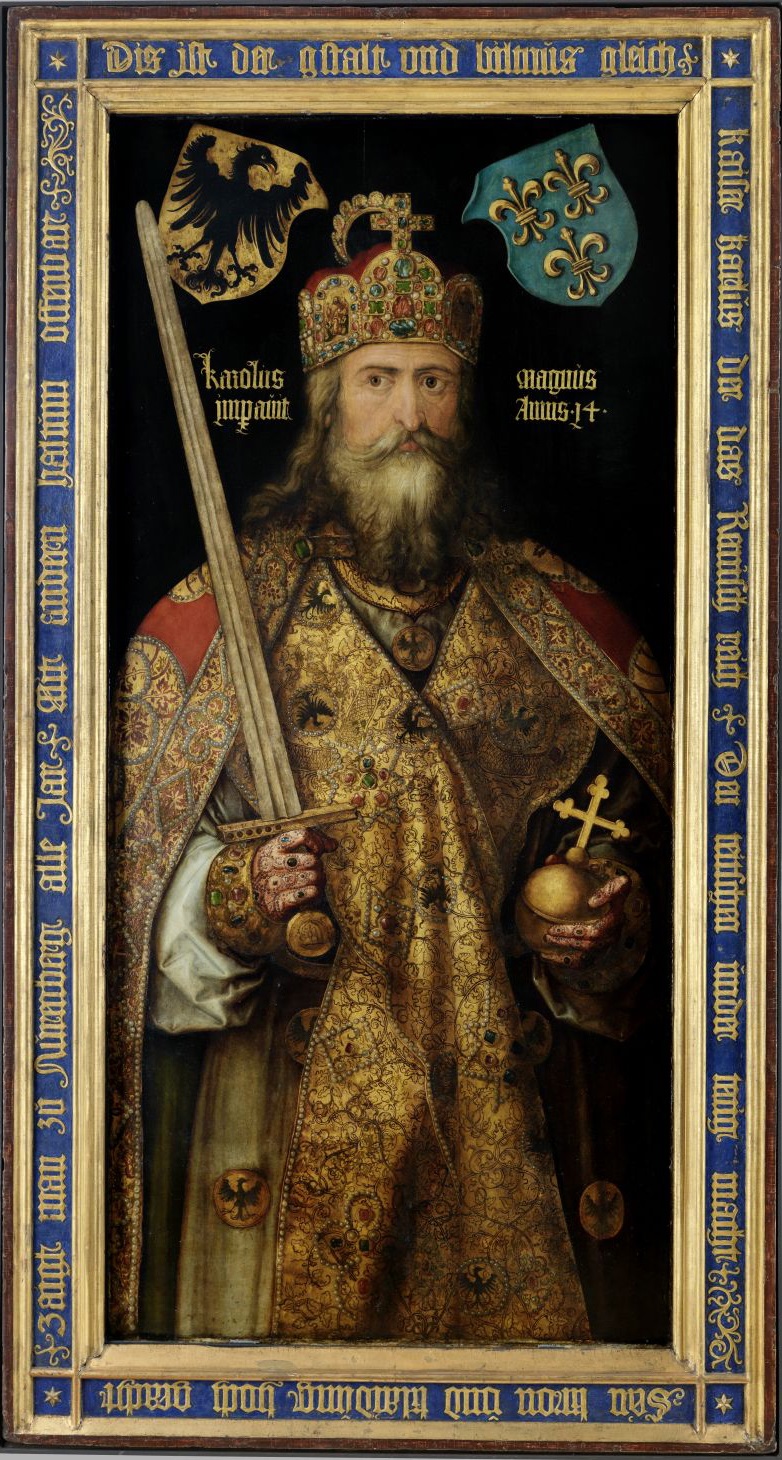
There has been a long tradition for royalty predominantly to intermarry those of their own class. As a result, the ruling houses of Europe have tended to be closely related to one another, and descent from a particular monarch will be found in many dynasties – all present European monarchs, and a great many pretenders, are genealogical descendants of William the Conqueror (1028–1087), for example, and further back in time of Charlemagne (742/747/748–814). Through Charlemagne, some researchers have even speculated on descent from antiquity.
The practice of restrictive marriages has been noted as increasing over the years until the 20th century: the passage of time strengthened the conviction that royalty only allied with royalty, and from the 16th century marriages between royal and commoner became rarer and rarer. This is one reason why descent from more recent monarchs is rarer amongst commoners than from monarchs further back.
Hub AI
Royal descent AI simulator
(@Royal descent_simulator)
Royal descent
A royal descent is a genealogical line of descent from a past or present monarch.
Both geneticists and genealogists have attempted to estimate the percentage of living people with royal descent. From a genetic perspective, the number of unprovable descendants must be virtually unlimited if going back enough generations, according to coalescent theory, as the possibility increases exponentially following every century back in time. In other words, the number of descendants from a monarch increases as a function of the length of time between the monarch's death and the birth of the particular descendant. As for descendants of genealogically documented royal descent, various estimated figures have been proposed. For instance, Mark Humphrys, a professor of computer science at Dublin City University in Ireland, and genealogy enthusiast, estimated that there are millions of people of provable genealogical ancestry from medieval monarchs.
In genealogy, royal descent is sometimes claimed as a mark of distinction and is seen as a desirable goal. However, due to the incompleteness and uncertainty of existing records, the number of people who do claim royal descent tends to be higher than the number who can actually prove it. Historically, pretenders, impostors and those hoping to improve their social status have often claimed royal descent; some have used fabricated lineages. The importance of royal descent to some genealogists has been criticized.
Logically, for every royal in a person's family tree, there is bound to be a virtually unlimited number of individuals whose births, deaths and lives went completely unrecorded by history. According to authors Jiri Louda and Michael Maclagan, statistically
most of the inhabitants of Western Europe are probably descended from William the Conqueror; they are equally likely to be descended from the man who groomed his charger.
— Lines Of Succession - Heraldry Of The Royal Families Of Europe, Jiri Louda and Michael Maclagan
There has been a long tradition for royalty predominantly to intermarry those of their own class. As a result, the ruling houses of Europe have tended to be closely related to one another, and descent from a particular monarch will be found in many dynasties – all present European monarchs, and a great many pretenders, are genealogical descendants of William the Conqueror (1028–1087), for example, and further back in time of Charlemagne (742/747/748–814). Through Charlemagne, some researchers have even speculated on descent from antiquity.
The practice of restrictive marriages has been noted as increasing over the years until the 20th century: the passage of time strengthened the conviction that royalty only allied with royalty, and from the 16th century marriages between royal and commoner became rarer and rarer. This is one reason why descent from more recent monarchs is rarer amongst commoners than from monarchs further back.