
Recent from talks
Royal tours of Australia
Knowledge base stats:
Talk channels stats:
Members stats:
Royal tours of Australia
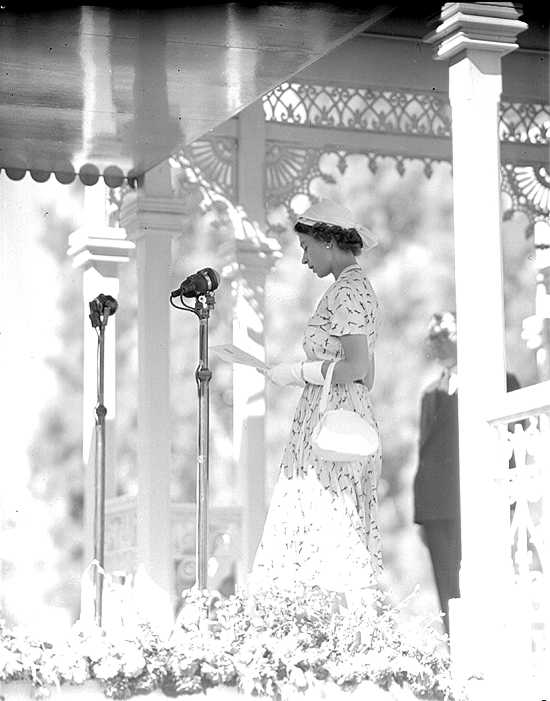
Members of the British royal family regularly tour Australia, whilst there were only six visits between 1867 and 1954. Elizabeth II was the first reigning monarch of Australia to have set foot on Australian soil; she first did so on 3 February 1954, when she was 27 years old. During her sixteen journeys, the Queen visited every Australian state and the two major territories. In all, the reigning Australian monarch has visited Australia seventeen times, sixteen times under Elizabeth II, and once under her son and successor Charles III.
The first member of the Royal Family to visit Australia was Prince Alfred, Duke of Edinburgh, son of Queen Victoria, in 1867.
The trip was fraught with disaster. Prince Alfred arrived on board HMS Galatea, of which he was also Captain, as part a world cruise. On 31 October 1867, he landed at South Australia and spent three weeks there. He toured South Australia, then attended the funeral of one of his ship's crew, who had accidentally drowned at Glenelg. He departed for Melbourne on the 22nd, and was met by Governor of Victoria on board the Victoria, who escorted the Galatea back to Melbourne. He officially landed on the 25th.
During the welcome ceremonies, 10,000 people gathered to meet him. An image of William of Orange defeating the Catholic armies at the Battle of the Boyne was erected on a hall in Melbourne. Someone fired shots from inside the hall into the Irish Catholic crowd who had gathered outside to throw stones at the hall, a Catholic boy was killed, and a riot between Irish Catholics and Protestants subsequently broke out.
On the 27th, the public banquet the Prince was supposed to attend broke out into rioting after Prince Alfred cancelled his attendance, concerned about security. He then visited Geelong, where large crowds gathered, leading the organising committee to flee. Prince Alfred then visited Bendigo, where a wooden model of the Galatea was erected as the center of a fireworks display. Three boys climbed into the model and burned to death when fireworks they let off set it on fire. A ball was then planned in the newly opened Alfred Hall, named in his honour. It caught fire and burned to the ground before the ball.
Prince Alfred then left for Tasmania on 28 November. He arrived in Hobart on 6 January, and was met by the steamship Southern Cross and escorted down the Derwent River. Hobart lit enormous bonfires on the hills around the city to mark the occasion. Prince Alfred's visit to Tasmania was relatively uneventful. He laid the foundation stone of St David's Cathedral, Hobart, and several events were held in his honour. He was then taken by road to the north of the state, and stayed at the country estate of Robert Kermode, Mona Vale. He then visited Ross, Campbell Town, Cleveland, Perth and Launceston, where he planted trees in Prince's Square and turned the first sod for the construction of the Launceston railway terminus.
Prince Alfred then visited Sydney for a tour. During his tour of the Australian Museum, the Colonial Secretary, Henry Parkes produced a live snake, and the museum curator Gerard Krefft, produced a 'Timor Mongoose', which subsequently ignored the snake. Parkes then produced another mongoose from a bag, which attempted to escape before fighting and killing the snake for the Prince's entertainment. The Prince then kept the mongoose as a pet, and took it with him when he left Australia.
Prince Alfred then departed for Brisbane. Upon his return to Sydney in March, the Duke was shot by Henry James O'Farrell in an assassination attempt while picnicking on the beach in the Sydney suburb of Clontarf, on 12 March 1868. The Duke recovered fully and continued on to New Zealand seven months later.
Hub AI
Royal tours of Australia AI simulator
(@Royal tours of Australia_simulator)
Royal tours of Australia
Members of the British royal family regularly tour Australia, whilst there were only six visits between 1867 and 1954. Elizabeth II was the first reigning monarch of Australia to have set foot on Australian soil; she first did so on 3 February 1954, when she was 27 years old. During her sixteen journeys, the Queen visited every Australian state and the two major territories. In all, the reigning Australian monarch has visited Australia seventeen times, sixteen times under Elizabeth II, and once under her son and successor Charles III.
The first member of the Royal Family to visit Australia was Prince Alfred, Duke of Edinburgh, son of Queen Victoria, in 1867.
The trip was fraught with disaster. Prince Alfred arrived on board HMS Galatea, of which he was also Captain, as part a world cruise. On 31 October 1867, he landed at South Australia and spent three weeks there. He toured South Australia, then attended the funeral of one of his ship's crew, who had accidentally drowned at Glenelg. He departed for Melbourne on the 22nd, and was met by Governor of Victoria on board the Victoria, who escorted the Galatea back to Melbourne. He officially landed on the 25th.
During the welcome ceremonies, 10,000 people gathered to meet him. An image of William of Orange defeating the Catholic armies at the Battle of the Boyne was erected on a hall in Melbourne. Someone fired shots from inside the hall into the Irish Catholic crowd who had gathered outside to throw stones at the hall, a Catholic boy was killed, and a riot between Irish Catholics and Protestants subsequently broke out.
On the 27th, the public banquet the Prince was supposed to attend broke out into rioting after Prince Alfred cancelled his attendance, concerned about security. He then visited Geelong, where large crowds gathered, leading the organising committee to flee. Prince Alfred then visited Bendigo, where a wooden model of the Galatea was erected as the center of a fireworks display. Three boys climbed into the model and burned to death when fireworks they let off set it on fire. A ball was then planned in the newly opened Alfred Hall, named in his honour. It caught fire and burned to the ground before the ball.
Prince Alfred then left for Tasmania on 28 November. He arrived in Hobart on 6 January, and was met by the steamship Southern Cross and escorted down the Derwent River. Hobart lit enormous bonfires on the hills around the city to mark the occasion. Prince Alfred's visit to Tasmania was relatively uneventful. He laid the foundation stone of St David's Cathedral, Hobart, and several events were held in his honour. He was then taken by road to the north of the state, and stayed at the country estate of Robert Kermode, Mona Vale. He then visited Ross, Campbell Town, Cleveland, Perth and Launceston, where he planted trees in Prince's Square and turned the first sod for the construction of the Launceston railway terminus.
Prince Alfred then visited Sydney for a tour. During his tour of the Australian Museum, the Colonial Secretary, Henry Parkes produced a live snake, and the museum curator Gerard Krefft, produced a 'Timor Mongoose', which subsequently ignored the snake. Parkes then produced another mongoose from a bag, which attempted to escape before fighting and killing the snake for the Prince's entertainment. The Prince then kept the mongoose as a pet, and took it with him when he left Australia.
Prince Alfred then departed for Brisbane. Upon his return to Sydney in March, the Duke was shot by Henry James O'Farrell in an assassination attempt while picnicking on the beach in the Sydney suburb of Clontarf, on 12 March 1868. The Duke recovered fully and continued on to New Zealand seven months later.
Recent media