
Recent from talks
Russo-Japanese War
Knowledge base stats:
Talk channels stats:
Members stats:
Russo-Japanese War
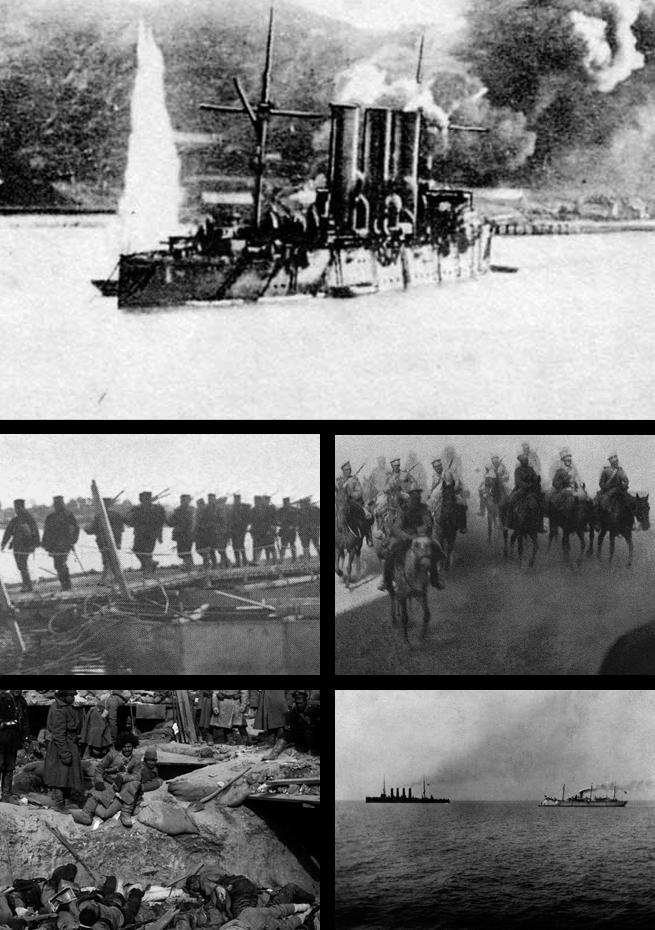
The Russo-Japanese War (8 February 1904 – 5 September 1905) was fought between the Russian Empire and the Empire of Japan over rival imperial ambitions in Manchuria and the Korean Empire. The major land battles of the war were fought on the Liaodong Peninsula and near Mukden in Southern Manchuria, with naval battles taking place in the Yellow Sea and the Sea of Japan.
Russia had pursued an expansionist policy in Siberia and the Far East since the reign of Ivan the Terrible in the 16th century. At the end of the First Sino-Japanese War, the Treaty of Shimonoseki of 1895 had ceded the Liaodong Peninsula and Port Arthur to Japan before the Triple Intervention, in which Russia, Germany, and France forced Japan to relinquish its claim. Japan feared that Russia would impede its plans to establish a sphere of influence in mainland Asia, especially as Russia built the Trans-Siberian Railroad, began making inroads in Korea, and acquired a lease of the Liaodong Peninsula and Port Arthur from China in 1898. Japan signed the Anglo-Japanese Alliance in 1902, and began offering to recognize Russia's dominance in Manchuria in exchange for recognition of Korea as part of Japan's sphere of influence. However, this was rejected by Russia.
After negotiations broke down, Japan opened hostilities in a surprise attack on the Russian Pacific Fleet at Port Arthur on 9 February [O.S. 27 January] 1904. Both sides declared war, and Japanese troops landed in Korea, crossed the Yalu River into Manchuria in May, and landed more forces on the Liaodong Peninsula. In August, the Japanese laid siege to Port Arthur, which eventually fell in January 1905. In March 1905, Japanese troops took Mukden, the Manchurian capital, after heavy fighting. The Russian Baltic Fleet, which had sailed over seven months and 18,000 nautical miles (33,000 km) from the Baltic Sea, arrived in the region in May and was intercepted and destroyed by the Japanese Combined Fleet at the Battle of Tsushima. The war was concluded with the Treaty of Portsmouth (5 September [O.S. 23 August] 1905), mediated by US President Theodore Roosevelt.
The treaty recognized Japanese interests in Korea, and awarded to Japan Russia's lease on the Liaodong Peninsula, control of the Russian-built South Manchuria Railway, and the southern half of the island of Sakhalin (Karafuto). The complete military victory of an Asian and non-Western nation over a European and Western power surprised international observers, and transformed the global balance of power, with the Empire of Japan emerging as a great power and the Russian Empire declining in prestige among the European powers. Russia's incurrence of substantial casualties and losses for a cause which resulted in a humiliating defeat contributed to internal unrest culminating in the 1905 Russian Revolution, during which the Russian autocracy was forced to make concessions. More widely, however, Japan's win effectively damaged the credibility of European dominance in Asia.
After the Meiji Restoration in 1868, the Meiji government endeavoured to assimilate Western ideas, technological advances and ways of warfare. By the late 19th century, Japan had transformed itself into a modernized industrial state. The Japanese wanted to be recognized as equal with the Western powers. The Meiji Restoration had been intended to make Japan a modernized state, not a Westernized one, and Japan was an imperialist power, looking towards overseas expansionism.
The United States saw Japan as an ally in the U.S.'s quest to control the Pacific and maintain for the U.S. China's "Open Door Policy." In Autumn 1872, U.S. minister to Japan Charles DeLong explained to U.S. General Charles LeGendre that he had been urging the Government of Japan to occupy Taiwan and "civilize" the Taiwanese indigenous people just as the U.S. had taken over the land of the Native Americans and "civilized" them. General LeGendre encouraged the Japanese to declare a Japanese "sphere of influence" modeled on the Monroe Doctrine that the U.S. had declared for the exclusion of other powers from the Western Hemisphere. Such a Japanese sphere of influence would be the first time a non-White state would adopt such a policy. The stated aim of the sphere of influence would be to civilize the barbarians of Asia. "Pacify and civilize them if possible, and if not...exterminate them or otherwise deal with them as the United States and England have dealt with the barbarians," LeGendre explained to the Japanese.
In the years 1869–1873, the Seikanron ("Conquer Korea Argument") had bitterly divided the Japanese elite: one faction wanted to conquer Korea immediately, while the other wanted to wait until Japan was further modernized before embarking on a war to conquer Korea. Significantly, no one in the Japanese elite had ever accepted the idea that the Koreans had the right to be independent, with only the question of timing dividing the two factions. In much the same way that Europeans used the "backwardness" of African and Asian nations as a reason for why they had to conquer them, for the Japanese elite the "backwardness" of China and Korea was proof of the inferiority of those nations, thus giving the Japanese the "right" to conquer them.
Count Inoue Kaoru, the foreign minister, gave a speech in 1887 saying "What we must do is to transform our empire and our people, make the empire like the countries of Europe and our people like the peoples of Europe," going on to say that the Chinese and Koreans had essentially forfeited their right to be independent by not modernizing. Much of the pressure for an aggressive foreign policy in Japan came from below, with the advocates of a "people's rights" movement calling for an elected parliament also favouring an ultra-nationalist line that took it for granted the Japanese had the "right" to annex Korea, as the "people's rights" movement was led by those who favoured invading Korea in the years 1869–1873.
Hub AI
Russo-Japanese War AI simulator
(@Russo-Japanese War_simulator)
Russo-Japanese War
The Russo-Japanese War (8 February 1904 – 5 September 1905) was fought between the Russian Empire and the Empire of Japan over rival imperial ambitions in Manchuria and the Korean Empire. The major land battles of the war were fought on the Liaodong Peninsula and near Mukden in Southern Manchuria, with naval battles taking place in the Yellow Sea and the Sea of Japan.
Russia had pursued an expansionist policy in Siberia and the Far East since the reign of Ivan the Terrible in the 16th century. At the end of the First Sino-Japanese War, the Treaty of Shimonoseki of 1895 had ceded the Liaodong Peninsula and Port Arthur to Japan before the Triple Intervention, in which Russia, Germany, and France forced Japan to relinquish its claim. Japan feared that Russia would impede its plans to establish a sphere of influence in mainland Asia, especially as Russia built the Trans-Siberian Railroad, began making inroads in Korea, and acquired a lease of the Liaodong Peninsula and Port Arthur from China in 1898. Japan signed the Anglo-Japanese Alliance in 1902, and began offering to recognize Russia's dominance in Manchuria in exchange for recognition of Korea as part of Japan's sphere of influence. However, this was rejected by Russia.
After negotiations broke down, Japan opened hostilities in a surprise attack on the Russian Pacific Fleet at Port Arthur on 9 February [O.S. 27 January] 1904. Both sides declared war, and Japanese troops landed in Korea, crossed the Yalu River into Manchuria in May, and landed more forces on the Liaodong Peninsula. In August, the Japanese laid siege to Port Arthur, which eventually fell in January 1905. In March 1905, Japanese troops took Mukden, the Manchurian capital, after heavy fighting. The Russian Baltic Fleet, which had sailed over seven months and 18,000 nautical miles (33,000 km) from the Baltic Sea, arrived in the region in May and was intercepted and destroyed by the Japanese Combined Fleet at the Battle of Tsushima. The war was concluded with the Treaty of Portsmouth (5 September [O.S. 23 August] 1905), mediated by US President Theodore Roosevelt.
The treaty recognized Japanese interests in Korea, and awarded to Japan Russia's lease on the Liaodong Peninsula, control of the Russian-built South Manchuria Railway, and the southern half of the island of Sakhalin (Karafuto). The complete military victory of an Asian and non-Western nation over a European and Western power surprised international observers, and transformed the global balance of power, with the Empire of Japan emerging as a great power and the Russian Empire declining in prestige among the European powers. Russia's incurrence of substantial casualties and losses for a cause which resulted in a humiliating defeat contributed to internal unrest culminating in the 1905 Russian Revolution, during which the Russian autocracy was forced to make concessions. More widely, however, Japan's win effectively damaged the credibility of European dominance in Asia.
After the Meiji Restoration in 1868, the Meiji government endeavoured to assimilate Western ideas, technological advances and ways of warfare. By the late 19th century, Japan had transformed itself into a modernized industrial state. The Japanese wanted to be recognized as equal with the Western powers. The Meiji Restoration had been intended to make Japan a modernized state, not a Westernized one, and Japan was an imperialist power, looking towards overseas expansionism.
The United States saw Japan as an ally in the U.S.'s quest to control the Pacific and maintain for the U.S. China's "Open Door Policy." In Autumn 1872, U.S. minister to Japan Charles DeLong explained to U.S. General Charles LeGendre that he had been urging the Government of Japan to occupy Taiwan and "civilize" the Taiwanese indigenous people just as the U.S. had taken over the land of the Native Americans and "civilized" them. General LeGendre encouraged the Japanese to declare a Japanese "sphere of influence" modeled on the Monroe Doctrine that the U.S. had declared for the exclusion of other powers from the Western Hemisphere. Such a Japanese sphere of influence would be the first time a non-White state would adopt such a policy. The stated aim of the sphere of influence would be to civilize the barbarians of Asia. "Pacify and civilize them if possible, and if not...exterminate them or otherwise deal with them as the United States and England have dealt with the barbarians," LeGendre explained to the Japanese.
In the years 1869–1873, the Seikanron ("Conquer Korea Argument") had bitterly divided the Japanese elite: one faction wanted to conquer Korea immediately, while the other wanted to wait until Japan was further modernized before embarking on a war to conquer Korea. Significantly, no one in the Japanese elite had ever accepted the idea that the Koreans had the right to be independent, with only the question of timing dividing the two factions. In much the same way that Europeans used the "backwardness" of African and Asian nations as a reason for why they had to conquer them, for the Japanese elite the "backwardness" of China and Korea was proof of the inferiority of those nations, thus giving the Japanese the "right" to conquer them.
Count Inoue Kaoru, the foreign minister, gave a speech in 1887 saying "What we must do is to transform our empire and our people, make the empire like the countries of Europe and our people like the peoples of Europe," going on to say that the Chinese and Koreans had essentially forfeited their right to be independent by not modernizing. Much of the pressure for an aggressive foreign policy in Japan came from below, with the advocates of a "people's rights" movement calling for an elected parliament also favouring an ultra-nationalist line that took it for granted the Japanese had the "right" to annex Korea, as the "people's rights" movement was led by those who favoured invading Korea in the years 1869–1873.
Recent media