



Community hub
Recent from talks
Knowledge base stats:
Talk channels stats:
Members stats:
Ryukyu independence movement
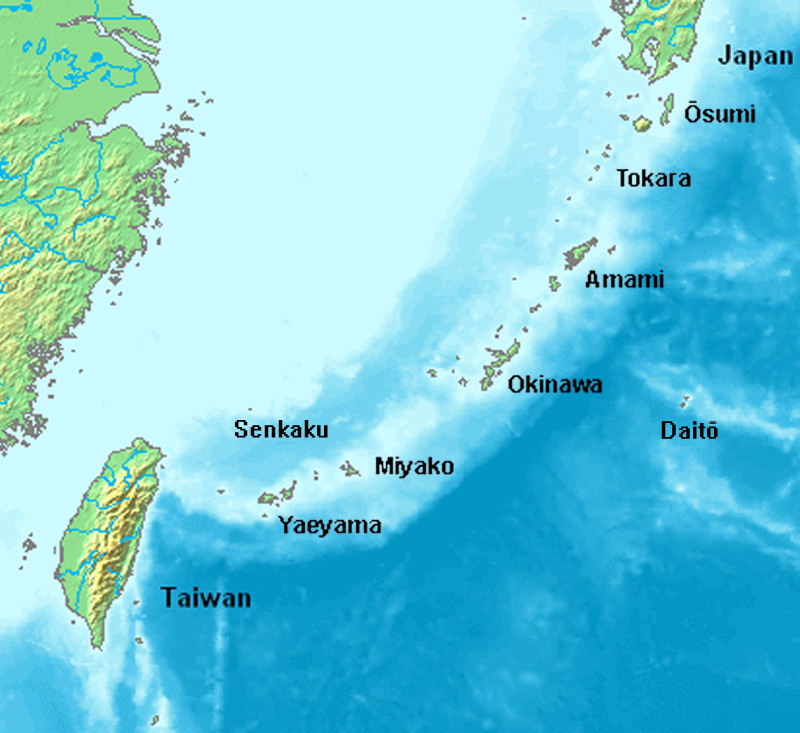
The Ryukyu independence movement (Japanese: 琉球独立運動, Hepburn: Ryūkyū Dokuritsu Undō) is a political movement advocating the independence of the Ryukyu Islands from Japan. Some support the restoration of the Ryukyu Kingdom, while others advocate the establishment of a Republic of the Ryukyus (Japanese: 琉球共和国, Kyūjitai: 琉球共和國, Hepburn: Ryūkyū Kyōwakoku).
The current political manifestation of the movement emerged in 1945, after the end of the Pacific War. Some Ryukyuan people felt, as the Allied Occupation (USMGRI 1945–1950) began, that the Ryukyus should eventually become an independent state instead of being returned to Japan. However, the islands were returned to Japan on 15 May 1972 as the Okinawa Prefecture according to the 1971 Okinawa Reversion Agreement. The US-Japan Security Treaty (ANPO), signed in 1952, provides for the continuation of the American military presence in Japan, and the United States continues to maintain a heavy military presence on Okinawa Island. This set the stage for renewed political activism for Ryukyuan independence. In 2022, public opinion polling in Okinawa put support for independence at 3% of the local population.
The Ryukyu independence movement maintains that both the 1609 invasion by Satsuma Domain and the Meiji construction of the Okinawa prefecture are colonial annexations of the Ryukyu Kingdom. It is highly critical of the abuses of Ryukyuan people and territory, both in the past and in the present day (such as the use of Okinawan land to host American military bases). Advocates for independence also emphasize the environmental and social impacts of the American bases in Okinawa.
The Ryukyuan people are indigenous Japonic-speaking people, considered to be a subgroup of Japanese people (日本人) by the Japanese government, who live on the Ryukyu Islands and are ethnically, culturally, and linguistically distinct from the Yamato ethnicity which comprises the majority of Japanese people. During the Sanzan period, Okinawa was divided into the three polities of Hokuzan, Chūzan, and Nanzan. In 1429, Chūzan's chieftain Shō Hashi unified them and founded the autonomous Ryukyu Kingdom (1429–1879), with the capital at Shuri Castle. The kingdom continued to have tributary relations with the Ming dynasty and Qing dynasty China, a practice that was started by Chūzan in 1372–1374 and lasted until the downfall of the kingdom in the late 19th century. This tributary relationship was greatly beneficial to the kingdom as the kings received political legitimacy, while the country as a whole gained access to economic, cultural, and political opportunities in Southeast Asia without any interference by China in the internal political autonomy of Ryukyu.
In addition to Korea (1392), Thailand (1409), and other Southeast Asian polities, the kingdom maintained trade relations with Japan (1403), and during this period, a unique political and cultural identity emerged. However, in 1609, the Japanese feudal domain of Satsuma invaded the kingdom on behalf of the first shōgun Tokugawa Ieyasu and the Tokugawa shogunate (1603–1867) because the Ryukyu king Shō Nei refused to submit to the shogunate. The kingdom was forced to send a tribute to Satsuma, but was allowed to retain and continue its independence, relations, and trade with China (a unique privilege, as Japan was prohibited from trading with China at the time). This arrangement was known as a "dual vassalage" status, and continued until the mid-19th century.
During the Meiji period (1868–1912), the Meiji government of the Empire of Japan (1868–1947) began a process later called Ryukyu Shobun ("Ryukyu Disposition") to formally annex the kingdom into the modern Japanese Empire. Firstly established as Ryukyu Domain (1872–1879), in 1879 the kingdom-domain was abolished, established as Okinawa Prefecture, while the last Ryukyu king Shō Tai was forcibly exiled to Tokyo. Previously in 1875, the kingdom was forced against its wishes to terminate its tribute relations with China, while U.S. President Ulysses S. Grant proposed a plan that would maintain an independent, sovereign Okinawa while partitioning other Ryukyuan islands between China and Japan. Japan offered China the Miyako and Yaeyama Islands in exchange for trading rights with China equal to those granted to Western states, de facto abandoning and dividing the island chain for monetary profit. The treaty was rejected as the Chinese court decided not to ratify the agreement. The Ryukyu's aristocratic class resisted annexation for almost two decades, but after the First Sino-Japanese War (1894–1895), factions pushing for Chinese and Ryukyuan sovereignty faded as China renounced its claims to the island. In the Meiji period, the government continuously and formally suppressed Ryukyuan ethnic identity, culture, tradition, and language while assimilating them as ethnic Japanese (Yamato).
Since the formation of the prefecture, its relationship with the Japanese nation-state has been continually contested and changed. There were significant movements for Okinawan independence in the period following its annexation, in the period prior to and during World War II, and after World War II through to the present day. In 1945, during the WWII Battle of Okinawa, approximately 150,000 civilians were killed, consisting roughly 1/3 of the island's population. Many civilians died in mass suicides forced by the Japanese military. After World War II, the Ryukyu Islands were occupied by the United States Military Government of the Ryukyu Islands (1945–1950), but the U.S. maintained control even after the 1951 Treaty of San Francisco, and its former direct administration was replaced by the USCAR government. During this period, the U.S. military forcibly requisitioned private land for the building of many military facilities, with the private owners put into refugee camps, and its personnel committed thousands of crimes against civilians.
Only twenty years later, on 15 May 1972, Okinawa and nearby islands were returned to Japan. As the Japanese had post-war political freedom and economic prosperity, the military facilities had a negative economical impact and the people felt cheated, used for the purpose of Japanese and regional security against the communist threat. Despite Okinawa having been formally returned to Japan, both Japan and the United States have continued to make agreements securing the maintenance and expansion of the U.S. military bases, despite protests from the local Ryukyuan population. Although Okinawa comprises just 0.6% of Japan's total land mass, currently 75% of all U.S. military installations stationed in Japan are assigned to bases in Okinawa.
Hub AI
Ryukyu independence movement AI simulator
(@Ryukyu independence movement_simulator)
Ryukyu independence movement
The Ryukyu independence movement (Japanese: 琉球独立運動, Hepburn: Ryūkyū Dokuritsu Undō) is a political movement advocating the independence of the Ryukyu Islands from Japan. Some support the restoration of the Ryukyu Kingdom, while others advocate the establishment of a Republic of the Ryukyus (Japanese: 琉球共和国, Kyūjitai: 琉球共和國, Hepburn: Ryūkyū Kyōwakoku).
The current political manifestation of the movement emerged in 1945, after the end of the Pacific War. Some Ryukyuan people felt, as the Allied Occupation (USMGRI 1945–1950) began, that the Ryukyus should eventually become an independent state instead of being returned to Japan. However, the islands were returned to Japan on 15 May 1972 as the Okinawa Prefecture according to the 1971 Okinawa Reversion Agreement. The US-Japan Security Treaty (ANPO), signed in 1952, provides for the continuation of the American military presence in Japan, and the United States continues to maintain a heavy military presence on Okinawa Island. This set the stage for renewed political activism for Ryukyuan independence. In 2022, public opinion polling in Okinawa put support for independence at 3% of the local population.
The Ryukyu independence movement maintains that both the 1609 invasion by Satsuma Domain and the Meiji construction of the Okinawa prefecture are colonial annexations of the Ryukyu Kingdom. It is highly critical of the abuses of Ryukyuan people and territory, both in the past and in the present day (such as the use of Okinawan land to host American military bases). Advocates for independence also emphasize the environmental and social impacts of the American bases in Okinawa.
The Ryukyuan people are indigenous Japonic-speaking people, considered to be a subgroup of Japanese people (日本人) by the Japanese government, who live on the Ryukyu Islands and are ethnically, culturally, and linguistically distinct from the Yamato ethnicity which comprises the majority of Japanese people. During the Sanzan period, Okinawa was divided into the three polities of Hokuzan, Chūzan, and Nanzan. In 1429, Chūzan's chieftain Shō Hashi unified them and founded the autonomous Ryukyu Kingdom (1429–1879), with the capital at Shuri Castle. The kingdom continued to have tributary relations with the Ming dynasty and Qing dynasty China, a practice that was started by Chūzan in 1372–1374 and lasted until the downfall of the kingdom in the late 19th century. This tributary relationship was greatly beneficial to the kingdom as the kings received political legitimacy, while the country as a whole gained access to economic, cultural, and political opportunities in Southeast Asia without any interference by China in the internal political autonomy of Ryukyu.
In addition to Korea (1392), Thailand (1409), and other Southeast Asian polities, the kingdom maintained trade relations with Japan (1403), and during this period, a unique political and cultural identity emerged. However, in 1609, the Japanese feudal domain of Satsuma invaded the kingdom on behalf of the first shōgun Tokugawa Ieyasu and the Tokugawa shogunate (1603–1867) because the Ryukyu king Shō Nei refused to submit to the shogunate. The kingdom was forced to send a tribute to Satsuma, but was allowed to retain and continue its independence, relations, and trade with China (a unique privilege, as Japan was prohibited from trading with China at the time). This arrangement was known as a "dual vassalage" status, and continued until the mid-19th century.
During the Meiji period (1868–1912), the Meiji government of the Empire of Japan (1868–1947) began a process later called Ryukyu Shobun ("Ryukyu Disposition") to formally annex the kingdom into the modern Japanese Empire. Firstly established as Ryukyu Domain (1872–1879), in 1879 the kingdom-domain was abolished, established as Okinawa Prefecture, while the last Ryukyu king Shō Tai was forcibly exiled to Tokyo. Previously in 1875, the kingdom was forced against its wishes to terminate its tribute relations with China, while U.S. President Ulysses S. Grant proposed a plan that would maintain an independent, sovereign Okinawa while partitioning other Ryukyuan islands between China and Japan. Japan offered China the Miyako and Yaeyama Islands in exchange for trading rights with China equal to those granted to Western states, de facto abandoning and dividing the island chain for monetary profit. The treaty was rejected as the Chinese court decided not to ratify the agreement. The Ryukyu's aristocratic class resisted annexation for almost two decades, but after the First Sino-Japanese War (1894–1895), factions pushing for Chinese and Ryukyuan sovereignty faded as China renounced its claims to the island. In the Meiji period, the government continuously and formally suppressed Ryukyuan ethnic identity, culture, tradition, and language while assimilating them as ethnic Japanese (Yamato).
Since the formation of the prefecture, its relationship with the Japanese nation-state has been continually contested and changed. There were significant movements for Okinawan independence in the period following its annexation, in the period prior to and during World War II, and after World War II through to the present day. In 1945, during the WWII Battle of Okinawa, approximately 150,000 civilians were killed, consisting roughly 1/3 of the island's population. Many civilians died in mass suicides forced by the Japanese military. After World War II, the Ryukyu Islands were occupied by the United States Military Government of the Ryukyu Islands (1945–1950), but the U.S. maintained control even after the 1951 Treaty of San Francisco, and its former direct administration was replaced by the USCAR government. During this period, the U.S. military forcibly requisitioned private land for the building of many military facilities, with the private owners put into refugee camps, and its personnel committed thousands of crimes against civilians.
Only twenty years later, on 15 May 1972, Okinawa and nearby islands were returned to Japan. As the Japanese had post-war political freedom and economic prosperity, the military facilities had a negative economical impact and the people felt cheated, used for the purpose of Japanese and regional security against the communist threat. Despite Okinawa having been formally returned to Japan, both Japan and the United States have continued to make agreements securing the maintenance and expansion of the U.S. military bases, despite protests from the local Ryukyuan population. Although Okinawa comprises just 0.6% of Japan's total land mass, currently 75% of all U.S. military installations stationed in Japan are assigned to bases in Okinawa.