



Community hub
Recent from talks
Knowledge base stats:
Talk channels stats:
Members stats:
Sadr City
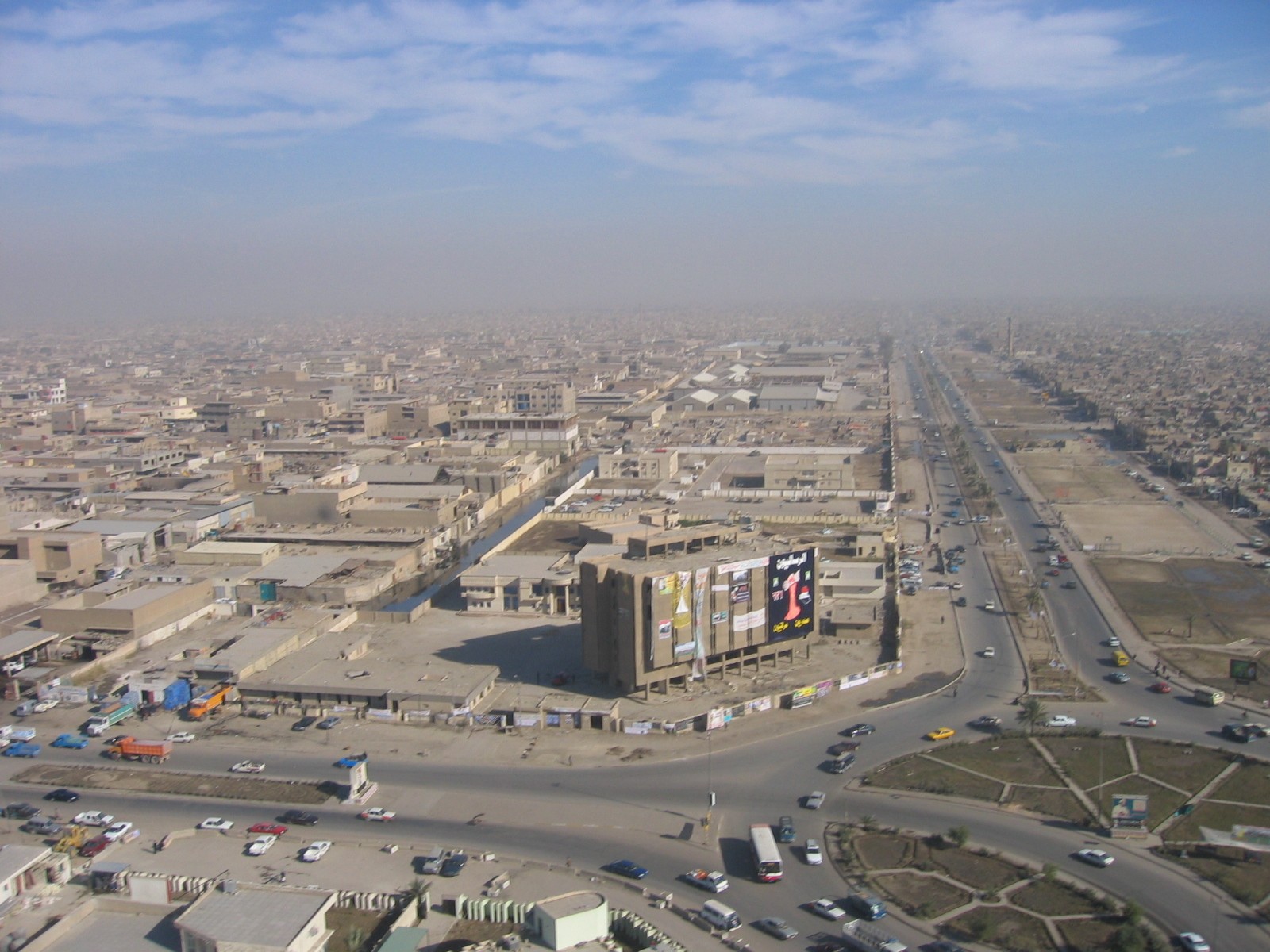
Sadr City (Arabic: مدينة الصدر, romanized: Madīnat aṣ-Ṣadr), formerly known as Al-Thawra (Arabic: الثورة, romanized: aṯ-Ṯawra) and Saddam City (Arabic: مدينة صدام, romanized: Madīnat Ṣaddām), is a suburb district of the city of Baghdad, Iraq. It was built in 1959 by Prime Minister Abdul Karim Qassim and named Al-Rafidain District. After the US-led invasion of Iraq and the toppling of Saddam, it was unofficially renamed Sadr City after Ayatollah Mohammed al-Sadr.
Sadr City – or more accurately Thawra District (Arabic: حيّ الثورة, romanized: Ḥayy ath-Thawra) – is one of nine administrative districts in Baghdad. A public housing project neglected by Saddam Hussein, Sadr City holds around 1 million residents.
The City (or District) was built in 1959 by Prime Minister Abdul Karim Qassim in response to grave housing shortages in Baghdad. At the time it was officially named Al-Rafidain District (Arabic: حي الرافدين), but was colloquially called Al-Thawra (Arabic: الثورة) and so it came to be known by that name. It provided housing for Baghdad's urban poor, many of whom had come from the countryside and who had until then lived in unfavourable conditions. Naziha al-Dulaimi was instrumental in turning the vast slums of eastern Baghdad into a massive public works and housing project that came to be known as Revolution City. It quickly became a stronghold of the Iraqi Communist Party, with resistance to the Baathist-led coup of 1963 becoming prevalent within the city itself. The development was devised by the Greek planner Constantinos Apostolou Doxiadis, who also designed Islamabad and Riyadh. The original plans for the city were designed as part of Doxiadis’s Plans for Baghdad which were not fully completed as a result of the cancellation of the plans in 1959. Doxiadis Associates managed to develop the northeast side of Baghdad. This later developed as the nucleus for Al-Thawra City.
During urban development of Baghdad, Al-Habibiyah Jewish Cemetery was built by Saddam Hussein in 1975. In 1982, the district was renamed Saddam City. In the 1980s, the district became known for poverty and communist organizing, with illegal documents and, in some cases, people themselves being hidden from the authorities in overflowing septic tanks. The proliferation of communism in the district was seen by some as ironic, given how Doxiadis's design had been considered "anticommunist" with the view that it promoted a village atmosphere in an effort to ease the transition of rural migrants to the city.
After Saddam Hussein was removed from power in April 2003, the district was unofficially renamed Sadr City after deceased Shiite leader Mohammad Mohammad Sadeq al-Sadr.
In April 2003, the US Army 2d Squadron, 2nd Armored Cavalry Regiment established their headquarters at the abandoned Sumer cigarette factory located on the eastern side of Sadr City. In honor of the history of the factory, the military named their new camp Camp Marlboro. [citation needed]
During the fall and winter of 2003, American forces focused on rebuilding civilian infrastructure and training local leaders in democracy. District and neighborhood councils were established, giving the residents of Sadr City representation in the new Iraqi government. The municipal building became the centerpiece of the reconstruction effort, and it was the site of a forward outpost of American soldiers that met daily with council members and citizens. Progress was slow due to escalating tensions and violence, and attacks against the American military increased significantly in late 2003.
On 9 October 2003, the Mahdi Army in Sadr City ambushed an American convoy, inflicting multiple casualties. The Combat Patrol, made up of vehicles from the 2/2 ACR was attacked by approximately 100 men with several improvised explosive devices, RPGs and automatic weapons fire from the surrounding rooftops and streets killing and injuring soldiers from E Trp 2/2 ACR. The Mahdi Army attempted to capture several soldiers during the ambush, but they were ultimately unsuccessful in their efforts to obtain hostages.
Hub AI
Sadr City AI simulator
(@Sadr City_simulator)
Sadr City
Sadr City (Arabic: مدينة الصدر, romanized: Madīnat aṣ-Ṣadr), formerly known as Al-Thawra (Arabic: الثورة, romanized: aṯ-Ṯawra) and Saddam City (Arabic: مدينة صدام, romanized: Madīnat Ṣaddām), is a suburb district of the city of Baghdad, Iraq. It was built in 1959 by Prime Minister Abdul Karim Qassim and named Al-Rafidain District. After the US-led invasion of Iraq and the toppling of Saddam, it was unofficially renamed Sadr City after Ayatollah Mohammed al-Sadr.
Sadr City – or more accurately Thawra District (Arabic: حيّ الثورة, romanized: Ḥayy ath-Thawra) – is one of nine administrative districts in Baghdad. A public housing project neglected by Saddam Hussein, Sadr City holds around 1 million residents.
The City (or District) was built in 1959 by Prime Minister Abdul Karim Qassim in response to grave housing shortages in Baghdad. At the time it was officially named Al-Rafidain District (Arabic: حي الرافدين), but was colloquially called Al-Thawra (Arabic: الثورة) and so it came to be known by that name. It provided housing for Baghdad's urban poor, many of whom had come from the countryside and who had until then lived in unfavourable conditions. Naziha al-Dulaimi was instrumental in turning the vast slums of eastern Baghdad into a massive public works and housing project that came to be known as Revolution City. It quickly became a stronghold of the Iraqi Communist Party, with resistance to the Baathist-led coup of 1963 becoming prevalent within the city itself. The development was devised by the Greek planner Constantinos Apostolou Doxiadis, who also designed Islamabad and Riyadh. The original plans for the city were designed as part of Doxiadis’s Plans for Baghdad which were not fully completed as a result of the cancellation of the plans in 1959. Doxiadis Associates managed to develop the northeast side of Baghdad. This later developed as the nucleus for Al-Thawra City.
During urban development of Baghdad, Al-Habibiyah Jewish Cemetery was built by Saddam Hussein in 1975. In 1982, the district was renamed Saddam City. In the 1980s, the district became known for poverty and communist organizing, with illegal documents and, in some cases, people themselves being hidden from the authorities in overflowing septic tanks. The proliferation of communism in the district was seen by some as ironic, given how Doxiadis's design had been considered "anticommunist" with the view that it promoted a village atmosphere in an effort to ease the transition of rural migrants to the city.
After Saddam Hussein was removed from power in April 2003, the district was unofficially renamed Sadr City after deceased Shiite leader Mohammad Mohammad Sadeq al-Sadr.
In April 2003, the US Army 2d Squadron, 2nd Armored Cavalry Regiment established their headquarters at the abandoned Sumer cigarette factory located on the eastern side of Sadr City. In honor of the history of the factory, the military named their new camp Camp Marlboro. [citation needed]
During the fall and winter of 2003, American forces focused on rebuilding civilian infrastructure and training local leaders in democracy. District and neighborhood councils were established, giving the residents of Sadr City representation in the new Iraqi government. The municipal building became the centerpiece of the reconstruction effort, and it was the site of a forward outpost of American soldiers that met daily with council members and citizens. Progress was slow due to escalating tensions and violence, and attacks against the American military increased significantly in late 2003.
On 9 October 2003, the Mahdi Army in Sadr City ambushed an American convoy, inflicting multiple casualties. The Combat Patrol, made up of vehicles from the 2/2 ACR was attacked by approximately 100 men with several improvised explosive devices, RPGs and automatic weapons fire from the surrounding rooftops and streets killing and injuring soldiers from E Trp 2/2 ACR. The Mahdi Army attempted to capture several soldiers during the ambush, but they were ultimately unsuccessful in their efforts to obtain hostages.