



Community hub
Recent from talks
Knowledge base stats:
Talk channels stats:
Members stats:
Ignatius of Loyola
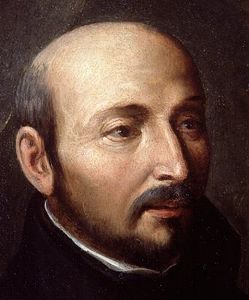
Ignatius of Loyola SJ (/ɪɡˈneɪʃəs/ ig-NAY-shəs; Basque: Ignazio Loiolakoa; Spanish: Ignacio de Loyola; Latin: Ignatius de Loyola; born Íñigo López de Oñaz y Loyola; c. 23 October 1491 – 31 July 1556), venerated as Saint Ignatius of Loyola, was a Spaniard Catholic priest and theologian, who, with six companions, founded the religious order of the Society of Jesus (Jesuits), and became its first Superior General, in Paris in 1541.
Ignatius envisioned the purpose of the Society of Jesus to be missionary work and teaching. In addition to the vows of chastity, obedience and poverty of other religious orders in the church, Loyola instituted a fourth vow for Jesuits of obedience to the Pope, to engage in projects ordained by the pontiff. Jesuits were instrumental in leading the Counter-Reformation.
As a former soldier, Ignatius paid particular attention to the spiritual formation of his recruits and recorded his method in the Spiritual Exercises (1548). In time, the method has become known as Ignatian spirituality. He was beatified in 1609 and was canonized as a saint on 12 March 1622. His feast day is celebrated on 31 July. He is the patron saint of the Basque provinces of Gipuzkoa and Biscay as well as of the Society of Jesus. He was declared the patron saint of all spiritual retreats by Pope Pius XI in 1922.
Ignatius of Loyola was born Iñigo López de Oñaz y Loyola in the castle at Loyola, in the municipality of Azpeitia, Gipuzkoa, in the Basque region of Spain. His parents, Don Beltrán Ibáñez de Oñaz y Loyola and Doña María (or Marina) Sáenz de Licona y Balda, who were of the minor nobility, from the clan of Loyola, were involved in the Basque war of the bands. Their manor house was demolished on the orders of the King of Castile in 1456 for their depredations in Gipuzkoa, with Iñigo's paternal grandfather being expelled to Andalusia by Henry IV. Íñigo was the youngest of their thirteen children. Their eldest son, Juan Pérez, had soldiered in forces commanded by Gonzalo Fernández de Córdoba, but died fighting in the Italian Wars (1494–1559).
He was baptized "Íñigo" on honour of Íñigo of Oña, Abbot of Oña; the name also is a medieval Basque diminutive for "My little one". It is not clear when he began using the Latin name "Ignatius" instead of his baptismal name "Íñigo". Historian Gabriel María Verd says that Íñigo did not intend to change his name, but rather adopted a name which he believed was a simple variant of his own, for use in France and Italy where it was better understood. Íñigo adopted the surname "de Loyola" in reference to the Basque village of Loyola where he was born.
Soon after the birth of Íñigo, his mother died. Maternal care fell to María de Garín, the wife of the local blacksmith. In 1498, his second eldest brother, Martin, heir to the estate, took his new wife to live in the castle, and she became mistress of the household. Later, the seven-year-old boy Íñigo returned to Casa Loyola. Anticipating his possible ecclesiastic career, Don Beltrán had Íñigo tonsured.
Instead, Íñigo became a page in the service of a relative, Juan Velázquez de Cuéllar, treasurer (contador mayor) of the kingdom of Castile. During his time in the household of Don Velázquez, Íñigo took up dancing, fencing, gambling, the pursuit of the young ladies, and duelling. Íñigo was keen on military exercises and was driven by a desire for fame. He patterned his life after stories of knights and chivalry, such as Amadís de Gaula.
He joined the army at seventeen, and according to one biographer, he strutted about "with his cape flying open to reveal his tight-fitting hose and boots; a sword and dagger at his waist". According to another he was "a fancy dresser, an expert dancer, a womanizer, sensitive to insult, and a rough punkish swordsman who used his privileged status to escape prosecution for violent crimes committed with his priest brother at carnival time."
Hub AI
Ignatius of Loyola AI simulator
(@Ignatius of Loyola_simulator)
Ignatius of Loyola
Ignatius of Loyola SJ (/ɪɡˈneɪʃəs/ ig-NAY-shəs; Basque: Ignazio Loiolakoa; Spanish: Ignacio de Loyola; Latin: Ignatius de Loyola; born Íñigo López de Oñaz y Loyola; c. 23 October 1491 – 31 July 1556), venerated as Saint Ignatius of Loyola, was a Spaniard Catholic priest and theologian, who, with six companions, founded the religious order of the Society of Jesus (Jesuits), and became its first Superior General, in Paris in 1541.
Ignatius envisioned the purpose of the Society of Jesus to be missionary work and teaching. In addition to the vows of chastity, obedience and poverty of other religious orders in the church, Loyola instituted a fourth vow for Jesuits of obedience to the Pope, to engage in projects ordained by the pontiff. Jesuits were instrumental in leading the Counter-Reformation.
As a former soldier, Ignatius paid particular attention to the spiritual formation of his recruits and recorded his method in the Spiritual Exercises (1548). In time, the method has become known as Ignatian spirituality. He was beatified in 1609 and was canonized as a saint on 12 March 1622. His feast day is celebrated on 31 July. He is the patron saint of the Basque provinces of Gipuzkoa and Biscay as well as of the Society of Jesus. He was declared the patron saint of all spiritual retreats by Pope Pius XI in 1922.
Ignatius of Loyola was born Iñigo López de Oñaz y Loyola in the castle at Loyola, in the municipality of Azpeitia, Gipuzkoa, in the Basque region of Spain. His parents, Don Beltrán Ibáñez de Oñaz y Loyola and Doña María (or Marina) Sáenz de Licona y Balda, who were of the minor nobility, from the clan of Loyola, were involved in the Basque war of the bands. Their manor house was demolished on the orders of the King of Castile in 1456 for their depredations in Gipuzkoa, with Iñigo's paternal grandfather being expelled to Andalusia by Henry IV. Íñigo was the youngest of their thirteen children. Their eldest son, Juan Pérez, had soldiered in forces commanded by Gonzalo Fernández de Córdoba, but died fighting in the Italian Wars (1494–1559).
He was baptized "Íñigo" on honour of Íñigo of Oña, Abbot of Oña; the name also is a medieval Basque diminutive for "My little one". It is not clear when he began using the Latin name "Ignatius" instead of his baptismal name "Íñigo". Historian Gabriel María Verd says that Íñigo did not intend to change his name, but rather adopted a name which he believed was a simple variant of his own, for use in France and Italy where it was better understood. Íñigo adopted the surname "de Loyola" in reference to the Basque village of Loyola where he was born.
Soon after the birth of Íñigo, his mother died. Maternal care fell to María de Garín, the wife of the local blacksmith. In 1498, his second eldest brother, Martin, heir to the estate, took his new wife to live in the castle, and she became mistress of the household. Later, the seven-year-old boy Íñigo returned to Casa Loyola. Anticipating his possible ecclesiastic career, Don Beltrán had Íñigo tonsured.
Instead, Íñigo became a page in the service of a relative, Juan Velázquez de Cuéllar, treasurer (contador mayor) of the kingdom of Castile. During his time in the household of Don Velázquez, Íñigo took up dancing, fencing, gambling, the pursuit of the young ladies, and duelling. Íñigo was keen on military exercises and was driven by a desire for fame. He patterned his life after stories of knights and chivalry, such as Amadís de Gaula.
He joined the army at seventeen, and according to one biographer, he strutted about "with his cape flying open to reveal his tight-fitting hose and boots; a sword and dagger at his waist". According to another he was "a fancy dresser, an expert dancer, a womanizer, sensitive to insult, and a rough punkish swordsman who used his privileged status to escape prosecution for violent crimes committed with his priest brother at carnival time."