Hubbry Logo
CanonizationCanonizationMain
Open search
Canonization
Community hub
Canonization
logo
8 pages, 0 posts
0 subscribers
Be the first to start a discussion here.
Contribute something
Canonization
Canonization
from Wikipedia
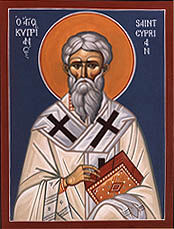
Icon of St. Cyprian of Carthage, who urged diligence in the process of canonization

Canonization is the declaration of a deceased person as an officially recognized saint,[1] specifically, the official act of a Christian communion declaring a person worthy of public veneration and entering their name in the canon catalogue of saints,[2] or authorized list of that communion's recognized saints.[3][4]

Catholic Church

[edit]
Canonization of Elizabeth of Hungary in 1235. Sándor Liezen-Mayer (1863).

Canonization is a papal declaration that the Catholic faithful may venerate a particular deceased member of the church. Popes began making such decrees in the tenth century. Up to that point, the local bishops governed the veneration of holy men and women within their own dioceses; and there may have been, for any particular saint, no formal decree at all. In subsequent centuries, the procedures became increasingly regularized and the Popes began restricting to themselves the right to declare someone a Catholic saint. In contemporary usage, the term is understood to refer to the act by which any Christian church declares that a person who has died is a saint, upon which declaration the person is included in the list of recognized saints, called the "canon".[5]

Biblical roots

[edit]

In the Roman Martyrology, the following entry is given for the Penitent Thief: "At Jerusalem, the commemoration of the good Thief, who confessed Christ on the cross, and deserved to hear from Him these words: 'This day thou shalt be with Me in paradise.'[6][7]

Historical development

[edit]

The Roman Canon, the historical Eucharistic Prayer or Anaphora of Canon of the Roman Rite contains only the names of apostles and martyrs, along with that of the Blessed Virgin Mary and, since 1962, that of Saint Joseph her spouse.

By the fourth century, however, "confessors"—people who had confessed their faith not by dying but by word and life—began to be venerated publicly. Examples of such people are Saint Hilarion and Saint Ephrem the Syrian in the East, and Saint Martin of Tours and Saint Hilary of Poitiers in the West. Their names were inserted in the diptychs, the lists of saints explicitly venerated in the liturgy, and their tombs were honoured in like manner as those of the martyrs. Since the witness of their lives was not as unequivocal as that of the martyrs, they were venerated publicly only with the approval by the local bishop. This process is often referred to as "local canonization".[9]

This approval was required even for veneration of a reputed martyr. In his history of the Donatist heresy, Saint Optatus recounts that at Carthage a Catholic matron, named Lucilla, incurred the censures of the Church for having kissed the relics of a reputed martyr whose claims to martyrdom had not been juridically proved. And Saint Cyprian (died 258) recommended that the utmost diligence be observed in investigating the claims of those who were said to have died for the faith. All the circumstances accompanying the martyrdom were to be inquired into; the faith of those who suffered, and the motives that animated them were to be rigorously examined, in order to prevent the recognition of undeserving persons. Evidence was sought from the court records of the trials or from people who had been present at the trials.

Augustine of Hippo (died 430) tells of the procedure which was followed in his day for the recognition of a martyr. The bishop of the diocese in which the martyrdom took place set up a canonical process for conducting the inquiry with the utmost severity. The acts of the process were sent either to the metropolitan or primate, who carefully examined the cause, and, after consultation with the suffragan bishops, declared whether the deceased was worthy of the name of "martyr" and public veneration.

Though not "canonizations" in the narrow sense, acts of formal recognition, such as the erection of an altar over the saint's tomb or transferring the saint's relics to a church, were preceded by formal inquiries into the sanctity of the person's life and the miracles attributed to that person's intercession.

Such acts of recognition of a saint were authoritative, in the strict sense, only for the diocese or ecclesiastical province for which they were issued, but with the spread of the fame of a saint, were often accepted elsewhere also.

Nature

[edit]

In the Catholic Church, both in the Latin and the constituent Eastern churches, the act of canonization is reserved to the Apostolic See and occurs at the conclusion of a long process requiring extensive proof that the candidate for canonization lived and died in such an exemplary and holy way that they are worthy to be recognized as a saint. The Church's official recognition of sanctity implies that the person is now in Heaven and that they may be publicly invoked and mentioned officially in the liturgy of the Church, including in the Litany of the Saints.

In the Catholic Church, canonization is a decree that allows universal veneration of the saint. For permission to venerate merely locally, only beatification is needed.[10]

Procedure prior to reservation to the Apostolic See

[edit]
Pope Pius II canonizes Catherine of Siena.

For several centuries the bishops, or in some places only the primates and patriarchs,[11] could grant martyrs and confessors public ecclesiastical honor; such honor, however, was always decreed only for the local territory of which the grantors had jurisdiction. Only acceptance of the cultus by the Pope made the cultus universal, because he alone can rule the universal Catholic Church.[12] Abuses, however, crept into this discipline, due as well to indiscretions of popular fervor as to the negligence of some bishops in inquiring into the lives of those whom they permitted to be honoured as saints.

In the Medieval West, the Apostolic See was asked to intervene in the question of canonizations so as to ensure more authoritative decisions. The canonization of Saint Udalric, Bishop of Augsburg by Pope John XV in 993 was the first undoubted example of papal canonization of a saint from outside of Rome being declared worthy of liturgical veneration for the entire church.[13]

Thereafter, recourse to the judgment of the Pope occurred more frequently. Toward the end of the 11th century, the Popes began asserting their exclusive right to authorize the veneration of a saint against the older rights of bishops to do so for their dioceses and regions. Popes therefore decreed that the virtues and miracles of persons proposed for public veneration should be examined in councils, more specifically in general councils. Pope Urban II, Pope Calixtus II, and Pope Eugene III conformed to this discipline.

Exclusive reservation to the Apostolic See

[edit]

Hugh de Boves, Archbishop of Rouen, canonized Walter of Pontoise, or St. Gaultier, in 1153, the final saint in Western Europe to be canonized by an authority other than the Pope:[14][15] "The last case of canonization by a metropolitan is said to have been that of St. Gaultier, or Gaucher, [A]bbot of Pontoise, by the Archbishop of Rouen. A decree of Pope Alexander III [in] 1170 gave the prerogative to the [P]ope thenceforth, so far as the Western Church was concerned."[14] In a decretal of 1173, Pope Alexander III reprimanded some bishops for permitting veneration of a man who was merely killed while intoxicated, prohibited veneration of the man, and most significantly decreed that "you shall not therefore presume to honor him in the future; for, even if miracles were worked through him, it is not lawful for you to venerate him as a saint without the authority of the Catholic Church."[16] Theologians disagree as to the full import of the decretal of Pope Alexander III: either a new law was instituted,[17] in which case the Pope then for the first time reserved the right of beatification to himself, or an existing law was confirmed.

However, the procedure initiated by the decretal of Pope Alexander III was confirmed by a bull of Pope Innocent III issued on the occasion of the canonization of Cunigunde of Luxembourg in 1200. The bull of Pope Innocent III resulted in increasingly elaborate inquiries to the Apostolic See concerning canonizations. Because the decretal of Pope Alexander III did not end all controversy and some bishops did not obey it in so far as it regarded beatification, the right of which they had certainly possessed hitherto, Pope Urban VIII issued the Apostolic letter Caelestis Hierusalem cives of 5 July 1634 that exclusively reserved to the Apostolic See both its immemorial right of canonization and that of beatification. He further regulated both of these acts by issuing his Decreta servanda in beatificatione et canonizatione Sanctorum on 12 March 1642.

Procedure from 1734 to 1738 to 1983

[edit]

In his De Servorum Dei beatificatione et de Beatorum canonizatione of five volumes the eminent canonist Prospero Lambertini (1675–1758), who later became Pope Benedict XIV, elaborated on the procedural norms of Pope Urban VIII's Apostolic letter Caelestis Hierusalem cives of 1634 and Decreta servanda in beatificatione et canonizatione Sanctorum of 1642, and on the conventional practice of the time. His work published from 1734 to 1738 governed the proceedings until 1917. The article "Beatification and canonization process in 1914" describes the procedures followed until the promulgation of the Codex of 1917. The substance of De Servorum Dei beatifιcatione et de Beatorum canonizatione was incorporated into the Codex Iuris Canonici (Code of Canon Law) of 1917,[18] which governed until the promulgation of the revised Codex Iuris Canonici in 1983 by Pope John Paul II. Prior to promulgation of the revised Codex in 1983, Pope Paul VI initiated a simplification of the procedures.

Since 1983

[edit]

The Apostolic constitution Divinus Perfectionis Magister of Pope John Paul II of 25 January 1983[19] and the norms issued by the Congregation for the Causes of Saints on 7 February 1983 to implement the constitution in dioceses, continued the simplification of the process initiated by Pope Paul VI.[19] Contrary to popular belief, the reforms did not eliminate the office of the Promoter of the Faith (Latin: Promotor Fidei), popularly known as the Devil's advocate, whose office is to question the material presented in favor of canonization. The reforms were intended to reduce the adversarial nature of the process. In November 2012 Pope Benedict XVI appointed Monsignor Carmello Pellegrino as Promoter of the Faith.[20]

Candidates for canonization undergo the following process:

  1. Servant of God (Servus Dei): The process of canonization commences at the diocesan level. A bishop with jurisdiction, usually the bishop of the place where the candidate died or is buried, although another ordinary can be given this authority, gives permission to open an investigation into the virtues of the individual in response to a petition of members of the faithful, either actually or pro forma.[21] This investigation usually commences no sooner than five years after the death of the person being investigated.[22] The Pope, qua Bishop of Rome, may also open a process and has the authority to waive the waiting period of five years, e.g., as was done for St. Teresa of Calcutta by Pope John Paul II,[23] and for Lúcia Santos and for Pope John Paul II himself by Pope Benedict XVI.[24][25] Normally, an association to promote the cause of the candidate is instituted, an exhaustive search of the candidate's writings, speeches, and sermons is undertaken, a detailed biography is written, and eyewitness accounts are collected. When sufficient evidence has been collected, the local bishop presents the investigation of the candidate, who is titled "Servant of God" (Latin: Servus Dei), to the Congregation for the Causes of the Saints of the Roman Curia, where the cause is assigned a postulator, whose office is to collect further evidence of the life of the Servant of God. Religious orders that regularly deal with the Congregation often designate their own Postulator General. At some time, permission is then granted for the body of the Servant of God to be exhumed and examined. A certification non-cultus is made that no superstitious or heretical worship, or improper cult of the Servant of God or her/his tomb has emerged, and relics are taken and preserved.
  2. Venerable (Venerabilis; abbreviated "Ven.") or "Heroic in Virtue": When sufficient evidence has been collected, the Congregation recommends to the Pope that he proclaim the heroic virtue of the Servant of God; that is, that the Servant of God exercised "to a heroic degree" the theological virtues of faith, hope, and charity and the cardinal virtues of prudence, justice, fortitude, and temperance. From this time the one said to be "heroic in virtue" is entitled "Venerable" (Latin: Venerabilis). A Venerable does not yet have a feast day, permission to erect churches in their honor has not yet been granted, and the Church does not yet issue a statement on their probable or certain presence in Heaven, but prayer cards and other materials may be printed to encourage the faithful to pray for a miracle wrought by their intercession as a sign of God's will that the person be canonized.
  3. Blessed (Beatus or Beata; abbreviated "Bl."): Beatification is a statement of the Church that it is "worthy of belief" that the Venerable is in Heaven and saved. Attaining this grade depends on whether the Venerable is a martyr:
    • For a martyr, the Pope has only to make a declaration of martyrdom, which is a certification that the Venerable gave their life voluntarily as a witness of the Faith or in an act of heroic charity for others.
    • For a non-martyr, all of them being denominated "confessors" because they "confessed", i.e., bore witness to the Faith by how they lived, proof is required of the occurrence of a miracle through the intercession of the Venerable; that is, that God granted a sign that the person is enjoying the beatific vision by performing a miracle for which the Venerable interceded. Presently, these miracles are almost always miraculous cures of infirmity, because these are the easiest to judge given the Church's evidentiary requirements for miracles; e.g., a patient was sick with an illness for which no cure was known; prayers were directed to the Venerable; the patient was cured; the cure was spontaneous, instantaneous, complete, and enduring; and physicians cannot discover any natural explanation for the cure.
    The satisfaction of the applicable conditions permits beatification, which then bestows on the Venerable the title of "Blessed" (Latin: Beatus or Beata). A feast day will be designated, but its observance is ordinarily only permitted for the Blessed's home diocese, to specific locations associated with them, or to the churches or houses of the Blessed's religious order if they belonged to one. Parishes may not normally be named in honor of beati.
  4. Saint (Sanctus or Sancta; abbreviated "St." or "S."): To be canonized as a saint, ordinarily at least two miracles must have been performed through the intercession of the Blessed after their death, but for beati confessors, i.e., beati who were not declared martyrs, only one miracle is required, ordinarily being additional to that upon which beatification was premised. Very rarely, a Pope may waive the requirement for a second miracle after beatification if he, the Sacred College of Cardinals, and the Congregation for the Causes of Saints all agree that the Blessed lived a life of great merit proven by certain actions. This extraordinary procedure was used in Pope Francis' canonization of Pope John XXIII, who convoked the first part of the Second Vatican Council.

Canonization is a statement of the Church that the person certainly enjoys the beatific vision of Heaven. The title of "Saint" (Latin: Sanctus or Sancta) is then proper, reflecting that the saint is a refulgence of the holiness (sanctitas) of God himself, which alone comes from God's gift. The saint is assigned a feast day which may be celebrated anywhere in the universal Church, although it is not necessarily added to the General Roman Calendar or local calendars as an "obligatory" feast; parish churches may be erected in their honor; and the faithful may freely celebrate and honor the saint.

Although recognition of sainthood by the Pope does not directly concern a fact of Divine revelation, nonetheless it must be "definitively held" by the faithful as infallible pursuant to, at the least, the Universal Magisterium of the Church, because it is a truth related to revelation by historical necessity.[26][27]

Regarding the Eastern Catholic Churches, the cult of candidates for sainthood who have attained beatification in a sui juris Church is restricted to that Church. Canonization removes this restriction, and the saint is then venerated in the universal Church.[28]

Equipollent canonization

[edit]

Popes have several times permitted to the universal Church, without executing the ordinary judicial process of canonization described above, the veneration as a saint, the "cultus" of one long venerated as such locally. This act of a Pope is denominated "equipollent" or "equivalent canonization"[29] and "confirmation of cultus".[30] In such cases, there is no need to have a miracle attributed to the saint to allow their canonization.[29] According to the rules Pope Benedict XIV (regnat 17 August 1740 – 3 May 1758) instituted, there are three conditions for an equipollent canonization: (1) existence of an ancient cultus of the person, (2) a general and constant attestation to the virtues or martyrdom of the person by credible historians, and (3) uninterrupted fame of the person as a worker of miracles.

Protestant denominations

[edit]

The majority of Protestant denominations do not formally recognize saints because some think[who?] the Bible uses the term in a way that suggests all Christians are saints[citation needed]. However, some denominations do, as shown below.

Anglican Communion

[edit]

The Church of England, the Mother Church of the Anglican Communion, canonized Charles I as a saint, in the Convocations of Canterbury and York of 1660.[31]

United Methodist Church

[edit]

The General Conference of the United Methodist Church has formally declared individuals martyrs, including Dietrich Bonhoeffer (in 2008) and Martin Luther King Jr. (in 2012).[32][33]

Eastern Orthodox Church

[edit]
The Turkish atrocities in Bulgaria (1876). On 3 April 2011, Batak massacre victims were canonized as saints.
On 4 November 1992, the Holy Synod of the Church of Greece unanimously declared saints those Christians who had been tortured and massacred by the Turks in the Great fire of Smyrna in 1922.[34][35]

Various terms are used for canonization by the autocephalous Eastern Orthodox Churches: канонизация[36] ("canonization") or прославление[37] ("glorification",[38] in the Russian Orthodox Church), კანონიზაცია (kanonizats’ia, Georgian Orthodox Church), канонизација (Serbian Orthodox Church), canonizare (Romanian Orthodox Church), and Канонизация (Bulgarian Orthodox Church). Additional terms are used for canonization by other autocephalous Eastern Orthodox Churches: αγιοκατάταξη[39] (Katharevousa: ἁγιοκατάταξις) agiokatataxi/agiokatataxis, "ranking among saints" (Ecumenical Patriarchate of Constantinople, Church of Cyprus, Church of Greece), kanonizim (Albanian Orthodox Church), kanonizacja (Polish Orthodox Church), and kanonizace/kanonizácia (Czech and Slovak Orthodox Church).

The Orthodox Church in America, an Eastern Orthodox Church partly recognized as autocephalous, uses the term "glorification" for the official recognition of a person as a saint.[40]

Oriental Orthodox Church

[edit]

Within the Armenian Apostolic Church, part of Oriental Orthodoxy, there had been discussions since the 1980s about canonizing the victims of the Armenian genocide.[41] On 23 April 2015, all of the victims of the genocide were canonized.[42][43][44]

See also

[edit]

Notes

[edit]

References

[edit]
[edit]
Revisions and contributorsEdit on WikipediaRead on Wikipedia
from Grokipedia
Canonization is the solemn act by which the declares a deceased person a of the , affirming their eternal union with in heaven and authorizing their public throughout the universal Church as an infallible judgment of the Church's . The process, governed by the for the Causes of Saints, requires evidence of the candidate's exercise of heroic virtues—such as , , fortitude, and temperance in eminent degree—or martyrdom, along with at least two miracles attributed to their , one preceding (which permits limited veneration) and a second following it to confirm divine approval of the declaration. Historically, evolved from spontaneous local acclamations of martyrs and confessors in the early Christian era, where bishops oversaw based on communal devotion and relics, to a centralized papal procedure formalized in the under , who reserved the right to approve saints amid concerns over unauthorized cults. Key reforms, including those in 1983 under , streamlined investigations while emphasizing juridical rigor, such as diocesan inquiries into writings, witness testimonies, and validations, though popes retain discretion to dispense certain requirements like the five-year waiting period post-death. This development underscores 's role not in creating saints—whom the Church holds are made so by God—but in recognizing and proposing them as models of Christian life, with miracles serving as empirical signs of heavenly rather than mere pious anecdotes. Notable aspects include its exclusivity to the Catholic tradition among major Christian communions, occasional controversies over expedited processes or politically influenced causes, and its culmination in a where the saint's name is inscribed in the for perpetual liturgical honor.

Definition and Theological Foundations

Etymology and Core Meaning

The term "canonization" entered English in the late 14th century, derived from Medieval Latin canonizatio (nominative canonizatio), denoting the act of enrolling a beatified individual among the saints, with papal authority for this process formalized by 1179. Its root, "canon," traces to the Greek kanōn, originally signifying a straight rod or measuring stick used as a standard for alignment or evaluation, which metaphorically evolved to denote a rule, norm, or authoritative criterion. In early Christian contexts, kanōn applied to ecclesiastical standards, extending by the 4th century to curated lists of scriptures deemed orthodox, paralleling its later use for rosters of venerated holy persons. At its core, constitutes the definitive declaration—principally by the Roman Pontiff in the Catholic tradition—that a deceased individual possesses , resides in heavenly glory, and merits universal public as a , thereby inscribing their name in the official catalog of saints. This act presupposes prior and typically requires verification of at least two miracles attributable to the candidate's , affirming not mere personal but a divine endorsement of their sanctity for the edification of the faithful. Unlike informal local recognition of holiness in antiquity, canonization establishes an infallible judgment on the person's eternal beatitude, authorizing liturgical honors, feast days, and invocation across the universal Church.

Biblical and Scriptural Basis

The New Testament employs the term "saints" (Greek hagios, meaning "holy ones") to denote all believers sanctified through faith in Christ, rather than a privileged subset verified by ecclesiastical processes. For instance, Paul addresses "all those in Rome who are loved by God and called to be saints" (Romans 1:7, ESV), a designation echoed in 1 Corinthians 1:2 ("to those sanctified in Christ Jesus, called to be saints") and Ephesians 1:1 ("to the saints who are in Ephesus"). This usage reflects a communal holiness imputed by grace, not posthumous declaration, as confirmed by over 60 New Testament references applying the term broadly to living and deceased faithful. Scripture nonetheless provides precedents for honoring exemplary lives of faith, forming an inferential basis for distinguishing particularly virtuous individuals worthy of emulation. Hebrews 11 catalogs Old Testament figures like Abraham and Moses as "heroes of faith," culminating in Hebrews 12:1's exhortation to persevere "since we are surrounded by so great a cloud of witnesses." Paul models this by instructing, "Be imitators of me, as I am of Christ" (1 Corinthians 11:1), implying veneration through replication of holy conduct, a principle extended in 1 Thessalonians 1:6-7 to Thessalonian believers as regional exemplars. In the Old Testament, patriarchal tombs received ongoing honor, as with Abraham's burial site at Machpelah (Genesis 23:19; 25:9-10), signaling communal remembrance of the righteous. Support for the saints' ongoing role emerges in apocalyptic imagery, where the departed faithful intercede actively. Revelation 5:8 depicts twenty-four elders holding "golden bowls full of incense, which are the prayers of the saints," presented before the Lamb, while Revelation 8:3-4 shows an angel offering "the prayers of all the saints" as incense from a golden censer. These verses, interpreted by Catholic theology as encompassing petitions from heavenly saints to God, underpin invocation without equating it to divine worship, though Protestant exegesis often limits "saints" here to earthly believers and rejects intercessory implications as tradition-derived. Additionally, 2 Maccabees 12:38-46 records Judas Maccabeus offering sacrifices and prayers for fallen soldiers' purification, affirming efficacy of supplications for the deceased—a practice included in the Catholic scriptural canon but excluded from Protestant Bibles as deuterocanonical. While these passages establish scriptural warrant for recognizing holiness, communal honor, and potential heavenly advocacy, no text prescribes a formalized investigative rite, miracle verification, or authoritative declaration of sanctity—elements central to later canonization procedures, which developed ecclesiastically to regulate public amid diverse local cults. Early Christian practices, such as Acts 19:11-12's account of healings via Paul's handkerchiefs, suggest relic efficacy but not systematic . Thus, the biblical foundation emphasizes inherent sanctity and exemplary witness over institutional conferral.

Essential Criteria for Holiness

In , holiness constitutes a state of complete dedication to , marked by moral perfection and union with the divine through grace-enabled virtues. The , in proclaiming saints, identifies holiness as fidelity to God's grace manifested in the heroic exercise of virtues, which exceed ordinary human efforts and reflect Christ's own sanctity. This criterion stems from the scriptural imperative to "be holy, for I am holy" (1 Peter 1:16, echoing Leviticus 11:44), interpreted as a call to imitate divine perfection in daily conduct. The Second Vatican Council emphasized the universal vocation to holiness, stating that all baptized persons must advance in sanctity by responding to grace with charity as the soul of all virtues. Central to these criteria are the —faith, , and charity—infused directly by the as supernatural habits orienting the soul toward . Faith involves firm assent to divine truths, enabling perseverance amid doubt or persecution; hope fosters confident reliance on 's promises, even in suffering; and charity, the preeminent virtue, drives self-forgetful above all and neighbor as oneself, often culminating in sacrificial acts. These virtues, distinct from acquired moral habits, are essential for sanctity because they have as their object, motive, and end, as articulated in Church teaching. Complementing the theological virtues are the cardinal virtues—prudence, justice, fortitude, and temperance—elevated by grace to a heroic degree, where acts of goodness become spontaneous, constant, and effective despite obstacles like temptation or external opposition. Heroic virtue is defined as a stable disposition to perform the good with supernatural readiness, surpassing natural inclinations and verified through prolonged practice over a lifetime. discerns God's will amid complexity, renders due rights to God and others, fortitude endures trials without faltering, and temperance moderates desires for ordered liberty. The Church requires evidence of such heroism in all virtues for beatification, excluding isolated acts or mere good intentions. Martyrdom exemplifies par excellence, equating to it by the supreme act of charity in shedding blood for faith, as seen in early Christian witnesses who preferred death to . Non-martyrs must demonstrate equivalent moral fortitude through consistent virtuous living, confirmed posthumously by reputation of sanctity and, typically, attributing to their heavenly union with . This framework ensures honors only those empirically evidenced to have attained holiness, avoiding subjective or culturally biased assessments.

Historical Evolution

Early Christian Practices and Martyr Recognition

In the primitive Church, prior to the legalization of Christianity under Constantine in 313 AD, the recognition of martyrs as saints occurred spontaneously through local communal veneration rather than any formalized ecclesiastical procedure. Martyrs, defined as Christians who died witnessing their faith during persecutions, were immediately honored for imitating Christ's passion and securing heavenly intercession, with their cultus emerging directly from the faithful's devotion at execution or burial sites. This practice drew from Jewish traditions of honoring prophets but adapted to emphasize bodily relics and eschatological triumph, as persecution intensified under emperors like Nero in 64 AD and Decius in 250 AD. Communities commemorated martyrs on the anniversary of their death, termed dies natalis (day of birth into eternal life), gathering at graves for Eucharistic liturgies, prayers, scriptural readings, and recitations of their sufferings as recorded in acta martyrum (acts of the martyrs). Relics—bones, blood, or clothing—were collected and preserved, not as idols but as tangible links to the saint's merits, fostering and attributed to their proximity to ; this is attested as early as the , predating imperial tolerance. Local bishops regulated these cults to authenticate martyrdom accounts and prevent apocryphal fabrications, ensuring only verifiable witnesses of received public honor, as seen in the episcopal oversight of Polycarp's martyrdom in Smyrna around 155 AD, documented in a contemporary letter circulated among churches. By the late 2nd and 3rd centuries, martyrologies—calendars listing martyrs' names and feast days—began compiling these recognitions, facilitating shared devotion across regions, though authority remained decentralized and episcopal rather than papal. Examples include the North African martyrs , executed in 203 AD, whose passion narrative was publicly read in liturgies, establishing their intercessory role without higher sanction. Post-persecution, after the , this martyr-centric model extended tentatively to confessors—those who suffered but survived—yet retained informal, community-driven validation, reflecting the Church's organic growth amid existential threats rather than institutionalized bureaucracy. Such practices underscored causal links between faithful endurance and divine favor, privileging empirical testimonies of perseverance over speculative theology.

Medieval Formalization and Papal Centralization

In the , the recognition of saints remained largely a local affair, with bishops and communities venerating martyrs and confessors based on popular devotion and episcopal approval, often without centralized oversight. This decentralized approach, while rooted in the Church's , led to inconsistencies and potential abuses, such as unverified claims of sanctity or politically motivated cults. The transition toward formalization began in the , marked by the first recorded papal canonization of Bishop Ulric of by in 993, which involved a synodal investigation into his life and miracles, setting a for Roman involvement beyond local martyrs. By the 12th century, growing concerns over unauthorized prompted papal assertions of exclusive authority. In 1171, issued a to the canons of , prohibiting the local veneration of a deceased without apostolic approval and declaring that only the Roman Pontiff possessed the competence to canonize saints, thereby initiating the papal monopoly on the process. This ruling addressed instances where bishops presumed to declare sainthood independently, emphasizing the need for universal discernment to safeguard the Church's witness to holiness. The Fourth in 1215 further reinforced this centralization through Canon 62, which forbade any lay or clerical presumption of divine honors for the dead without papal sanction, aiming to curb superstitious or erroneous cults amid the era's proliferation of new devotions. The 13th century saw procedural standardization under papal auspices. in 1200 outlined initial investigative norms, requiring evidence of and , while incorporated the papal reserve into via the Decretals (Liber Extra) in 1234, mandating written records and apostolic scrutiny for all . This formalization shifted authority decisively to , transforming from a regional custom into a juridical act of the universal Church, supported by emerging bureaucratic mechanisms like commissions and validations. Despite resistance in some locales accustomed to , the process gained acceptance as it ensured doctrinal reliability and prevented factional influences from diluting the criteria for sanctity.

Post-Reformation Shifts and Denominational Divergences

The Protestant Reformation, initiated by Martin Luther's in 1517, prompted significant reevaluations of canonization practices across Christian traditions, emphasizing scriptural authority over ecclesiastical tradition. In response, the at the (1545–1563) reaffirmed the veneration of saints and their relics as consistent with apostolic teaching, defending local cults against Protestant accusations of while implicitly upholding the Church's authority to recognize holiness. This session 25 decree on the invocation of saints marked a defensive consolidation, though it did not yet formalize the infallibility of canonization, which would be articulated later by in 1740. To standardize procedures amid Reformation-era challenges, established the Congregation of Rites in 1588, centralizing oversight of and under Roman authority to ensure uniformity and curb abuses like premature local cults. further reformed the process in 1634 through decrees that mandated papal approval for all causes, required verified miracles, and suppressed unapproved , shifting from decentralized episcopal initiatives to exclusive Vatican jurisdiction. These measures reduced the annual rate of new saints from a pre-Reformation average of about one every two years to roughly one every five years by the , reflecting heightened evidentiary standards. Protestant reformers, viewing canonization as an unbiblical innovation that elevated humans to near-divine status, rejected formal processes entirely, with Luther arguing in his 1520 Babylonian Captivity that all baptized believers constitute the true saints per Romans 1:7, rendering papal declarations superfluous and prone to error. Calvin, in his Institutes (1536), similarly critiqued saint veneration as idolatrous, insisting holiness derives from faith alone without need for ecclesiastical canon. Continental Reformed and Lutheran traditions thus abandoned canonization, commemorating biblical figures and martyrs through preaching and hymnody rather than obligatory feasts or intercession. Anglicans diverged slightly by retaining a revised calendar of saints in the 1549 Book of Common Prayer, including pre-Reformation figures but excluding post-schism popes, with commemoration emphasizing exemplary faith over infallible status; post-Reformation additions, like King Charles I in 1660, reflect national heroic veneration without miracles or dogma. Eastern Orthodox traditions, unaffected by Western Reformation dynamics due to prior schism, maintained synodal glorification processes independent of papal centralization, with local churches or autocephalous synods recognizing saints through consensus on virtues, miracles, and incorrupt relics, as seen in the 1652 glorification of Nektarios of . This decentralized approach persisted, contrasting Catholic uniformity; for instance, the formalized inquiries under Synod oversight from 1721, canonizing figures like only after widespread popular devotion and episcopal investigation, underscoring ecclesial rather than individual papal authority. These divergences entrenched denominational boundaries, with Catholics prioritizing juridical certainty, Protestants scriptural minimalism, and Orthodox conciliar tradition.

Canonization in the Catholic Church

Pre-Modern and Transitional Procedures

In the early Christian era, following the martyrdoms under Roman , the recognition of saints began through local of martyrs, where bishops verified the authenticity of martyrdoms based on eyewitness accounts and motives of faith, often incorporating the deceased's name into the local liturgical canon and distributing relics. This process relied on popular acclaim tempered by episcopal oversight, as seen in the case of St. Polycarp in 155 AD, whose martyrdom was documented and approved by neighboring churches before wider cultus. With the in 313 AD, extended to confessors—those who endured without dying—requiring evidence of rather than bloodshed, though cults remained predominantly diocesan unless spontaneously spreading through miracles or reputation. By the , papal intervention emerged to address inconsistencies and potential abuses in local declarations, with the first formal papal canonization occurring in 993 when declared St. a saint after investigating reported miracles at his tomb, marking a shift from purely episcopal authority. This was followed by 's 1170 decree, which prohibited veneration of any new saint without the Apostolic See's authorization, motivated by cases like the unauthorized cult of a Swedish figure falsely claimed as a despite evident unworthiness. further centralized control in 1234 by incorporating exclusive papal rights into , requiring written processes akin to judicial inquiries, including witness testimonies and scrutiny by a Promoter of the Faith to counter devil's advocacy against hasty acclaim. Medieval procedures distinguished —permitting limited local or regional cultus after papal approval—and full canonization for universal , both involving rigorous examination of virtues, , and , as formalized under Popes Urban II (1089–1099), who ordered the first structured local inquiry for Nicholas of Trani, and Callixtus II (1119–1124), who mandated biographical scrutiny. These steps prevented political manipulations, such as royal pressures on bishops to elevate kin, ensuring decisions rested on of sanctity rather than expediency. Transitional reforms in the late 16th and early 17th centuries built on this foundation by institutionalizing oversight amid post-Reformation scrutiny. established the Congregation of Rites on January 22, 1588, via the constitution Immensa Aeterni Dei, to systematize investigations previously handled ad hoc by the pope, mandating diocesan inquiries followed by Roman review of documents, virtues, and . advanced this in 1634 with the decree Cælestis Hierusalem Cives, strictly forbidding any public cultus without approval, even for long-standing local traditions, while allowing equipollent recognition for immemorial veneration (over 100 years) if non-contradictory evidence supported it—thus bridging pre-modern customary practices with formalized juridical norms. These changes emphasized causal evidence of divine intervention, such as verifiable , over mere reputation, reducing forgeries and enhancing procedural rigor without retroactively invalidating earlier saints.

Current Process Under Apostolic Norms

The canonization process in the follows norms established by the Divinus Perfectionis Magister, promulgated by on January 25, 1983, which streamlined procedures to promote efficiency, episcopal collegiality, and rigorous scrutiny of sanctity while eliminating prior adversarial courtroom elements. These reforms mandate a single cognitional process for gathering evidence, conducted initially by the diocesan bishop with oversight from the for the Causes of Saints (formerly the Congregation), culminating in papal declaration. The retains exclusive authority to declare saints, based on verified heroic virtues or martyrdom and attributed miracles. Initiation requires a written from the faithful or a group, submitted via an approved postulator to the of the where the candidate died (or where a occurred), no earlier than five years after to allow time for of holiness (fama sanctitatis) to emerge. The consults the regional , publicizes the cause for input, and appoints a including a judicial , promotor of justice, and notaries to investigate the candidate's life, virtues, martyrdom (if applicable), and any public . Theological censors examine writings for , and eyewitnesses (plus ex officio and potentially adversarial ones) provide sworn testimonies via structured interrogatories. For non-martyrs, demands proof of heroic exercise of theological and , confirmed by historical and theological commissions at the after the diocesan phase forwards authenticated acts to . One , typically an inexplicable healing, must be attributed to the candidate's post-death, vetted by medical experts for scientific inexplicability and theologians for divine causation. Martyrs require no for , only verified martyrdom in odium fidei (hatred of the faith). follows , necessitating a second under identical scrutiny, after which the issues a permitting universal . The advises on procedure but cannot declare saints independently. No formal is permitted during investigation to prevent premature , and processes for causes over 30 years old require checks for potential . While the may dispense with requirements in exceptional cases, such as equipollent canonization recognizing longstanding veneration, the standard norms emphasize empirical verification of miracles through multidisciplinary panels. These procedures remain in force without substantive alteration since 1983, though administrative streamlining has occurred under subsequent pontificates.

Recent Canonizations and Equipollent Declarations

Pope Francis, during his pontificate from 2013 onward, authorized the canonization of over 900 individuals, establishing a record for the largest number in a single papacy, with many involving groups of martyrs, missionaries, and lay faithful from diverse global regions such as , , and the . This surge emphasized recognition of ordinary witnesses to faith amid or service, often verified through documented attributed to their , as required by the 1983 Divinus Perfectionis Magister norms. Notable standard canonizations include the 813 on May 12, 2013, beheaded by Ottoman forces in 1480 for refusing conversion; and Maria Guadalupe Garcia Zavala on October 11, 2013; and seven saints on October 9, 2022, comprising figures like César de Bus and Luigino Velotti, whose causes involved rigorous scrutiny of virtues and posthumous miracles by the Dicastery for the Causes of Saints. In February 2024, María Antonia de Paz y Figueroa (Mama Antula) was canonized, highlighting indigenous and lay contributions to Argentine Catholicism. Equipollent declarations, an exceptional procedure invoking longstanding popular veneration (cultus publicus) and historical devotion equivalent to formal proof of holiness, have been utilized by Francis to bypass the ordinary process for figures with ancient or widespread acclaim, provided no doctrinal errors exist in their legacy. This method, rooted in (Normae Servandae art. 2), affirms sainthood directly via papal decree rather than ceremonial rite. On July 9, 2013, Angela of Foligno, a 13th-14th century Italian mystic, was declared a saint equipollently due to centuries of liturgical veneration and endorsement by Church authorities. Similarly, Jesuit cofounder received equipollent canonization on December 17, 2013, recognizing his role in early amid existing cultus. was canonized equipollently on April 27, 2014, alongside the ordinary canonization of John Paul II, justified by John XXIII's enduring reputation from the Second Vatican Council era despite waiving a second miracle. More recent equipollent actions include the April 24, 2021, declaration for Dominican tertiary (1287–1320), a blind and hunchbacked laywoman venerated in and local shrines for her endurance of disability and charity, with devotion tracing to medieval times. In December 2024, Francis issued equipollent canonizations for the 16 , Carmelite nuns executed by guillotine during the French Revolution's in 1794, whose martyrdom inspired Georges Bernanos's and evidenced persistent liturgical commemoration; and for Servant Sisters of the Home of the Mother, affirming their based on reported favors. These declarations underscore a pragmatic approach to integrating historically revered figures into the universal , prioritizing evidence of continuous piety over procedural formalities, though critics note potential risks to evidentiary standards without full scrutiny.

Processes in Eastern Christian Traditions

Glorification in the

In the , glorification refers to the formal ecclesiastical recognition that a deceased individual has attained sanctity and union with , permitting universal veneration through inclusion in the liturgical calendar, icons, and troparia. Unlike the centralized papal canonization in the Roman Catholic Church—which follows formal stages from Servant of God to blessed via beatification and then saint, under papal authority with mandatory medically verified miracles and resulting in universal veneration—Orthodox glorification lacks a uniform, juridical procedure enforced from a single authority; instead, it emerges organically from the local Church's lived experience of the person's holiness, often confirmed by a or autocephalous , without rigid timelines or required miracles, frequently yielding saints specific to particular traditions. This process reflects the Orthodox of conciliarity, where sanctity is discerned collectively rather than decreed unilaterally via Petrine primacy and juridical proof, emphasizing the Church as the mystical body manifesting through exemplary lives and divine signs, though both traditions value miracles as confirmatory. The initial phase typically involves grassroots , such as prayers at the grave, reports of , or discovery of incorrupt relics, which prompt local and faithful to commemorate as blessed. A synodal commission or episcopal investigation then examines the candidate's Orthodox confession, moral life, and post-mortem signs of grace— serving as empirical confirmation rather than strict prerequisites, though their absence does not preclude if virtues are evident. For instance, the Orthodox Church of America (OCA) glorified Venerable on August 9, 1970, after decades of Alaskan evidenced by his ascetic life (1756–1837) and attributed healings, with the proclaiming his sanctity following liturgical services and composition. Similarly, the Russian Orthodox Church Outside Russia (ROCOR) glorified new martyrs like those of 1981, recognizing confessors under Soviet persecution through synodal decree after verifying martyrdom accounts and spiritual fruits. The rite of glorification culminates in a dedicated liturgical cycle: a final parastas (memorial service) transitions to festal , with composed hymns, and , during which the presiding reads the synod's proclamation, blesses an , and often distributes particles from relics or for . This act integrates the saint into the diptychs (canon of commemorations), enabling intercessory prayers and feast days, as seen in the OCA's glorification of Righteous (Matushka Olga) on November 8, 2023, honoring her quiet piety and missionary work among (1918–1979). Autocephalous churches operate independently—e.g., the Ecumenical or —but often reciprocally accept glorifications, fostering pan-Orthodox unity without overriding local discernment. Critics within Orthodox circles note variability, with some jurisdictions requiring exhaustive hagiographic scrutiny to counter hasty local enthusiasms, yet the process prioritizes the Church's charismatic witness over bureaucratic proofs.

Recognition in Oriental Orthodox Churches

In the Oriental Orthodox Churches, which include the Coptic, Armenian Apostolic, Syriac, Ethiopian, Eritrean, and Malankara Syrian traditions, the recognition of saints occurs through decentralized synodal or patriarchal processes rather than a uniform, centralized mechanism akin to that in the Roman Catholic Church. Each autocephalous church discerns sanctity based on longstanding local veneration, martyrdom, ascetic virtue, or reported posthumous intercessions, formalized by the Holy Synod's declaration, inclusion in liturgical diptychs, and commemoration in calendars. This approach prioritizes the organic witness of the faithful and episcopal consensus over juridical proofs like mandatory miracles, reflecting a tradition where saints are seen as already glorified by God, with the Church affirming rather than conferring their status. The exemplifies this through its , comprising the and metropolitans/bishops, which reviews candidates after a customary waiting period—traditionally around 50 years post-death, though exceptions occur for figures of evident piety. On June 20, 2013, the Synod formally canonized Pope Kyrollos VI (reigned 1959–1971) and Archdeacon Habib Girgis (1890s–1950s), both venerated for decades amid reports of healings and spiritual edification, marking the first such synodal proclamations in modern and involving liturgical enrollment despite the shorter interval for Kyrollos VI. In the , canonizations are rare and often collective, declared by the and of Etchmiadzin without a codified formula emphasizing empirical verification. The most recent major act occurred on April 23, 2015 (Holy Thursday), when 1.5 million victims of the 1915 were proclaimed "Holy Martyrs" in a at , the first formal canonization since the , honoring their collective fidelity unto death over individual investigations. The similarly eschews declarations reliant on documented miracles or cures, focusing instead on historical martyrs and confessors whose lives align with apostolic witness, with recognition by the Patriarchal Synod through hagiographic tradition and feast days. Recent affirmations include Ignatius Maloyan (1869–1915), a martyred during the , canonized for his steadfast refusal to convert under Ottoman pressure, underscoring martyrdom as a primary criterion across these churches. Recognition remains church-specific, with no automatic inter-church equivalence, allowing for shared ancient saints but independent modern ones.

Protestant Perspectives

Theological Rejection of Formal Canonization

In Protestant theology, sainthood applies universally to all believers justified by faith in Christ, as the consistently addresses Christian assemblies as "saints" (Greek hagioi, meaning holy or set apart ones) without delineating a select class or requiring institutional validation—examples include Paul's salutations in Romans 1:7, 1 Corinthians 1:2, and Ephesians 1:1. This biblical usage, rooted in the sanctifying work of the rather than posthumous ecclesiastical decree, renders formal canonization superfluous and contrary to , the Reformation principle that Scripture alone suffices as the infallible rule of faith, containing no mandate for papal or conciliar processes to confer or recognize sanctity. Martin Luther and John Calvin spearheaded this critique, viewing canonization not merely as procedural but as intertwined with the invocation and veneration of saints, practices they deemed idolatrous for ascribing mediatorial powers to the dead and undermining Christ's exclusive role as intercessor (1 Timothy 2:5). Luther, in his 1537 Smalcald Articles, condemned saint invocation as an antichristian abuse that obscures justification by faith alone, arguing it introduces unnecessary intermediaries where Scripture prescribes none. Calvin, in Institutes of the Christian Religion (Book III, Chapter 20), similarly rejected such elevation of saints as a corruption of the First Commandment, asserting that church councils and traditions fabricating intercessory roles lack divine warrant and foster superstition by diverting trust from God's direct accessibility. The doctrine of the further bolsters this rejection, positing that every Christian has immediate access to God through Christ (1 Peter 2:9; Hebrews 4:16), eliminating any rationale for a hierarchical system of canonized exemplars whose miracles or virtues purportedly demand . Protestant confessions, such as the (1646, Chapter 26), affirm the as a spiritual fellowship among the living and departed but eschew formal canonization, emphasizing emulation of biblical figures like Abraham or Paul through scriptural witness alone rather than authenticated wonders, which are often scrutinized for evidential rigor under naturalistic or providential explanations. This stance prioritizes causal realism in assessing sanctity—grounded in faith's transformative effects observable in life and doctrine—over ritualistic declarations prone to historical politicization.

Commemoration of Exemplary Believers

In Protestant theology, all believers in Christ are considered saints, as reflected in New Testament usage where the term denotes the entire body of faithful Christians rather than an elite subset requiring posthumous elevation. This egalitarian view, rooted in sola scriptura and the priesthood of all believers, rejects hierarchical canonization processes that imply differential access to divine favor or intercession, emphasizing instead direct prayer to God through Jesus Christ alone. Exemplary believers—such as apostles, martyrs, reformers, and faithful witnesses—are honored through biographical study, preaching, hymnody, and occasional liturgical remembrances to edify the living, without attributing mediatory powers or requiring miraculous validation. Lutheran traditions maintain a structured of commemorations, drawing from biblical figures, early church martyrs, and Reformation-era witnesses, integrated into the church year for devotional reflection. The (LCMS), for instance, observes dates such as February 18 for and Philipp Melanchthon, recognizing their doctrinal contributions, and July 28 for Johann Sebastian Bach as a whose music exemplified Lutheran piety. These entries, listed in resources like Lutheran Service Book, total over 120 annually and focus on lives of faithful service rather than , often paired with collects that highlight their earthly witness to gospel truths. Anglican and Episcopal churches similarly employ a , commemorating pre-Reformation figures like (June 25) alongside post-Reformation exemplars such as (September 25), without a centralized canonization mechanism akin to Rome's. This practice, evident in the and modern lectionaries, involves reading their stories, observing lesser feasts, and drawing moral lessons from their perseverance, but explicitly avoids invocation or cultic devotion, viewing saints as part of the "" in a non-intercessory sense. Anglicans historically deferred to ecumenical recognitions while adding local heroes, such as King Charles I (January 30) for his steadfastness amid civil strife, prioritizing exemplary faith over papal decrees. In Reformed and Presbyterian circles, commemoration remains informal and secondary to Scripture, with emphasis on historical figures like or as models of doctrinal fidelity rather than objects of feast days. Critics of saintly cults, as articulated in the Westminster Confession, argue that such honors risk by diverting glory from Christ, favoring instead the "cloud of witnesses" in Hebrews 12:1 as inspirational examples studied in catechisms and sermons. Evangelical and Baptist traditions, often non-liturgical, commemorate martyrs and heroes through annual observances like the International Day of the Christian Martyr (June 29), spotlighting modern witnesses such as the 21 Coptic Christians beheaded in on February 15, 2015, to inspire contemporary boldness amid . Biographies, accounts, and All Saints' Day reflections serve to recount lives of sacrifice, reinforcing the universal call to holiness without formalized calendars or relic veneration. Across these streams, the focus persists on emulation for ethical and evangelistic ends, grounded in empirical accounts of faithfulness under trial rather than supernatural proofs.

Controversies, Criticisms, and Skeptical Views

Historical Abuses, Forgeries, and Political Manipulations

Prior to the centralization of canonization authority under the papacy around 993 AD with the case of St. Udalric, local bishops and communities often declared individuals saints through popular , a process prone to manipulation for regional prestige, economic benefits from pilgrimages, or familial . Catholic royalty frequently pressured bishops to elevate deceased kin or allies, transforming sanctity into a tool for dynastic legitimacy rather than spiritual merit. This decentralized system lacked uniform scrutiny, enabling unsubstantiated claims of holiness to proliferate without rigorous verification of virtues or . Hagiographies, the biographical accounts central to canonization advocacy, were frequently embellished or fabricated by clerical authors to amplify a candidate's piety, miracles, or martyrdom, serving institutional or local agendas. Medieval forgers produced saint lives alongside other ecclesiastical documents to bolster cults that attracted devotees and revenue, with legendary elements like exaggerated visions or posthumous interventions woven into narratives despite scant contemporary evidence. Such practices persisted into later periods, as seen in compilations like the Golden Legend (c. 1260), which blended folklore with history to popularize saints, often prioritizing edification over factual accuracy. These forgeries undermined the evidential basis for veneration, reflecting a causal dynamic where narrative invention drove belief rather than vice versa. Political manipulations peaked in high-profile cases, such as the 1165 canonization of by , orchestrated by Emperor Frederick I Barbarossa amid the with to symbolically align imperial power with divine sanction and legitimize Barbarossa's antipapal stance. This act, performed without broad ecclesiastical consensus, exemplifies how canonization served geopolitical ends, intertwining sanctity with temporal authority in ways that later papal reforms sought to curb. Similar dynamics appeared in the 1622 canonizations of and , accelerated by to rally Catholic identity against Protestant advances during the , prioritizing doctrinal reinforcement over exhaustive inquiry.

Modern Challenges to Procedural Rigor

In the post-Vatican II era, reforms introduced by in the 1983 apostolic constitution Divinus Perfectionis Magister streamlined canonization procedures by reducing the required miracles from four (two for beatification and two for canonization) to two total, delegating initial investigations to diocesan bishops rather than centralized Roman congregations, and shortening timelines, which critics argue eroded layers of scrutiny previously ensuring procedural thoroughness. Subsequent dispensations from norms, such as waiving the mandatory five-year waiting period after death before initiating a cause, have accelerated cases like that of John Paul II himself, who died on April 2, 2005, was beatified on May 1, 2011, and canonized on April 27, 2014—effectively completing the process in under nine years amid public cries of "Santo subito" during his funeral. Such waivers, extended under Popes Benedict XVI and Francis, prioritize pastoral responsiveness but invite concerns over insufficient time for of writings, testimonies, and potential flaws in candidates' lives. Equipollent canonizations, an exceptional mode recognizing longstanding popular without the full evidentiary process—including verified or detailed positio on heroic virtues—have proliferated under , who employed it for seven saints between 2013 and 2022 amid his overall tally of 909 canonizations, often involving large groups of martyrs with abbreviated individual reviews. This approach, rooted in historical precedents but rarely invoked pre-2013, dispenses with formal inquiries, prompting arguments that it conflates existing cultus with proven sanctity, potentially admitting figures lacking rigorous vetting. Traditionalist analysts, including those affiliated with the Society of St. Pius X, further contend that post-1983 delegation to local bishops introduces variability in competence and objectivity, while restricted access to cause documentation obscures verification of procedural adherence, fostering doubts about the process's integrity even if papal declarations retain doctrinal weight. For papal candidates, the institution's complexity—encompassing governance decisions with mixed historical outcomes—amplifies risks of incomplete scrutiny, as noted by canonists wary of conflating personal holiness with office-holding. These procedural tensions reflect broader debates on balancing accessibility with the historical emphasis on exhaustive discernment to avert errors in declaring eternal communion with the divine.

Empirical and Secular Critiques of Miracles and Evidence

Secular critics of canonization processes contend that purported miracles, often central to validating a candidate's , fail to meet empirical standards of , relying instead on subjective and incomplete medical data that do not withstand scientific . These claims typically involve spontaneous recoveries from illnesses, deemed "inexplicable" by Vatican-appointed medical panels, yet skeptics argue such judgments constitute an , where absence of a known natural cause does not imply supernatural intervention. Philosophical foundations for this critique trace to Hume's 1748 essay "," which posits that no can establish a unless its force exceeds the uniform experience of natural laws observed across , a threshold rarely—if ever—approached in religious claims due to their inherent improbability. In practice, canonization miracles are predominantly medical healings, such as remissions of cancer or neurological disorders, investigated by the Vatican's Congregation for the Causes of Saints and an International Medical Committee composed largely of Catholic physicians. Critics highlight procedural flaws, including limited transparency, absence of independent adversarial review, and reliance on post-hoc rationalization rather than controlled, falsifiable testing akin to clinical trials. For instance, empirical analyses of specific cases reveal alternative explanations like , documented in for conditions such as (occurring in approximately 1 in 60,000 to 100,000 cases) or psychosomatic factors, which can mimic organic disease resolution without invoking the . A prominent example is the 2011 healing of Floribeth Mora Diaz's cerebral , attributed to John Paul II's and pivotal for his 2014 . Skeptical review notes that fusiform aneurysms rarely rupture (lifetime risk under 1%), and recovery could stem from reduced or artifacts, with scant pre- and post-event diagnostic details released for verification. Similarly, Sister Marie Simon-Pierre's 2005 Parkinson's remission, another John Paul II , has been questioned as potentially a —psychosomatic symptoms resolving under psychological stress—rather than idiopathic Parkinson's, evidenced by her reported 2010 relapse and diagnostic inconsistencies noted by independent neurologists. For John XXIII's 2014 , Sister Caterina Capitani's 1966 stomach closure followed and occurred over 11 days, aligning with natural timelines rather than instantaneous divine action, with the accompanying "vision" interpretable as a hypnagogic . Broader empirical challenges include the lack of peer-reviewed, replicable studies confirming causation in canonization claims, contrasted with large-scale trials like the 2006 STEP study on intercessory , which found no healing benefit and potential from awareness of prayers. Skeptics further note in selecting cases: millions of prayers occur annually, yet only favorable outcomes coinciding with intercession are scrutinized, ignoring non-healings as statistically expected under natural probabilities per Littlewood's law, which estimates "miraculous" events (1-in-a-million odds) happen roughly once a month to the average person. While Vatican processes have incorporated scientific input since the to exclude explainable cures, critics argue the threshold remains subjective, with "inexplicable" often reflecting diagnostic gaps rather than causal evidence for the divine. This internal validation, lacking external audit, perpetuates claims unsubstantiated by causal realism, where correlation ( followed by recovery) does not establish intervention absent controlled elimination of naturalistic confounders.

References

Add your contribution
Related Hubs
Contribute something
User Avatar
No comments yet.