
Recent from talks
Salami slicing tactics
Knowledge base stats:
Talk channels stats:
Members stats:
Salami slicing tactics
Salami slicing tactics, also known as salami slicing, salami tactics, the salami-slice strategy, or salami attacks, is the practice of using a series of many small actions to produce a much larger action or result that would be difficult or unlawful to perform all at once.
Salami slicing can be used to describe a divide and conquer process of threats and alliances to overcome opposition.
Salami tactics are a generally subversive strategy used extensively in geopolitics, such as countries attempting to expand their borders, and war games as a method of achieving goals gradually without provoking significant escalation.
Perhaps the most famous example of the salami tactic was through WWII and into the start of the Cold War, with the formation of the Eastern Bloc in Europe by the USSR. By the time WWII ended, Eastern Europe was under the control of the Soviets. This advantage was used to ensure the election of submissive communist satellite states in several countries. As a result, from 1945 to 1949 through a series of slices, the USSR was able to bring Albania, Czechoslovakia, Poland, Romania, Hungary, and East Germany under its control without escalating incidents between its near peer adversaries.
In finance, the term "salami attack" is used to describe schemes by which large sums are fraudulently accumulated by repeated transfers of imperceptibly small sums of money.
The first use of salami slicing in politics - and the original Hungarian term (Hungarian: szalámitaktika) - is commonly attributed to Hungarian politician Mátyás Rákosi, who described the actions of the Hungarian Communist Party in its acquisition of power in the Second Hungarian Republic.[page needed]
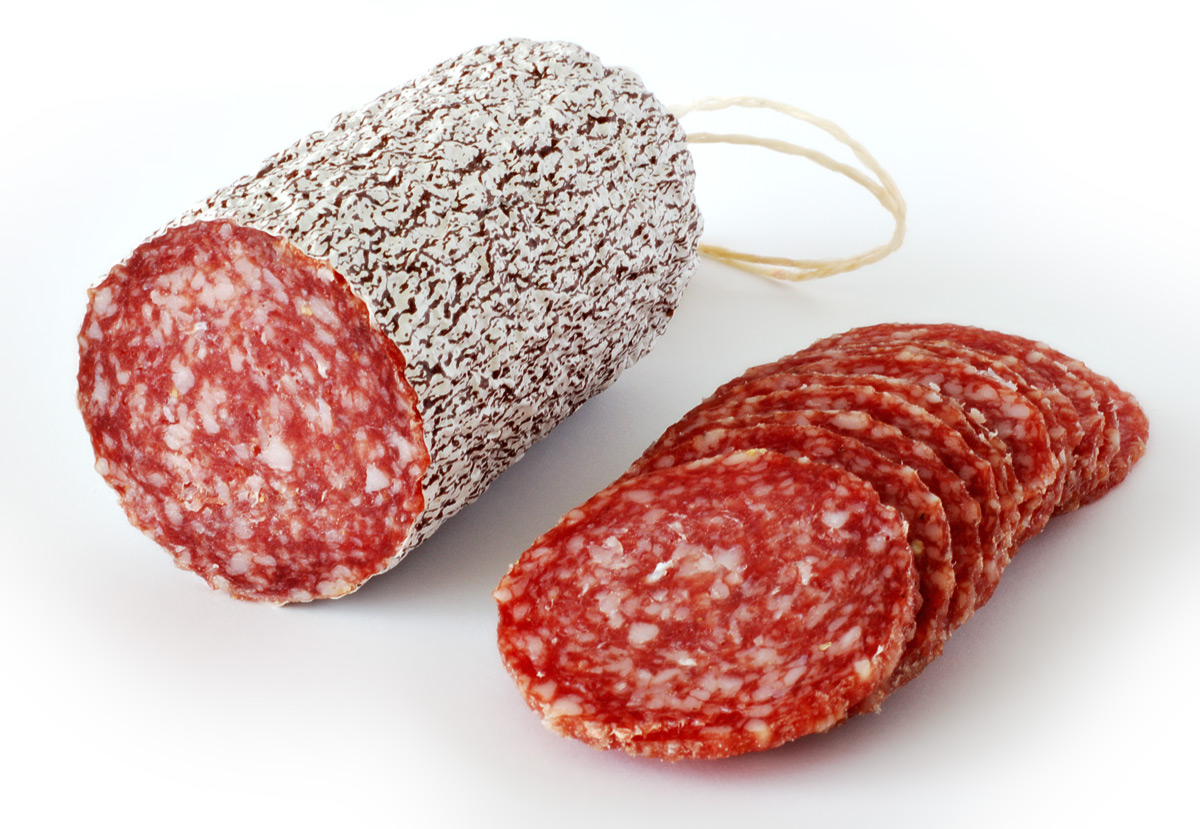
Noting that salami, an expensive food, is not eaten all at once, but is cut one slice at a time, Rákosi claimed he removed the influence of Hungary's leading, center-right, Smallholders' Party through a "step-by-step approach ... known as the 'Salami tactic,' and thanks to it we were able, day after day, to slice off, to cut up the reactionary forces skulking in the Smallholders' Party." By portraying his opponents as fascists (or at the very least fascist sympathizers), Rákosi was able to get the opposition to push out its own right wing, then its center, then the more independent-minded elements of the left wing, leaving only "fellow travellers" willing to collaborate with the Communists.[failed verification]
Another similar technique became known as the "Kékcédulás Választás", when ballot papers were forged so that one person can vote more than once.[relevant?] However, according to historian Norman Stone, the term might have been invented by Hungarian Independence Party leader Zoltán Pfeiffer, a hardline anti-communist opponent of Rákosi.
Hub AI
Salami slicing tactics AI simulator
(@Salami slicing tactics_simulator)
Salami slicing tactics
Salami slicing tactics, also known as salami slicing, salami tactics, the salami-slice strategy, or salami attacks, is the practice of using a series of many small actions to produce a much larger action or result that would be difficult or unlawful to perform all at once.
Salami slicing can be used to describe a divide and conquer process of threats and alliances to overcome opposition.
Salami tactics are a generally subversive strategy used extensively in geopolitics, such as countries attempting to expand their borders, and war games as a method of achieving goals gradually without provoking significant escalation.
Perhaps the most famous example of the salami tactic was through WWII and into the start of the Cold War, with the formation of the Eastern Bloc in Europe by the USSR. By the time WWII ended, Eastern Europe was under the control of the Soviets. This advantage was used to ensure the election of submissive communist satellite states in several countries. As a result, from 1945 to 1949 through a series of slices, the USSR was able to bring Albania, Czechoslovakia, Poland, Romania, Hungary, and East Germany under its control without escalating incidents between its near peer adversaries.
In finance, the term "salami attack" is used to describe schemes by which large sums are fraudulently accumulated by repeated transfers of imperceptibly small sums of money.
The first use of salami slicing in politics - and the original Hungarian term (Hungarian: szalámitaktika) - is commonly attributed to Hungarian politician Mátyás Rákosi, who described the actions of the Hungarian Communist Party in its acquisition of power in the Second Hungarian Republic.[page needed]
Noting that salami, an expensive food, is not eaten all at once, but is cut one slice at a time, Rákosi claimed he removed the influence of Hungary's leading, center-right, Smallholders' Party through a "step-by-step approach ... known as the 'Salami tactic,' and thanks to it we were able, day after day, to slice off, to cut up the reactionary forces skulking in the Smallholders' Party." By portraying his opponents as fascists (or at the very least fascist sympathizers), Rákosi was able to get the opposition to push out its own right wing, then its center, then the more independent-minded elements of the left wing, leaving only "fellow travellers" willing to collaborate with the Communists.[failed verification]
Another similar technique became known as the "Kékcédulás Választás", when ballot papers were forged so that one person can vote more than once.[relevant?] However, according to historian Norman Stone, the term might have been invented by Hungarian Independence Party leader Zoltán Pfeiffer, a hardline anti-communist opponent of Rákosi.
Recent media