


Community hub
Recent from talks
Contribute something
Nothing was collected or created yet.
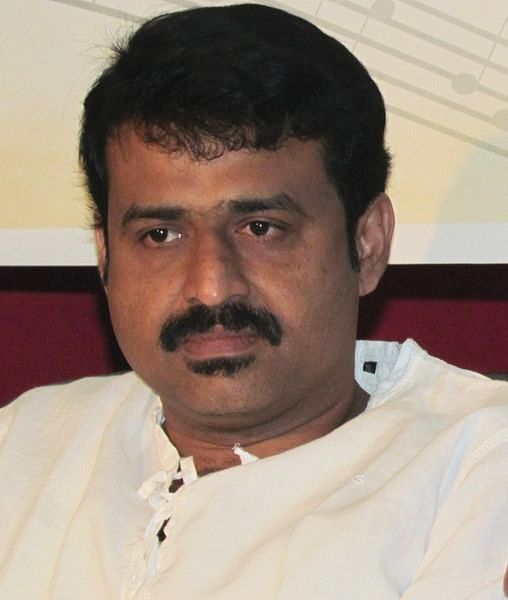
Salim Ahamed
View on Wikipedia
Salim Ahamed (born 6 July 1971) is an Indian film director, screen writer and producer. After working for a long time as a travel consultant, he joined as a creative director and script writer in a television channel. His directorial debut, Adaminte Makan Abu (2011), fetched him numerous accolades and was screened at various international film festivals. It was also chosen as India's official entry to be considered for nomination in the Best Foreign Film category for the 84th Academy Awards. Then he made two movies Kunjananthante Kada (2013) and Pathemari (2015) with Mammootty as the lead. The latter won the Best Feature Film In Malayalam award at the 63rd National Film Awards. Salim's latest film is And the Oscar Goes To...(2019), which tells about his own experiences with the production and marketing of his first film.[citation needed]
Key Information


Biography
[edit]Early life and family
[edit]Salim Ahamed was born on 6 July 1971 in Mattannur, Kerala,[1] as the son of Ahamed Kutty and Asya Umma.[2] He graduated in Commerce from Mattannur Pazhassiraja NSS College, and obtained a professional diploma in Travel and Tourism.[1][2] Upon graduating from college, Salim dreamed of joining the film industry but found it hard to break into and ended up a travel consultant.[3] For his passion, he joined the School of Drama in Thrissur, Kerala.[1] He worked as a Creative Director and Script Writer with Surya TV and then worked in films such as Saphalyam as an Assistant Director.[1] His notable works as a television director include Rasikaraja No.1, a comedy programme telecast in Surya TV.[2]
Salim is married to Mafeedha. They have three sons, Allen Zahar Ahamed, Amal Zahar Ahamed And Adam Zahar Ahamed. Salim Ahamed is now settled at Palottupalli, Mattanur.[2]
Adaminte Makan Abu
[edit]He made his feature film debut with Adaminte Makan Abu, a story he had entertained in his mind for many years.[4][5] The film portrayed the story of a poor attar (a kind of perfume) seller Abu whose only remaining wish in life is the Hajj pilgrimage, which he strives hard to fulfill, and at the verge of the fulfilment, he opts out when he fears that the means is not fully legitimate. Salim himself co-produced the film, and had to spend every rupee raised from what he had saved up over the years working on scripts for television serials and assisting directors to complete the film. The film opened to critical acclaim and fetched numerous honours including four National Film Awards and four Kerala State Film Awards.
The film was screened at various international film festivals: 55th BFI London Film Festival,[6] MAMI Mumbai Film Festival,[7] 8th South Asian International Film Festival (SAIFF),[8] 42nd International Film Festival of India,[9] 5th Indo-German Film Festival,[10] 17th Kolkata Film Festival,[11] 16th International Film Festival of Kerala (IFFK),[12] 23rd Palm Springs International Film Festival (PSIFF),[13] and 8th Dubai International Film Festival.[14]
Other projects
[edit]Salim had written three basic plots during his college days. One was based in a local school in Kerala, one was a thriller, and the third was the story of Abu. He decided to film Adaminte Makan Abu as a number of people liked the story line; he wanted his first film to have a message and to be impressive. It was reported that he had started the pre-production works of the one based in the local school,[4] as well as was planning to bring the story of Travancore king Marthanda Varma on big screen.[15] However, none of the projects materialised.
Salim officially announced his next project in September 2012. The project was titled Kunjananthante Kada and starred Mammootty in the lead role. The film started production in February 2013 and released in theatres in August 2013. Salim then directed the critically acclaimed Pathemari which follows the life of a Gulf migrant from Kerala who migrated when the Kerala Gulf boom was just beginning. The film won several awards including the National Film Award for Best Feature Film in Malayalam.
Filmography
[edit]As director
[edit]| Year | Title | Cast |
|---|---|---|
| 2011 | Adaminte Makan Abu | Salim Kumar, Zarina Wahab |
| 2013 | Kunjananthante Kada | Mammootty, Nyla Usha, Balachandra Menon |
| 2015 | Pathemari | Mammootty, Jewel Mary, Sreenivasan |
| 2019 | And The Oscar Goes To... | Tovino Thomas, Anu Sithara |
As producer
[edit]| Year | Title | Director | Ref. |
|---|---|---|---|
| 2022 | 1001 Nunakal | Thamar K. V. | [16] |
| 2025 | Mindiyum Paranjum | Arun Bose | [17] |
Awards
[edit]- Best Feature Film – Adaminte Makan Abu
- Best Feature Film In Malayalam- Pathemari (2015)[18]
- Best Film – Adaminte Makan Abu
- Best Screenplay – Adaminte Makan Abu
- Longlisted for Best Foreign Film nomination – Adaminte Makan Abu[21]
- Best Outstanding Indian Film – Adaminte Makan Abu
- Best Debut Director – Adaminte Makan Abu
- 2013 – Asiavision Awards – Socially Committed Movie – Kunjananthante Kada[23]
- Kazan International Festival of Muslim Cinema (Golden Minbar International Film Festival)[24][25]
- The Best Feature Film Scenario – Adaminte Makan Abu
- The Prize of the Guild of Film Critics and Film scholars of Russia – Adaminte Makan Abu
- Special Jury Award for Best Film (Silver Peacock) – Adaminte Makan Abu
- NETPAC Award for Best Malayalam Film – Adaminte Makan Abu
- FIPRESCI Award for Best Malayalam Film – Adaminte Makan Abu
- Hassankutty Award for Best Indian Debut Director – Adaminte Makan Abu
- Thikkurissy Foundation Awards (2012)[28]
- Best Film – Adaminte Makan Abu
- Best Director – Adaminte Makan Abu
- Others
References
[edit]- ^ a b c d "Director: Salim Ahamed". Kolkata Film Festival. November 2011. Archived from the original on 6 April 2012. Retrieved 8 December 2011.
- ^ a b c d "മട്ടന്നൂരിന്റെ സലിം ദേശീയ ശ്രദ്ധയില്". Mathrubhumi (in Malayalam). 20 May 2011. Archived from the original on 13 August 2014. Retrieved 8 December 2011.
- ^ Divya Kumar. (20 June 2011). "Salim's story" Archived 25 October 2012 at the Wayback Machine. The Hindu. Retrieved 8 December 2011.
- ^ a b Parvati Jayaraman (11 November 2011). "Pilgrim's progress" Archived 13 April 2024 at the Wayback Machine. Mint. Retrieved 8 December 2011.
- ^ Minu Ittyipe. (5 December 2011). "Kodak Moment" Archived 8 December 2011 at the Wayback Machine. Outlook. Retrieved 8 December 2011.
- ^ Cary Rajinder Sawhney (13 October 2011). "Abu, Son of Adam". British Film Institute. Archived from the original on 10 October 2011. Retrieved 9 November 2011.
- ^ "Mumbai Film Festival Time Schedule" Archived 13 April 2024 at the Wayback Machine. Mumbai Film Festival. Retrieved 9 November 2011.
- ^ "Opening Night" Archived 8 December 2011 at the Wayback Machine. South Asian International Film Festival. 9 November 2011. Retrieved 9 November 2011.
- ^ "Urumi, Adaminte Makan Abu in Goa Film Festival". Oneindia.in. 19 October 2011. Archived from the original on 23 May 2013. Retrieved 26 October 2011.
- ^ Pratima Chabbi. (17 November 2011). "2 nations, 1 screen". Bangalore Mirror. Retrieved 8 December 2011.
- ^ "Films » Adaminte Makan Abu (Abu, Son of Adam)" Archived 13 April 2024 at the Wayback Machine. Kolkata Film Festival. November 2011. Retrieved 8 December 2011.
- ^ "Nine Malayalam films to be screened at IFFK". IBN Live. 19 October 2011. Archived from the original on 12 October 2013. Retrieved 26 October 2011.
- ^ "Festival Flight" Archived 13 April 2024 at the Wayback Machine. Indian Express. Retrieved 2 December 2011.
- ^ "ദുബൈ രാജ്യാന്തര ചലച്ചിത്രോല്സവത്തില് ഇന്ത്യന് സിനിമക്ക് അംഗീകാരം" Archived 29 October 2011 at the Wayback Machine. (in Malayalam). Madhyamam. 28 October 2011. Retrieved 9 November 2011.
- ^ Sanjith Sidhardhan (8 November 2011). "Legends to rise again in 2012". The Times of India. Archived from the original on 21 September 2013. Retrieved 8 December 2011.
- ^ "'1001 Nunakal' trailer promises an intriguing drama filled with emotions". The Times of India. 9 August 2023. ISSN 0971-8257. Archived from the original on 27 August 2023. Retrieved 27 August 2023.
- ^ Desk, Cinema Express (6 December 2025). "Unni Mukundan-Aparna Balamurali's Mindiyum Paranjum finally gets release date". Cinema Express. Retrieved 17 December 2025.
{{cite web}}:|last=has generic name (help) - ^ "Mammootty starrer Pathemari won the Best Malayalam Film Award at the 63rd National Film Awards". Behindwoods. 28 March 2016. Archived from the original on 31 March 2016. Retrieved 1 April 2016.
- ^ "Kerala State Film Awards 2010 Declaration" (PDF) (in Malayalam). Kerala State Chalachitra Academy. 22 May 2011. Archived from the original (PDF) on 30 September 2011. Retrieved 8 December 2011.
- ^ "Adaminte Makan Abu adjudged best film". The Hindu. Chennai, India. 23 May 2011. Archived from the original on 26 May 2011. Retrieved 8 December 2011.
- ^ "63 Countries Vie for 2011 Foreign Language Film Oscar". Oscars.org. Archived from the original on 18 May 2012. Retrieved 8 December 2011.
- ^ "Asiavision Movie Awards 2011 – Winners". Asiavisionawards.com. Archived from the original on 25 January 2012. Retrieved 16 January 2012.
- ^ "Mammotty, Kavya Madhavan bag Asiavision awards - Entertainment - Emirates24|7". 5 November 2013. Archived from the original on 4 March 2016. Retrieved 7 January 2014.
- ^ Priya Sreekumar. (15 September 2012). "Salim Ahmed bags two awards at international fest" Archived 15 September 2012 at the Wayback Machine. Deccan Chronicle. Retrieved 21 September 2012.
- ^ "The winners of the Eighth Kazan International Muslim Film Festival" Archived 4 October 2012 at the Wayback Machine. Kazan International Festival of Muslim Cinema. 11 September 2012. Retrieved 21 September 2012.
- ^ T. Ramavarman. (3 December 2011). "Special Jury Award for Adaminte Makan Abu at IFFI". Times of India. Retrieved 8 December 2011.
- ^
- "16th IFFK Awards". International Film Festival of Kerala. December 2011. Archived from the original on 7 November 2008. Retrieved 30 December 2011.
- ^ Press Trust of India (7 January 2012). "'Aadminte Makan Abu chosen best film by Thikkurissy foundation". IBN Live. Archived from the original on 19 January 2012. Retrieved 8 January 2012.
- ^ "പ്രാഞ്ചിയേട്ടന് മൂന്ന് അവാർഡ്". Kaumudi Plus (in Malayalam). 17 June 2011. Archived from the original on 19 June 2011. Retrieved 8 December 2011.
- ^ "Shihab Thangal Cultural Award For Salem Ahmed". Yentha.com. 11 January 2012. Archived from the original on 13 January 2012. Retrieved 12 January 2012.
- ^ "Salem Ahamed bags award". Kerala Kaumudi. 12 January 2012. Archived from the original on 10 September 2015. Retrieved 12 January 2012.
External links
[edit]- Salim Ahamed at IMDb
Salim Ahamed
View on GrokipediaEarly life and education
Family background
Salim Ahamed was born in Mattannur, a town in the Kannur district of northern Kerala, India. He grew up in a family that emphasized athletics and community events in the region, contributing to his own early engagement with physical activities.[5][6] As a child in Mattannur, Ahamed was deeply influenced by the town's vibrant cultural scene, which included traditional arts and performances. He developed an early passion for storytelling through his participation in mimicry, joining the popular troupe Chaplins India, where he performed imitations and comedic narratives that captivated local audiences. This exposure to performative arts, combined with the communal storytelling traditions of northern Kerala, laid the foundation for his creative inclinations.[5] His family's legacy and the area's emphasis on collective endeavors further shaped his upbringing, fostering a sense of discipline and narrative drive that transitioned into his later academic pursuits.[5]Academic pursuits and early career
Salim Ahamed completed his secondary education in Mattannur, North Kerala, where he was born and raised. During his school years, he demonstrated a keen interest in extracurricular activities, excelling in volleyball—representing Kerala at the National junior championship—and mimicry, performing with the Chaplins India troupe. These early engagements in sports and performing arts laid the foundation for his creative inclinations.[5] Ahamed pursued higher education with a focus on commerce, graduating with a degree in the field from Mattannur Pazhassiraja NSS College, followed by a professional diploma in Travel and Tourism. His academic background equipped him with practical skills for the professional world, though his passion increasingly leaned toward the arts. To nurture this interest, he enrolled at the School of Drama and Fine Arts in Thrissur, Kerala, engaging in theater training, but ultimately did not complete the program.[7][5] Upon graduation, Ahamed embarked on his early career as a travel consultant in the airline and travel industry, a role he held for five years. This position offered extensive international exposure, involving interactions with diverse cultures and travelers, including elderly Haj pilgrims whose personal narratives profoundly shaped his worldview and storytelling sensibilities. During this time, Ahamed cultivated his cinematic interests through self-directed reading of literature and scripts, continued involvement in theater and mimicry, and independent writing of multiple story ideas. These pursuits, sustained alongside his professional commitments, gradually transitioned his focus toward creative expression.[8][7][5]Professional career
Entry into filmmaking
After graduating with a commerce degree in the early 2000s, Salim Ahamed initially pursued a career in the travel industry, working for five years at a travel agency where he interacted with elderly Hajj pilgrims whose personal stories profoundly influenced his storytelling sensibilities.[8] These experiences, particularly encounters with passengers at East-West Airlines around 1999, sparked his interest in narrative-driven projects centered on human aspirations and cultural journeys.[9] By the mid-2000s, Ahamed transitioned from travel consultancy to creative pursuits, enrolling briefly in a Bachelor of Theatre Arts program at Calicut University before dropping out to focus on writing.[9] Ahamed's entry into the Malayalam film ecosystem began through scriptwriting roles, where he served as an assistant to established screenwriter T.A. Razak and later as a writer and creative director at Surya TV for another five years.[8] During this period, he honed his skills by contributing to television content, including directing reality shows to generate funds for his own ambitions, and assisted as a director on a single film project.[9] Over a decade, he penned 12 scripts, drawing from his observational insights into Kerala's social fabric, which built his foundational expertise in narrative construction.[8] Through these engagements, Ahamed networked within Kerala's film circles, forging key connections such as with cinematographer Madhu Ambat, who provided both technical guidance and financial support for his independent ventures.[8] This collaboration, alongside interactions in television and scriptwriting communities, empowered him to decide on directing independently rather than continuing as a behind-the-scenes contributor.[9] As a newcomer, he faced significant hurdles, including a decade-long struggle to secure producers who aligned with his vision, with budgets for initial ideas ballooning unexpectedly and requiring personal funding from friends and reduced actor fees to proceed.[8][9]Directorial projects
Salim Ahamed made his directorial debut with Adaminte Makan Abu (2011), a poignant exploration of faith, sacrifice, and the aspirations of the elderly within a Muslim community in Kerala. The film centers on an aging couple's lifelong dream of undertaking the Hajj pilgrimage, highlighting their quiet devotion and the personal costs of pursuing spiritual fulfillment amid modest circumstances.[10] Ahamed's second directorial effort, Kunjananthante Kada (2013), depicts a small-time shopkeeper in Kannur and his attempt to find his own place in a rapidly changing world, addressing themes of nostalgia, modernization, and personal relationships.[11] In Pathemari (2015), Ahamed delved into the experiences of Gulf migration, portraying the emotional toll of family separation and the socio-economic challenges faced by Kerala migrants over decades. The narrative traces a laborer's journey from the early 1960s Gulf boom to later years, underscoring the hardships and bittersweet rewards of diaspora life that reshaped Kerala's social fabric.[12] Ahamed's fourth directorial venture, And the Oscar Goes To... (2019), shifted to a satirical drama examining the dreams and ambitions within the filmmaking industry. It critiques the pursuit of recognition and the absurdities of creative aspirations through the story of a struggling young filmmaker navigating production challenges and industry dynamics.[13] Across his films, Ahamed employs a realistic style that captures the nuances of everyday lives, emphasizing character-driven narratives rooted in authentic human emotions and subtle social commentary on Kerala society.[14] His work evolves from intimate portrayals of family and personal faith in his debut to explorations of tradition versus modernity, broader critiques of migration's cultural impacts, and the entertainment world's illusions, reflecting a growing scope in addressing societal transformations.[12]Producing and writing contributions
Salim Ahamed served as producer for the 2013 Malayalam drama Kunjananthante Kada, which he also wrote and directed, handling funding through his banner Allens Media while contributing creatively through the screenplay that centered on a shopkeeper's struggle against displacement.[11][15] In 2023, Ahamed produced 1001 Nunakal, an ensemble drama delving into themes of friendships, secrets, and moral dilemmas triggered by a chain of lies among a group of friends, marking his support for debut director Thamar K.V. by providing financial backing and production oversight under Allens Media.[16][17][18][19] Ahamed's screenwriting credits are predominantly linked to his directorial works, such as Adaminte Makan Abu (2011) and Pathemari (2015), though he provided story contributions to the 2024 Bollywood film Khudai, directed by Yusuf Ali Khan.[20] Through his producing efforts, Ahamed has emphasized championing socially relevant narratives and emerging talents in Malayalam cinema, as seen in his decision to back Thamar K.V.'s debut project exploring interpersonal deceptions and ethical conflicts.[17] In April 2025, Ahamed announced an untitled project in collaboration with Newton Cinema, with principal photography commencing that month in Kasaragod, representing his return to filmmaking after a six-year hiatus from direction.[4]Filmography
As director
Salim Ahamed's directorial debut was Adaminte Makan Abu (2011), which he also wrote and co-produced, starring Salim Kumar in the lead role as an aging perfume seller whose lifelong dream is to undertake the Hajj pilgrimage to Mecca with his family, highlighting themes of sacrifice and faith.[21] His second feature, Kunjananthante Kada (2013), which he also wrote, is a biographical drama about the life of Kunjananthan, a legendary Kerala theater artist, starring Mammootty in the title role.[22] His third feature, Pathemari (2015), which he directed and wrote, features Mammootty as Pallikkal Narayanan, chronicling the struggles and joys of a Malayali migrant's life in the Gulf from the 1960s onward, spanning five decades of diaspora experiences.[23] In 2019, Ahamed directed and wrote And the Oscar Goes To..., starring Tovino Thomas as the aspiring filmmaker Isaak Ebrahem, who pours everything into his debut film that unexpectedly becomes India's Oscar entry, satirizing the pursuit of cinematic recognition amid personal sacrifices.[24]As producer
Salim Ahamed has produced several Malayalam films outside his directorial works, often backing projects that explore interpersonal relationships and societal nuances akin to the social themes in his own directing style. His notable production credits include:| Year | Title | Director | Logline |
|---|---|---|---|
| 2022 | Sundari Gardens | Charlie Davis | A romantic drama following a quirky school librarian who develops feelings for the new English teacher amid everyday school life.[25] |
| 2023 | 1001 Nunakal | Thamar K. V. | An anthology ensemble depicting interconnected real-life stories of hidden truths and secrets within Gulf Malayali families.[16] |
| TBA | Mindiyum Paranjum | Arun Bose | A mature romantic drama tracing the evolving phases of a married couple's relationship from Cochin to the landscapes of Idukki (upcoming).[26] |
Awards and recognition
National Film Awards
Salim Ahamed's directorial debut, Adaminte Makan Abu (2011), received significant recognition at the 58th National Film Awards, earning the top honor of Best Feature Film for its poignant portrayal of a Muslim couple's lifelong aspiration for the Hajj pilgrimage.[1] The film also secured awards for Best Actor (Salim Kumar), Best Cinematography (Madhu Ambat), and Best Music Direction (Background Score) by Isaac Thomas Kottukapally, highlighting its technical and performative excellence in depicting themes of faith and family.[27] In addition to these accolades, Adaminte Makan Abu was selected as India's official entry for the Best Foreign Language Film category at the 84th Academy Awards, underscoring its international appeal and universal humanist values as chosen by the Film Federation of India.[28] Ahamed's subsequent film, Pathemari (2015), won the Best Feature Film in Malayalam at the 63rd National Film Awards, praised for its artistic narrative on the struggles of Gulf migrant workers across two generations.[29] This recognition affirmed Ahamed's consistent ability to address social issues through compelling storytelling in Malayalam cinema.[30]| Film | Year of Award | Category | Notes |
|---|---|---|---|
| Adaminte Makan Abu | 58th (2011) | Best Feature Film | Producer and Director: Salim Ahamed |
| Adaminte Makan Abu | 58th (2011) | Best Actor | Salim Kumar |
| Adaminte Makan Abu | 58th (2011) | Best Cinematography | Madhu Ambat |
| Adaminte Makan Abu | 58th (2011) | Best Music Direction (Background Score) | Isaac Thomas Kottukapally |
| Adaminte Makan Abu | 2011 | India's Oscar Entry | Best Foreign Language Film category |
| Pathemari | 63rd (2016) | Best Feature Film in Malayalam | Director: Salim Ahamed |