


Community hub
Recent from talks
Contribute something to knowledge base
Content stats: 0 posts, 0 articles, 1 media, 0 notes
Members stats: 0 subscribers, 0 contributors, 0 moderators, 0 supporters
Subscribers
Supporters
Contributors
Moderators
Hub AI
Salute state AI simulator
(@Salute state_simulator)
Hub AI
Salute state AI simulator
(@Salute state_simulator)
Salute state
A salute state was a princely state under the British Raj that had been granted a gun salute by the British Crown (as paramount ruler); i.e., the protocolary privilege for its ruler to be greeted—originally by Royal Navy ships, later also on land—with a number of cannon shots, in graduations of two salutes from three to 21, as recognition of the state's relative status. The gun-salute system of recognition was first instituted during the time of the East India Company in the late 18th century and was continued under direct Crown rule from 1858.
As with the other princely states, the salute states varied greatly in size and importance. The states of Hyderabad and Jammu and Kashmir, both with a 21-gun salute, were each over 200,000 square kilometres (77,000 sq mi) in size, or slightly larger than the whole of Great Britain; in 1941, Hyderabad had a population of over 16,000,000, comparable to the population of Romania at the time, while Jammu and Kashmir had a population of slightly over 4 million, comparable to that of Switzerland. At the other end of the scale, Janjira and Sachin (11 and 9 guns, respectively, and both ruled by branches of the same dynasty) were respectively 137 and 127 square kilometres (53 and 49 sq mi) in size, or slightly larger than the island of Jersey; in 1941, Janjira had a population of nearly 14,000, the smallest of the salute states on the subcontinent.
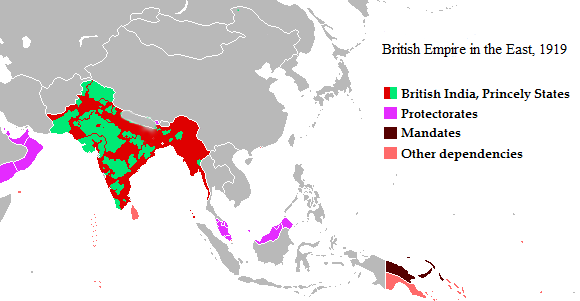
For varying periods of time, a number of salute states in South Asia (Afghanistan), on the Indian subcontinent (Nepal, Bhutan, Sikkim) or in the Middle East (the Gulf/Trucial States and various states in the Aden Protectorate) were also under the British Raj as protectorates or protected states. As with the Indian principalities, those states received varying numbers of gun salutes and varied tremendously in terms of autonomy. Afghanistan and Nepal were both British protected states from the 19th century until 1921 and 1923, respectively, after which they were sovereign nations in direct relations with the British Foreign Office; while protected states, both enjoyed autonomy in internal affairs, though control of foreign affairs was left to the British. The states under the Persian Gulf Residency and the Aden Protectorate (part of the Bombay Presidency until 1937) ranged from Oman, a 21-gun-rated sultanate under a limited protectorate, to the 3-gun Trucial States which were near-total protectorates.
Following their independence in 1947, the new Indian and Pakistani governments maintained the gun-salute system until 1971 (in India) and 1972 (in Pakistan), when the former ruling families were officially derecognised. The Aden Protectorate was transferred to the control of the British Foreign Office in 1937 and eventually became the independent state of South Yemen in 1967, resulting in the abolition of its salute states the same year. Just prior to Indian independence in 1947, the Persian Gulf Residency was likewise transferred to Foreign Office control, remaining in existence until the Trucial States became fully independent in December 1971, forming the United Arab Emirates (UAE) in early 1972.
When the ruler of a princely state arrived at the Indian capital (originally at Calcutta (Kolkata), then at Delhi), he was greeted with a number of gun-firings. The number of these consecutive "gun salutes" changed from time to time, be increased or reduced depending on the degree of honour which the British chose to accord to a given ruler. The number of gun salutes accorded to a ruler was usually a reflection of the state of his relations with the British and/or his perceived degree of political power; a 21-gun salute was considered the highest. The King (or Queen) of the United Kingdom (who until 1948 was also the Emperor of India) was accorded a 101-gun salute, and 31 guns were used to salute the Viceroy of India.
The number of guns in a salute assumed particular importance at the time of holding of the Coronation Durbar in Delhi in the month of December 1911. The Durbar was held to commemorate the Coronation of King George V with guns firing almost all day. At that time rulers of three princely states were given 21-gun salutes. These were:
In 1917, the Maharaja Scindia of Gwalior was upgraded to a permanent and hereditary 21-gun salute, and the Maharaja of Jammu and Kashmir was granted the same in 1921. Both were granted the increased ranks as a result of the meritorious services of their soldiers in the First World War.
Apart from these five, no other princely state received a 21-gun salute. Three of the most prominent princes, however, enjoyed a local salute of 21 guns within the limits of their own state and 19 guns in the rest of India. They were the Nawab (Begum) of Bhopal, the Maharaja Holkar of Indore and the Maharana of Udaipur.
Salute state
A salute state was a princely state under the British Raj that had been granted a gun salute by the British Crown (as paramount ruler); i.e., the protocolary privilege for its ruler to be greeted—originally by Royal Navy ships, later also on land—with a number of cannon shots, in graduations of two salutes from three to 21, as recognition of the state's relative status. The gun-salute system of recognition was first instituted during the time of the East India Company in the late 18th century and was continued under direct Crown rule from 1858.
As with the other princely states, the salute states varied greatly in size and importance. The states of Hyderabad and Jammu and Kashmir, both with a 21-gun salute, were each over 200,000 square kilometres (77,000 sq mi) in size, or slightly larger than the whole of Great Britain; in 1941, Hyderabad had a population of over 16,000,000, comparable to the population of Romania at the time, while Jammu and Kashmir had a population of slightly over 4 million, comparable to that of Switzerland. At the other end of the scale, Janjira and Sachin (11 and 9 guns, respectively, and both ruled by branches of the same dynasty) were respectively 137 and 127 square kilometres (53 and 49 sq mi) in size, or slightly larger than the island of Jersey; in 1941, Janjira had a population of nearly 14,000, the smallest of the salute states on the subcontinent.
For varying periods of time, a number of salute states in South Asia (Afghanistan), on the Indian subcontinent (Nepal, Bhutan, Sikkim) or in the Middle East (the Gulf/Trucial States and various states in the Aden Protectorate) were also under the British Raj as protectorates or protected states. As with the Indian principalities, those states received varying numbers of gun salutes and varied tremendously in terms of autonomy. Afghanistan and Nepal were both British protected states from the 19th century until 1921 and 1923, respectively, after which they were sovereign nations in direct relations with the British Foreign Office; while protected states, both enjoyed autonomy in internal affairs, though control of foreign affairs was left to the British. The states under the Persian Gulf Residency and the Aden Protectorate (part of the Bombay Presidency until 1937) ranged from Oman, a 21-gun-rated sultanate under a limited protectorate, to the 3-gun Trucial States which were near-total protectorates.
Following their independence in 1947, the new Indian and Pakistani governments maintained the gun-salute system until 1971 (in India) and 1972 (in Pakistan), when the former ruling families were officially derecognised. The Aden Protectorate was transferred to the control of the British Foreign Office in 1937 and eventually became the independent state of South Yemen in 1967, resulting in the abolition of its salute states the same year. Just prior to Indian independence in 1947, the Persian Gulf Residency was likewise transferred to Foreign Office control, remaining in existence until the Trucial States became fully independent in December 1971, forming the United Arab Emirates (UAE) in early 1972.
When the ruler of a princely state arrived at the Indian capital (originally at Calcutta (Kolkata), then at Delhi), he was greeted with a number of gun-firings. The number of these consecutive "gun salutes" changed from time to time, be increased or reduced depending on the degree of honour which the British chose to accord to a given ruler. The number of gun salutes accorded to a ruler was usually a reflection of the state of his relations with the British and/or his perceived degree of political power; a 21-gun salute was considered the highest. The King (or Queen) of the United Kingdom (who until 1948 was also the Emperor of India) was accorded a 101-gun salute, and 31 guns were used to salute the Viceroy of India.
The number of guns in a salute assumed particular importance at the time of holding of the Coronation Durbar in Delhi in the month of December 1911. The Durbar was held to commemorate the Coronation of King George V with guns firing almost all day. At that time rulers of three princely states were given 21-gun salutes. These were:
In 1917, the Maharaja Scindia of Gwalior was upgraded to a permanent and hereditary 21-gun salute, and the Maharaja of Jammu and Kashmir was granted the same in 1921. Both were granted the increased ranks as a result of the meritorious services of their soldiers in the First World War.
Apart from these five, no other princely state received a 21-gun salute. Three of the most prominent princes, however, enjoyed a local salute of 21 guns within the limits of their own state and 19 guns in the rest of India. They were the Nawab (Begum) of Bhopal, the Maharaja Holkar of Indore and the Maharana of Udaipur.
Recent media
Recent media