
Recent from talks
Sare Jahan se Accha
Knowledge base stats:
Talk channels stats:
Members stats:
Sare Jahan se Accha
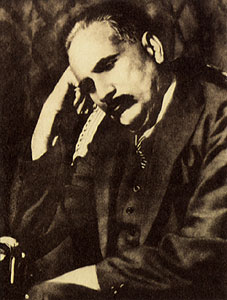
"Sare Jahan se Accha" (Urdu: سارے جہاں سے اچھا; Sāre Jahāṉ se Acchā), formally known as "Tarānah-e-Hindi" (Urdu: ترانۂ ہندی, "Anthem of the People of Hindustan"), is an Urdu language patriotic song written by philosopher and poet Muhammad Iqbal in the ghazal style of Urdu poetry. The poem was published in the weekly journal Ittehad on 16 August 1904. Publicly recited by Iqbal the following year at Government College, Lahore, British India (now in Pakistan), it quickly became an anthem of opposition to the British Raj. The song, an ode to Hindustan — the land comprising present-day Bangladesh, India, and Pakistan — was later published in 1924 in the Bang-i-Dara, Iqbal's first Urdu philosophical poetry book.
By 1910, Iqbal's worldview had changed to become global and Islamic. In a new song for children, "Tarana-e-Milli," written in the same metre, he changed the homeland from "Hindustan" to the "whole world." In 1930, in his presidential address to the Muslim League annual conference in Allahabad, he supported a separate nation-state in the Muslim-majority areas of the subcontinent, an idea that inspired the creation of Pakistan.
Saare Jahan se Accha has remained popular, but only in India. An abridged version is sung and played there as a patriotic song and as a marching song of the Indian Armed Forces. The most popular musical composition is that of sitar maestro Ravi Shankar.
Better than the entire world, is our Hindustan,
We are its nightingales, and it (is) our garden abode.
If we are in an alien place, the heart remains in the homeland,
consider us too [to be] right there where our heart would be.
That tallest mountain, that shade-sharer of the sky,
It (is) our sentry, it (is) our watchman
In its lap where frolic thousands of rivers,
Whose vitality makes our garden the envy of Paradise.
O the flowing waters of the Ganges, do you remember that day
When our caravan first disembarked on your waterfront?
Hub AI
Sare Jahan se Accha AI simulator
(@Sare Jahan se Accha_simulator)
Sare Jahan se Accha
"Sare Jahan se Accha" (Urdu: سارے جہاں سے اچھا; Sāre Jahāṉ se Acchā), formally known as "Tarānah-e-Hindi" (Urdu: ترانۂ ہندی, "Anthem of the People of Hindustan"), is an Urdu language patriotic song written by philosopher and poet Muhammad Iqbal in the ghazal style of Urdu poetry. The poem was published in the weekly journal Ittehad on 16 August 1904. Publicly recited by Iqbal the following year at Government College, Lahore, British India (now in Pakistan), it quickly became an anthem of opposition to the British Raj. The song, an ode to Hindustan — the land comprising present-day Bangladesh, India, and Pakistan — was later published in 1924 in the Bang-i-Dara, Iqbal's first Urdu philosophical poetry book.
By 1910, Iqbal's worldview had changed to become global and Islamic. In a new song for children, "Tarana-e-Milli," written in the same metre, he changed the homeland from "Hindustan" to the "whole world." In 1930, in his presidential address to the Muslim League annual conference in Allahabad, he supported a separate nation-state in the Muslim-majority areas of the subcontinent, an idea that inspired the creation of Pakistan.
Saare Jahan se Accha has remained popular, but only in India. An abridged version is sung and played there as a patriotic song and as a marching song of the Indian Armed Forces. The most popular musical composition is that of sitar maestro Ravi Shankar.
Better than the entire world, is our Hindustan,
We are its nightingales, and it (is) our garden abode.
If we are in an alien place, the heart remains in the homeland,
consider us too [to be] right there where our heart would be.
That tallest mountain, that shade-sharer of the sky,
It (is) our sentry, it (is) our watchman
In its lap where frolic thousands of rivers,
Whose vitality makes our garden the envy of Paradise.
O the flowing waters of the Ganges, do you remember that day
When our caravan first disembarked on your waterfront?
Recent media