


Community hub
Recent from talks
Contribute something
Nothing was collected or created yet.
Sases
View on Wikipedia
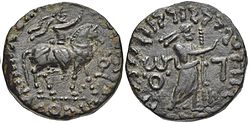
Sases, also known as Gondophares IV Sases (Kharosthi: 𐨒𐨂𐨡𐨂𐨥𐨪 𐨯𐨯 Gu-du-pha-ra Sa-sa, Guduphara Sasa[1][2]), sometimes Sasan, was an Indo-Parthian king and Apracharaja[3] who ruled in Gandhara. He is only known from coins and ruled for at least 26 years after succeeding Gondophares.[4] At some point during his reign he assumed the title Gondophares, which was held by the supreme Indo-Parthian rulers.
Key Information


With the modern datings supplied by Robert Senior, Gondophares IV is a likely candidate for several possible historical references to Indo-Parthian kings of the 1st century AD. Traditionally, these references have been thought to be about Gondophares I, as earlier scholars did not realise that "Gondophares" became a title after the death of this king, just as the name of the first emperor, Augustus, in the Roman Empire, was used by all later emperors as a title.[5]
Rule
[edit]
During the dominion of the Indo-Parthians, Apracharaja Sasan, as described on numismatic evidence identifying him as the nephew of Aspavarma,[7] emerged as a figure of significance.[8] Aspavarman, a preceding Apracharaja contemporaneous with Gondophares, was succeeded by Sasan, after having ascended from a subordinate governance role to a recognized position as one of Gondophares's successors.[9] He assumed the position following Abdagases I.[10]
The Kushan ruler Vima Takto is known through numismatic evidence to have overstruck the coins of Sasan, whilst a numismatic hoard had found coins of Sasan together with smaller coins of Kujula Kadphises[11][12] It has also been discovered that Sasan overstruck the coins of Nahapana of the Western Satraps, this line of coinage dating between 40 and 78 AD.[13]
Connection with Phraotes
[edit]
In the 1st century CE, Phraotes, a Greek-speaking king of the city of Taxila, was met by the philosopher Apollonius of Tyana dated approximately to 46 CE, according to the Life of Apollonius Tyana written by Philostratus. The Gondophares who fits this date is Gondophares IV Sases, whose coinage has been dated to 40-78 AD.[14] Apollionus describes the king as an Indian.[15]
They describe Phraotes' residence, Taxila, as being the same size as Nineveh, being walled like a Greek city whilst also being shaped with Narrow roads,[16][17] and further describe Phraotes kingdom as containing the old territory of Porus.[18] Following an exchange with the king, Phraotes is reported to have subsidized both barbarians and neighboring states, with the objective of averting incursions into his kingdom.[19] Phraotes also recounts that his father, being the son of a king, had become an orphan from a young age. In accordance with Indian customs, two of his relatives assumed responsibility for his upbringing until they were killed by rebellious nobles during a ritualistic ceremony along the Indus River.[20] This event led to the usurpation of the throne, compelling Phraotes' father to seek refuge with the king situated beyond the Hydaspes River, in modern-day Punjab, a ruler esteemed greater than Phraotes' father. Moreover, Phraotes states that his father, received an education facilitated by the Brahmins upon request to the king and married the daughter of the Hydaspian king, whilst having one son that was Phraotes himself.[21] Phraotes proceeds to narrate the opportune moment he seized to reclaim his ancestral kingdom, sparked by a rebellion of the citizens of Taxila against the usurpers. With fervent support from the populace, Phraotes led a triumphant entry into the residence of the usurpers, whilst the citizens brandished torches, swords, and bows in a display of unified resistance.[22]
Family tree
[edit]| Apracharajas | |||||||||||||||||||||||||||||||||||||||||||||||||||||||||||||||||||||||||||||||||||||||||||||||||||||||||||||||||||||||||||||||||||||||||||||||||||||||||||||||||||||||||||||||||||||||||||||||||||||||||||||||||||||||||||||||||||||||||||||||||||||||||||||||||||||||||||||||||||||||||||||||||||||||||||||||||||||||||||||||||||||||||||||||||||||||||||||||||||||||||||||||||||||||||||||||||||||||||||||||||||||||||||||||||||||||||||||||||||||||||||||||||||||||||||||||||||||||||||||||||||||||||||||||||||||||||||||||||||||||||||||||||||||||||||||||||||||||||||||||||||||||||||||||||||||||||||||||||||||||||||||||||||||||||||||||||||||||||||||||||||||||||||||||||||||||||||||||||||||||||||||||||||||||||||||||||||||||||||||||||||||||||||||||||||||||||||||||||||||||||||||||||||||||||||||||||||||||||||||||||||||||||||||||||||||||||||||||||||||||||||||||||||||||||||||||||||||||||||||||||||||||||||||||||||||||||||||||||||||||||||||||||||||||||||||||||||||||||||||||||||||||||||||||||||||||||||||||||||||||
|---|---|---|---|---|---|---|---|---|---|---|---|---|---|---|---|---|---|---|---|---|---|---|---|---|---|---|---|---|---|---|---|---|---|---|---|---|---|---|---|---|---|---|---|---|---|---|---|---|---|---|---|---|---|---|---|---|---|---|---|---|---|---|---|---|---|---|---|---|---|---|---|---|---|---|---|---|---|---|---|---|---|---|---|---|---|---|---|---|---|---|---|---|---|---|---|---|---|---|---|---|---|---|---|---|---|---|---|---|---|---|---|---|---|---|---|---|---|---|---|---|---|---|---|---|---|---|---|---|---|---|---|---|---|---|---|---|---|---|---|---|---|---|---|---|---|---|---|---|---|---|---|---|---|---|---|---|---|---|---|---|---|---|---|---|---|---|---|---|---|---|---|---|---|---|---|---|---|---|---|---|---|---|---|---|---|---|---|---|---|---|---|---|---|---|---|---|---|---|---|---|---|---|---|---|---|---|---|---|---|---|---|---|---|---|---|---|---|---|---|---|---|---|---|---|---|---|---|---|---|---|---|---|---|---|---|---|---|---|---|---|---|---|---|---|---|---|---|---|---|---|---|---|---|---|---|---|---|---|---|---|---|---|---|---|---|---|---|---|---|---|---|---|---|---|---|---|---|---|---|---|---|---|---|---|---|---|---|---|---|---|---|---|---|---|---|---|---|---|---|---|---|---|---|---|---|---|---|---|---|---|---|---|---|---|---|---|---|---|---|---|---|---|---|---|---|---|---|---|---|---|---|---|---|---|---|---|---|---|---|---|---|---|---|---|---|---|---|---|---|---|---|---|---|---|---|---|---|---|---|---|---|---|---|---|---|---|---|---|---|---|---|---|---|---|---|---|---|---|---|---|---|---|---|---|---|---|---|---|---|---|---|---|---|---|---|---|---|---|---|---|---|---|---|---|---|---|---|---|---|---|---|---|---|---|---|---|---|---|---|---|---|---|---|---|---|---|---|---|---|---|---|---|---|---|---|---|---|---|---|---|---|---|---|---|---|---|---|---|---|---|---|---|---|---|---|---|---|---|---|---|---|---|---|---|---|---|---|---|---|---|---|---|---|---|---|---|---|---|---|---|---|---|---|---|---|---|---|---|---|---|---|---|---|---|---|---|---|---|---|---|---|---|---|---|---|---|---|---|---|---|---|---|---|---|---|---|---|---|---|---|---|---|---|---|---|---|---|---|---|---|---|---|---|---|---|---|---|---|---|---|---|---|---|---|---|---|---|---|---|---|---|---|---|---|---|---|---|---|---|---|---|---|---|---|---|---|---|---|---|---|---|---|---|---|---|---|---|---|---|---|---|---|---|---|---|---|---|---|---|---|---|---|---|---|---|---|---|---|---|---|---|---|---|---|---|---|---|---|---|---|---|---|---|---|---|---|---|---|---|---|---|---|---|---|---|---|---|---|---|---|---|---|---|---|---|---|---|---|---|---|---|---|---|---|---|---|---|---|---|---|---|---|---|---|---|---|---|---|---|---|---|---|---|---|---|---|---|---|---|---|---|---|---|---|---|---|---|---|---|---|---|---|---|---|---|---|---|---|---|---|---|---|---|---|---|---|---|---|---|---|---|---|---|---|---|---|---|---|---|---|---|---|---|---|---|---|---|---|---|---|---|---|---|---|---|---|---|---|---|---|---|---|---|---|---|---|---|---|---|---|---|---|---|---|---|---|---|---|---|---|---|---|---|---|---|---|---|---|---|---|---|---|---|---|---|---|---|---|---|---|---|---|---|---|---|---|---|---|---|---|---|---|---|---|---|---|---|---|---|---|---|---|---|---|---|---|---|---|---|---|---|---|---|---|---|---|---|---|---|---|---|---|---|---|---|---|---|---|---|---|---|---|---|---|---|---|---|---|---|---|---|---|---|---|---|---|---|---|---|---|---|---|---|---|---|---|---|---|---|---|---|---|---|---|---|---|---|---|---|---|---|---|---|---|---|---|---|---|---|---|---|---|---|---|---|---|---|---|---|---|---|---|---|---|---|---|---|---|---|---|---|---|---|---|---|---|---|---|---|---|---|---|---|---|---|---|---|---|---|---|---|---|---|---|---|---|---|---|---|---|---|---|---|---|---|---|---|---|---|---|---|---|---|---|---|---|---|---|---|---|---|---|---|---|---|---|---|---|---|---|---|---|---|---|---|---|---|---|---|---|---|---|---|---|---|---|---|---|---|---|---|---|---|---|---|---|---|---|---|---|---|---|---|---|---|---|---|---|---|---|---|---|---|---|---|---|---|---|---|
| |||||||||||||||||||||||||||||||||||||||||||||||||||||||||||||||||||||||||||||||||||||||||||||||||||||||||||||||||||||||||||||||||||||||||||||||||||||||||||||||||||||||||||||||||||||||||||||||||||||||||||||||||||||||||||||||||||||||||||||||||||||||||||||||||||||||||||||||||||||||||||||||||||||||||||||||||||||||||||||||||||||||||||||||||||||||||||||||||||||||||||||||||||||||||||||||||||||||||||||||||||||||||||||||||||||||||||||||||||||||||||||||||||||||||||||||||||||||||||||||||||||||||||||||||||||||||||||||||||||||||||||||||||||||||||||||||||||||||||||||||||||||||||||||||||||||||||||||||||||||||||||||||||||||||||||||||||||||||||||||||||||||||||||||||||||||||||||||||||||||||||||||||||||||||||||||||||||||||||||||||||||||||||||||||||||||||||||||||||||||||||||||||||||||||||||||||||||||||||||||||||||||||||||||||||||||||||||||||||||||||||||||||||||||||||||||||||||||||||||||||||||||||||||||||||||||||||||||||||||||||||||||||||||||||||||||||||||||||||||||||||||||||||||||||||||||||||||||||||||||
See also
[edit]Notes
[edit]References
[edit]- ^ Cunningham, Alexander, COINS OF THE INDO-SCYTHIANS. The Numismatic Chronicle and Journal of the Numismatic Society, Third Series, Vol. 8 (1888), pp. 199-248
- ^ Coins of the Sakas, The Numismatic Chronicle and Journal of the Numismatic Society Third Series, Vol. 10 (1890), pp. 103-172.
- ^ Sastri, K. a Nilakanta (1957). Comprehensive History Of India Vol.2 (mauryas And Satavahanas). p. 215.
The interesting additional information we get from these coins is that Sasan, a former associate of Gondophares and afterwards one of his successors in the Taxila region, was the son of Aspa's brother
- ^ See main Indo-Parthian page for references to Robert Senior's modern chronology
- ^ Jan Olbrycht, Marek (2016). "Dynastic Connections in the Arsacid Empire and the Origins of the House of Sāsān". In Curtis, Vesta Sarkhosh; Pendleton, Elizabeth J.; Alram, Michael; Daryaee, Touraj (eds.). The Parthian and early Sasanian empires: adaptation and expansion: proceedings of a conference held in Vienna, 14-16 June 2012. Archaeological Monographs series. Oxford: Oxbow Books. p. 24. ISBN 978-1-78570-207-5.
"Gondophares" passed into the title used by the rulers of Indo-Parthia, just like the honorific Arsaces in Parthia and Augustus in Rome.
- ^ Metropolitan Museum of Art Item 38116 [1]
- ^ Indo-Greek and Indo-Scythian Coinage, Volumes 7 à 9, Michael Mitchiner, Hawkins Publications, 1976, p.721
- ^ Sastri, K. a Nilakanta (1957). Comprehensive History Of India Vol.2 (mauryas And Satavahanas). p. 215.
The interesting additional information we get from these coins is that Sasan, a former associate of Gondophares and afterwards one of his successors in the Taxila region, was the son of Aspa's brother
- ^ Sastri, K. a Nilakanta (1957). Comprehensive History Of India Vol.2 (mauryas And Satavahanas). p. 215.
The coins further show that Sasan, who was at first a subordinate ruler under Gondophares, subsequently assumed independent or quasiindependent status.
- ^ Srinivasan, Doris (30 April 2007). On the Cusp of an Era: Art in the Pre-Kuṣāṇa World. BRILL. p. 106. ISBN 978-90-474-2049-1.
In the Indus valley Gondophares was succeeded by his nephew Abdagases and then by Sases.
- ^ Srinivasan, Doris (30 April 2007). On the Cusp of an Era: Art in the Pre-Kuṣāṇa World. BRILL. p. 115. ISBN 978-90-474-2049-1.
- ^ Dating and locating Mujatria and the two Kharahostes, Joe Cribb, p.29
- ^ Rienjang, Wannaporn; Stewart, Peter (14 March 2018). Problems of Chronology in Gandhāran Art: Proceedings of the First International Workshop of the Gandhāra Connections Project, University of Oxford, 23rd-24th March, 2017. Archaeopress. pp. 16–17. ISBN 978-1-78491-855-2.
- ^ Rienjang, Wannaporn; Stewart, Peter (14 March 2018). Problems of Chronology in Gandhāran Art: Proceedings of the First International Workshop of the Gandhāra Connections Project, University of Oxford, 23rd-24th March, 2017. Archaeopress. pp. 16–17. ISBN 978-1-78491-855-2.
- ^ De Beauvoir Priaulx, Osmond (1860). "The Indian Travels of Apollonius of Tyana". Journal of the Royal Asiatic Society of Great Britain and Ireland. 17: 76. ISSN 0035-869X. JSTOR 25581224.
Tho Indus passed, their new guide led them straight to Taxila, where was the palace of the Indian king.
- ^ De Beauvoir Priaulx, Osmond (1860). "The Indian Travels of Apollonius of Tyana". Journal of the Royal Asiatic Society of Great Britain and Ireland. 17: 76. ISSN 0035-869X. JSTOR 25581224.
Taxila was about the size of Ninovoh, walled like a Greek city
- ^ De Beauvoir Priaulx, Osmond (1860). "The Indian Travels of Apollonius of Tyana". Journal of the Royal Asiatic Society of Great Britain and Ireland. 17: 77. ISSN 0035-869X. JSTOR 25581224.
They are taken to the palace. They found the city divided by narrow streets, well-arranged, and reminding them of Athens.
- ^ De Beauvoir Priaulx, Osmond (1860). "The Indian Travels of Apollonius of Tyana". Journal of the Royal Asiatic Society of Great Britain and Ireland. 17: 76. ISSN 0035-869X. JSTOR 25581224.
and was the residence of a sovereign who ruled over what of old was the kingdom of Porus.
- ^ De Beauvoir Priaulx, Osmond (1860). "The Indian Travels of Apollonius of Tyana". Journal of the Royal Asiatic Society of Great Britain and Ireland. 17: 78. ISSN 0035-869X. JSTOR 25581224.
Phraotes, in answer, said that he was moderate because his wants were few, and that as he was wealthy, he employed his wealth in doing good to his friends, and in subsidizing the barbarians, his neighbours, to prevent them from themselves ravaging, or allowing other barbarians to ravage his territories.
- ^ De Beauvoir Priaulx, Osmond (1860). "The Indian Travels of Apollonius of Tyana". Journal of the Royal Asiatic Society of Great Britain and Ireland. 17: 81. ISSN 0035-869X. JSTOR 25581224.
The king then told how his father, the son of a king, had been left very young an orphan; and how during his minority two of his relatives according to Indian custom acted as regents, but with so little regard to law, that some nobles conspired against them, and slow them as they were sacrificing to the Indus, and seized upon the government
- ^ De Beauvoir Priaulx, Osmond (1860). "The Indian Travels of Apollonius of Tyana". Journal of the Royal Asiatic Society of Great Britain and Ireland. 17: 81. ISSN 0035-869X. JSTOR 25581224.
How on this his father, then sixteen years of age, fled to the king beyond the Hydaspes, a greater king than himself, who received him kindly... he requested to be sent to the Brahmans; and how the Brahmans educated him; and how in time he married the daughter of the Hydaspian king, and received with her seven villages as pin-money, and had issue one son, himself, Phraotes.
- ^ De Beauvoir Priaulx, Osmond (1860). "The Indian Travels of Apollonius of Tyana". Journal of the Royal Asiatic Society of Great Britain and Ireland. 17: 81. ISSN 0035-869X. JSTOR 25581224.
When I crossed the Hydraotis, I heard that, of the usurpers, one was already dead, and the other besieged in this very palace; so I hurried on, proclaiming to the villages I passed through who I was, and what were my rights : and the people received me gladly; and declaring I was the very picture of my father and grandfather, they accompanied me, many of them armed with swords and bows, and our numbers increased daily; and when we reached this city, the inhabitants, with torches lit at the altar of the Sun, and singing the praises of my father and grandfather, came out and welcomed me, and brought me hither.