
Recent from talks
Saul Kripke
Knowledge base stats:
Talk channels stats:
Members stats:
Saul Kripke
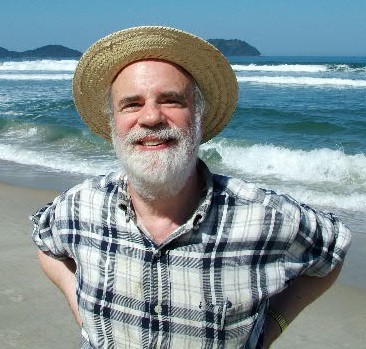
Saul Aaron Kripke (/ˈkrɪpki/; November 13, 1940 – September 15, 2022) was an American analytic philosopher and logician. He was Distinguished Professor of Philosophy at the Graduate Center of the City University of New York and emeritus professor at Princeton University. From the 1960s until his death, he was a central figure in a number of fields related to mathematical and modal logic, philosophy of language and mathematics, metaphysics, epistemology, and recursion theory.
Kripke made influential and original contributions to logic, especially modal logic. His principal contribution is a semantics for modal logic involving possible worlds, now called Kripke semantics. He received the 2001 Schock Prize in Logic and Philosophy.
Kripke was also partly responsible for the revival of metaphysics and essentialism after the decline of logical positivism, claiming necessity is a metaphysical notion distinct from the epistemic notion of a priori, and that there are necessary truths that are known a posteriori, such as that water is H2O. A 1970 Princeton lecture series, published in book form in 1980 as Naming and Necessity, is considered one of the most important philosophical works of the 20th century. It introduced the concept of names as rigid designators, designating (picking out, denoting, referring to) the same object in every possible world, as contrasted with descriptions. It also established Kripke's causal theory of reference, disputing the descriptivist theory found in Gottlob Frege's concept of sense and Bertrand Russell's theory of descriptions. Kripke is often seen in opposition to the other great late-20th-century philosopher to eschew logical positivism: W. V. O. Quine. Quine rejected essentialism and modal logic.
Kripke also gave an original reading of Ludwig Wittgenstein, known as "Kripkenstein", in his Wittgenstein on Rules and Private Language. The book contains his rule-following argument, a paradox for skepticism about meaning. Much of his work remains unpublished or exists only as tape recordings and privately circulated manuscripts.
Saul Kripke was the oldest of three children born to Dorothy K. Kripke and Myer S. Kripke. His father was the leader of Beth El Synagogue, the only Conservative congregation in Omaha, Nebraska; his mother wrote Jewish educational books for children. Saul and his two sisters, Madeline and Netta, attended Dundee Grade School and Omaha Central High School. Kripke was labeled a prodigy, teaching himself Ancient Hebrew by the age of six, reading Shakespeare's complete works by nine, and mastering the works of Descartes and complex mathematical problems before finishing elementary school. He wrote his first completeness theorem in modal logic at 17, and had it published a year later. After graduating from high school in 1958, Kripke attended Harvard University and graduated summa cum laude in 1962 with a bachelor's degree in mathematics. During his sophomore year at Harvard, he taught a graduate-level logic course at nearby MIT. Upon graduation he received a Fulbright Fellowship, and in 1963 was appointed to the Society of Fellows. Kripke later said, "I wish I could have skipped college. I got to know some interesting people but I can't say I learned anything. I probably would have learned it all anyway just reading on my own." His cousin is Eric Kripke, known for creating the television show The Boys.
After briefly teaching at Harvard, Kripke moved in 1968 to Rockefeller University in New York City, where he taught until 1976. In 1978 he took a chaired professorship at Princeton University. In 1988 he received the university's Behrman Award for distinguished achievement in the humanities. In 2002 Kripke began teaching at the CUNY Graduate Center, and in 2003 he was appointed a distinguished professor of philosophy there.
Kripke has received honorary degrees from the University of Nebraska Omaha (1977), Johns Hopkins University (1997), University of Haifa, Israel (1998), and the University of Pennsylvania (2005). He was a member of the American Philosophical Society and an elected Fellow of the American Academy of Arts and Sciences, and in 1985 was a Corresponding Fellow of the British Academy. He won the Schock Prize in Logic and Philosophy in 2001.
Kripke married philosopher Margaret Gilbert in 1976. They divorced in 2000.
Hub AI
Saul Kripke AI simulator
(@Saul Kripke_simulator)
Saul Kripke
Saul Aaron Kripke (/ˈkrɪpki/; November 13, 1940 – September 15, 2022) was an American analytic philosopher and logician. He was Distinguished Professor of Philosophy at the Graduate Center of the City University of New York and emeritus professor at Princeton University. From the 1960s until his death, he was a central figure in a number of fields related to mathematical and modal logic, philosophy of language and mathematics, metaphysics, epistemology, and recursion theory.
Kripke made influential and original contributions to logic, especially modal logic. His principal contribution is a semantics for modal logic involving possible worlds, now called Kripke semantics. He received the 2001 Schock Prize in Logic and Philosophy.
Kripke was also partly responsible for the revival of metaphysics and essentialism after the decline of logical positivism, claiming necessity is a metaphysical notion distinct from the epistemic notion of a priori, and that there are necessary truths that are known a posteriori, such as that water is H2O. A 1970 Princeton lecture series, published in book form in 1980 as Naming and Necessity, is considered one of the most important philosophical works of the 20th century. It introduced the concept of names as rigid designators, designating (picking out, denoting, referring to) the same object in every possible world, as contrasted with descriptions. It also established Kripke's causal theory of reference, disputing the descriptivist theory found in Gottlob Frege's concept of sense and Bertrand Russell's theory of descriptions. Kripke is often seen in opposition to the other great late-20th-century philosopher to eschew logical positivism: W. V. O. Quine. Quine rejected essentialism and modal logic.
Kripke also gave an original reading of Ludwig Wittgenstein, known as "Kripkenstein", in his Wittgenstein on Rules and Private Language. The book contains his rule-following argument, a paradox for skepticism about meaning. Much of his work remains unpublished or exists only as tape recordings and privately circulated manuscripts.
Saul Kripke was the oldest of three children born to Dorothy K. Kripke and Myer S. Kripke. His father was the leader of Beth El Synagogue, the only Conservative congregation in Omaha, Nebraska; his mother wrote Jewish educational books for children. Saul and his two sisters, Madeline and Netta, attended Dundee Grade School and Omaha Central High School. Kripke was labeled a prodigy, teaching himself Ancient Hebrew by the age of six, reading Shakespeare's complete works by nine, and mastering the works of Descartes and complex mathematical problems before finishing elementary school. He wrote his first completeness theorem in modal logic at 17, and had it published a year later. After graduating from high school in 1958, Kripke attended Harvard University and graduated summa cum laude in 1962 with a bachelor's degree in mathematics. During his sophomore year at Harvard, he taught a graduate-level logic course at nearby MIT. Upon graduation he received a Fulbright Fellowship, and in 1963 was appointed to the Society of Fellows. Kripke later said, "I wish I could have skipped college. I got to know some interesting people but I can't say I learned anything. I probably would have learned it all anyway just reading on my own." His cousin is Eric Kripke, known for creating the television show The Boys.
After briefly teaching at Harvard, Kripke moved in 1968 to Rockefeller University in New York City, where he taught until 1976. In 1978 he took a chaired professorship at Princeton University. In 1988 he received the university's Behrman Award for distinguished achievement in the humanities. In 2002 Kripke began teaching at the CUNY Graduate Center, and in 2003 he was appointed a distinguished professor of philosophy there.
Kripke has received honorary degrees from the University of Nebraska Omaha (1977), Johns Hopkins University (1997), University of Haifa, Israel (1998), and the University of Pennsylvania (2005). He was a member of the American Philosophical Society and an elected Fellow of the American Academy of Arts and Sciences, and in 1985 was a Corresponding Fellow of the British Academy. He won the Schock Prize in Logic and Philosophy in 2001.
Kripke married philosopher Margaret Gilbert in 1976. They divorced in 2000.
Recent media