
Recent from talks
Schwabacher
Knowledge base stats:
Talk channels stats:
Members stats:
Schwabacher
Schwabacher typefaces (pronounced [ˈʃvaːˌbaxɐ]) were a style of blackletter typefaces which evolved from Gothic Textualis (Textura) under the influence of Humanist type design in Italy during the 15th century. Schwabacher typesetting was the most common typeface in Germany, until it was replaced by Fraktur from the mid 16th century onwards. In the course of the 18th and 19th centuries (but in Germany not until 1941), Fraktur gave way in turn to Antiqua.
The term may derive from the Franconian town of Schwabach, where, in 1529, the Articles of Schwabach, a Lutheran creed, were adopted; the Articles became the basis of the 1530 Confessio Augustana, and possibly also promoted the use of Schwabacher types.[citation needed]
Similar to Rotunda, the rounded Schwabacher types were nearer to handwriting than the former Textualis style, though it also includes sharp edges. The lower-case g and upper-case H have particularly distinctive forms. In the context of German language texts, Schwabacher appeared vibrant and popular.
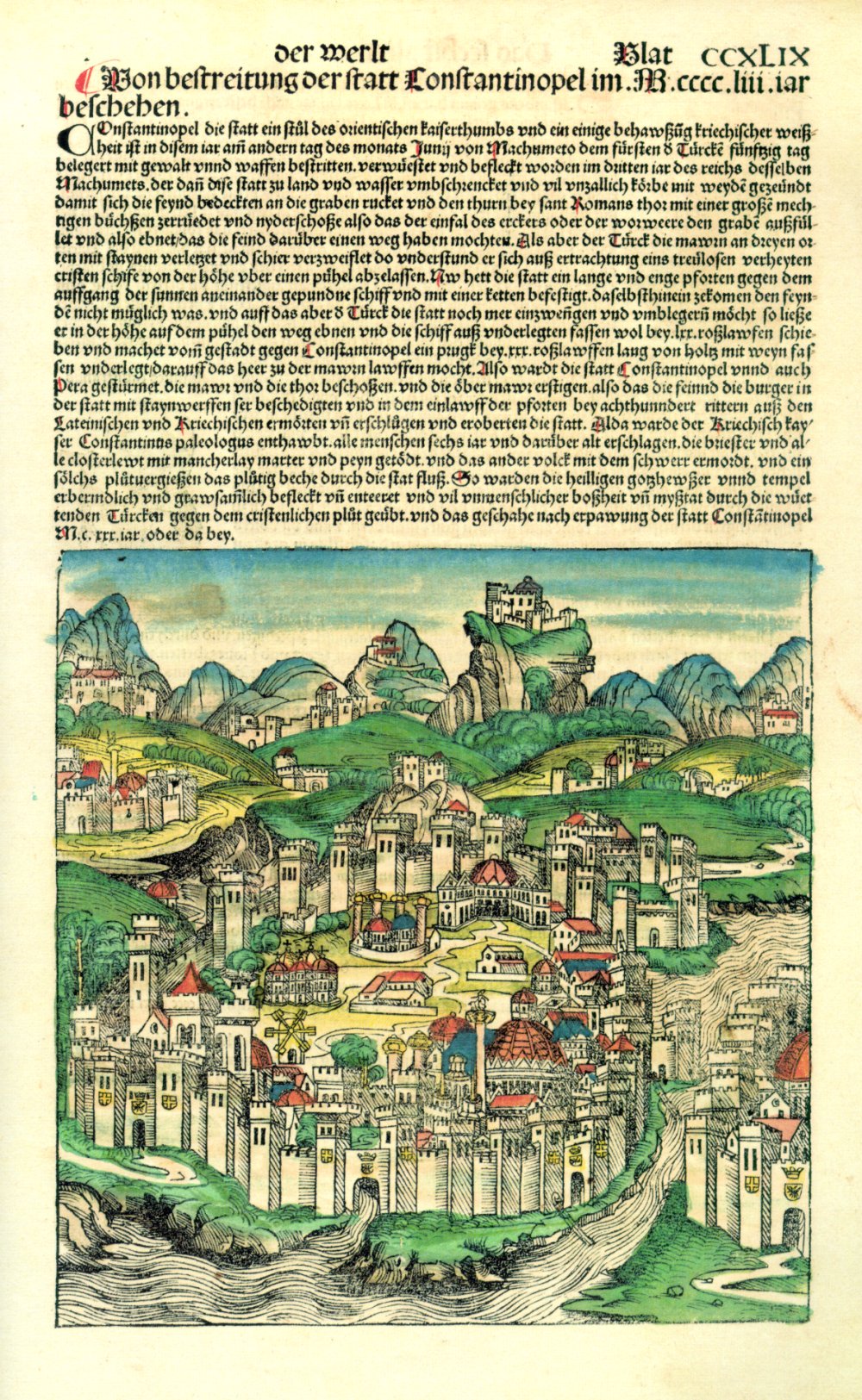
While the Latin Gutenberg Bible was still set in Textualis type, the oldest preserved Schwabacher incunable dates from 1472, and was printed in Augsburg. Schwabacher types appeared in the Free Imperial City of Nuremberg from about 1485: Anton Koberger (c. 1440–1513) used them for the publication of the Nuremberg Chronicle (in both Latin and German) in 1493, and Albrecht Dürer (1471–1528) for his Apocalypse series in 1498. Schwabacher became widely known with the spread of Luther Bibles from 1522.
After Schwabacher was displaced by Fraktur as the most-used German language type style from about 1530, it remained in common use as a secondary typeface for emphasis in a similar way to italic. It was still used occasionally until the mid 20th century.
In January 1941, the Government of Nazi Germany officially abandoned the Fraktur type, following Martin Bormann's Normalschrifterlass ("Normal type decree"). Bormann refers to Fraktur as Schwabacher Judenlettern ("Jew-letters of Schwabach"). The statement ignores the fact that Schwabacher originated from the earlier Rotunda blackletter script and late medieval Bastarda types. Despite Bormann's assertion, there is no evidence of any connection between Jews and the Schwabacher typeface; in fact, at the time of the typeface's origin, the ownership of printing houses was reserved for Christian citizens. The decree eliminating the use of Fraktur actually makes prominent use of Fraktur, including the party name (Nationalsozialistische Deutsche Arbeiterpartei) and other letterhead elements.
Circular
(Not for publication).
On behalf of the Führer I notify for common attention that:
Hub AI
Schwabacher AI simulator
(@Schwabacher_simulator)
Schwabacher
Schwabacher typefaces (pronounced [ˈʃvaːˌbaxɐ]) were a style of blackletter typefaces which evolved from Gothic Textualis (Textura) under the influence of Humanist type design in Italy during the 15th century. Schwabacher typesetting was the most common typeface in Germany, until it was replaced by Fraktur from the mid 16th century onwards. In the course of the 18th and 19th centuries (but in Germany not until 1941), Fraktur gave way in turn to Antiqua.
The term may derive from the Franconian town of Schwabach, where, in 1529, the Articles of Schwabach, a Lutheran creed, were adopted; the Articles became the basis of the 1530 Confessio Augustana, and possibly also promoted the use of Schwabacher types.[citation needed]
Similar to Rotunda, the rounded Schwabacher types were nearer to handwriting than the former Textualis style, though it also includes sharp edges. The lower-case g and upper-case H have particularly distinctive forms. In the context of German language texts, Schwabacher appeared vibrant and popular.
While the Latin Gutenberg Bible was still set in Textualis type, the oldest preserved Schwabacher incunable dates from 1472, and was printed in Augsburg. Schwabacher types appeared in the Free Imperial City of Nuremberg from about 1485: Anton Koberger (c. 1440–1513) used them for the publication of the Nuremberg Chronicle (in both Latin and German) in 1493, and Albrecht Dürer (1471–1528) for his Apocalypse series in 1498. Schwabacher became widely known with the spread of Luther Bibles from 1522.
After Schwabacher was displaced by Fraktur as the most-used German language type style from about 1530, it remained in common use as a secondary typeface for emphasis in a similar way to italic. It was still used occasionally until the mid 20th century.
In January 1941, the Government of Nazi Germany officially abandoned the Fraktur type, following Martin Bormann's Normalschrifterlass ("Normal type decree"). Bormann refers to Fraktur as Schwabacher Judenlettern ("Jew-letters of Schwabach"). The statement ignores the fact that Schwabacher originated from the earlier Rotunda blackletter script and late medieval Bastarda types. Despite Bormann's assertion, there is no evidence of any connection between Jews and the Schwabacher typeface; in fact, at the time of the typeface's origin, the ownership of printing houses was reserved for Christian citizens. The decree eliminating the use of Fraktur actually makes prominent use of Fraktur, including the party name (Nationalsozialistische Deutsche Arbeiterpartei) and other letterhead elements.
Circular
(Not for publication).
On behalf of the Führer I notify for common attention that:
Recent media