
Recent from talks
Apocalypse (Dürer)
Knowledge base stats:
Talk channels stats:
Members stats:
Apocalypse (Dürer)
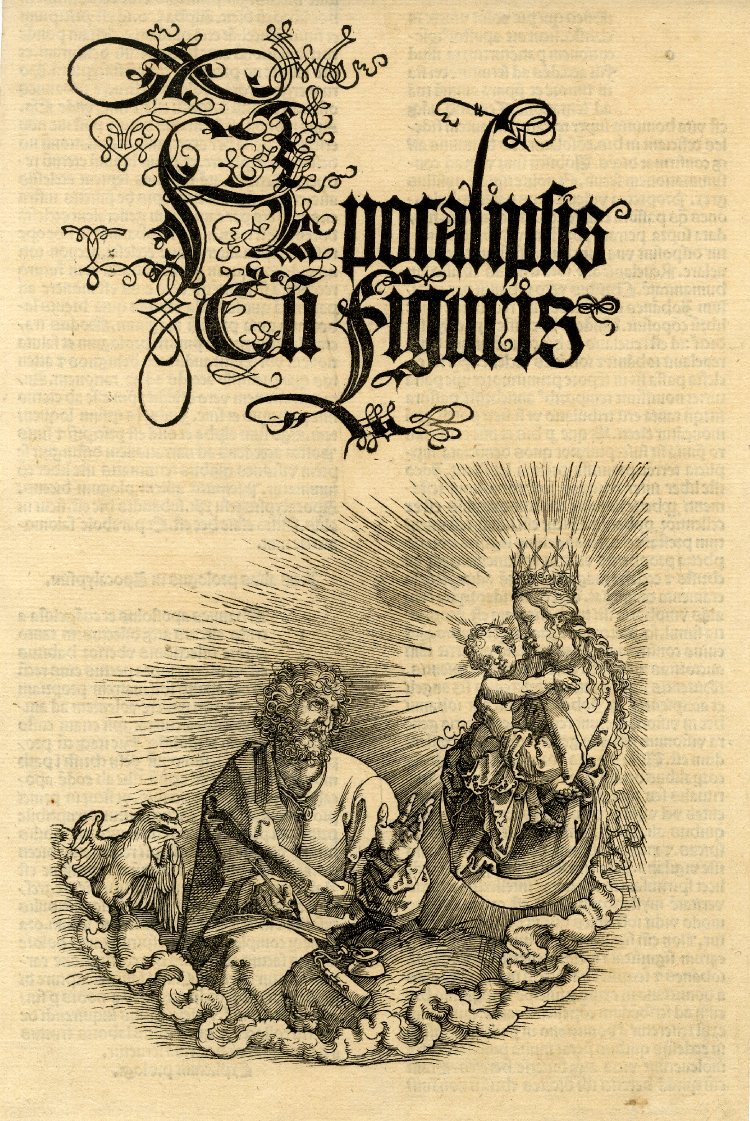
The Apocalypse, properly Apocalypse with Pictures (Latin: Apocalipsis cum figuris; German: Die heimliche Offenbaru[n]g ioh[an]nis), is a 1498 printed book by Albrecht Dürer containing fifteen woodcuts accompanied by text. The book depicts scenes from the Book of Revelation, and rapidly brought Dürer fame across Europe. These woodcuts likely drew on theological advice, particularly from Johannes Pirckheimer, the father of Dürer's friend Willibald Pirckheimer.
Work on the book started during Dürer's first trip to Italy (1494–95), It was published in both Latin and German at Nuremberg in 1498, at a time when much of secular Europe feared an invasion of the Ottoman Empire and Christian Europe anticipated a possible Last Judgment in the year 1500. Dürer was the publisher and seller of this series, and became the first artist to publish a book and create a copyright. Considering the 15 woodcuts, The Four Horsemen of the Apocalypse (c. 1497–98), referring to Revelation 6:1–8, is often viewed as the most famous piece. The overall layout of the cycle has the illustrations on the recto (right) and the text on the following verso (left). This would suggest the importance of illustration over text.
In 1511, Dürer published the second edition of Apocalypse in a combined edition with his Life of the Virgin and Large Passion; single impressions were also produced and sold.
Originally cut onto pear wood, Dürer depicts the Book of Revelation across 15 woodcuts. On the verso side of the page, Dürer includes the writings of the Book of Revelation in a two-column format. This form of text printed on one side of a page and an image on the opposite page was used earlier by Dürer's godfather, Anton Koberger, and his printing of the Liber chronicarum. Subject matter was likely taken from the Low German Bible, which Koberger had included in his version of the Bible. Additionally, Dürer may have also been exposed to the woodcut images of the Strasbourg Bible.
To circulate his work, Dürer created a 15-page booklet that presented the woodcut print first on the right of the page, followed by descriptive text on the back or the left of the page. This would be a reversal of what was normally done during the latter 15th century, as text was typically represented before any contextual images. The second edition of Dürer's Apocalypse series was later published with an additional title page depicting the Virgin Mary appearing to Saint John. The Assumption being depicted on the cover to a book imagining the Apocalypse may serve as a form of blessing, which establishes the idea that the Virgin Mary herself will care for those who have faith continuously throughout the Apocalypse; she will show pious people to paradise.
Dürer originally intended to include every scene of the Book of Revelation. However, theological insight was likely given to Dürer by Johannes Pirckheimer, though other scholars claim that religious consult could have been given by Provost Sixtus Tucher. This advice may have aided Dürer in condensing his series down to the fifteen woodcuts he ended up publishing. Earlier woodcuts depicted the Book of Revelation in unrealistic way, but Dürer, after traveling to Italy, was able to combine early ideology and biblical iconography with his artistic skill in order to create a work of art that was realistic, expressive, and practical to view.
One overlooked detail within this series is the inclusion of Ottoman Turks in this Christian Apocalypse. Dürer did not learn about the Turks through firsthand experience. Instead, he learned about the Ottoman culture from Gentile Bellini after his return from the Court of Mehmed II. This second-hand information was used to both create unique characters, but may have also unintentionally fueled anti-Ottoman propaganda in creating a parallel between the Ottoman Empire and the Anti-Christ.
Dürer takes a realistic approach when creating his scenes. In previous depictions of the Apocalypse, artists had fantasized certain aspects of the event. Rather than a skeleton on horseback representing Death in The Four Horsemen of the Apocalypse, Dürer depicts an emaciated man riding an equally malnourished horse. In Saint John Eating the Book, Saint John is physically eating the book, and his facial expressions are strained as he consumes the pages. The weather conditions and vegetations are likewise realistic and accurate with no overwhelming exaggerations. In St John kneeling before Christ and the twenty-four elders, a natural scene of castles, cliffs, plants, and a small river can be seen as a contrasting the Heavenly event taking place above. Though a scene of chaos, the weather in the background of The Four Horsemen of the Apocalypse is placid. Even in a scene of chaos in The opening of the seventh seal and the eagle crying 'Woe,' the land is tranquil and it is the heavenly bodies that are raining disaster upon the earth.
Hub AI
Apocalypse (Dürer) AI simulator
(@Apocalypse (Dürer)_simulator)
Apocalypse (Dürer)
The Apocalypse, properly Apocalypse with Pictures (Latin: Apocalipsis cum figuris; German: Die heimliche Offenbaru[n]g ioh[an]nis), is a 1498 printed book by Albrecht Dürer containing fifteen woodcuts accompanied by text. The book depicts scenes from the Book of Revelation, and rapidly brought Dürer fame across Europe. These woodcuts likely drew on theological advice, particularly from Johannes Pirckheimer, the father of Dürer's friend Willibald Pirckheimer.
Work on the book started during Dürer's first trip to Italy (1494–95), It was published in both Latin and German at Nuremberg in 1498, at a time when much of secular Europe feared an invasion of the Ottoman Empire and Christian Europe anticipated a possible Last Judgment in the year 1500. Dürer was the publisher and seller of this series, and became the first artist to publish a book and create a copyright. Considering the 15 woodcuts, The Four Horsemen of the Apocalypse (c. 1497–98), referring to Revelation 6:1–8, is often viewed as the most famous piece. The overall layout of the cycle has the illustrations on the recto (right) and the text on the following verso (left). This would suggest the importance of illustration over text.
In 1511, Dürer published the second edition of Apocalypse in a combined edition with his Life of the Virgin and Large Passion; single impressions were also produced and sold.
Originally cut onto pear wood, Dürer depicts the Book of Revelation across 15 woodcuts. On the verso side of the page, Dürer includes the writings of the Book of Revelation in a two-column format. This form of text printed on one side of a page and an image on the opposite page was used earlier by Dürer's godfather, Anton Koberger, and his printing of the Liber chronicarum. Subject matter was likely taken from the Low German Bible, which Koberger had included in his version of the Bible. Additionally, Dürer may have also been exposed to the woodcut images of the Strasbourg Bible.
To circulate his work, Dürer created a 15-page booklet that presented the woodcut print first on the right of the page, followed by descriptive text on the back or the left of the page. This would be a reversal of what was normally done during the latter 15th century, as text was typically represented before any contextual images. The second edition of Dürer's Apocalypse series was later published with an additional title page depicting the Virgin Mary appearing to Saint John. The Assumption being depicted on the cover to a book imagining the Apocalypse may serve as a form of blessing, which establishes the idea that the Virgin Mary herself will care for those who have faith continuously throughout the Apocalypse; she will show pious people to paradise.
Dürer originally intended to include every scene of the Book of Revelation. However, theological insight was likely given to Dürer by Johannes Pirckheimer, though other scholars claim that religious consult could have been given by Provost Sixtus Tucher. This advice may have aided Dürer in condensing his series down to the fifteen woodcuts he ended up publishing. Earlier woodcuts depicted the Book of Revelation in unrealistic way, but Dürer, after traveling to Italy, was able to combine early ideology and biblical iconography with his artistic skill in order to create a work of art that was realistic, expressive, and practical to view.
One overlooked detail within this series is the inclusion of Ottoman Turks in this Christian Apocalypse. Dürer did not learn about the Turks through firsthand experience. Instead, he learned about the Ottoman culture from Gentile Bellini after his return from the Court of Mehmed II. This second-hand information was used to both create unique characters, but may have also unintentionally fueled anti-Ottoman propaganda in creating a parallel between the Ottoman Empire and the Anti-Christ.
Dürer takes a realistic approach when creating his scenes. In previous depictions of the Apocalypse, artists had fantasized certain aspects of the event. Rather than a skeleton on horseback representing Death in The Four Horsemen of the Apocalypse, Dürer depicts an emaciated man riding an equally malnourished horse. In Saint John Eating the Book, Saint John is physically eating the book, and his facial expressions are strained as he consumes the pages. The weather conditions and vegetations are likewise realistic and accurate with no overwhelming exaggerations. In St John kneeling before Christ and the twenty-four elders, a natural scene of castles, cliffs, plants, and a small river can be seen as a contrasting the Heavenly event taking place above. Though a scene of chaos, the weather in the background of The Four Horsemen of the Apocalypse is placid. Even in a scene of chaos in The opening of the seventh seal and the eagle crying 'Woe,' the land is tranquil and it is the heavenly bodies that are raining disaster upon the earth.
Recent media