


Community hub
Recent from talks
Contribute something
Nothing was collected or created yet.
Senegalia chundra
View on Wikipedia
| Senegalia chundra | |
|---|---|

| |
Scientific classification 
| |
| Kingdom: | Plantae |
| Clade: | Tracheophytes |
| Clade: | Angiosperms |
| Clade: | Eudicots |
| Clade: | Rosids |
| Order: | Fabales |
| Family: | Fabaceae |
| Subfamily: | Caesalpinioideae |
| Clade: | Mimosoid clade |
| Genus: | Senegalia |
| Species: | S. chundra
|
| Binomial name | |
| Senegalia chundra | |

| |
| Range of Senegalia chundra | |
| Synonyms[1] | |
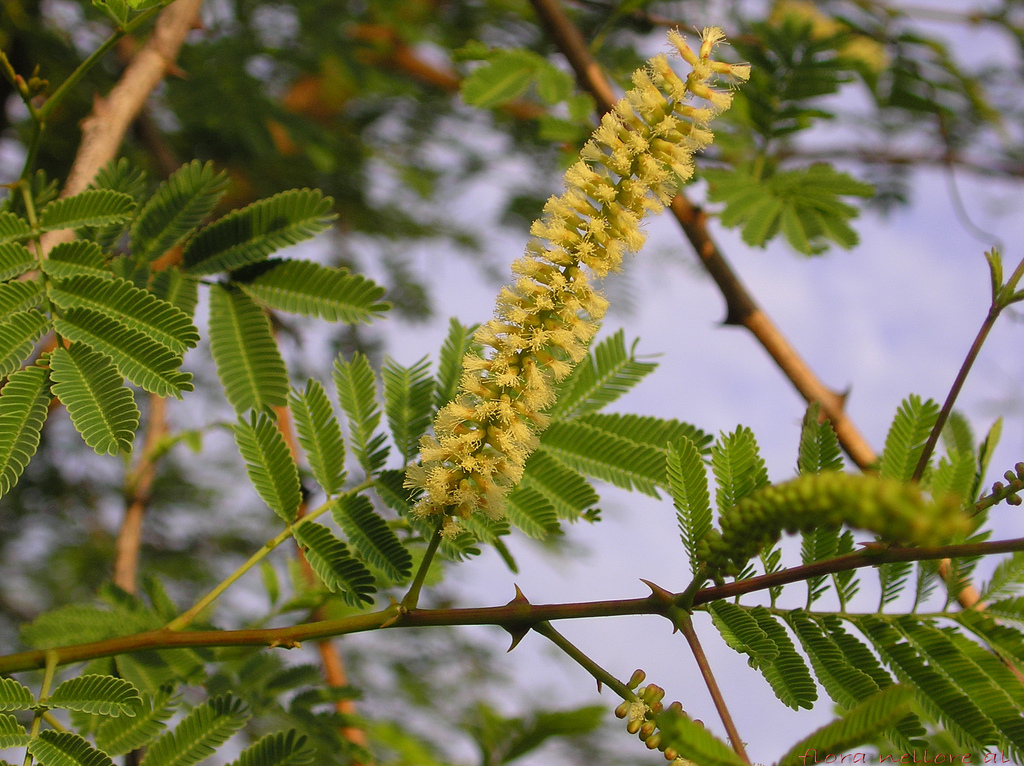
Senegalia chundra is a perennial, deciduous tree found in Asia, India and in the Indian Ocean area. It grows 12 to 15 metres in height.[2]
Common names for it include karangali, kodalimurunkai, lal khair, lal khair, rat kihiriya and red cutch.
Its uses include chemical and wood products.
Uses
[edit]The wood is used for certain applications in shipbuilding.[3] The tree is used for timber, for cutch (catechutannic acid)[4] from its wood and for tannin. It is also used as food for bees.[5] It is a preferred nesting site for the scaly-breasted munia.
Kheersal is found as a white substance in the tree's wood. Cutch is sought after commercially as a dye and to preserve fabrics from weather, mildew and marine exposure.[4]
Conservation
[edit]Senegalia chundra is considered "moderately threatened". In India it is now necessary to get a permit before cutting this tree down.[6]
References
[edit]- ^ International Legume Database & Information Service (ILDIS)
- ^ Indian Council of Forestry Research and Education Archived 2007-09-30 at the Wayback Machine
- ^ FAO
- ^ a b Cutch and Katha
- ^ Sources of Bee Forage in India Archived 2007-01-10 at the Wayback Machine
- ^ Biodiversity Information System Plants of Western Ghats
 | This article on a tree of the Fabaceae family is a stub. You can help Wikipedia by adding missing information. |
 | This Mimosoideae-related article is a stub. You can help Wikipedia by adding missing information. |