
Recent from talks
Senufo people
Knowledge base stats:
Talk channels stats:
Members stats:
Senufo people
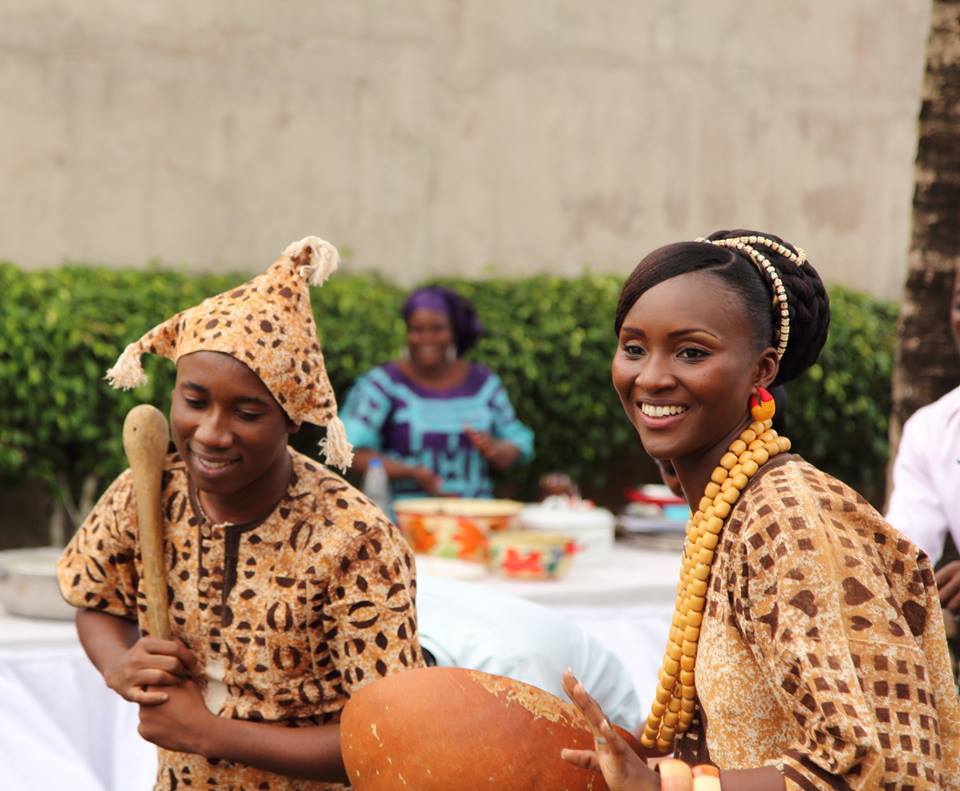
The Senufo people, also known as Siena, Senefo, Sene, Senoufo, and Syénambélé, are a West African ethnolinguistic group. They consist of diverse subgroups living in a region spanning the northern Ivory Coast, the southeastern Mali and the western Burkina Faso. One sub-group, the Nafana, is found in north-western Ghana.
The Senufo people are predominantly animists, with some who are Muslims. They are regionally famous for their handicrafts, many of which feature their cultural themes and religious beliefs.
In the 1980s, estimates placed the total ethnic group population of Senufo people somewhere between 1.5 and 2.7 million. A 2013 estimate places the total over 3 million, with majority of them living in Ivory Coast in places such as Katiola, and some 0.8 million in southeastern Mali. Their highest population densities are found in the land between the Black Volta river, Bagoe River and Bani River.
Their kinship organization is matrilineal. Typically, the Senufo people are studied in three large subgroups that have been relatively isolated. The northern Senufo are called "Supide or Kenedougou", found near Odienne, and who helped found an important kingdom of West Africa and challenged Muslim missionaries and traders. The southern Senufo are the largest group, numbering over 2 million, who allowed Muslim traders to settle within their communities in the 18th century who actively proselytized, and about 20% of the southern Senufo are Muslims. The third group is very small and isolated from both northern and southern Senufo. Some sociologists such as the French scholar Holas mentions fifteen identifiable sub-groups of Senufo people, with thirty dialects and four castes scattered between them.
The term Senufo refers to a linguistic group comprising roughly thirty related dialects within the larger Gur language family. It belongs to the Gur-branch of the Niger-Congo language family, and consists of four distinct languages namely Palaka(also spelt Kpalaga), Djimini(also spelt Dyimini), and Senari in Côte d'Ivoire and Suppire( also spelt Supyire) in Mali, as well as Karaboro in Burkina Faso. Within each group, numerous subdivisions use their own names for the people and language; the name Senufo is of external origin. Palaka separated from the main Senufo stock well before the 14th century ad; at about that time, with the founding of the town of Kong as a Bambara trade-route station, the rest of the population began migrations to the south, west, and north, resulting in the present divisions.The Senufo speaking people range from 800,000 to one million and live in agricultural based communities predominately located in the Côte d'Ivoire, West Africa, Africa.
Korhogo, an ancient town in northern Ivory Coast dating from the 13th century, is linked to the Senufo people. This separation of languages and sub-ethnic groups may be linked to the 14th-century migrations with its founding along with the Bambara trade-route.
The Senufo people emerged as a group sometime within the 15th or 16th century. They were a significant part of the 17th to 19th-century Kénédougou Kingdom (literally "country of the plain") with the capital of Sikasso. This region saw many wars including the rule of Daoula Ba Traoré, a cruel despot who reigned between 1840 and 1877. The Islamisation of the Senufo people began during this historical period of the Kénédougou Kingdom, but it was the kings & chiefs who converted, while the general Senufo population refused. Daoula Ba Traoré attempted to convert his kingdom to Islam, destroying many villages within the kingdom such as Guiembe and Nielle in 1875 because they resisted his views. The Kénédougou dynastic rulers attacked their neighbors as well, such as the Zarma people and they in turn counterattacked many times between 1883 and 1898.
The pre-colonial wars and violence led to their migration into Burkina Faso in regions that became towns such as Tiembara in Kiembara Department. The Kénédougou kingdom and the Traoré dynasty were dissolved in 1898 with the arrival of French colonial rule.
Hub AI
Senufo people AI simulator
(@Senufo people_simulator)
Senufo people
The Senufo people, also known as Siena, Senefo, Sene, Senoufo, and Syénambélé, are a West African ethnolinguistic group. They consist of diverse subgroups living in a region spanning the northern Ivory Coast, the southeastern Mali and the western Burkina Faso. One sub-group, the Nafana, is found in north-western Ghana.
The Senufo people are predominantly animists, with some who are Muslims. They are regionally famous for their handicrafts, many of which feature their cultural themes and religious beliefs.
In the 1980s, estimates placed the total ethnic group population of Senufo people somewhere between 1.5 and 2.7 million. A 2013 estimate places the total over 3 million, with majority of them living in Ivory Coast in places such as Katiola, and some 0.8 million in southeastern Mali. Their highest population densities are found in the land between the Black Volta river, Bagoe River and Bani River.
Their kinship organization is matrilineal. Typically, the Senufo people are studied in three large subgroups that have been relatively isolated. The northern Senufo are called "Supide or Kenedougou", found near Odienne, and who helped found an important kingdom of West Africa and challenged Muslim missionaries and traders. The southern Senufo are the largest group, numbering over 2 million, who allowed Muslim traders to settle within their communities in the 18th century who actively proselytized, and about 20% of the southern Senufo are Muslims. The third group is very small and isolated from both northern and southern Senufo. Some sociologists such as the French scholar Holas mentions fifteen identifiable sub-groups of Senufo people, with thirty dialects and four castes scattered between them.
The term Senufo refers to a linguistic group comprising roughly thirty related dialects within the larger Gur language family. It belongs to the Gur-branch of the Niger-Congo language family, and consists of four distinct languages namely Palaka(also spelt Kpalaga), Djimini(also spelt Dyimini), and Senari in Côte d'Ivoire and Suppire( also spelt Supyire) in Mali, as well as Karaboro in Burkina Faso. Within each group, numerous subdivisions use their own names for the people and language; the name Senufo is of external origin. Palaka separated from the main Senufo stock well before the 14th century ad; at about that time, with the founding of the town of Kong as a Bambara trade-route station, the rest of the population began migrations to the south, west, and north, resulting in the present divisions.The Senufo speaking people range from 800,000 to one million and live in agricultural based communities predominately located in the Côte d'Ivoire, West Africa, Africa.
Korhogo, an ancient town in northern Ivory Coast dating from the 13th century, is linked to the Senufo people. This separation of languages and sub-ethnic groups may be linked to the 14th-century migrations with its founding along with the Bambara trade-route.
The Senufo people emerged as a group sometime within the 15th or 16th century. They were a significant part of the 17th to 19th-century Kénédougou Kingdom (literally "country of the plain") with the capital of Sikasso. This region saw many wars including the rule of Daoula Ba Traoré, a cruel despot who reigned between 1840 and 1877. The Islamisation of the Senufo people began during this historical period of the Kénédougou Kingdom, but it was the kings & chiefs who converted, while the general Senufo population refused. Daoula Ba Traoré attempted to convert his kingdom to Islam, destroying many villages within the kingdom such as Guiembe and Nielle in 1875 because they resisted his views. The Kénédougou dynastic rulers attacked their neighbors as well, such as the Zarma people and they in turn counterattacked many times between 1883 and 1898.
The pre-colonial wars and violence led to their migration into Burkina Faso in regions that became towns such as Tiembara in Kiembara Department. The Kénédougou kingdom and the Traoré dynasty were dissolved in 1898 with the arrival of French colonial rule.
Recent media