Hubbry Logo
ShalishukaShalishukaMain
Open search
Shalishuka
Community hub
Shalishuka
logo
8 pages, 0 posts
0 subscribers
Be the first to start a discussion here.
Shalishuka
Shalishuka
from Wikipedia

Key Information

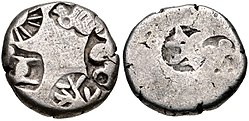
Possible extent of Maurya Empire under Shalishuka

Shalishuka (IAST: Śāliśuka) Maurya was the 6th Emperor of the Indian Maurya dynasty.[2] He ruled from 215–202 BCE. He was the successor and son of Samprati Maurya.[3] While the Yuga Purana section of the Gargi Samhita mentions him as a quarrelsome, unrighteous ruler, he is also noted as being of "righteous words"[4]

  1. In that beautiful Puṣpapura (flower city), occupied by fewer than a hundred kings, there will be Śāliśūka, born for the destruction of the truth, the offspring of karma (fate).
  2. That king, the offspring of karma, cheerful-minded [yet] fond of conflict, [will be] an oppressor of his own kingdom, of righteous speech but unrighteous conduct;

— Yuga Purana[5]

Succession

[edit]

According to the Puranas he was succeeded by Devavarman.[6]

Notes

[edit]
Revisions and contributorsEdit on WikipediaRead on Wikipedia
from Grokipedia
Shalishuka (IAST: Śāliśuka) was a ruler of the Mauryan dynasty in ancient India, listed in Puranic genealogies as succeeding Samprati and reigning circa 215–202 BCE. The Vishnu and Vayu Puranas include him in the sequence of Mauryan kings following Ashoka, while the Yuga Purana, a section of the Gargi Samhita, depicts his era as one of domestic quarrels and incursions by Yavana (Indo-Greek) forces, characterizing him as quarrelsome and of unrighteous conduct. No inscriptions, coins, or other contemporary artifacts directly attest to his existence or accomplishments, rendering details of his rule reliant on these later compilations, which blend historical elements with astrological and prophetic narratives composed centuries after the Mauryan decline. He was reportedly succeeded by Devavarman, amid a period of imperial fragmentation preceding the rise of the Shunga dynasty.

Background and Ascension

Parentage and Early References

Shalishuka's parentage is attested in secondary historical reconstructions as the son of Samprati, the preceding Mauryan ruler, though primary sources provide limited detail on familial ties. Some accounts reference a father named Sangata in Vayu and Vishnu Puranic traditions, potentially a variant corresponding to Samprati, reflecting discrepancies between Jain and Brahmanical genealogies. The earliest references to Shalishuka appear in ancient Indian texts postdating Ashoka's reign (c. 232 BCE), primarily the Puranas, which list him among the later Mauryan kings with a reign duration of 13 years in the dynastic sequence. He is explicitly named in the Yuga Purana section of the Gargi Samhita, a Jyotisha text containing prophetic and historical elements, portraying him as a contentious ruler prone to quarrels and unrighteous conduct amid imperial decline, yet credited with righteous speech and efforts to propagate Jainism, sometimes coercively. These accounts align with a timeline placing his rule circa 215–202 BCE, following rulers identified with Dasharatha and Samprati.

Succession Dispute and Timeline

The primary ancient sources, particularly the Puranas, list Shalishuka as the immediate successor to Samprati in the Mauryan dynastic sequence, with no explicit references to contests, rival claimants, or violent transitions attending his ascension. This absence of detail reflects the generally sparse and retrospective nature of post-Ashokan records, which prioritize king lists and reign durations over narrative events. Secondary interpretations suggesting Shalishuka as Samprati's son lack direct support from the Puranas themselves, which do not specify familial ties beyond succession order; claims of patrilineal descent appear in later compilations influenced by Jain traditions associating Samprati with religious patronage but may conflate unverified genealogies. The timeline for Shalishuka's reign is reconstructed from varying Puranic accounts, which collectively assign approximately 13 years to his rule within the post-Ashokan period totaling around 50 years across multiple successors before the dynasty's end circa 185 BCE. Aligning Ashoka's death around 232 BCE with edict-dated evidence for Dasharatha (his confirmed grandson via rock inscriptions) and Samprati's intervening 8–9 years places Shalishuka's tenure circa 215–202 BCE. Discrepancies arise from Puranic textual variants—such as the Vishnu Purana and interpolated passages from the Yuga Purana (part of the Gargi Samhita)—which differ on the exact number of post-Ashokan kings (four to seven) and cumulative years, potentially reflecting later scribal emendations or sectarian biases against Mauryan rulers for supporting Buddhism and Jainism over Brahmanical orthodoxy. These inconsistencies underscore the challenges in precise dating, as no contemporary inscriptions or foreign accounts corroborate Shalishuka's era, unlike Ashoka's.

Reign and Administration

Rule Duration and Territorial Extent

Shalishuka's reign is estimated to have lasted 13 years, from circa 215 BCE to 202 BCE, based on reconstructions of Puranic king lists that attribute this duration to the sixth Mauryan ruler after Ashoka, identified as Shalishuka or a variant such as Suganga. These texts, while varying in details across manuscripts, consistently place his succession after Samprati and before Devavarman, aligning with a post-Ashokan timeline derived from cross-referencing archaeological and numismatic evidence. Exact dates remain approximate due to discrepancies in Puranic chronologies, which sometimes inflate or compress regnal periods to fit broader dynastic totals. The Mauryan Empire under Shalishuka retained much of its vast territorial extent inherited from Ashoka, spanning core regions from the Ganges valley heartland westward to parts of modern-day Afghanistan and eastward to Bengal, though administrative control weakened in peripheral areas. No inscriptions or edicts directly from his reign detail expansions or losses, but contemporary coinage bearing symbols attributable to later Mauryans, including potential issues from his era, suggests continuity in minting across these territories. Indications of decline include emerging provincial autonomy, particularly in the south and northwest, as central authority faced internal rebellions and fiscal strains, setting the stage for fragmentation without recorded territorial conquests or defenses unique to his rule.

Internal Governance and Challenges

The Yuga Purana section of the Gargi Samhita portrays Shalishuka as a quarrelsome and unrighteous ruler, suggesting his reign (c. 215–202 BCE) was marked by internal discord and ineffective leadership that exacerbated the Mauryan Empire's weakening central authority. This characterization aligns with the broader post-Ashokan pattern of succession disputes and royal infighting, which undermined administrative cohesion inherited from predecessors like Ashoka. Shalishuka's governance likely relied on the established Mauryan framework of provincial governors (kumāras) and a sprawling bureaucracy, but contemporary accounts indicate these structures faltered amid internal instability and growing provincial autonomy. Economic strains from prior military expenditures and administrative overheads further strained resources, contributing to fiscal challenges that his rule failed to resolve. Religious policies favoring Jainism, continued from his predecessor Samprati, may have intensified tensions with Brahmanical elements, mirroring earlier alienations under Ashoka's Buddhist patronage, though direct evidence for Shalishuka's favoritism remains limited. These internal challenges signaled the onset of dynastic decline, with Shalishuka's perceived quarrelsomeness fostering a climate of unrest that eroded loyalty among officials and facilitated the empire's fragmentation into eastern and western spheres. No major administrative reforms are attested, highlighting a continuity of stagnation rather than adaptation to emerging pressures.

Military and External Affairs

Shalishuka's reign, approximately 215–202 BCE, is not associated with any documented offensive military campaigns, in contrast to the expansionist efforts of earlier Mauryan rulers like Chandragupta Maurya and Ashoka. The Puranic texts, primary chronological sources for post-Ashoka Mauryan kings, provide no accounts of conquests or battles under his rule, suggesting a shift toward defensive consolidation amid empire-wide weakening. Historical analyses attribute this inactivity to the lingering effects of Ashoka's non-violent dhamma policy, which curtailed aggressive militarism and may have eroded the empire's martial readiness. External threats during Shalishuka's period primarily stemmed from peripheral pressures rather than full-scale invasions, as the northwest frontiers began to face incursions from Indo-Greek elements establishing footholds beyond the Indus. These challenges exacerbated internal divisions, with secondary sources noting that Shalishuka contended with rebellions and territorial losses that foreshadowed the empire's fragmentation. No diplomatic treaties or envoys akin to those under Bindusara or Ashoka—such as exchanges with Hellenistic kingdoms—are recorded for his era, indicating a contraction in foreign engagement. The absence of epigraphic or literary evidence for proactive external policy underscores the transitional decline, where Mauryan resources were increasingly diverted to core territories in Magadha rather than border defense or outreach.

Succession and Immediate Aftermath

Heirs and Transition to Devavarman

According to the Puranic accounts, Shalishuka was succeeded by Devavarman, who is listed as the next ruler in the Mauryan lineage following a period of approximately 13 years under Shalishuka (circa 215–202 BCE). The Puranas, drawing from ancient compilations like the Vishnu Purana and others, provide the primary textual basis for this succession, though variations exist in reign lengths across manuscripts, reflecting the texts' composite nature and later redactions. No ancient sources explicitly identify Shalishuka's heirs by name or detail familial ties to Devavarman, leaving the precise mechanism of transition—whether through direct descent, appointment, or court intrigue—unclear and reliant on inference from the sequential lists. Devavarman's rule lasted about seven years (circa 202–195 BCE), after which he was followed by Shatadhanvan, continuing a pattern of short reigns indicative of weakening central authority in the post-Ashokan era. This handover underscores the dynasty's fragmentation, with limited epigraphic or numismatic evidence to corroborate personal relationships or the smoothness of power transfer beyond Puranic genealogy.

Factors Contributing to Dynastic Decline

The succession of Shalishuka to the throne around 215 BCE marked the onset of ineffective leadership that eroded the Mauryan central authority, as subsequent rulers, including Devavarman (r. circa 202–195 BCE), failed to replicate the administrative vigor of Ashoka, leading to fragmented control over the vast empire. Weak successors prioritized short-term stability over systemic reforms, exacerbating vulnerabilities inherited from Ashoka's expansive but resource-intensive policies, such as widespread dhamma propagation that strained finances without yielding proportional loyalty from diverse provincial elites. Internal instability intensified under Shalishuka, with reports of provincial governors asserting greater autonomy and localized revolts challenging imperial oversight, signaling a breakdown in the bureaucratic hierarchy that had sustained cohesion during earlier reigns. This devolution of power stemmed from the empire's over-centralized structure, which demanded constant enforcement from Pataliputra but faltered amid rapid successions—six kings ruling only 50 years post-Ashoka—allowing viceroys in regions like Taxila and the Deccan to prioritize local interests. Economic pressures further accelerated decline, as Ashoka-era expenditures on public works and missionary activities depleted treasury reserves, leaving Shalishuka's administration ill-equipped to suppress dissent or maintain military garrisons, while agrarian revenues stagnated amid neglected irrigation and trade disruptions in peripheral territories. The absence of monumental inscriptions or edicts attributable to Shalishuka or Devavarman underscores their limited influence, contrasting sharply with Ashoka's prolific records and implying a retreat from proactive governance that emboldened centrifugal forces.

Historical Sources and Depictions

Puranic Accounts

The Puranas, ancient Hindu texts compiling dynastic genealogies and chronological frameworks for the Kali Yuga, include Shalishuka (also spelled Śāliśuka) among the rulers of the Mauryan dynasty, positioning him as a successor in the line following Chandragupta Maurya and Bindusara. These accounts emphasize aggregate durations rather than individual biographies, stating that ten Mauryan kings collectively reigned for 137 years after the Nanda dynasty's overthrow. The Vishnu Purana, in its enumeration of post-Nanda dynasties, describes the Mauryas as originating from a lineage tied to low-caste or ministerial origins, with their rule marked by expansion but eventual decline leading to the Shunga interregnum. Specific mentions of Shalishuka appear in recensions of the Bhagavata Purana and certain manuscripts of the Vayu and Vishnu Puranas, listing him alongside other late Mauryan kings such as Somasharma, Shatadhanvan, and Brihadratha, who together conclude the dynasty before its assassination by Pushyamitra Shunga. However, variations exist across Puranic traditions; for instance, some Vayu Purana versions substitute Indrapalita for Shalishuka, suggesting textual fluidity or regional manuscript differences. These genealogies do not attribute specific reign lengths to Shalishuka individually, nor do they detail his administration, military campaigns, or personal character, focusing instead on the dynasty's overall temporal span and succession to underscore cycles of rise and fall in royal lineages. The incorporation of Shalishuka's name in these texts likely reflects later scribal harmonization with contemporaneous sources, as the core Puranic framework prioritizes prophetic chronology over granular history. Puranic reliability for precise Mauryan succession remains debated among historians, as the texts were compiled centuries after the events (likely 4th–10th centuries CE) and exhibit inconsistencies in king counts—Vishnu Purana citing ten Mauryas, while Bhagavata enumerates nine names for a similar period—potentially conflating or omitting rulers to fit symbolic totals. Nonetheless, the consistent placement of figures like Shalishuka affirms a tradition of multiple short-reigning successors after Ashoka's era, aligning with archaeological evidence of Mauryan fragmentation, though without empirical corroboration for his exact position or deeds.

References in Gargi Samhita and Other Texts

The Yuga Purāṇa, a section of the Garga Saṃhitā (an ancient Indian astronomical text attributed to sage Garga), references Shalishuka in the context of Mauryan , portraying him as a wicked, cruel, and quarrelsome ruler of unrighteous character. This depiction aligns with accounts of dynastic instability, emphasizing moral and administrative failings that contributed to the empire's fragmentation. The text, composed around the 1st century BCE, blends astrological prophecy with historical narrative, noting Shalishuka's era amid broader turmoil including Yavana (Indo-Greek) incursions into northwestern territories. Beyond the Garga Saṃhitā, Shalishuka receives scant mention in surviving non-Puranic sources, with no prominent references in Buddhist or Jain canonical texts that detail his predecessors like Samprati's Jain patronage. This paucity underscores reliance on genealogical and astronomical works for post-Ashokan Mauryan rulers, where verifiable epigraphic or inscriptional evidence remains absent for his specific reign. Scholarly analyses interpret these limited textual allusions as reflective of a transitional phase marked by weakened central authority rather than substantive achievements.

Legacy and Historical Assessment

Role in Mauryan Decline

Shalishuka's reign, dated approximately to 215–202 BCE based on Puranic chronologies, coincided with the acceleration of Mauryan fragmentation, as central authority eroded amid rising provincial autonomy and internal strife. Puranic texts list him as the fifth or sixth successor to Ashoka, with reign lengths varying between 13 and 60 years across manuscripts, reflecting the texts' inconsistencies but consistently portraying post-Ashokan rulers as diminishing in efficacy. The Yuga Purana within the Gargi Samhita describes Shalishuka specifically as a quarrelsome and unrighteous sovereign, implying governance plagued by factionalism and moral lapses that undermined administrative stability. This characterization aligns with broader evidence of decline, including debased coinage and economic pressures from sustaining a vast bureaucracy and military without Ashoka's conquest-driven revenues. Shalishuka's failure to consolidate power—evident in the lack of inscriptions or monumental projects attributable to him—exacerbated succession disputes and encouraged viceroys in regions like the northwest to defect or declare independence, as Indo-Greek incursions began around 206 BCE. While Puranic accounts, compiled centuries later by Brahmanical scholars potentially biased against heterodox influences from Ashoka's era, provide the primary framework, archaeological silence on Shalishuka's achievements underscores his negligible role in empire preservation. His tenure thus exemplifies causal factors in dynastic decay: incompetent leadership unable to adapt centralized structures to fiscal strain and cultural backlash against prior Buddhist patronage, paving the way for Shunga usurpation by 185 BCE.

Modern Interpretations and Verifiable Evidence

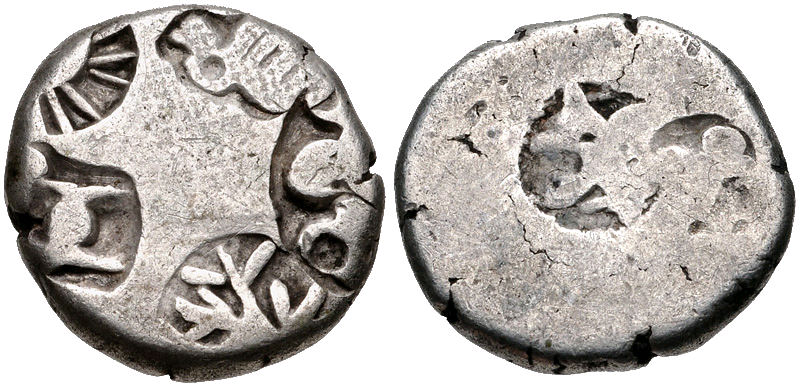
Modern scholarship accepts Shalishuka as a historical Mauryan ruler based on genealogical lists in the Puranas, such as the Vishnu Purana, which assign him a reign of 13 years following Samprati. These texts, compiled between the 4th and 10th centuries CE, provide the primary framework for reconstructing post-Ashokan chronology, estimating Shalishuka's rule circa 215–202 BCE to fit the approximately 50-year interval before the dynasty's end around 185 BCE. However, their late composition, internal discrepancies, and susceptibility to interpolation undermine their precision, prompting historians to treat them as tentative rather than definitive. Verifiable evidence for Shalishuka remains scant, with no inscriptions, seals, or artifacts bearing his name discovered to date. In contrast, the immediately preceding ruler Dasaratha is attested by dedicatory inscriptions at the Nagarjuni Hill Caves, dated to shortly after Ashoka's death circa 232 BCE, confirming Mauryan patronage of Ajivika ascetics. Archaeological surveys of late Mauryan sites reveal continuity in polished stone architecture and urban settlements, such as at Pataliputra, but attribute these broadly to the dynasty without ruler-specific attribution. Numismatic records offer indirect continuity through silver punch-marked karshapanas, standardized under earlier Mauryans and persisting into the late phase, including potential overlaps with Shalishuka's era. These coins, weighing approximately 3.4 grams and featuring symbols like the sun, elephant, and tree-in-railing, circulated widely but lack personalized royal legends, precluding direct linkage to individual kings. Hoards from sites like Taxila and Eran indicate economic stability amid political transition, yet typological variations do not reliably delineate Shalishuka's period. Interpretations of Shalishuka's character draw from the Yuga Purana and Gargi Samhita, which depict him as unjust and oppressive, potentially foreshadowing foreign incursions like Indo-Greek advances. Such portrayals, however, stem from astrological and prophetic genres with limited historical fidelity, and scholars like Romila Thapar emphasize their narrative rather than evidentiary value, advising caution against unsubstantiated moral judgments. The absence of contemporary Buddhist or Jain texts mentioning him—possibly due to waning imperial patronage of these faiths post-Ashoka—further highlights reliance on Brahmanical sources, which may reflect sectarian biases in retrospective accounts. Overall, Shalishuka exemplifies the evidentiary challenges in late Mauryan history, where textual traditions inform but do not conclusively prove administrative or military details.

References

Add your contribution
Related Hubs
User Avatar
No comments yet.