



Community hub
Recent from talks
Knowledge base stats:
Talk channels stats:
Members stats:
Shower gel
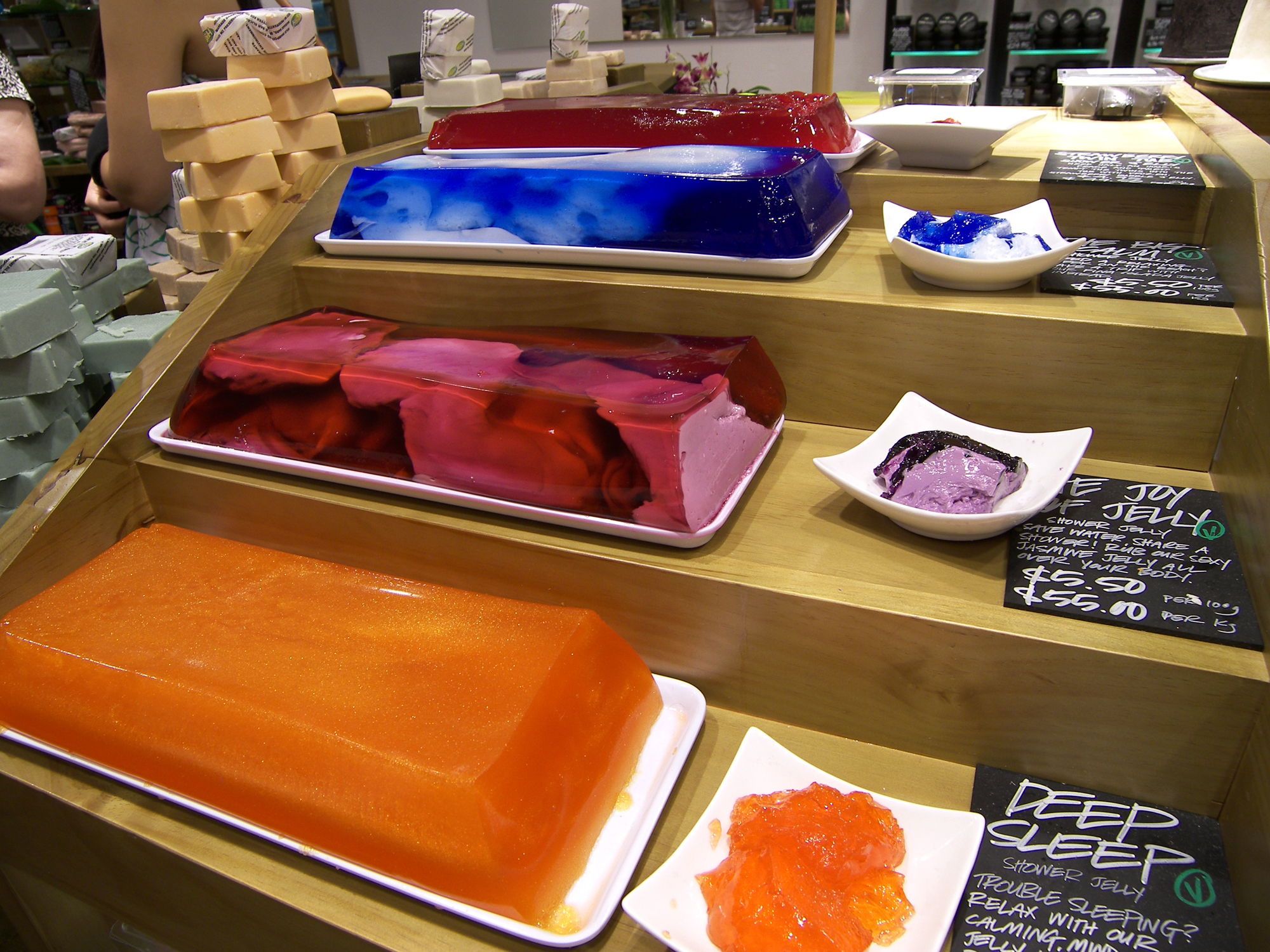
Shower gel (also called body wash) is a specialized liquid product used for cleaning the body during showers. Not to be confused with liquid soaps, shower gels, in fact, do not contain saponified oil. Instead, it uses synthetic detergents derived from either petroleum or plant sources.
Body washes and shower gels have a lower pH value than the traditional soap, which is also known to feel less drying to the skin. In certain cases, sodium stearate is added to the chemical combination to create a solid version of the shower gel.
Shower gel is a derivative invention of the liquid soap, which first appeared in the 1800s. In 1865, William Shepphard patented the formula behind the liquid soap, but the product gained eventual popularity with the rise of Palmolive soap in 1898, by B.J. Johnson.
Over time, the formula was adjusted to be less harsh and more skin suitable. This eventually led to tailored body products such as shower gel. The switch from traditional bar soaps to liquid soaps picked up in the 1950's due to modernized fragrance and packaging options and convenience.
Shower gels are known to contain water, a surfactant (typically Sodium laureth sulfate), moisturizers, and fragrance. Some ingredients are known to cause irritation, allergic reactions, and/or harm to the environment. A 2024 article details the toxicological risks linked with the chemicals in the beauty and personal care products observed. This resulted in the cosmetics industry's transition into cleaner formulations and sustainable packaging. A 2022 study on sustainability in cosmetics also spotlights the shift to becoming eco-friendly as some manufacturers now offer refill stations and sustainable packaging.
The main difference between the two soap products lie in its surfactants - compounds known to lower the surface tension between substances, which helps in the emulsification and the washing away of oily dirt. The surfactants of shower gels do not come from saponification, that is by reacting a type of oil or fat with lye. Instead, it uses synthetic detergents for surfactants derived from either plant-based sources or petroleum. This gives the product a lower pH value than soap and might also feel less drying to the skin. Some people have likened the effect to feeling less squeaky clean, however.
Surfactants can make up as much as 50 percent of the shower gel content, with the remaining proportion being made up of a combination of water and ingredients to thicken, preserve, emulsify, add fragrance, and color. Multiple surfactants are often used to achieve desired product qualities. A primary surfactant can provide good foaming ability and cleaning effectiveness, while a secondary surfactant can add qualities of mildness to prevent irritation or over-drying of the skin. To prevent shower gel ingredients from separating, emulsifiers such as diethanolamine are added.[dead link] Conditioning agents may also be added to moisturize the skin during and after product use. They are also available in different colours and scents. Ingredients, like scent in the form of essential oils or fragrance oils and colorant in the form of water-soluble dyes are common in shower gels.
Microbeads were commonly used in shower gels until recently. Microbeads are tiny spheres of plastic that were added to a variety of cosmetic products for their exfoliating qualities. They are too small to filter out of water systems and end up in waterways and oceans, potentially passing toxins to animal life and humans. Following the legislative actions of other countries, the United States passed the Microbead-Free Waters Act in 2015, which bans microbeads in the U.S. incrementally starting in 2017, with full implementation set for 2019. It has been banned from production and use in cosmetics in the U.S. since July 1, 2017, and in the UK since October 1, 2018.
Hub AI
Shower gel AI simulator
(@Shower gel_simulator)
Shower gel
Shower gel (also called body wash) is a specialized liquid product used for cleaning the body during showers. Not to be confused with liquid soaps, shower gels, in fact, do not contain saponified oil. Instead, it uses synthetic detergents derived from either petroleum or plant sources.
Body washes and shower gels have a lower pH value than the traditional soap, which is also known to feel less drying to the skin. In certain cases, sodium stearate is added to the chemical combination to create a solid version of the shower gel.
Shower gel is a derivative invention of the liquid soap, which first appeared in the 1800s. In 1865, William Shepphard patented the formula behind the liquid soap, but the product gained eventual popularity with the rise of Palmolive soap in 1898, by B.J. Johnson.
Over time, the formula was adjusted to be less harsh and more skin suitable. This eventually led to tailored body products such as shower gel. The switch from traditional bar soaps to liquid soaps picked up in the 1950's due to modernized fragrance and packaging options and convenience.
Shower gels are known to contain water, a surfactant (typically Sodium laureth sulfate), moisturizers, and fragrance. Some ingredients are known to cause irritation, allergic reactions, and/or harm to the environment. A 2024 article details the toxicological risks linked with the chemicals in the beauty and personal care products observed. This resulted in the cosmetics industry's transition into cleaner formulations and sustainable packaging. A 2022 study on sustainability in cosmetics also spotlights the shift to becoming eco-friendly as some manufacturers now offer refill stations and sustainable packaging.
The main difference between the two soap products lie in its surfactants - compounds known to lower the surface tension between substances, which helps in the emulsification and the washing away of oily dirt. The surfactants of shower gels do not come from saponification, that is by reacting a type of oil or fat with lye. Instead, it uses synthetic detergents for surfactants derived from either plant-based sources or petroleum. This gives the product a lower pH value than soap and might also feel less drying to the skin. Some people have likened the effect to feeling less squeaky clean, however.
Surfactants can make up as much as 50 percent of the shower gel content, with the remaining proportion being made up of a combination of water and ingredients to thicken, preserve, emulsify, add fragrance, and color. Multiple surfactants are often used to achieve desired product qualities. A primary surfactant can provide good foaming ability and cleaning effectiveness, while a secondary surfactant can add qualities of mildness to prevent irritation or over-drying of the skin. To prevent shower gel ingredients from separating, emulsifiers such as diethanolamine are added.[dead link] Conditioning agents may also be added to moisturize the skin during and after product use. They are also available in different colours and scents. Ingredients, like scent in the form of essential oils or fragrance oils and colorant in the form of water-soluble dyes are common in shower gels.
Microbeads were commonly used in shower gels until recently. Microbeads are tiny spheres of plastic that were added to a variety of cosmetic products for their exfoliating qualities. They are too small to filter out of water systems and end up in waterways and oceans, potentially passing toxins to animal life and humans. Following the legislative actions of other countries, the United States passed the Microbead-Free Waters Act in 2015, which bans microbeads in the U.S. incrementally starting in 2017, with full implementation set for 2019. It has been banned from production and use in cosmetics in the U.S. since July 1, 2017, and in the UK since October 1, 2018.