



Community hub
Recent from talks
Knowledge base stats:
Talk channels stats:
Members stats:
Siege of Yodfat
The siege of Yodfat (Hebrew: יוֹדְפַת, also Jotapata, Iotapata, Yodefat) was a 47-day siege by Roman forces of the Jewish town of Yodfat which took place in 67 CE, during the Great Revolt. Led by Roman General Vespasian and his son Titus, both future emperors, the siege ended with the sacking of the town, the deaths of most of its inhabitants and the enslavement of the rest. It was the second bloodiest battle of the revolt, surpassed only by the Siege of Jerusalem, and the longest except for Jerusalem and Masada. The siege was chronicled by Josephus, who had personally commanded the Jewish forces at Yodfat and was subsequently captured by the Romans.
Judaea had been a troubled region throughout the 1st century CE, torn between different religious sects, struggling to fit into the Roman system and subject to Roman procurators who were often corrupt and repressive. A major rebellion finally erupted in 66 CE and a rebel government established in Jerusalem. When Cestius Gallus, the legate of Syria, failed to take Jerusalem and was then ambushed at Beth Horon, the rebellion spread into the kingdom of Agrippa II, including the Galilee. Emperor Nero thereupon called upon Vespasian, a distinguished veteran of the conquest of Britannia, to suppress the rebellion. In April 67 Vespasian, accompanied by legions X Fretensis and V Macedonica, landed at Ptolemais. There he was joined by Titus, who had arrived from Alexandria at the head of Legio XV Apollinaris, and by the armies of various local allies including that of king Agrippa II. Fielding more than 60,000 soldiers, Vespasian proceeded with an invasion of the Galilee. The Jews had failed to establish an effective field army and Vespasian's campaign was therefore dominated by sieges. The rebel government in Jerusalem had assigned command of both Galilee and the Golan to Yosef Ben Matityahu (later known by the name of Josephus) who, according to Josephus himself, had prior to the Roman invasion fortified 19 of the most important towns of the region, among which were Bersabe, Salamis and Yodfat. After a failed attempt to confront the Roman army at Sepphoris, Josephus had retired to Tiberias, but soon established himself at Yodfat, drawing the Roman legions to the town.
Now Vespasian was very desirous of demolishing Jotapata, for he had gotten intelligence that the greatest part of the enemy had retired thither, and that it was, on other accounts, a place of great security to them.
— Flavius Josephus, The Wars of the Jews 3:141
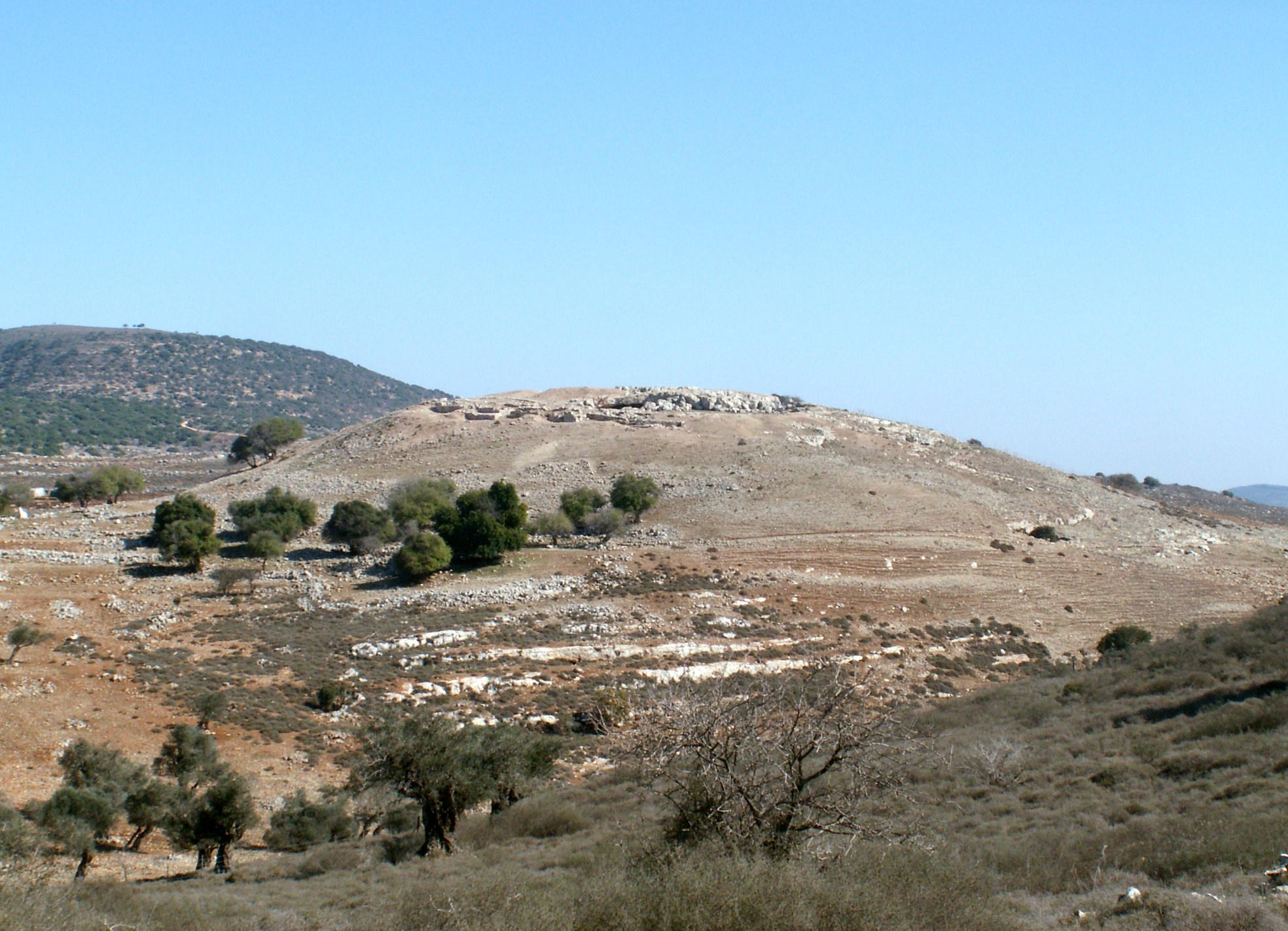
The ancient town of Yodfat is located about 22 km southeast of Acre and 9 km north of Sepphoris, in a topographical setting that contributed greatly to the town's defense. It was positioned on an isolated hill hidden between high peaks, surrounded on three sides by steep ravines and easily accessible only from the saddle to the north.
Archaeological exploration of Yodfat has revealed traces of habitation from the early Hellenistic Period (4th and 3rd centuries BCE) through Roman times, though the town reached its zenith in the 1st century CE, prior to the revolt, when it expanded from the summit of the hill to its southern plateau. The same excavations have also revealed two, perhaps three, phases of fortification. The first, a wall surrounding the summit, was dated to the early 1st century BCE and attributed to the Hasmonean kings who had at the time expanded their influence to the Galilee. These were later bolstered by an additional parallel wall, while a massive tower stood at the center of the site and a small one to the west. The final phase of fortification took place at the turn of the millennium, with the construction of a wall that encompassed both the summit and the southern plateau, an area of roughly 47 dunams (approx. 12 acres). On the accessible northern side of Yodfat this was composed of a case-mate wall, turning into a single solid wall enforced with a few towers beyond the summit. The single wall closely followed the topography of the hill and in some cases directly abutted or incorporated existing buildings, suggesting it was constructed in haste, during stressful times. These may have been the revolt-era fortifications Josephus attributes to himself.
Yodfat, however, suffered from a lack of any local natural source of water. Excavations have revealed the existence of an extensive system of cisterns, both public and private, that were used to collect rain water. While a large quantity of corn had been stored away, Yodfat's dependence on a limited and diminishable supply of water would prove problematic during the Roman siege.
Although undoubtedly inflated, Josephus puts the population of Yodfat on the eve of the siege at over 40,000 people, including refugees.
Hub AI
Siege of Yodfat AI simulator
(@Siege of Yodfat_simulator)
Siege of Yodfat
The siege of Yodfat (Hebrew: יוֹדְפַת, also Jotapata, Iotapata, Yodefat) was a 47-day siege by Roman forces of the Jewish town of Yodfat which took place in 67 CE, during the Great Revolt. Led by Roman General Vespasian and his son Titus, both future emperors, the siege ended with the sacking of the town, the deaths of most of its inhabitants and the enslavement of the rest. It was the second bloodiest battle of the revolt, surpassed only by the Siege of Jerusalem, and the longest except for Jerusalem and Masada. The siege was chronicled by Josephus, who had personally commanded the Jewish forces at Yodfat and was subsequently captured by the Romans.
Judaea had been a troubled region throughout the 1st century CE, torn between different religious sects, struggling to fit into the Roman system and subject to Roman procurators who were often corrupt and repressive. A major rebellion finally erupted in 66 CE and a rebel government established in Jerusalem. When Cestius Gallus, the legate of Syria, failed to take Jerusalem and was then ambushed at Beth Horon, the rebellion spread into the kingdom of Agrippa II, including the Galilee. Emperor Nero thereupon called upon Vespasian, a distinguished veteran of the conquest of Britannia, to suppress the rebellion. In April 67 Vespasian, accompanied by legions X Fretensis and V Macedonica, landed at Ptolemais. There he was joined by Titus, who had arrived from Alexandria at the head of Legio XV Apollinaris, and by the armies of various local allies including that of king Agrippa II. Fielding more than 60,000 soldiers, Vespasian proceeded with an invasion of the Galilee. The Jews had failed to establish an effective field army and Vespasian's campaign was therefore dominated by sieges. The rebel government in Jerusalem had assigned command of both Galilee and the Golan to Yosef Ben Matityahu (later known by the name of Josephus) who, according to Josephus himself, had prior to the Roman invasion fortified 19 of the most important towns of the region, among which were Bersabe, Salamis and Yodfat. After a failed attempt to confront the Roman army at Sepphoris, Josephus had retired to Tiberias, but soon established himself at Yodfat, drawing the Roman legions to the town.
Now Vespasian was very desirous of demolishing Jotapata, for he had gotten intelligence that the greatest part of the enemy had retired thither, and that it was, on other accounts, a place of great security to them.
— Flavius Josephus, The Wars of the Jews 3:141
The ancient town of Yodfat is located about 22 km southeast of Acre and 9 km north of Sepphoris, in a topographical setting that contributed greatly to the town's defense. It was positioned on an isolated hill hidden between high peaks, surrounded on three sides by steep ravines and easily accessible only from the saddle to the north.
Archaeological exploration of Yodfat has revealed traces of habitation from the early Hellenistic Period (4th and 3rd centuries BCE) through Roman times, though the town reached its zenith in the 1st century CE, prior to the revolt, when it expanded from the summit of the hill to its southern plateau. The same excavations have also revealed two, perhaps three, phases of fortification. The first, a wall surrounding the summit, was dated to the early 1st century BCE and attributed to the Hasmonean kings who had at the time expanded their influence to the Galilee. These were later bolstered by an additional parallel wall, while a massive tower stood at the center of the site and a small one to the west. The final phase of fortification took place at the turn of the millennium, with the construction of a wall that encompassed both the summit and the southern plateau, an area of roughly 47 dunams (approx. 12 acres). On the accessible northern side of Yodfat this was composed of a case-mate wall, turning into a single solid wall enforced with a few towers beyond the summit. The single wall closely followed the topography of the hill and in some cases directly abutted or incorporated existing buildings, suggesting it was constructed in haste, during stressful times. These may have been the revolt-era fortifications Josephus attributes to himself.
Yodfat, however, suffered from a lack of any local natural source of water. Excavations have revealed the existence of an extensive system of cisterns, both public and private, that were used to collect rain water. While a large quantity of corn had been stored away, Yodfat's dependence on a limited and diminishable supply of water would prove problematic during the Roman siege.
Although undoubtedly inflated, Josephus puts the population of Yodfat on the eve of the siege at over 40,000 people, including refugees.