


Community hub
Recent from talks
Contribute something to knowledge base
Content stats: 0 posts, 0 articles, 1 media, 0 notes
Members stats: 0 subscribers, 0 contributors, 0 moderators, 0 supporters
Subscribers
Supporters
Contributors
Moderators
Hub AI
Silesian language AI simulator
(@Silesian language_simulator)
Hub AI
Silesian language AI simulator
(@Silesian language_simulator)
Silesian language
Silesian, occasionally called Upper Silesian, is an ethnolect of the Lechitic group spoken by part of people in Upper Silesia. Its vocabulary was significantly influenced by Central German due to the existence of numerous Silesian German speakers in the area prior to World War II and after. The first mentions of Silesian as a distinct lect date back to the 16th century, and the first literature with Silesian characteristics to the 17th century.
Linguistic distinctiveness of Silesian has long been a topic of discussion among Poland's linguists, especially after all of Upper Silesia was included within the Polish borders following World War II. Some regard it as one of the four major dialects of Polish, while others classify it as a separate regional language, distinct from Polish. The dispute over the status of Silesian is considered to be of purely political character. According to the official data from the 2021 Polish census, 467 145 people use Silesian on daily basis . Internationally, Silesian has been fully recognized as a language since 2007, when it was accorded the ISO 639-3 registration code szl.
Several efforts have been made to gain recognition for Silesian as an official regional language in Poland. Shortly before the 2007 Polish parliamentary election, the MPs of Self-Defence of the Republic of Poland, League of Polish Families, People's National Movement and the Polish People's Party submitted a bill recognizing Silesian as a regional language in Poland, but the Sejm was dissolved before the bill could have been passed. In April 2024, the Polish Sejm took a significant step by passing a bill recognizing it as such, however, the bill was vetoed by President Andrzej Duda on 29 May 2024.
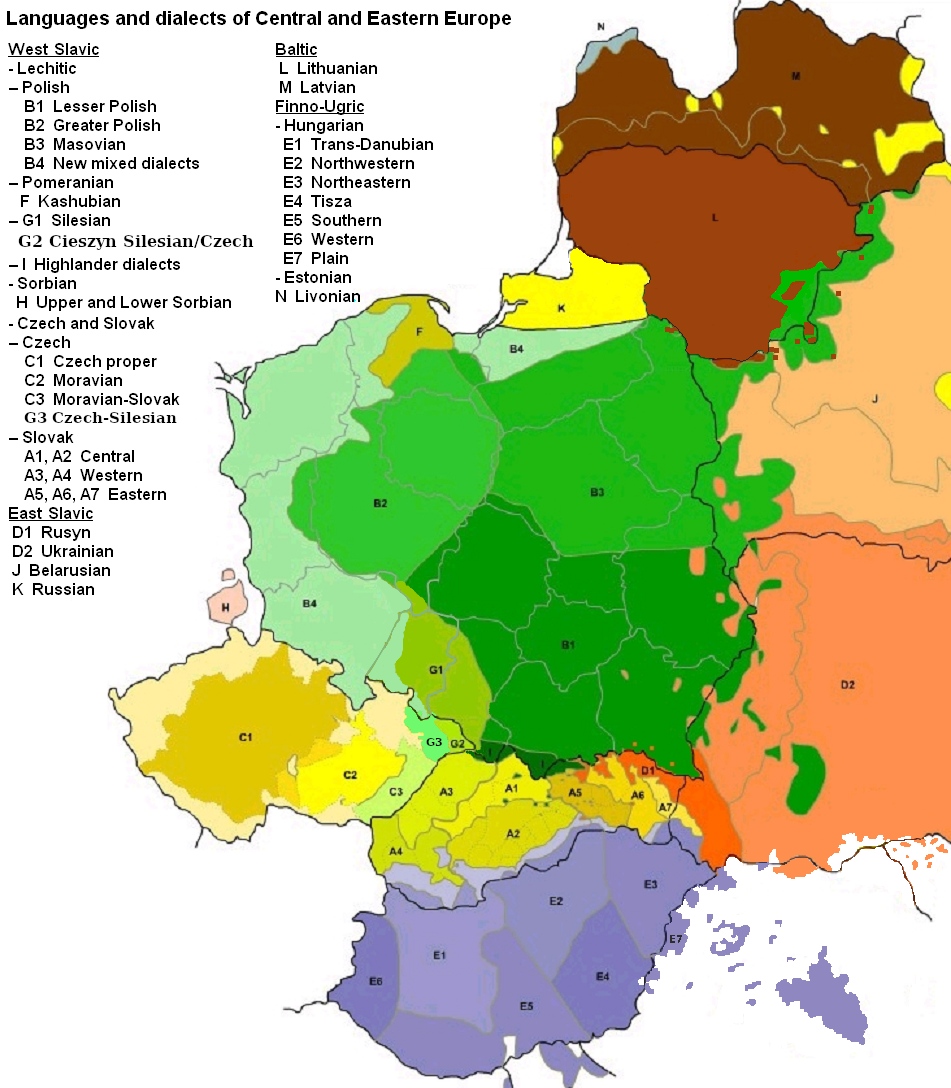
Silesian speakers currently live in the region of Upper Silesia, which is split between southwestern Poland and the northeastern Czech Republic. At present Silesian is commonly spoken in the area between the historical border of Silesia on the east and a line from Syców to Prudnik on the west as well as in the Rawicz area.
Until 1945, Silesian was also spoken in enclaves in Lower Silesia, where the majority spoke Lower Silesian, a variety of Central German. The German-speaking population was either evacuated en masse by German forces towards the end of the war or deported by the new administration upon the Polish annexation of the Silesian Recovered Territories after its end. Before World War II, most Slavic-language speakers also knew German and, at least in eastern Upper Silesia, many German speakers were acquainted with Slavic Silesian.
According to the last official census in Poland in 2021, about 460,000 people declared Silesian as their native language, whereas in the country's census of 2011, the figure was about 510,000. In the censuses in Poland, the Czech Republic, and Slovakia, nearly 527,000 people declared Silesian nationality; Upper Silesia has almost five million inhabitants, with the vast majority speaking Polish in the Polish part and declaring themselves to be Poles and the vast majority speaking Czech in the Czech part and declaring themselves to be Czechs.
Although the morphological differences between Silesian and Polish have been researched extensively, other grammatical differences have not been studied in depth.
A notable difference is in question-forming. In standard Polish, questions which do not contain interrogative words are formed either by using intonation or the interrogative particle czy. In Silesian, questions which do not contain interrogative words are formed by using intonation (with a markedly different intonation pattern than in Polish) or inversion (e.g. Je to na karcie?); there is no interrogative particle.
Silesian language
Silesian, occasionally called Upper Silesian, is an ethnolect of the Lechitic group spoken by part of people in Upper Silesia. Its vocabulary was significantly influenced by Central German due to the existence of numerous Silesian German speakers in the area prior to World War II and after. The first mentions of Silesian as a distinct lect date back to the 16th century, and the first literature with Silesian characteristics to the 17th century.
Linguistic distinctiveness of Silesian has long been a topic of discussion among Poland's linguists, especially after all of Upper Silesia was included within the Polish borders following World War II. Some regard it as one of the four major dialects of Polish, while others classify it as a separate regional language, distinct from Polish. The dispute over the status of Silesian is considered to be of purely political character. According to the official data from the 2021 Polish census, 467 145 people use Silesian on daily basis . Internationally, Silesian has been fully recognized as a language since 2007, when it was accorded the ISO 639-3 registration code szl.
Several efforts have been made to gain recognition for Silesian as an official regional language in Poland. Shortly before the 2007 Polish parliamentary election, the MPs of Self-Defence of the Republic of Poland, League of Polish Families, People's National Movement and the Polish People's Party submitted a bill recognizing Silesian as a regional language in Poland, but the Sejm was dissolved before the bill could have been passed. In April 2024, the Polish Sejm took a significant step by passing a bill recognizing it as such, however, the bill was vetoed by President Andrzej Duda on 29 May 2024.
Silesian speakers currently live in the region of Upper Silesia, which is split between southwestern Poland and the northeastern Czech Republic. At present Silesian is commonly spoken in the area between the historical border of Silesia on the east and a line from Syców to Prudnik on the west as well as in the Rawicz area.
Until 1945, Silesian was also spoken in enclaves in Lower Silesia, where the majority spoke Lower Silesian, a variety of Central German. The German-speaking population was either evacuated en masse by German forces towards the end of the war or deported by the new administration upon the Polish annexation of the Silesian Recovered Territories after its end. Before World War II, most Slavic-language speakers also knew German and, at least in eastern Upper Silesia, many German speakers were acquainted with Slavic Silesian.
According to the last official census in Poland in 2021, about 460,000 people declared Silesian as their native language, whereas in the country's census of 2011, the figure was about 510,000. In the censuses in Poland, the Czech Republic, and Slovakia, nearly 527,000 people declared Silesian nationality; Upper Silesia has almost five million inhabitants, with the vast majority speaking Polish in the Polish part and declaring themselves to be Poles and the vast majority speaking Czech in the Czech part and declaring themselves to be Czechs.
Although the morphological differences between Silesian and Polish have been researched extensively, other grammatical differences have not been studied in depth.
A notable difference is in question-forming. In standard Polish, questions which do not contain interrogative words are formed either by using intonation or the interrogative particle czy. In Silesian, questions which do not contain interrogative words are formed by using intonation (with a markedly different intonation pattern than in Polish) or inversion (e.g. Je to na karcie?); there is no interrogative particle.
Recent media
Recent media