



Community hub
Recent from talks
Knowledge base stats:
Talk channels stats:
Members stats:
Silver Arrows
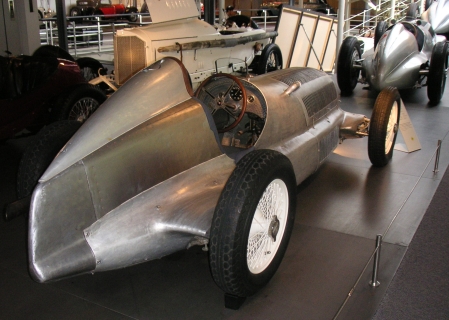
Silver Arrows (German: Silberpfeile) is a nickname typically given to silver racing cars with a significant connection to a German car manufacturer. Although the term was coined in 1932, it came into popular usage regarding Germany's dominant Mercedes-Benz and Auto Union Grand Prix motor racing cars between 1934 and 1939. The name was later applied to the Mercedes-Benz Formula One and sports cars in 1954 and 1955, then to the Sauber Group C prototype racing sports cars that raced at Le Mans in the late 1980s as well as the McLaren-Mercedes Formula One cars of the late 1990s and 2000s, and is currently applied to the Mercedes-AMG Petronas F1 cars from 2010 to present.
For decades until the introduction of sponsorship liveries, each country had its traditional colour in automobile racing. German race cars for their Silver Arrows silver, Italian for their Rosso corsa red, British ones were British racing green green, French Bleu de France blue, etc.
German cars like the Blitzen Benz were white, as were the three Mercedes that won the 1914 French Grand Prix 1–2–3. On the other hand, Mercedes won the Italian Targa Florio with cars painted red in 1922 (Giulio Masetti) and 1924 (Christian Werner), blending in with the local competitors. The big supercharged 200 hp Mercedes-Benz SSKL with which Rudolf Caracciola won the 1931 Mille Miglia was called the White Elephant.
In 1958, Alfred Neubauer described the origin of the Silver Arrows as being accidental. In 1934 the international governing body of motor sport prescribed a maximum weight limit of 750 kg (1,653 lb) for Grand Prix racing cars, excluding tyres and fuel. Neubauer said that when in spring 1934, the Mercedes-Benz team placed its new Mercedes-Benz W25 on the scrutineering scales prior to the Eifelrennen at the Nürburgring, it allegedly recorded 751 kg (1,656 lb). Racing manager Alfred Neubauer and his driver Manfred von Brauchitsch, who both later published their memoirs, claimed that they had the idea of removing all the white lead-based paint from the bodywork. The story continues that the next day the shining silver aluminium beneath was exposed and scrutineering was passed. After the 350 hp (260 kW) car of Von Brauchitsch won the race, the nickname Silver Arrow was born, according to this version.
There is however, controversy and doubt regarding this story. It did not appear until 1958, and no reference to it has been found in contemporary sources. It has since been established that von Brauchitsch had raced a streamlined silver SSKL on the AVUS in 1932, which was called a Silver Arrow in live radio coverage. Also, in 1934, both Mercedes and Auto Union had entered the Avusrennen with silver cars. The next big event was the 1934 Eifelrennen, but as few cars complying to the new rules were ready, it was held for Formule Libre, so weight was still not a race-critical issue at that time. By the 1930s, modern stressed-skin aircraft fuselage construction was already using polished and unpainted aluminium panels for streamlining and to save weight. Neubauer's 1958 autobiography has been shown to include several embellished stories and dubious claims, including a fabricated hoax surrounding the 1933 Tripoli Grand Prix, where he falsely accused several drivers of "fixing" the race.
A historical connection to the Neubauer's story appeared in 2023 with the introduction of the Mercedes-AMG F1 W14 E Performance Formula One car. At the launch, held on 15 February 2023, the W14 was revealed to have a black livery, much like its predecessors, the Mercedes F1 W11 of 2020 and the W12 of 2021, but unlike those aforementioned cars, the black livery on the car is not being primarily used to promote diversity, but to save weight after the team admitted to struggling with excess weight with its 2022 car, the W13, which had a traditional silver-painted livery. The black colour was created by leaving most of the parts as unpainted raw carbon whilst some others (mainly the top of the nose and the engine cover) are painted with matte black paint.
By 1937, the supercharged engine of a Mercedes-Benz W125 attained an output of 646 hp (475 kW),[citation needed] a figure not greatly exceeded in Grand Prix Racing until the early 1980s,[citation needed] when turbo-charged engines were common in Formula One – although it was at least matched as early as the late 1940s by conventionally fuelled Grand Prix engines like the BRM V16, despite the rules restricting later engines to half the cylinder capacity.
The Silver Arrows of Mercedes and Auto Union cars reached speeds of well over 300 kilometres per hour (186 mph) in 1937,[citation needed] and well over 400 km/h (249 mph) during land speed record runs.[citation needed]
Hub AI
Silver Arrows AI simulator
(@Silver Arrows_simulator)
Silver Arrows
Silver Arrows (German: Silberpfeile) is a nickname typically given to silver racing cars with a significant connection to a German car manufacturer. Although the term was coined in 1932, it came into popular usage regarding Germany's dominant Mercedes-Benz and Auto Union Grand Prix motor racing cars between 1934 and 1939. The name was later applied to the Mercedes-Benz Formula One and sports cars in 1954 and 1955, then to the Sauber Group C prototype racing sports cars that raced at Le Mans in the late 1980s as well as the McLaren-Mercedes Formula One cars of the late 1990s and 2000s, and is currently applied to the Mercedes-AMG Petronas F1 cars from 2010 to present.
For decades until the introduction of sponsorship liveries, each country had its traditional colour in automobile racing. German race cars for their Silver Arrows silver, Italian for their Rosso corsa red, British ones were British racing green green, French Bleu de France blue, etc.
German cars like the Blitzen Benz were white, as were the three Mercedes that won the 1914 French Grand Prix 1–2–3. On the other hand, Mercedes won the Italian Targa Florio with cars painted red in 1922 (Giulio Masetti) and 1924 (Christian Werner), blending in with the local competitors. The big supercharged 200 hp Mercedes-Benz SSKL with which Rudolf Caracciola won the 1931 Mille Miglia was called the White Elephant.
In 1958, Alfred Neubauer described the origin of the Silver Arrows as being accidental. In 1934 the international governing body of motor sport prescribed a maximum weight limit of 750 kg (1,653 lb) for Grand Prix racing cars, excluding tyres and fuel. Neubauer said that when in spring 1934, the Mercedes-Benz team placed its new Mercedes-Benz W25 on the scrutineering scales prior to the Eifelrennen at the Nürburgring, it allegedly recorded 751 kg (1,656 lb). Racing manager Alfred Neubauer and his driver Manfred von Brauchitsch, who both later published their memoirs, claimed that they had the idea of removing all the white lead-based paint from the bodywork. The story continues that the next day the shining silver aluminium beneath was exposed and scrutineering was passed. After the 350 hp (260 kW) car of Von Brauchitsch won the race, the nickname Silver Arrow was born, according to this version.
There is however, controversy and doubt regarding this story. It did not appear until 1958, and no reference to it has been found in contemporary sources. It has since been established that von Brauchitsch had raced a streamlined silver SSKL on the AVUS in 1932, which was called a Silver Arrow in live radio coverage. Also, in 1934, both Mercedes and Auto Union had entered the Avusrennen with silver cars. The next big event was the 1934 Eifelrennen, but as few cars complying to the new rules were ready, it was held for Formule Libre, so weight was still not a race-critical issue at that time. By the 1930s, modern stressed-skin aircraft fuselage construction was already using polished and unpainted aluminium panels for streamlining and to save weight. Neubauer's 1958 autobiography has been shown to include several embellished stories and dubious claims, including a fabricated hoax surrounding the 1933 Tripoli Grand Prix, where he falsely accused several drivers of "fixing" the race.
A historical connection to the Neubauer's story appeared in 2023 with the introduction of the Mercedes-AMG F1 W14 E Performance Formula One car. At the launch, held on 15 February 2023, the W14 was revealed to have a black livery, much like its predecessors, the Mercedes F1 W11 of 2020 and the W12 of 2021, but unlike those aforementioned cars, the black livery on the car is not being primarily used to promote diversity, but to save weight after the team admitted to struggling with excess weight with its 2022 car, the W13, which had a traditional silver-painted livery. The black colour was created by leaving most of the parts as unpainted raw carbon whilst some others (mainly the top of the nose and the engine cover) are painted with matte black paint.
By 1937, the supercharged engine of a Mercedes-Benz W125 attained an output of 646 hp (475 kW),[citation needed] a figure not greatly exceeded in Grand Prix Racing until the early 1980s,[citation needed] when turbo-charged engines were common in Formula One – although it was at least matched as early as the late 1940s by conventionally fuelled Grand Prix engines like the BRM V16, despite the rules restricting later engines to half the cylinder capacity.
The Silver Arrows of Mercedes and Auto Union cars reached speeds of well over 300 kilometres per hour (186 mph) in 1937,[citation needed] and well over 400 km/h (249 mph) during land speed record runs.[citation needed]