



Community hub
Recent from talks
Knowledge base stats:
Talk channels stats:
Members stats:
Targa Florio
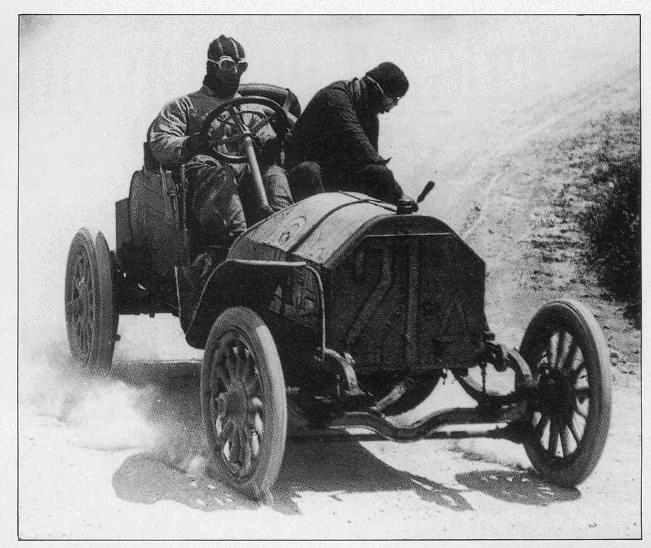
The Targa Florio was a public road endurance automobile race held in the mountains of Sicily near the island's capital of Palermo. Founded in 1906, it was the oldest sports car racing event and was part of the World Sportscar Championship between 1955 and 1973. While the first races consisted of a whole tour of the island, the track length in the race's last decades was limited to the 72 km (45 mi) of the Circuito Piccolo delle Madonie, which was lapped 11 times.
After 1973, it was a national sports car event until it was discontinued in 1977 due to safety concerns. It has since been run as Targa Florio Rally, a rallying event, and is part of the Italian Rally Championship.
The race was created in 1906 by the wealthy pioneer race driver and automobile enthusiast, Vincenzo Florio, who had started the Coppa Florio race in Brescia, Lombardy in 1900. The Targa also claimed to be a world event not to be missed. Renowned artists, such as Alexandre Charpentier and Leonardo Bistolfi, were commissioned to design medals. A magazine was initiated, Rapiditas, which aimed to enhance, with graphic and photographic reproductions of the race, the myth of the car and the typical character of modern life, speed.
One of the toughest competitions in Europe, the first Targa Florio covered 3 laps of a 92-mile (148 km) circuit, totaling 276 miles (444 km), traversing through winding bends and multiple hairpin curves on treacherous mountain roads, with around 2,000 corners per lap and over 3,600 feet (1,100 m) of elevation change, at heights where severe changes in climate frequently occurred. Alessandro Cagno won the inaugural 1906 race in nine hours, averaging 30 miles per hour (50 km/h).
By the early to mid-1920s, the Targa Florio course had been shortened to 67 miles (108 km) and had become one of Europe's most important races, as neither the 24 Hours of Le Mans nor the Mille Miglia had been established yet. Grand Prix races were still isolated events, not a series like today's F1.
The wins of Mercedes (not yet merged with Benz) in the 1920s made a big impression in Germany, especially that of German Christian Werner in 1924, as he was the first non-Italian winner since 1920. Rudolf Caracciola repeated a similar upset win at the Mille Miglia a couple of years later. In 1927, Eliska Junkova, one of the great female drivers in Grand Prix motor racing history, became the first woman to ever compete in the race. The 1931 race saw a one-off return to the Grande course after roads and bridges specifically unique to the Medio course near Polizzi Generosa had been destroyed by landslides during severe rainstorms; the 1932 course saw the first use of the Piccolo course after a road connecting Caltavuturo and Collesano was constructed on the direct orders of Benito Mussolini himself by request of Florio.
In 1953, the FIA World Sportscar Championship was introduced. The Targa became part of it in 1955. Mercedes had to win 1–2 with the Mercedes-Benz 300 SLR in order to beat Ferrari for the title. They had missed the first two of the 6 events, Buenos Aires and the 12 Hours of Sebring, where Ferrari, Jaguar, Maserati and Porsche scored points. Mercedes appeared at and won in the Mille Miglia, then pulled out of Le Mans as a sign of respect for the victims of the 1955 Le Mans disaster, but won the Tourist Trophy at Dundrod. Despite a number of incidents, the Stirling Moss/Peter Collins and Juan Manuel Fangio/Karl Kling cars finished minutes ahead of the best Ferrari and secured the title. In 1958 the race again became a round in the Championship replacing the discontinued Mille Miglia as the Italian round of the Championship.
Several versions of the track were used. It started with a single lap of a 148 km (92 mi) circuit from 1906 to 1911 and 1931. From 1912 to 1914 a tour around the perimeter of Sicily was used, with a single lap of 975 kilometres (606 mi), lengthened to 1,080 kilometres (670 mi) from 1948 to 1950. The 146 km "Grande" circuit was then shortened twice, the first time to 108 km (67 mi), the version used from 1919 to 1930, and then to the 72 km (45 mi) circuit used from 1932 to 1936 and 1951 to 1977. From 1951 to 1958, the long coastal island tour variant was used for a separate event called the Giro di Sicilia (Lap of Sicily).
Hub AI
Targa Florio AI simulator
(@Targa Florio_simulator)
Targa Florio
The Targa Florio was a public road endurance automobile race held in the mountains of Sicily near the island's capital of Palermo. Founded in 1906, it was the oldest sports car racing event and was part of the World Sportscar Championship between 1955 and 1973. While the first races consisted of a whole tour of the island, the track length in the race's last decades was limited to the 72 km (45 mi) of the Circuito Piccolo delle Madonie, which was lapped 11 times.
After 1973, it was a national sports car event until it was discontinued in 1977 due to safety concerns. It has since been run as Targa Florio Rally, a rallying event, and is part of the Italian Rally Championship.
The race was created in 1906 by the wealthy pioneer race driver and automobile enthusiast, Vincenzo Florio, who had started the Coppa Florio race in Brescia, Lombardy in 1900. The Targa also claimed to be a world event not to be missed. Renowned artists, such as Alexandre Charpentier and Leonardo Bistolfi, were commissioned to design medals. A magazine was initiated, Rapiditas, which aimed to enhance, with graphic and photographic reproductions of the race, the myth of the car and the typical character of modern life, speed.
One of the toughest competitions in Europe, the first Targa Florio covered 3 laps of a 92-mile (148 km) circuit, totaling 276 miles (444 km), traversing through winding bends and multiple hairpin curves on treacherous mountain roads, with around 2,000 corners per lap and over 3,600 feet (1,100 m) of elevation change, at heights where severe changes in climate frequently occurred. Alessandro Cagno won the inaugural 1906 race in nine hours, averaging 30 miles per hour (50 km/h).
By the early to mid-1920s, the Targa Florio course had been shortened to 67 miles (108 km) and had become one of Europe's most important races, as neither the 24 Hours of Le Mans nor the Mille Miglia had been established yet. Grand Prix races were still isolated events, not a series like today's F1.
The wins of Mercedes (not yet merged with Benz) in the 1920s made a big impression in Germany, especially that of German Christian Werner in 1924, as he was the first non-Italian winner since 1920. Rudolf Caracciola repeated a similar upset win at the Mille Miglia a couple of years later. In 1927, Eliska Junkova, one of the great female drivers in Grand Prix motor racing history, became the first woman to ever compete in the race. The 1931 race saw a one-off return to the Grande course after roads and bridges specifically unique to the Medio course near Polizzi Generosa had been destroyed by landslides during severe rainstorms; the 1932 course saw the first use of the Piccolo course after a road connecting Caltavuturo and Collesano was constructed on the direct orders of Benito Mussolini himself by request of Florio.
In 1953, the FIA World Sportscar Championship was introduced. The Targa became part of it in 1955. Mercedes had to win 1–2 with the Mercedes-Benz 300 SLR in order to beat Ferrari for the title. They had missed the first two of the 6 events, Buenos Aires and the 12 Hours of Sebring, where Ferrari, Jaguar, Maserati and Porsche scored points. Mercedes appeared at and won in the Mille Miglia, then pulled out of Le Mans as a sign of respect for the victims of the 1955 Le Mans disaster, but won the Tourist Trophy at Dundrod. Despite a number of incidents, the Stirling Moss/Peter Collins and Juan Manuel Fangio/Karl Kling cars finished minutes ahead of the best Ferrari and secured the title. In 1958 the race again became a round in the Championship replacing the discontinued Mille Miglia as the Italian round of the Championship.
Several versions of the track were used. It started with a single lap of a 148 km (92 mi) circuit from 1906 to 1911 and 1931. From 1912 to 1914 a tour around the perimeter of Sicily was used, with a single lap of 975 kilometres (606 mi), lengthened to 1,080 kilometres (670 mi) from 1948 to 1950. The 146 km "Grande" circuit was then shortened twice, the first time to 108 km (67 mi), the version used from 1919 to 1930, and then to the 72 km (45 mi) circuit used from 1932 to 1936 and 1951 to 1977. From 1951 to 1958, the long coastal island tour variant was used for a separate event called the Giro di Sicilia (Lap of Sicily).