Hubbry Logo
Alfred NeubauerAlfred NeubauerMain
Open search
Alfred Neubauer
Community hub
Alfred Neubauer
logo
8 pages, 0 posts
0 subscribers
Be the first to start a discussion here.
Alfred Neubauer
Alfred Neubauer
from Wikipedia

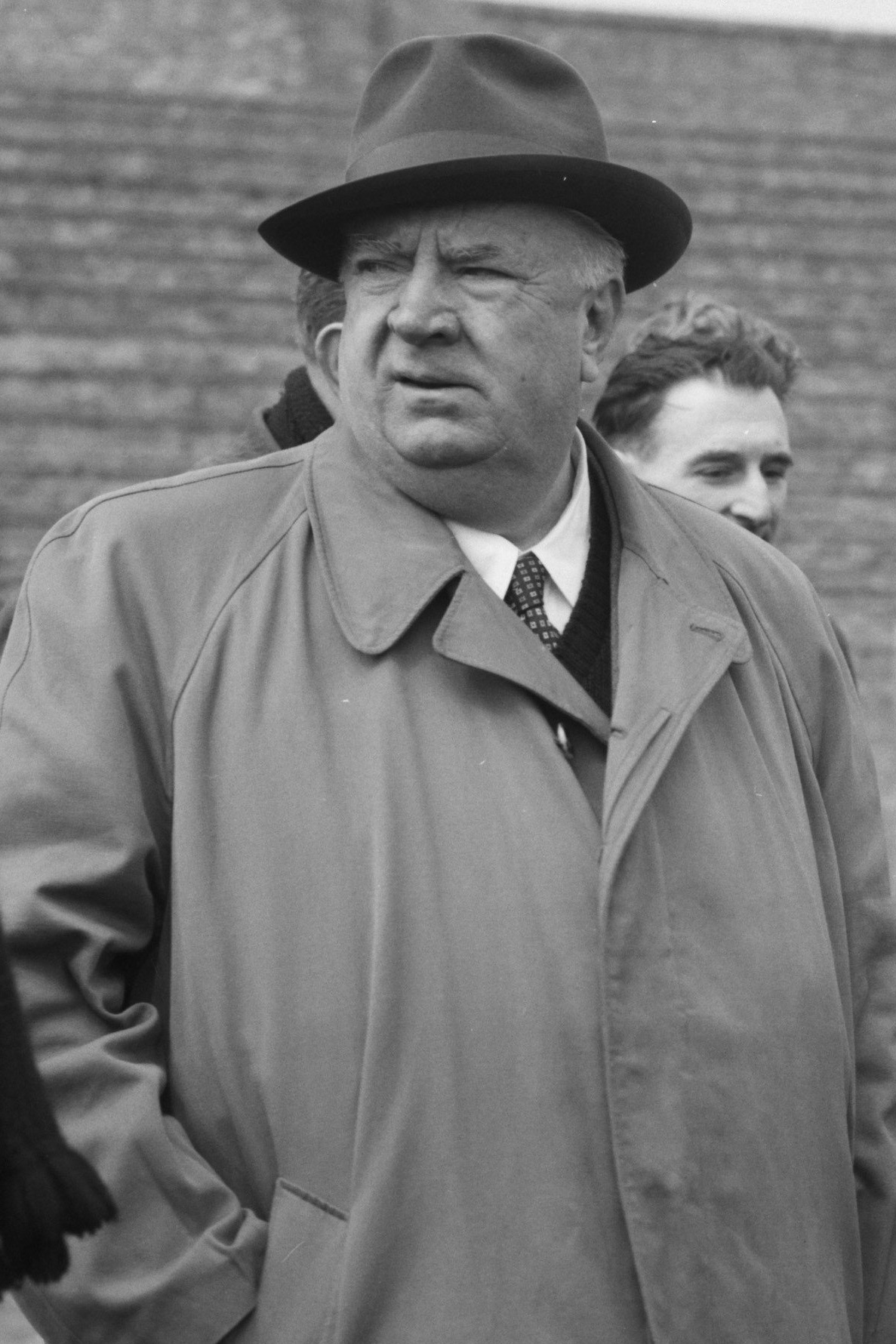
Alfred Neubauer (29 March 1891 – 21 August 1980)[1] was the racing manager of the Mercedes-Benz Grand Prix team from 1926 to 1955.

Key Information

Biography

[edit]

Neubauer's father, Karl Neubauer, was a furniture-maker in Neutitschein (Czech: Nový Jičín), which then was part of the Austro-Hungarian Empire.[2] Karl christened his only son Alfred, but the child quickly became known to family and friends as Friedl.[2]

Neubauer used to repair motor vehicles while he was an officer during his service in the Imperial Austrian army. After the First World War, he joined the Austrian car manufacturer Austro-Daimler, where Ferdinand Porsche appointed him to be chief tester. From 1922 onwards, Neubauer also drove in races, although without any great success. In 1923, when Ferdinand Porsche moved to the Daimler Works at Stuttgart (Daimler-Benz was not founded until 1926), he took Neubauer with him. In 1926, recognizing that he himself was not a great racing driver, Neubauer got an inspiration that let him create the position of racing team manager (Rennleiter).

Racing drivers in those days being isolated from the outside, they often did not know their position in a race. Occasionally a driver would learn that he had won after a race merely by surprise. To overcome this situation, Alfred Neubauer devised a well thought-out system, with flags and boards, to give his drivers more tactical information. When he tried out the system for the first time at the 1926 Solituderennen on 12 September 1926, the chief steward demanded angrily that he leave the track, since his 'antics' were irritating the drivers. To Neubauer's explanation that he was the Rennleiter, the organizer responded: 'Are you mad? I'm the Rennleiter' (Rennleiter can also mean "race director").

The Mercedes-Benz team was soon winning races with SS and SSK racing cars, frequently in the hands of Rudolf Caracciola, the best driver during those days. Neubauer's contribution lay not just in his tactical skill, but also in the perfectionistical, almost military drill of the pit crew, which constantly gave the team a time advantage over its rivals.

Neubauer's organization at the Mille Miglia in 1931 was a master stroke. To reach each staging post before Caracciola arrived, he repeatedly criss-crossed Italy with his team.

According to Neubauer, the origin of the Silver Arrows phrase was due to the cars being overweighted at their first race. Neubauer's story states that the rules prescribed a weight limit of 750 kg, whilst one day before the new cars' first race they weighed in at 751 kg. This led to Neubauer and Manfred von Brauchitsch eventually coming up with the idea of removing the cars' white paint. The silver-coloured aluminium bodywork was exposed, and the Silver Arrows were born. However, this story is a fabrication by Neubauer himself, a well-known raconteur. The debut race was run to Formula Libre rules, meaning there was no weight limit. Additionally, there are no reports or photographs from the time suggesting that the cars were ever run in white paint.[3]

Silver Arrows

[edit]

The Silver Arrows years were dominated by German racing cars and the rivalry between Mercedes-Benz and Auto Union. In its most successful phase, the Mercedes-Benz team's regular drivers were Rudolf Caracciola, Hermann Lang, Manfred von Brauchitsch, and Richard Seaman.

After the Second World War, Mercedes-Benz was anxious to return to racing as soon as possible, but a new formula was announced for 1954, and there was insufficient time to produce a new model. As a compromise solution, the design of the Mercedes-Benz 300 was adapted. This resulted in a new racing car, the Mercedes-Benz 300SL.

With this car, Neubauer achieved victories at the Carrera Panamericana and the Le Mans 24-hour race. When Mercedes-Benz cars returned to Grand Prix racing in 1954, the new Silver Arrows proved to be as superior as those produced before the war. Juan Manuel Fangio was World Champion in 1954 and 1955.

Probably Neubauer's worst day as racing manager was at Le Mans in 1955, when a Mercedes-Benz 300 SLR driven by Frenchman Pierre Levegh, was catapulted into the crowd, killing more than 80 people including Levegh. After consultation with Stuttgart, Neubauer withdrew the remaining cars from the event.

After the shock of Le Mans, Mercedes-Benz withdrew from racing altogether, and Alfred Neubauer retired.

References

[edit]
[edit]
Revisions and contributorsEdit on WikipediaRead on Wikipedia
from Grokipedia
Alfred Neubauer is an Austrian racing manager known for his pioneering role as the racing director of the Mercedes-Benz Grand Prix team from 1926 to 1955, during which he revolutionized motorsport team management and led the marque to dominance in the legendary Silver Arrows era of the 1930s as well as a highly successful postwar return to racing in the 1950s. Born on 29 March 1891 in Neutitschein, Moravia (then part of the Austro-Hungarian Empire, now in the Czech Republic), he initially pursued a brief career as a racing driver in the early 1920s after serving as an automotive officer in the Austrian army during World War I, competing in events such as the Targa Florio with Austro-Daimler and early Mercedes models before shifting to team management. Neubauer is widely credited with inventing the modern racing team manager position, introducing systematic pit-to-driver communication using signal boards, flags, and coded messages, along with structured pit-stop procedures and strategic race planning that became foundational to the sport. Under his leadership, Mercedes-Benz dominated Grand Prix racing from 1934 to 1939 with the supercharged Silver Arrows, achieving more than two dozen victories and three European Championship titles for Rudolf Caracciola amid intense competition from Auto Union. After World War II, he successfully advocated for the company's return to motorsport, overseeing the development and triumphs of the 300 SL/300 SLR sports cars and the W 196 R Formula 1 car, which propelled Juan Manuel Fangio to the World Championships in 1954 and 1955 before Mercedes withdrew following the tragic Le Mans disaster that year. Neubauer retired from active racing management in 1955 and later focused on documenting Mercedes-Benz's motorsport history, remaining associated with the company until his death on 21 August 1980; his meticulous organization, charismatic presence, and innovative approaches earned him lasting recognition as one of the most influential figures in the history of motor racing.

Early life

Birth and family background

Alfred Neubauer was born on 29 March 1891 in Neutitschein, Moravia, then part of the Austro-Hungarian Empire and now known as Nový Jičín in the Czech Republic. He was the only son of Karl Neubauer, a furniture-maker. From childhood, Neubauer was affectionately known to family and friends by the nickname "Friedl." As a young boy, he developed an early fascination with motors and automobiles.

Military service and entry into automotive industry

During World War I, Alfred Neubauer served as an automotive officer in the Imperial Austrian Army, where he repaired motor vehicles and helped organize motorized artillery units that utilized Austro-Daimler equipment. This work brought him into early contact with Ferdinand Porsche, whose designs for prime movers and gun carriages were integral to these military efforts. After the war ended, Neubauer joined Austro-Daimler in Wiener Neustadt, and around 1920 Ferdinand Porsche appointed him head of the break-in department. In this role, he focused on testing and development activities, which soon extended to motorsport participation. From 1922 onward, Neubauer began racing as a driver, most notably piloting a Porsche-designed Austro-Daimler Sascha at the Targa Florio that year, though his efforts yielded no major successes. In 1923, when Ferdinand Porsche transferred to the Daimler-Motoren-Gesellschaft in Stuttgart-Untertürkheim as Technical Director, Neubauer accompanied him and took on the position of head of the driving department. His modest results as a driver contributed to his eventual shift toward organizational responsibilities in the automotive and racing spheres.

Motorsport career

Early racing as a driver

Alfred Neubauer began his competitive racing career as a driver in 1922 while employed by Austro-Daimler, participating in events with the Porsche-designed Sascha model. His most prominent early outing came at the Targa Florio that year, where he drove one of the team's 1100cc Sascha cars and finished 19th overall. In 1923, he followed Ferdinand Porsche to Daimler-Motoren-Gesellschaft and continued occasional racing appearances. He returned to the Targa Florio in 1924 with the Mercedes team, placing 15th as the squad secured the team prize. Despite these participations, Neubauer achieved limited success as a driver and did not establish himself among the top competitors. At the Semmering hillclimb, he finished nearly 40 seconds behind teammate Christian Werner, prompting his fiancée to remark that he drove "like a nightwatchman"—a comment that mortified him and reinforced his self-assessment. By 1926, having recognized that he would not rise to the level of a leading racing driver, Neubauer shifted away from active competition.

Creation of the modern racing manager role

In 1926, having recognized the limitations of his own abilities as a driver, Alfred Neubauer invented the role of Rennleiter (racing manager) at Mercedes-Benz, effectively creating the modern concept of the professional racing team manager. This shift stemmed from his realization that a driver on the track was isolated, often unaware of their position, speed, or tactical needs during a race, prompting him to focus on organized oversight and communication from the pits. To address this isolation, Neubauer developed the first systematic pit-to-driver communication methods, employing colored flags, signal boards, and hand signals—similar to baseball sign language—to relay critical information such as pace adjustments, remaining laps, distances to competitors, and service needs. These tools were first deployed in full at the Solituderennen on 12 September 1926, marking a pioneering attempt to provide real-time tactical guidance during competition. The innovation met immediate resistance, however, as the chief steward angrily ordered Neubauer to leave the track area, deeming his "peculiar antics" disruptive and stressful to other drivers while scoffing at the idea of a separate Rennleiter role and insisting that he himself held that title. Neubauer further emphasized military-style pit discipline, organizing dedicated crews per car and enforcing drilled procedures for rapid servicing to secure time advantages through precision and efficiency—practices that were unprecedented at the time. These innovations laid the groundwork for contemporary race team management and were applied to the Mercedes-Benz team from 1926 onward.

Pre-war Mercedes-Benz era (1926–1939)

Alfred Neubauer served as racing manager of the Mercedes-Benz Grand Prix team from 1926 to 1939, directing its competition program and contributing to major successes with the supercharged S-series models. He oversaw the SS and SSK variants between 1928 and 1931, which secured numerous victories, frequently driven by Rudolf Caracciola. One of the era's highlights was the 1931 Mille Miglia, where Caracciola and co-driver Wilhelm Sebastian won in a Mercedes-Benz SSKL after a 1,635 km race completed in 16 hours, 10 minutes and 10 seconds at an average speed of 101.6 km/h—the first time the 100 km/h barrier was broken in the event and the first non-Italian victory. Neubauer orchestrated a logistical operation with only four supply points along the route, enabling efficient support despite the Mercedes team's disadvantages compared to Italian factory efforts with extensive spare parts networks. In 1934, Mercedes-Benz introduced the W25 under the new 750 kg Grand Prix formula, initiating the Silver Arrows era that lasted until 1939 and featured dominance in European racing with more than two dozen Grand Prix victories and three European Championship titles won by Rudolf Caracciola. Key drivers during this period included Caracciola, Hermann Lang, Manfred von Brauchitsch, and Richard Seaman. Neubauer later claimed in his 1958 memoir Speed Was My Life that the "Silver Arrows" nickname originated at the 1934 Eifelrennen at the Nürburgring, where he and driver Manfred von Brauchitsch reportedly stripped white paint from the W25 to shed about 1 kg and meet the weight limit, exposing the bare aluminum bodywork. This anecdote lacks contemporary evidence and is widely regarded as a fabrication or embellishment by Neubauer.

Post-war return and 1950s successes (1952–1955)

After World War II, Alfred Neubauer returned to Mercedes-Benz and took charge of the company's motorsport revival in the early 1950s, directing the racing department with the same meticulous planning that had characterized his pre-war efforts. In 1952, he oversaw the successful deployment of the 300 SL sports car in major endurance events. That year, Mercedes-Benz secured a 1-2 finish at the 24 Hours of Le Mans, with Hermann Lang and Fritz Riess taking victory ahead of teammates Theo Helfrich and Helmut Niedermayr. Neubauer also managed the team's participation in the grueling Carrera Panamericana in Mexico, where Karl Kling and Hans Klenk won, with Hermann Lang and Erwin Grupp finishing second. These triumphs marked Mercedes-Benz's first major post-war international racing successes. Neubauer then spearheaded the company's return to Formula One Grand Prix racing in 1954 with the advanced W196 model. He personally recruited Juan Manuel Fangio, who debuted with the team at the French Grand Prix in Reims and contributed to a dominant campaign. Under Neubauer's leadership, Fangio won the Formula One World Championship in 1954 and repeated the feat in 1955, establishing Mercedes-Benz as a formidable force in the sport. The team's performance during this period was widely regarded as unbeatable in Grand Prix competition.

1955 Le Mans disaster and end of Mercedes racing involvement

On 11 June 1955, during the 24 Hours of Le Mans, Pierre Levegh's Mercedes-Benz 300 SLR crashed after colliding with Lance Macklin's Austin-Healey, which had swerved to avoid Mike Hawthorn's Jaguar, launching Levegh's magnesium-bodied car into the grandstand where it disintegrated and caught fire. The accident killed Levegh instantly and 83 spectators, marking the deadliest incident in motorsport history. As team manager, Alfred Neubauer immediately contacted the Daimler-Benz board in Stuttgart to discuss withdrawal, having already approached Jaguar for a joint retirement that was declined. Shortly after midnight, the board authorized pulling the two remaining Mercedes cars—driven by Juan Manuel Fangio/Stirling Moss and Karl Kling/André Simon, then leading and in third place—out of respect for the victims, with the retirement executed around 1:40 a.m. on 12 June. Mercedes-Benz completed the 1955 season but announced the complete cessation of factory motorsport activities on 22 October during a victory celebration in Stuttgart, redirecting resources to production development though the Le Mans tragedy was widely linked to the timing. At that gathering, the Silver Arrows were ceremonially covered before the press, an emotional moment for Neubauer who waved his handkerchief and wiped tears from his eyes as the era ended.

Later life and death

Retirement and post-racing activities

After the Mercedes-Benz factory team's withdrawal from motor racing following the 1955 Le Mans disaster, Alfred Neubauer retired from his position as racing manager, a role he had held since 1926. The company's complete exit from competition left him without an official factory team to manage, marking the end of his direct involvement in Grand Prix and sports car racing operations. Neubauer remained connected to Mercedes-Benz, concerned with the reappraisal of the company's motorsport history and closely associated with Daimler-Benz AG into old age. Secondary sources report that he headed a section supporting private drivers at the Stuttgart factory, assisting amateur and private entrants with advice on vehicle preparation, setup, and racing strategies. He also continued driver training activities, working alongside Karl Kling at events including Monza and the Nürburgring. Details of his activities in this period remain limited, reflecting the reduced scope of Mercedes-Benz motorsport involvement at the time.

Death

Alfred Neubauer died on 21 August 1980 at the age of 89 in West Germany (some sources list 22 August). He is buried at the cemetery in Remseck am Neckar-Aldingen (now part of Remseck). His death came after more than two decades of retirement following Mercedes-Benz's withdrawal from motorsport in 1955.

Personal life

Marriage and family

Alfred Neubauer married Josefa Romana Ortbauer, known as "Hansi," in 1929 in Vienna. The couple remained together until her death in May 1963 at a hospital in Stuttgart. They had no children. In his later years, Neubauer and his wife led a quiet family life in Aldingen, where he pursued hobbies and retired from public activities. Neubauer was buried beside her. Limited details about their personal relationship or extended family are documented in available sources.

Personality and storytelling reputation

Alfred Neubauer was renowned for his vibrant personality off the track, where he was described as a true raconteur who was always ready with a wonderful story. He maintained an impish charm from his youth, full of mirth and an appetite for life that made him an engaging storyteller in social settings. This side of Neubauer contrasted with his stern on-track persona, highlighting his flair for the dramatic and ability to captivate audiences. His reputation as an enthusiastic storyteller carried into his writings, where he occasionally embellished anecdotes for greater dramatic impact. A prominent example is his account of the "Silver Arrows" nickname's origin, first detailed in his 1958 memoir Speed Was My Life, claiming that Mercedes mechanics stripped white paint from the W25 cars overnight before the 1934 Eifelrennen to meet the 750 kg weight limit, revealing the bare aluminum bodywork that inspired the name. This entertaining tale, however, is widely regarded as a myth propagated by Neubauer, as no contemporary photographs show the cars painted white, the weight limit was not enforced at that event under Formula Libre rules, and the term "Silver Arrow" had been used earlier for a bare-metal Mercedes in 1932. Neubauer's inventive approach to racing management also earned him the nickname "the man of a thousand tricks," reflecting his clever tactics and resourcefulness, which complemented his storytelling prowess in building the Mercedes legend. His anecdotes, while sometimes inaccurate, contributed significantly to the enduring allure of the Silver Arrows era.

Publications

Authored books

Alfred Neubauer authored several books drawing from his long career in motorsport, particularly his role as racing manager for Mercedes-Benz. His first book, Heute lacht man darüber, was published in 1951. This work features humorous anecdotes and stories from his experiences in automobile racing and related events. The title, translating to "Today One Laughs About It," reflects a lighthearted look back at incidents that may have seemed serious at the time. Neubauer's best-known publication is Männer, Frauen und Motoren: Die Erinnerungen des Mercedes-Rennleiters Alfred Neubauer, first released in 1958 and reprinted in 1970. This autobiographical memoir details his leadership of the Mercedes-Benz Grand Prix team from the 1920s through the 1950s, including accounts of drivers, races, technical innovations, and key events in the sport. Some editions included contributions from illustrator Harvey T. Rowe, and the book was translated into English as Speed Was My Life in 1960. These works highlight Neubauer's storytelling reputation, blending personal recollections with insights into the golden eras of motor racing.

Media appearances

Television and film credits

Alfred Neubauer had limited credits in television and film, with his contributions largely consisting of appearances as himself in documentary shorts, newsreels, and race-related productions tied to his role as Mercedes-Benz racing manager, primarily during the 1950s. He is credited as writer (concept) and narrator for the 1954 German TV movie Helfer, Funktionäre - Startplatz räumen!, a documentary focused on racing operations and personnel. Neubauer appeared as himself in various short films and documentary productions covering Grand Prix racing in 1954 and 1955, including the 1955 short film Belgian Grand Prix. IMDb lists him with credits in multiple race-specific entries from those years (aggregated under "Formula 1" on the site) as well as other 1950s titles such as The British Grand Prix Aintree 1955, Rennfieber, and The Titans 1935-1939. IMDb records a total of 11 credits for Neubauer as "Self," some featuring contemporary footage from his early racing career (including the 1922 and 1924 Italian Grands Prix) and others from his management era. Additionally, archive footage of Neubauer appears in three later productions, further illustrating the enduring historical interest in his career and the Mercedes racing team's activities. These credits remain closely connected to his professional legacy in motorsport management rather than fictional or dramatic roles.

Legacy

Impact on motorsport management

Alfred Neubauer is widely regarded as the founder of modern professional racing team management, transforming the role from informal oversight to a highly organized, strategic position central to success in motorsport. His experience as a driver highlighted the isolation of competitors who lacked real-time information about race positions or gaps, leading him to develop systematic pit-to-driver communication methods that provided ongoing updates during events. In 1926, Neubauer introduced a code system using numbered and lettered boards along with colored flags to convey essential race data, such as positions and instructions, to drivers via glance from the pits. This innovation was first notably effective at the Solituderennen Grand Prix, where it contributed to a Mercedes 1-2-3 finish, and is credited with fundamentally changing the face of motor racing by enabling informed tactical decisions mid-race. He further pioneered disciplined pit organization, assigning dedicated crews to each car and implementing military-style drilling for rapid, reliable stops that included specialized roles for monitoring components and driver signals. Neubauer's emphasis on meticulous preparation, logistics, reconnaissance, and real-time strategy—such as pace-matching instructions and quick adaptation to changing conditions—elevated team operations to a professional standard that influenced subsequent motorsport management practices. Many of his core approaches, including two-way pit communication and efficient pit-stop execution, remain foundational elements in modern racing team structures.

Recognition and memorials

Alfred Neubauer has been posthumously honored with the naming of a street in Wiener Neustadt, Austria. The Alfred-Neubauer-Gasse is named after him. These tributes reflect his enduring recognition in locations connected to his life.

References

Add your contribution
Related Hubs
User Avatar
No comments yet.