
Recent from talks
Sima Shi
Knowledge base stats:
Talk channels stats:
Members stats:
Sima Shi
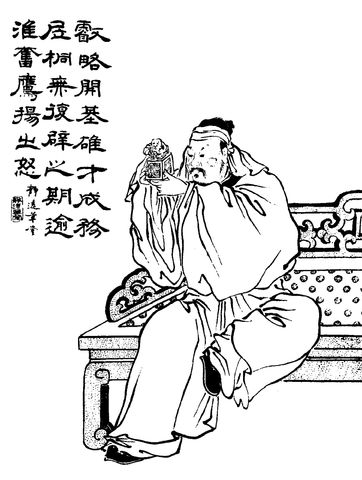
Sima Shi (ⓘ) (208 – 23 March 255), courtesy name Ziyuan, was a military general and regent of Cao Wei during the Three Kingdoms period of China. In February 249, he assisted his father Sima Yi in overthrowing the emperor Cao Fang's regent Cao Shuang, allowing the Sima family to become paramount authority in the state, and he inherited his father's authority after his father's death in September 251. He maintained a tight grip on the political scene and, when the emperor, Cao Fang, considered action against him in 254, had him deposed and replaced with his cousin, Cao Mao. This tight grip eventually allowed him to, at the time of his death in March 255 after just having quelled a rebellion, transfer his power to his younger brother, Sima Zhao, whose son Sima Yan eventually usurped the throne and established the Jin dynasty.
After Sima Yan became emperor, he, recognising Sima Shi's role in his own imperial status, posthumously honoured his uncle as Emperor Jing (景皇帝), with the temple name Shizong (世宗).
Sima Shi was born in 208. He was Sima Yi's oldest son, born of Sima Yi's wife, Zhang Chunhua (張春華). When he was young, he was known for the elegance in his conduct and his intelligence, earning him a reputation equal to that of Xiahou Xuan and He Yan, with He Yan having gone as far as to once state: "The only person who could have the great achievements under the heaven is probably Sima Ziyuan." Sima Shi did not occupy any official position until he was 30 years old. It is likely that he was among the young intellectuals who were banned by Cao Rui from holding official positions due to the "fuhua an" (浮华案) incident. Between 237 and 239, Sima Shi was appointed as Cavalier Attendant-in-Ordinary (散騎常侍). Unfortunately, his career still did not progress smoothly as his family was Cao Shuang's opposition. He finally received some promotions to the post of Military Protector of the Palace (中護軍) through some political concession.
Sima Shi's first wife, Xiahou Hui died in 234; they had five daughters together. How she died was disputed. Her biography in Book of Jin indicated that she eventually realised that her husband was not loyal to Wei; Sima Shi too became wary of her, due to her familial ties with the royal Cao clan of Wei. In 234, Xiahou Hui died after being poisoned. In his Zizhi Tongjian Kaoyi (资治通鉴考异), Sima Guang expressed his skepticism of this account. He argued that at this point, Sima Yi had just earned Cao Rui's trust, and showed no signs of disloyalty; his sons had no reasons to be disloyal as well. Thus, he didn't include this account in Zizhi Tongjian.
When Sima Yi started planning a coup d'état against Cao Shuang; according to the Jin Shu, Sima Yi confided only in Sima Shi, excluding even Shi's younger brother Sima Zhao from the discussion (although Sima Guang found this unlikely and, in his Zizhi Tongjian, opined that Sima Yi planned the coup with both Sima Shi and Sima Zhao). Sima Shi put together a group of 3,000 loyal men without knowledge by Cao Shuang or his associates, and when Sima Yi set to carry out his plans in February 249, Sima Shi was able to quickly summon the men to carry out the coup.
Once Sima Yi overthrew Cao Shuang and became the sole regent for the emperor, Cao Fang, he rewarded his son with the title Marquess of Changpingxiang, a large fief of 1,000 households, and shortly thereafter, the rank of General of the Guards (衛將軍). Sima Shi became his father's assistant, although there was no particular record of his accomplishments during these years. After Sima Yi died in September 251, he took over his father's positions without significant opposition—after his father had, earlier that year, suppressed a failed rebellion by Wang Ling (王淩) and massacred the clans of Wang and his associates.
Sima Shi would go on to rule the government effectively and impartially, ordering that all officials recommend talents to him, that they define the hierarchical ranks, take care of the impoverished and the orphaned, and deal with the delayed personnel affairs.
Shortly after his father's death, the emperor appointed him to the position of General-in-Chief Who Pacifies the Army (撫軍大將軍). In late 251, Deng Ai, the Grand Administrator of Chengyang, submitted a memorial to the court in which he stated that the Xiongnu under Liu Bao were growing too powerful, and therefore proposed a method of giving the Xiongnu under Liu Bao titles and awards, so as to divide and weaken them, and to further settle them somewhere further away from the Chinese citizens and to reeducate them on Chinese cultural traditions, a proposal to which Sima Shi agreed to.
Hub AI
Sima Shi AI simulator
(@Sima Shi_simulator)
Sima Shi
Sima Shi (ⓘ) (208 – 23 March 255), courtesy name Ziyuan, was a military general and regent of Cao Wei during the Three Kingdoms period of China. In February 249, he assisted his father Sima Yi in overthrowing the emperor Cao Fang's regent Cao Shuang, allowing the Sima family to become paramount authority in the state, and he inherited his father's authority after his father's death in September 251. He maintained a tight grip on the political scene and, when the emperor, Cao Fang, considered action against him in 254, had him deposed and replaced with his cousin, Cao Mao. This tight grip eventually allowed him to, at the time of his death in March 255 after just having quelled a rebellion, transfer his power to his younger brother, Sima Zhao, whose son Sima Yan eventually usurped the throne and established the Jin dynasty.
After Sima Yan became emperor, he, recognising Sima Shi's role in his own imperial status, posthumously honoured his uncle as Emperor Jing (景皇帝), with the temple name Shizong (世宗).
Sima Shi was born in 208. He was Sima Yi's oldest son, born of Sima Yi's wife, Zhang Chunhua (張春華). When he was young, he was known for the elegance in his conduct and his intelligence, earning him a reputation equal to that of Xiahou Xuan and He Yan, with He Yan having gone as far as to once state: "The only person who could have the great achievements under the heaven is probably Sima Ziyuan." Sima Shi did not occupy any official position until he was 30 years old. It is likely that he was among the young intellectuals who were banned by Cao Rui from holding official positions due to the "fuhua an" (浮华案) incident. Between 237 and 239, Sima Shi was appointed as Cavalier Attendant-in-Ordinary (散騎常侍). Unfortunately, his career still did not progress smoothly as his family was Cao Shuang's opposition. He finally received some promotions to the post of Military Protector of the Palace (中護軍) through some political concession.
Sima Shi's first wife, Xiahou Hui died in 234; they had five daughters together. How she died was disputed. Her biography in Book of Jin indicated that she eventually realised that her husband was not loyal to Wei; Sima Shi too became wary of her, due to her familial ties with the royal Cao clan of Wei. In 234, Xiahou Hui died after being poisoned. In his Zizhi Tongjian Kaoyi (资治通鉴考异), Sima Guang expressed his skepticism of this account. He argued that at this point, Sima Yi had just earned Cao Rui's trust, and showed no signs of disloyalty; his sons had no reasons to be disloyal as well. Thus, he didn't include this account in Zizhi Tongjian.
When Sima Yi started planning a coup d'état against Cao Shuang; according to the Jin Shu, Sima Yi confided only in Sima Shi, excluding even Shi's younger brother Sima Zhao from the discussion (although Sima Guang found this unlikely and, in his Zizhi Tongjian, opined that Sima Yi planned the coup with both Sima Shi and Sima Zhao). Sima Shi put together a group of 3,000 loyal men without knowledge by Cao Shuang or his associates, and when Sima Yi set to carry out his plans in February 249, Sima Shi was able to quickly summon the men to carry out the coup.
Once Sima Yi overthrew Cao Shuang and became the sole regent for the emperor, Cao Fang, he rewarded his son with the title Marquess of Changpingxiang, a large fief of 1,000 households, and shortly thereafter, the rank of General of the Guards (衛將軍). Sima Shi became his father's assistant, although there was no particular record of his accomplishments during these years. After Sima Yi died in September 251, he took over his father's positions without significant opposition—after his father had, earlier that year, suppressed a failed rebellion by Wang Ling (王淩) and massacred the clans of Wang and his associates.
Sima Shi would go on to rule the government effectively and impartially, ordering that all officials recommend talents to him, that they define the hierarchical ranks, take care of the impoverished and the orphaned, and deal with the delayed personnel affairs.
Shortly after his father's death, the emperor appointed him to the position of General-in-Chief Who Pacifies the Army (撫軍大將軍). In late 251, Deng Ai, the Grand Administrator of Chengyang, submitted a memorial to the court in which he stated that the Xiongnu under Liu Bao were growing too powerful, and therefore proposed a method of giving the Xiongnu under Liu Bao titles and awards, so as to divide and weaken them, and to further settle them somewhere further away from the Chinese citizens and to reeducate them on Chinese cultural traditions, a proposal to which Sima Shi agreed to.
Recent media