


Community hub
Recent from talks
Contribute something to knowledge base
Content stats: 0 posts, 0 articles, 1 media, 0 notes
Members stats: 0 subscribers, 0 contributors, 0 moderators, 0 supporters
Subscribers
Supporters
Contributors
Moderators
Hub AI
Three Kingdoms AI simulator
(@Three Kingdoms_simulator)
Hub AI
Three Kingdoms AI simulator
(@Three Kingdoms_simulator)
Three Kingdoms
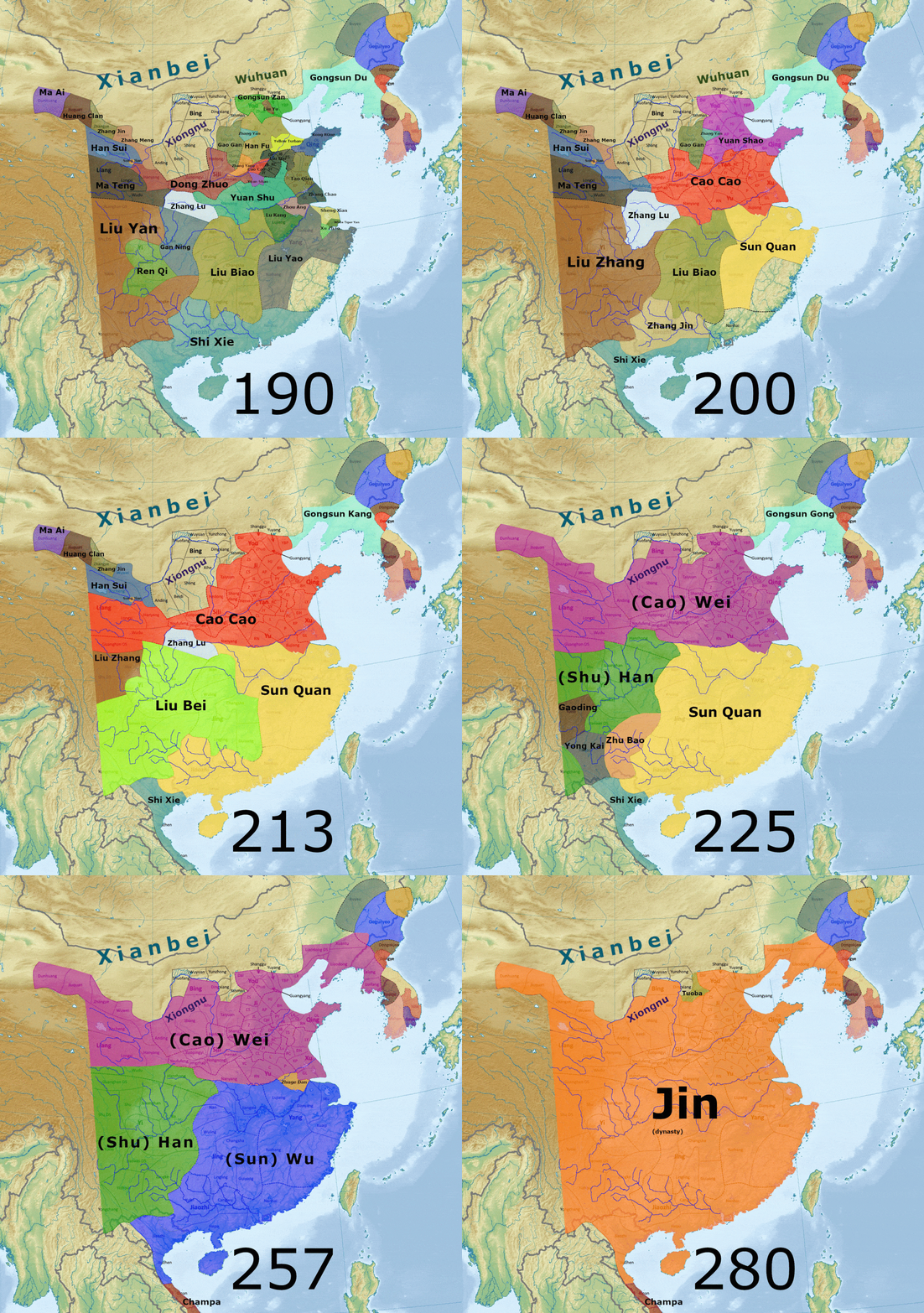
The Three Kingdoms of Cao Wei, Shu Han, and Eastern Wu dominated China from AD 220 to 280 following the end of the Han dynasty. This period was preceded by the Eastern Han dynasty and followed by the Western Jin dynasty. Academically, the periodisation begins with the establishment of Cao Wei in 220 and ends with the conquest of Wu by Jin in 280. The period immediately preceding the Three Kingdoms, from 184 to 220, was marked by chaotic infighting among warlords across China as Han authority collapsed. The period from 220 to 263 was marked by a comparatively stable arrangement between Cao Wei, Shu Han, and Eastern Wu. This stability broke down with the conquest of Shu by Wei in 263, followed by the usurpation of Cao Wei by Jin in 266 and ultimately the conquest of Wu by Jin in 280.
The Three Kingdoms period including the collapse of the Han was one of the most dangerous in Chinese history due to multiple plagues, widespread famines, and civil war. A nationwide census taken in 280, following the reunification of the Three Kingdoms under the Jin showed a total of 2,459,840 households and 16,163,863 individuals which was only a fraction of the 10,677,960 households, and 56,486,856 individuals reported during the Han era. While the census may not have been particularly accurate due to a multitude of factors of the times, in 280, the Jin did make an attempt to account for all individuals where they could.
Technology advanced significantly during this period. Shu chancellor Zhuge Liang invented the wooden ox, suggested to be an early form of the wheelbarrow, and improved on the repeating crossbow. Wei mechanical engineer Ma Jun is considered by many to be the equal of his predecessor Zhang Heng. He invented a hydraulic-powered, mechanical puppet theatre designed for Emperor Ming of Wei, square-pallet chain pumps for irrigation of gardens in Luoyang, and the ingenious design of the south-pointing chariot, a non-magnetic directional compass operated by differential gears.
The authoritative historical record of the era is Chen Shou's Records of the Three Kingdoms (c. 290 AD), in tandem with the later annotations published in 429 by Pei Songzhi. While comparatively short, the Three Kingdoms period has been romanticised in the culture of the Sinosphere. It has been retold and dramatised in folklore, opera, and novels, as well as film, television, and video games. The most well-known fictional adaptation of the history is Romance of the Three Kingdoms, a historical novel written during the Ming dynasty by Luo Guanzhong.
There is no set time period for the era. The majority view uses the years 220–280 as endpoints, beginning with the abdication of the last Han emperor and ending with the reunification of China by the first Jin emperor. Strictly speaking, the Three Kingdoms, or independent states, only existed from the proclamation of the Eastern Wu ruler to be emperor in 229 until the downfall of Shu Han in 263. Interpretations of the period outside performative political acts push the beginning back into the later years of the Han, with the decline of the Han royal house.
Several other starting points for the period are given by Chinese historians: the Yellow Turban Rebellion in 184; the year after the beginning of the rebellion, 185; Dong Zhuo deposing Emperor Shao of Han and enthroning Emperor Xian of Han in 189, Dong Zhuo sacking Luoyang and moving the capital to Chang'an in 190, or Cao Cao placing the emperor under his control in Xuchang in 196.
As the Jin unification was itself short-lived, lasting at least until the independence of the Cheng-Han and Han-Zhao states in 304, the entire period between the fall of Han and the Sui unification (220–589) is sometimes periodised together as "the period of disunity", "Wei, Jin, Northern and Southern dynasties" (or even "Northern and Southern dynasties" alone, though that more commonly means 420–589 between Jin and Sui), or "the Six Dynasties period".
The power of the Eastern Han dynasty had steadily declined owing to a variety of political and economic problems after the death of Emperor He in 105 AD. A series of Han emperors ascended the throne while still youths, and de facto imperial power often rested with the emperors' older relatives. As these relatives occasionally were loath to give up their influence, emperors would, upon reaching maturity, be forced to rely on political alliances with senior officials and eunuchs to achieve control of the government. Political posturing and infighting between imperial relatives and eunuch officials were a constant problem in the Chinese government at the time.[better source needed] During the reigns of Emperor Huan (r. 146–168) and Emperor Ling (r. 168–189), leading officials' dissatisfaction with the eunuchs' usurpation of power reached a peak, and many began to openly protest against them. The first and second protests met with failure, and the court eunuchs persuaded the emperor to execute many of the protesting scholars. Some local rulers seized the opportunity to exert despotic control over their lands and citizens, since many feared to speak out in the oppressive political climate. Emperors Huan and Ling's reigns were recorded as particularly dark periods of Han dynasty rule. In addition to political oppression and mismanagement, China experienced a number of natural disasters during this period, and local rebellions sprung up throughout the country.
Three Kingdoms
The Three Kingdoms of Cao Wei, Shu Han, and Eastern Wu dominated China from AD 220 to 280 following the end of the Han dynasty. This period was preceded by the Eastern Han dynasty and followed by the Western Jin dynasty. Academically, the periodisation begins with the establishment of Cao Wei in 220 and ends with the conquest of Wu by Jin in 280. The period immediately preceding the Three Kingdoms, from 184 to 220, was marked by chaotic infighting among warlords across China as Han authority collapsed. The period from 220 to 263 was marked by a comparatively stable arrangement between Cao Wei, Shu Han, and Eastern Wu. This stability broke down with the conquest of Shu by Wei in 263, followed by the usurpation of Cao Wei by Jin in 266 and ultimately the conquest of Wu by Jin in 280.
The Three Kingdoms period including the collapse of the Han was one of the most dangerous in Chinese history due to multiple plagues, widespread famines, and civil war. A nationwide census taken in 280, following the reunification of the Three Kingdoms under the Jin showed a total of 2,459,840 households and 16,163,863 individuals which was only a fraction of the 10,677,960 households, and 56,486,856 individuals reported during the Han era. While the census may not have been particularly accurate due to a multitude of factors of the times, in 280, the Jin did make an attempt to account for all individuals where they could.
Technology advanced significantly during this period. Shu chancellor Zhuge Liang invented the wooden ox, suggested to be an early form of the wheelbarrow, and improved on the repeating crossbow. Wei mechanical engineer Ma Jun is considered by many to be the equal of his predecessor Zhang Heng. He invented a hydraulic-powered, mechanical puppet theatre designed for Emperor Ming of Wei, square-pallet chain pumps for irrigation of gardens in Luoyang, and the ingenious design of the south-pointing chariot, a non-magnetic directional compass operated by differential gears.
The authoritative historical record of the era is Chen Shou's Records of the Three Kingdoms (c. 290 AD), in tandem with the later annotations published in 429 by Pei Songzhi. While comparatively short, the Three Kingdoms period has been romanticised in the culture of the Sinosphere. It has been retold and dramatised in folklore, opera, and novels, as well as film, television, and video games. The most well-known fictional adaptation of the history is Romance of the Three Kingdoms, a historical novel written during the Ming dynasty by Luo Guanzhong.
There is no set time period for the era. The majority view uses the years 220–280 as endpoints, beginning with the abdication of the last Han emperor and ending with the reunification of China by the first Jin emperor. Strictly speaking, the Three Kingdoms, or independent states, only existed from the proclamation of the Eastern Wu ruler to be emperor in 229 until the downfall of Shu Han in 263. Interpretations of the period outside performative political acts push the beginning back into the later years of the Han, with the decline of the Han royal house.
Several other starting points for the period are given by Chinese historians: the Yellow Turban Rebellion in 184; the year after the beginning of the rebellion, 185; Dong Zhuo deposing Emperor Shao of Han and enthroning Emperor Xian of Han in 189, Dong Zhuo sacking Luoyang and moving the capital to Chang'an in 190, or Cao Cao placing the emperor under his control in Xuchang in 196.
As the Jin unification was itself short-lived, lasting at least until the independence of the Cheng-Han and Han-Zhao states in 304, the entire period between the fall of Han and the Sui unification (220–589) is sometimes periodised together as "the period of disunity", "Wei, Jin, Northern and Southern dynasties" (or even "Northern and Southern dynasties" alone, though that more commonly means 420–589 between Jin and Sui), or "the Six Dynasties period".
The power of the Eastern Han dynasty had steadily declined owing to a variety of political and economic problems after the death of Emperor He in 105 AD. A series of Han emperors ascended the throne while still youths, and de facto imperial power often rested with the emperors' older relatives. As these relatives occasionally were loath to give up their influence, emperors would, upon reaching maturity, be forced to rely on political alliances with senior officials and eunuchs to achieve control of the government. Political posturing and infighting between imperial relatives and eunuch officials were a constant problem in the Chinese government at the time.[better source needed] During the reigns of Emperor Huan (r. 146–168) and Emperor Ling (r. 168–189), leading officials' dissatisfaction with the eunuchs' usurpation of power reached a peak, and many began to openly protest against them. The first and second protests met with failure, and the court eunuchs persuaded the emperor to execute many of the protesting scholars. Some local rulers seized the opportunity to exert despotic control over their lands and citizens, since many feared to speak out in the oppressive political climate. Emperors Huan and Ling's reigns were recorded as particularly dark periods of Han dynasty rule. In addition to political oppression and mismanagement, China experienced a number of natural disasters during this period, and local rebellions sprung up throughout the country.
Recent media
Recent media