Hubbry Logo
Simon BoswellSimon BoswellMain
Open search
Simon Boswell
Community hub
Simon Boswell
logo
7 pages, 0 posts
0 subscribers
Be the first to start a discussion here.
Simon Boswell
Simon Boswell
from Wikipedia

Key Information

Simon Boswell (born 15 October 1953) is an English film score composer, conductor, producer and musician. His body of work includes over 100 credits.

He was nominated for the BAFTA TV Award for Best Original Television Music for the drama series The Lakes, the Anthony Asquith Film Award for Best Original Film Music for the film Hardware and was nominated for a Goya Award for Best Original Score for the film Perdita Durango.

Biography

[edit]

Early years

[edit]

Boswell was born in London in 1953. He studied at The Haberdashers' Aske's Boys' School and English literature at Pembroke College, Cambridge.

Playing the guitar since age 12,[1] he was an accomplished guitarist and was signed by Transatlantic Records in 1975 whilst still at college. This led to the release of his first solo album, "The Mind Parasites", a collection of contemporary acoustic songs and instrumentals.

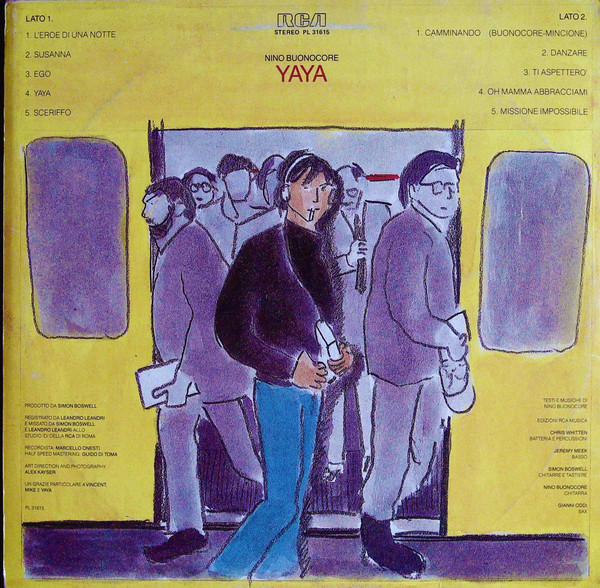
He formed the band Advertising in 1977.[2] Boswell later became a record producer both in the United Kingdom and Italy. He produced Renato Zero's album and album of Nino Buonocore.[3]

Film scoring

[edit]

Boswell's film career started in 1985, and since then he has countless awards from around the world and has been nominated twice for a BAFTA award.

Boswell has also worked on two projects with the Vatican. "Santo Subito" was his first project, which was a film collaboration setting the speeches and the singing of Pope John Paul II to Boswell's music and visuals.[4] Boswell more recently composed for and produced the album "Alma Mater", featuring Pope Benedict XVI.[5]

Television scoring

[edit]

Boswell has composed for BAFTA nominated TV series The Lakes, and collaborated with film-maker Brian Hill and poet Simon Armitage on "Pornography: The Musical" and "Songbirds".[4]

Other music

[edit]

Boswell has worked with musicians from bands such as Blur, Orbital, The Sex Pistols and Echo And The Bunnymen. In 1982 he produced and arranged the album Via Tagliamento 1965-1970 for the Renato Zero. His credits as arranger and producer includes albums by Amii Stewart, Tony Esposito, Tullio De Piscopo and Nino Buonocore.[6]

In Autumn 2006, his album Close Your Eyes was released on his own Flick Records [2]

Quote: "I cut up my previous scores into bits and re-assembled them as new songs mixing full orchestra with musicians from Blur and The Kills and spoken word parts for some of the actors and directors I have worked with along the way – including Ewan McGregor, Ray Winstone, Goran Visnij, Dario Argento and Alejandro Jodorowsky."[4]

Art

[edit]

Boswell continues to work on an art project called BLINK!, an audio-visual installation looped to last forever of portraits extracted from news footage, and individually scored with their own soundtracks. This was first exhibited at the ICA in London in 2002 on 4 simultaneous cinema-sized screens.[2]

Personal life

[edit]

He married and divorced, having had a son named Jack; he lived with the actress Lysette Anthony and has a son by her, Jimi, born in 2004. In 2008 Jimi was diagnosed with juvenile arthritis.[citation needed] Simon is now married to the contemporary fine artist Lg White who is also the lead singer in his band 'The And', who are performing Simon's film score's Live.

Film credits

[edit]

2013

  • Ashens and the Quest for the GameChild

2012

2008

2006

2005

2004

2003

  • Summer in the Golden Valley
  • The Sleeping Dictionary
  • Octane (with British electronica band Orbital)

2002

  • The White Darkness
  • Hypnotic
  • Alien Love Triangle

2001

  • The Secret Glory

2000

  • Born Romantic
  • There's Only One Jimmy Grimble
  • Circus

1999

1998

1997

1995

1994

1993

1992

1990

1989

1988

1987

1986

1985

[7]

TV credits

[edit]

2007

  • Tin Man
  • Nearly Famous (6 episodes)
  • Catwalk Dogs

2006

  • Jackanory (2 episodes)
  • The Magician of Samarkand
  • Muddle Earth

2004

  • Sea of Souls (2 episodes)

2003

  • Pornography: The Musical

2002

  • Widows

2001

  • Mind Games

2000

1999

1998

Other music credits

[edit]

2004

  • In My Father's Den - Music Recordist

2003

  • Octane - Soundtrack Producer

1999

  • Women Talking Dirty - Music Arranger
  • The Debtors - Conductor

1998

  • Cousin Bette - Music Arranger and Producer

1994

  • Second Best - Music Arranger
  • Burn:Cycle - Soundtrack Producer

1987

  • Fino alla morte (TV) - Music Arranger[7]

References

[edit]
[edit]
Revisions and contributorsEdit on WikipediaRead on Wikipedia
from Grokipedia
Simon Boswell is an English , conductor, , and renowned for blending electronic and orchestral elements in his compositions. His career spans over four decades, with scores for more than 100 s across genres including horror, fantasy, , and . Notable works include the atmospheric scores for Dario Argento's Phenomena (1985), Alejandro Jodorowsky's (1989), Danny Boyle's Shallow Grave (1994), Hackers (1995), and Clive Barker's (1995). Boswell has been nominated for two BAFTA Awards and won one Classical Brit Award for his contributions to film music. From an early age, Boswell showed musical talent, composing a theme and variations inspired by at age eight, which was broadcast on , and learning guitar at twelve after being inspired by . He began his professional career in bands such as and Live Wire before transitioning to record production in the early 1980s, notably producing Italian artist Renato Zero's top-selling album that sold over six million copies. His production work extended to artists including and , and he influenced tracks like The Chemical Brothers' "." In addition to film scoring, Boswell leads the band Caduta Massi and has pursued multimedia art projects, such as the audio-visual installation Blink, exhibited in 2002 and 2012. More recently, he released the album Dead Music Vol. 1 in 2023, featuring cues from films like Alien Love Triangle, and composed for Mancunian Man: The Legendary Life of Cliff Twemlow (2023). In 2025, he performed live at the Abertoir Horror Festival, marking the 40th anniversary of his film scoring debut with Phenomena.

Early life and education

Childhood and influences

Simon Boswell was born in , , on October 15, 1956. Little is documented about his family background, though he grew up with exposure to classical music through media such as programs. From a young age, Boswell showed a strong attachment to the piano, receiving classical training on the instrument from age 5 until 16. At age 8, Boswell was inspired by a broadcast about , prompting him to compose a theme and variations in the styles of composers including Chopin, Bach, , and Rachmaninoff; this piece was later performed at a . His musical interests expanded around age 10 (or possibly 12, per some accounts), when he taught himself guitar after watching a television performance by , blending classical with rock influences. These early experiences shaped his dual passion for classical composition and playing, without initial formal training beyond lessons. In his teens, Boswell formed and played in his first bands, including and Live Wire, marking the beginning of his practical involvement in . This period of informal experimentation led to his professional breakthrough at age 19, when he signed with Transatlantic Records in 1975 while still in college, resulting in the release of his debut solo album, , in 1976—a collection of acoustic songs and instrumentals.

Formal education

Boswell attended Haberdashers' Aske's Boys' School in , balancing general academic studies with burgeoning musical interests, including learning guitar at age 12 and participating in early band activities. Boswell studied English literature at , where he maintained his involvement in music by playing guitar in bands and exploring compositional ideas. Although Boswell did not obtain a formal degree in music, his time at provided an intellectual foundation through literary studies that would later shape the narrative depth in his scoring work. Following his time at university, Boswell transitioned directly to a professional music career, securing a recording deal with Transatlantic Records that marked the link between his academic years and industry entry.

Music career

Early productions and bands

After graduating from Pembroke College, Cambridge, Boswell relocated to in the late 1970s, where he immersed himself in the burgeoning punk and new wave scenes as a recording engineer and for emerging UK acts. His early work in these circles involved technical support and experimentation with raw, energetic sounds that blended rock influences with nascent electronic elements, laying the groundwork for his hybrid production style. During this period, Boswell was actively involved in band activities, co-founding the punk-era pop group in 1976 alongside Tot Taylor, which captured the DIY spirit of Cambridge's local scene before disbanding. He then joined forces with singer-guitarist Mike Edwards to form Live Wire around 1979, a London-based outfit that released the independent album No Fright in 1980 on , featuring Boswell on guitar, keyboards, and as producer; the record showcased pub-rock energy with tracks emphasizing tight rhythms and vocal harmonies. In 1981, Boswell co-produced the influential album Coup for 23 Skidoo on Illuminated Records, arranging tracks that fused industrial percussion, dub influences, and electronic textures—elements from the title track later sampled by for their 1997 hit "." This collaboration highlighted his growing affinity for experimental sounds amid the UK's alternative music landscape. Boswell's international breakthrough came in 1982 with his production and arrangement of Renato Zero's Via Tagliamento 1965-1970, a that became one of Italy's top-selling records, moving over 6 million copies and cementing his reputation across . Concurrently, he engaged with affiliates from The ' orbit, contributing to the era's punk-adjacent projects and further honing electronic experiments that informed his transition to more established production roles.

Film scoring

Simon Boswell's entry into film scoring occurred in 1985 with his contribution to the soundtrack of Dario Argento's Phenomena, where he collaborated with the band to incorporate electronic horror elements alongside orchestral textures, marking his debut in the genre. This was followed by scores for Richard Stanley's thriller Hardware (1990), featuring a distinctive blend of acoustic and synthesizers to evoke an apocalyptic atmosphere, and Dust Devil (1992), which drew on Morricone-inspired humming and throat-singing techniques for its supernatural desert narrative. Boswell gained prominence in independent cinema through collaborations with visionary directors, including his work on Alejandro Jodorowsky's surreal Santa Sangre (1989), a visceral horror piece that showcased his ability to craft unsettling, curiosity-driven cues without relying on conventional motifs. His score for Danny Boyle's debut feature Shallow Grave (1994) expanded his reach into black comedy thrillers, integrating tense, rhythmic pulses that complemented the film's psychological tension. Further highlights included Hackers (1995), a kinetic electronic-orchestral hybrid underscoring cyberpunk themes, and Clive Barker's Lord of Illusions (1995), with its dark, menacing ambient dissonances building escalating horror. In the late 1990s, Boswell's versatility shone in projects like Toby Simmons' Photographing Fairies (1997), an orchestral score evoking gothic fantasy, and Álex de la Iglesia's (1997), a percussive, Herrmann-esque composition that earned him a nomination for Best Original Score at the 1998 . He also composed for Tim Roth's directorial effort (1999), delivering a raw, emotional for its familial . These works exemplified his early experimental horror style, often fusing synths and sampling with live to create hybrid soundscapes tailored to maverick filmmakers. Entering the 2000s, Boswell continued with scores such as Paul Morrison's In My Father's Den (2004), shifting toward more melodic dramatic tones, and the miniseries Tin Man (2007), a film-like fantasy production with lush orchestral elements directed by . His evolution from visceral horror to introspective dramas was evident in later contributions, including a segment for the anthology (2012) and the 2020 adaptation of Noël Coward's Blithe Spirit, where he employed lighter, whimsical orchestration. This progression reflected a broader stylistic range, incorporating global influences like Indian and Bulgarian sounds while maintaining his signature electronic-orchestral fusion. Boswell's sacred compositions included commissions from the Vatican: Santo Subito (2005), a setting Pope John Paul II's speeches and chants to original music blending Gregorian elements with modern production, and (2006), an orchestral work for papal events that highlighted his capacity for reverent, expansive scores. Over his career, Boswell has amassed more than 100 credits, frequently partnering with innovative directors like Richard Stanley and to push sonic boundaries in independent cinema.

Television scoring

Boswell entered television scoring with the adaptation of David Hare's play My Zinc Bed in 2008, marking his early foray into dramatic television narratives. His work gained prominence with the score for the drama series The Lakes (1997–1999), which earned a BAFTA TV Award nomination for Best Original Music in 1998. The composition effectively captured the dramatic tension of the series' settings, blending orchestral elements to underscore themes of social struggle and personal conflict. In the 2000s, Boswell contributed scores to several notable projects, including the documentary musical Pornography: The Musical (2003) for Century Films and Channel 4, a collaboration with director Brian Hill and poet Simon Armitage that explored the British pornography industry through operatic sequences. He followed with the score for Songbirds (2004), another Hill-Armitage documentary musical set in a women's prison, emphasizing emotional introspection via restrained melodic structures. Additional highlights included the BBC series Nearly Famous (2007), which chronicled aspiring performers at a London arts school, and miniseries such as Jason and the Argonauts (2000) for Hallmark Entertainment and Tin Man (2007) for the Sci-Fi Channel, where he adapted mythological and fantastical elements with dynamic, episode-spanning themes. Later works featured Boswell's score for the short series Strings (2016), produced by Trajan Productions, alongside contributions to various documentaries that highlighted his versatility in blending electronic and orchestral techniques drawn from his film experience. These television scores often employed more restrained styles suited to episodic pacing and budget constraints, prioritizing recurring motifs to maintain narrative continuity across installments. Over his career, Boswell amassed approximately 25 television credits, primarily for broadcasters like the and , as well as international productions.

Other musical works

Album productions and collaborations

Boswell began his production career in the , focusing on Italian pop acts after relocating to . He produced and arranged Renato Zero's Via Tagliamento 1965-1970 (1982), which achieved massive commercial success, selling over 6 million copies and becoming one of the best-selling albums in Italian . This project showcased Boswell's ability to blend orchestral elements with pop sensibilities, contributing to its broad appeal across and . Following this breakthrough, Boswell continued working with Italian artists, notably producing Neapolitan singer-songwriter Nino Buonocore. He co-produced Buonocore's debut album Nino in Copertina (1983) alongside the artist himself and handled full production duties for Yaya (1985), incorporating rock and electronic influences into the singer's melodic pop style. These efforts established Boswell as a key figure in bridging British production techniques with Italian pop, resulting in several chart successes for Buonocore during the decade. In the 1990s and 2000s, Boswell expanded his collaborations to British and international artists, producing select tracks and remixes that fused , and orchestral genres. He created extended remixes for , including versions of "I Won't Let the Sun Go Down on Me" and "," enhancing the tracks with layered production. His work extended to electronic acts like Orbital, where he served as additional producer on tracks blending ambient and orchestral sounds, and included contributions to projects involving punk influences, including Sex Pistols alumnus in live projects. Boswell also collaborated on recordings with high-profile figures including , , , and , often integrating orchestral arrangements into their pop and rock material. Over his career, these efforts amassed more than 50 production credits, highlighting his versatility in merging punk roots with electronic and symphonic elements for diverse pop and rock artists.

Solo releases

Boswell's solo discography is notably limited, comprising a handful of experimental and non-commercial releases that showcase his personal creative voice distinct from his scoring work. His debut solo effort, , appeared in 1976 on Transatlantic Records as a collection of contemporary acoustic songs and instrumentals. In 2002, he self-released Close Your Eyes via his Flick Records imprint, an album that fuses electronic and orchestral textures across tracks exploring themes of love, war, and the supernatural, with guest vocals from figures like . In 2023, Boswell released Dead Music Vol. 1, featuring cues from films like Alien Love Triangle. The 2010s saw Boswell launch the band Caduta Massi, a project enabling live reinterpretations of his compositions with a full ensemble, emphasizing immersive performances over studio recordings. This sparse output of three to five albums, including occasional compilations drawing from unreleased material, underscores Boswell's preference for boundary-pushing, audience-focused endeavors rather than prolific output. In 2025, the documentary concert film The Dark Fantastic premiered, documenting a live set by Boswell and Caduta Massi—backed by a —featuring original pieces that blend his signature styles in a psychedelic, narrative-driven format.

Artistic endeavors

BLINK! is an audio-visual installation created by Simon Boswell in 2002, featuring a continuous loop of portraits extracted from footage, each accompanied by an composed by Boswell, and designed to run indefinitely as an exploration of eternal media cycles. The work debuted at the Institute of Contemporary Arts (ICA) in during the "whatdoyouwanttodowithit?" festival, where it was projected on four cinema-sized screens, capturing brief moments of blinks from public figures to highlight vulnerability amid spectacle. The installation's concept centers on the transience of identity in the news cycle, using the blink—a split-second revelation of humanity—to comment on the fleeting portrayal of individuals in media, blending Boswell's electronic-orchestral scoring style with visual art to blur the lines between news and entertainment. Technically, it employs looping mechanisms to simulate an endless procession, with each portrait processed for seamless, perpetual playback, evoking an AI-like perpetuity without interruption. Subsequent exhibitions include a 2010 presentation at the during Hong Kong Art Week, where a 30-meter-high version on the building's exterior featured figures like alongside archival interviews, adapting the work for large-scale public viewing. It has also been shown at Asia House in , with ongoing development incorporating updates for digital formats to maintain its relevance as a commentary on evolving media landscapes.

Other multimedia projects

In addition to his film and television scoring, Simon Boswell has contributed to multimedia projects that integrate music with visual, theatrical, and performative elements. One notable collaboration was his role as multimedia composer for Pornography: The Musical (2003), a documentary-operetta exploring the British pornography industry through interviews, , and staged performances; Boswell co-composed seven original with writer , blending orchestral and electronic scores to underscore the film's satirical and dramatic tone. Boswell's work extended to ecclesiastical multimedia events organized by the Vatican, particularly Santo Subito (2005), a and audio installation commemorating Pope John Paul II's funeral and process. In this project, he arranged and produced a trip-hop-infused incorporating the Pope's speeches, singing voice, and archival footage, creating an immersive audiovisual experience screened globally to evoke spiritual reverence through experimental and visual editing. More recently, Boswell served as both subject and composer for The Dark Fantastic (2025), a psychedelic documentary directed by LG White that delves into his creative psyche via interviews, archival clips, and live performances, featuring hallucinatory visuals synchronized with his original score to illustrate the intersection of horror, fantasy, and personal artistry in his oeuvre. Boswell has also pursued experimental audio-visual performances through his band Caduta Massi, formed around 2010, which reinterprets his film scores in live settings with immersive projections and lighting; these concerts, including a 2021 filming at London's theater with a , have been presented in formats that blend rock, electronic, and orchestral elements for theatrical impact.

Personal life

Family and relationships

Simon Boswell was in a long-term relationship with British actress from approximately 2004 until their separation around 2010. The couple share a son, Jimi, born in 2005. Their partnership, though not formalized by , involved and was marked by public attention during its dissolution. The separation was contentious, culminating in a 2011 court case where Anthony accused Boswell of assault; he was cleared of the charges after she declined to provide further details. Following the split, financial disputes over their shared home led to a settlement that drew media scrutiny, but details on ongoing co-parenting remain private. Boswell has no other publicly documented marriages or long-term partners, and he maintains a low profile regarding his personal relationships.

Residence and later years

For much of his career, Simon Boswell maintained his primary residence in , where he balanced composing, producing, and family life amid the city's vibrant cultural scene. In 2016, he relocated to on the Isle of Thanet in , seeking a coastal setting that offered a quieter environment conducive to creative pursuits while remaining accessible for international travel. This move aligned with his ownership of Ramsgate Music Hall, a venue that has hosted his performances and local events, further integrating his professional and personal spheres in the region. Following the 2013 release of his score for The Machine, Boswell shifted his focus toward art installations, live performances, and more selective scoring projects, allowing greater emphasis on experimentation over high-volume commercial work. This period saw him prioritize immersive experiences, such as updating his ongoing BLINK! installation—an audio-visual project featuring looped portraits from news footage set to original soundscapes—which he continues to refine for exhibitions and public displays. In 2025, marking the 40th anniversary of his debut contributions to Phenomena, Boswell celebrated with a series of concerts, including a live show at the Abertoir Horror Festival that blended rock, , and re-edited sequences with collaborators like . That same year, Boswell featured prominently in the documentary The Dark Fantastic, directed by LG White, which premiered at festivals like Raindance and explored his innovative scoring techniques, psychedelic influences, and career reflections through interviews, archival footage, and live band performances. The film highlights his evolution from orchestral film work to boundary-pushing art, underscoring his enduring impact on horror and fantasy genres. Boswell maintains an active lifestyle in his later years, blending music composition, artistic projects, and family time without any major public disclosures regarding health challenges. Residing in , he sustains a rigorous schedule of rehearsals, performances, and installations, often traveling for events while drawing inspiration from the countryside and seaside.

Awards and recognition

Major nominations

Simon Boswell's score for the drama series The Lakes (1997) earned him a for the BAFTA TV for Best Original Television Music in 1998, underscoring the impact of his evocative compositions on the series' depiction of working-class life in . In the realm of film music, Boswell received BAFTA nominations for his innovative scores to the horror films Hardware (1990) and Hackers (1995), which blended electronic elements with orchestral tension to amplify their and dystopian themes. His work on the Spanish-Mexican horror-fantasy Perdita Durango (1997) led to a nomination for Best Original Score at the 1998 Goya Awards, his sole recognition from the Spanish film academy, celebrating the score's fusion of Latin rhythms and dark orchestration that supported the film's ritualistic narrative.

Notable achievements

Simon Boswell has earned recognition for his innovative film scores and production work, with several key awards highlighting his impact in the horror and thriller genres. In 1996, he won the Fangoria Chainsaw Award for Best Soundtrack for his atmospheric composition to Clive Barker's Lord of Illusions, praised for its blend of orchestral elements and electronic tension that amplified the film's supernatural dread. In 2004, Boswell was awarded Best Score at the Paris Film Festival for Close Your Eyes (2002, also known as Doctor Sleep or Hypnotic), where his eclectic mix of flamenco-inspired rhythms and symphonic swells complemented the film's surreal narrative. Beyond these honors, Boswell's production achievements include helming Renato Zero's 1982 album Voyage, which became one of Italy's best-selling records of the decade, showcasing his early talent for blending pop, rock, and orchestral arrangements in a Mediterranean context. His contributions extend to high-profile multimedia projects, such as composing original for Alma Mater (2010), an album featuring Pope Benedict XVI's recitations and songs in multiple languages, performed by the Choir of the Philharmonic Academy of and the Royal Philharmonic ; Boswell's score fused classical traditions with contemporary filmic textures, marking a unique intersection of sacred and cinematic . Boswell has also received a Classical Brit Award. Boswell's body of over 100 film and television scores, including collaborations with directors like (Shallow Grave, 1994) and (Phenomena, 1985), underscores his versatility and enduring influence on genre soundtracks, often credited with pioneering the integration of electronic and world music elements in horror compositions.

References

Add your contribution
Related Hubs
User Avatar
No comments yet.