


Community hub
Recent from talks
Contribute something to knowledge base
Content stats: 0 posts, 0 articles, 1 media, 0 notes
Members stats: 0 subscribers, 0 contributors, 0 moderators, 0 supporters
Subscribers
Supporters
Contributors
Moderators
Hub AI
Suez Crisis AI simulator
(@Suez Crisis_simulator)
Hub AI
Suez Crisis AI simulator
(@Suez Crisis_simulator)
Suez Crisis
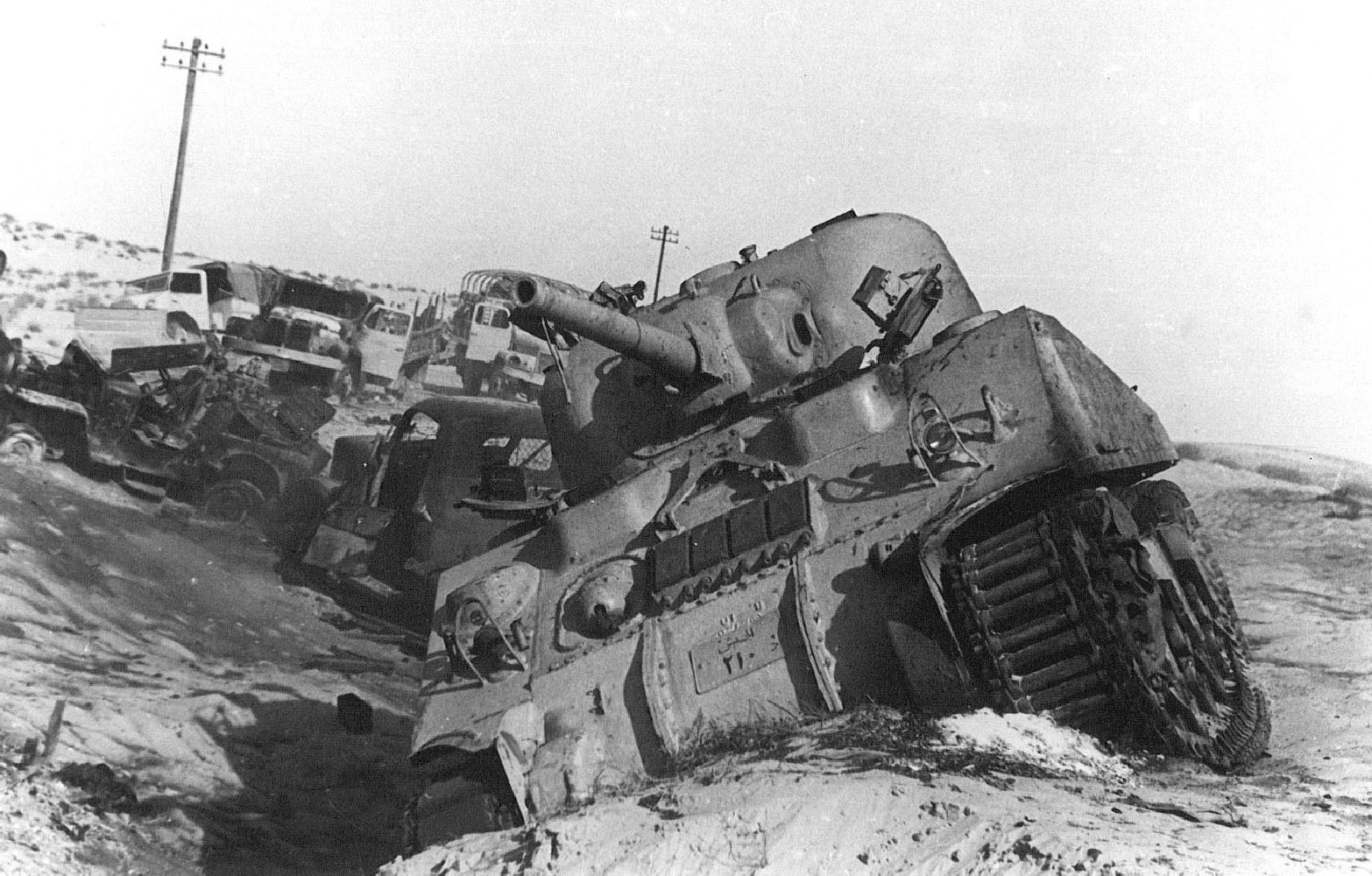
The Suez Crisis, also known as the second Arab–Israeli war, the Tripartite Aggression in the Arab world and the Sinai War in Israel, was a British–French–Israeli invasion of Egypt in 1956. Israel invaded on 29 October, having done so with the primary objective of re-opening the Straits of Tiran and the Gulf of Aqaba as the recent tightening of the eight-year-long Egyptian blockade further prevented Israeli passage. After issuing a joint ultimatum for a ceasefire, the United Kingdom and France joined the Israelis on 5 November, seeking to depose Egyptian president Gamal Abdel Nasser and regain control of the Suez Canal, which Nasser had earlier nationalised by transferring administrative control from the foreign-owned Suez Canal Company to Egypt's new government-owned Suez Canal Authority. Shortly after the invasion began, the three countries came under heavy political pressure from both the United States and the Soviet Union, as well as from the United Nations, eventually prompting their withdrawal from Egypt.
The Crisis demonstrated that the United Kingdom and France could no longer pursue their independent foreign policy without consent from the United States. Israel's four-month-long occupation of the Egyptian-occupied Gaza Strip and Egypt's Sinai Peninsula enabled it to attain freedom of navigation through the Straits of Tiran, but the Suez Canal was closed from October 1956 to March 1957.
U.S. president Dwight D. Eisenhower had issued a strong warning to the British if they were to invade Egypt; he threatened serious damage to the British financial system by selling the American government's bonds of pound sterling. Before their defeat, Egyptian troops blocked all ship traffic by sinking 40 ships in the canal. It later became clear that Israel, the UK, and France had conspired to invade Egypt. These three achieved a number of their military objectives, although the canal was useless.
The crisis strengthened Nasser's standing and led to international humiliation for the British—with historians arguing that it signified the end of its role as a world superpower—as well as the French amid the Cold War (which established the U.S. and the USSR as the world's superpowers). As a result of the conflict, the UN established an emergency force to police and patrol the Egypt–Israel border, while British prime minister Anthony Eden resigned from his position. For his diplomatic efforts in resolving the conflict through UN initiatives, Canadian external affairs minister Lester B. Pearson received a Nobel Peace Prize. Analysts have argued that the crisis may have emboldened the USSR, prompting the Soviet invasion of Hungary.
The Suez Canal was opened in 1869, after ten years of work financed by the French and Egyptian governments. The canal was operated by the Suez Company, an Egyptian-chartered company; the area surrounding the canal remained sovereign Egyptian territory and the only land-bridge between Africa and Asia.
The canal instantly became strategically important, as it provided the shortest ocean link between the Mediterranean Sea and the Indian Ocean. The canal eased commerce for trading nations and particularly helped European colonial powers to gain and govern their colonies.
In 1875, as a result of debt and financial crisis, Egypt was forced to sell its shares in the operating company to the British government. They were willing buyers and obtained a 44% share in the company for £4 million (equivalent to £476 million in 2023). This maintained the majority shareholdings of the mostly-French private investors. With the 1882 invasion and occupation of Egypt, the UK took de facto control of the country as well as the canal, its finances and operations.
The 1888 Convention of Constantinople declared the canal a neutral zone under British protection. In ratifying it, the Ottoman Empire agreed to permit international shipping to pass freely through the canal, in time of war and peace. The Convention came into force in 1904, the same year as the Entente Cordiale between Britain and France.
Suez Crisis
The Suez Crisis, also known as the second Arab–Israeli war, the Tripartite Aggression in the Arab world and the Sinai War in Israel, was a British–French–Israeli invasion of Egypt in 1956. Israel invaded on 29 October, having done so with the primary objective of re-opening the Straits of Tiran and the Gulf of Aqaba as the recent tightening of the eight-year-long Egyptian blockade further prevented Israeli passage. After issuing a joint ultimatum for a ceasefire, the United Kingdom and France joined the Israelis on 5 November, seeking to depose Egyptian president Gamal Abdel Nasser and regain control of the Suez Canal, which Nasser had earlier nationalised by transferring administrative control from the foreign-owned Suez Canal Company to Egypt's new government-owned Suez Canal Authority. Shortly after the invasion began, the three countries came under heavy political pressure from both the United States and the Soviet Union, as well as from the United Nations, eventually prompting their withdrawal from Egypt.
The Crisis demonstrated that the United Kingdom and France could no longer pursue their independent foreign policy without consent from the United States. Israel's four-month-long occupation of the Egyptian-occupied Gaza Strip and Egypt's Sinai Peninsula enabled it to attain freedom of navigation through the Straits of Tiran, but the Suez Canal was closed from October 1956 to March 1957.
U.S. president Dwight D. Eisenhower had issued a strong warning to the British if they were to invade Egypt; he threatened serious damage to the British financial system by selling the American government's bonds of pound sterling. Before their defeat, Egyptian troops blocked all ship traffic by sinking 40 ships in the canal. It later became clear that Israel, the UK, and France had conspired to invade Egypt. These three achieved a number of their military objectives, although the canal was useless.
The crisis strengthened Nasser's standing and led to international humiliation for the British—with historians arguing that it signified the end of its role as a world superpower—as well as the French amid the Cold War (which established the U.S. and the USSR as the world's superpowers). As a result of the conflict, the UN established an emergency force to police and patrol the Egypt–Israel border, while British prime minister Anthony Eden resigned from his position. For his diplomatic efforts in resolving the conflict through UN initiatives, Canadian external affairs minister Lester B. Pearson received a Nobel Peace Prize. Analysts have argued that the crisis may have emboldened the USSR, prompting the Soviet invasion of Hungary.
The Suez Canal was opened in 1869, after ten years of work financed by the French and Egyptian governments. The canal was operated by the Suez Company, an Egyptian-chartered company; the area surrounding the canal remained sovereign Egyptian territory and the only land-bridge between Africa and Asia.
The canal instantly became strategically important, as it provided the shortest ocean link between the Mediterranean Sea and the Indian Ocean. The canal eased commerce for trading nations and particularly helped European colonial powers to gain and govern their colonies.
In 1875, as a result of debt and financial crisis, Egypt was forced to sell its shares in the operating company to the British government. They were willing buyers and obtained a 44% share in the company for £4 million (equivalent to £476 million in 2023). This maintained the majority shareholdings of the mostly-French private investors. With the 1882 invasion and occupation of Egypt, the UK took de facto control of the country as well as the canal, its finances and operations.
The 1888 Convention of Constantinople declared the canal a neutral zone under British protection. In ratifying it, the Ottoman Empire agreed to permit international shipping to pass freely through the canal, in time of war and peace. The Convention came into force in 1904, the same year as the Entente Cordiale between Britain and France.
Recent media
Recent media