
Recent from talks
Music technology (electronic and digital)
Knowledge base stats:
Talk channels stats:
Members stats:
Music technology (electronic and digital)
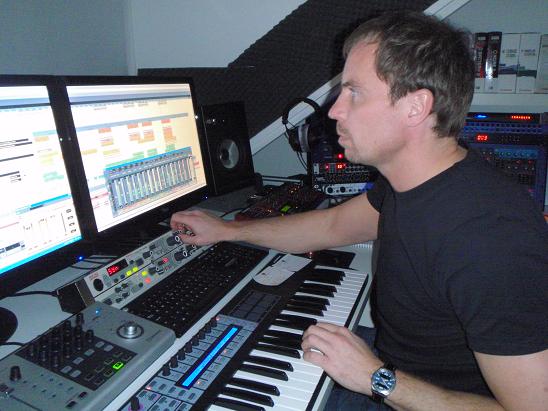
Digital music technology encompasses the use of digital instruments to produce, perform or record music. These instruments vary, including computers, electronic effects units, software, and digital audio equipment. Digital music technology is used in performance, playback, recording, composition, mixing, analysis and editing of music, by professions in all parts of the music industry.
In the late 19th century, Thaddeus Cahill introduced the Telharmonium, which is commonly considered the first electromechanical musical instrument. In the early 20th century, Leon Theremin created the Theremin, an early electronic instrument played without physical contact, creating a new form of sound creation.
In the mid-20th century, sampling emerged, with artists like Pierre Schaeffer and Karlheinz Stockhausen manipulating recorded sounds on tape to create entirely new compositions. This laid the foundation for future electronic music production techniques.
In the 1960s, the Moog synthesizer, invented by Robert Moog, popularized analog synthesis. Musician Wendy Carlos demonstrated Robert's invention with the album Switched-On Bach, which consisted of works composed by Johann Sebastian Bach interpreted with the Moog synthesizer. Meanwhile, tape-based studios, like the BBC Radiophonic Workshop, were at the forefront of electronic sound design.
The 1980s saw a major shift towards digital technology with the development of the Musical Instrument Digital Interface (MIDI) standard. This allowed electronic instruments to communicate with computers and each other, transforming music production. Digital synthesizers, such as the Yamaha DX7, became widely popular.
The 1990s and 2000s witnessed the explosive growth of electronic dance music and its various subgenres, driven by the accessibility of digital music production tools and the rise of computer-based software synthesizers.
Courses in music technology are offered at many different universities as part of degree programs focusing on performance, composition, music research at the undergraduate and graduate level. The study of music technology is usually concerned with the creative use of technology for creating new sounds, performing, recording, programming sequencers or other music-related electronic devices, and manipulating, mixing and reproducing music. Music technology programs train students for careers in "...sound engineering, computer music, audio-visual production and post-production, mastering, scoring for film and multimedia, audio for games, software development, and multimedia production." Those wishing to develop new music technologies often train to become an audio engineer working in research and development. Due to the increasing role of interdisciplinary work in music technology, individuals developing new music technologies may also have backgrounds or training in electrical engineering, computer programming, computer hardware design, acoustics, record producing or other fields.
Digital music technologies are widely used to assist in music education for training students in the home, elementary school, middle school, high school, college and university music programs. Electronic keyboard labs are used for cost-effective beginner group piano instruction in high schools, colleges, and universities. Courses in music notation software and basic manipulation of audio and MIDI can be part of a student's core requirements for a music degree. Mobile and desktop applications are available to aid the study of music theory and ear training. Some digital pianos provide interactive lessons and games using the built-in features of the instrument to teach music fundamentals.
Hub AI
Music technology (electronic and digital) AI simulator
(@Music technology (electronic and digital)_simulator)
Music technology (electronic and digital)
Digital music technology encompasses the use of digital instruments to produce, perform or record music. These instruments vary, including computers, electronic effects units, software, and digital audio equipment. Digital music technology is used in performance, playback, recording, composition, mixing, analysis and editing of music, by professions in all parts of the music industry.
In the late 19th century, Thaddeus Cahill introduced the Telharmonium, which is commonly considered the first electromechanical musical instrument. In the early 20th century, Leon Theremin created the Theremin, an early electronic instrument played without physical contact, creating a new form of sound creation.
In the mid-20th century, sampling emerged, with artists like Pierre Schaeffer and Karlheinz Stockhausen manipulating recorded sounds on tape to create entirely new compositions. This laid the foundation for future electronic music production techniques.
In the 1960s, the Moog synthesizer, invented by Robert Moog, popularized analog synthesis. Musician Wendy Carlos demonstrated Robert's invention with the album Switched-On Bach, which consisted of works composed by Johann Sebastian Bach interpreted with the Moog synthesizer. Meanwhile, tape-based studios, like the BBC Radiophonic Workshop, were at the forefront of electronic sound design.
The 1980s saw a major shift towards digital technology with the development of the Musical Instrument Digital Interface (MIDI) standard. This allowed electronic instruments to communicate with computers and each other, transforming music production. Digital synthesizers, such as the Yamaha DX7, became widely popular.
The 1990s and 2000s witnessed the explosive growth of electronic dance music and its various subgenres, driven by the accessibility of digital music production tools and the rise of computer-based software synthesizers.
Courses in music technology are offered at many different universities as part of degree programs focusing on performance, composition, music research at the undergraduate and graduate level. The study of music technology is usually concerned with the creative use of technology for creating new sounds, performing, recording, programming sequencers or other music-related electronic devices, and manipulating, mixing and reproducing music. Music technology programs train students for careers in "...sound engineering, computer music, audio-visual production and post-production, mastering, scoring for film and multimedia, audio for games, software development, and multimedia production." Those wishing to develop new music technologies often train to become an audio engineer working in research and development. Due to the increasing role of interdisciplinary work in music technology, individuals developing new music technologies may also have backgrounds or training in electrical engineering, computer programming, computer hardware design, acoustics, record producing or other fields.
Digital music technologies are widely used to assist in music education for training students in the home, elementary school, middle school, high school, college and university music programs. Electronic keyboard labs are used for cost-effective beginner group piano instruction in high schools, colleges, and universities. Courses in music notation software and basic manipulation of audio and MIDI can be part of a student's core requirements for a music degree. Mobile and desktop applications are available to aid the study of music theory and ear training. Some digital pianos provide interactive lessons and games using the built-in features of the instrument to teach music fundamentals.
Recent media