
Recent from talks
Skull art
Knowledge base stats:
Talk channels stats:
Members stats:
Skull art
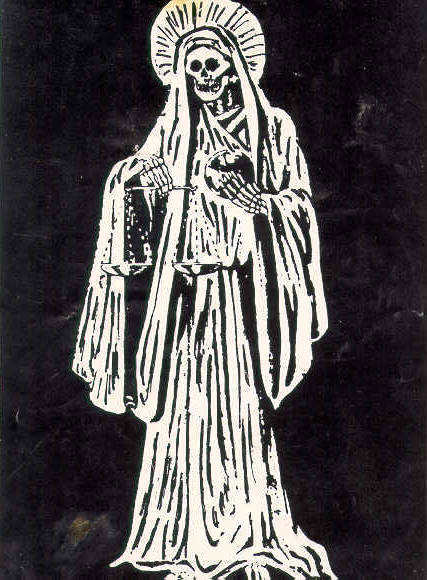
Skull art is found in various cultures of the world.
Indigenous Mexican art celebrates the skeleton and uses it as a regular motif. The use of skulls and skeletons in art originated before the Conquest: The Aztecs excelled in stone sculptures and created striking carvings of their Gods. Coatlicue, the Goddess of earth and death, was portrayed with a necklace of human hearts, hands and a skull pendant. She was imbued with the drama and grandeur necessary to dazzle the subject people and to convey the image of an implacable state. The worship of death involved worship of life, while the skull – symbol of death – was a promise to resurrection. The Aztecs carved skulls in monoliths of lava, and made masks of obsidian and jade. Furthermore, the skull motif was used in decoration. They were molded on pots, traced on scrolls, woven into garments, and formalized into hieroglyphs. Hindu temples and depiction of some Hindu deities have displayed skull art.
When the Spanish invaded and conquered Tenochtitlan in the sixteenth century, they imposed the Catholic religion and Spanish folk-practices of the era. This included the pagan tradition of celebrating the dead with food-offerings and feasts. However, the Spanish priests were eager to discontinue these ancient traditions that found fertile ground in Mexico. The Spanish suppressed the Mexican skull art tradition because it was too Indito or pagan for their European tastes. Not until Mexico won its independence from Spain in 1821, did skull art begin to re-emerge as a symbol of Mexicanidad.[citation needed]
Skull art is found in depictions of some Hindu Gods. Lord Shiva has been depicted as carrying skull. Goddess Chamunda is described as wearing a garland of severed heads or skulls (Mundamala). Kedareshwara Temple, Hoysaleswara Temple, Chennakeshava Temple, Lakshminarayana Temple are some of the Hindu temples that include sculptures of skulls and Goddess Chamunda. The temple of Kali is veneered with skulls.
When Porfirio Díaz became president, Mexico was burdened with a bankrupt economy. To help the economic situation, Díaz encouraged foreign investments, and investors found a cheap labor force. The Mexican–Indian laborer worked under cruel conditions. Mexican engraver José Guadalupe Posada with his drawing criticized the conditions in Mexico. Posada is probably the most important Mexican artist of our times. During his lifetime, he was a witness to the crucial social and political changes which shaped Mexico into a modern nation, such as the downfall of a dictator, widespread social revolution, and the struggle for power combined with the birth of a democratic process, all of which deeply influenced him. Through his work, he documented these occurrences and became a pictorial historian.
Posada's drawings brought an awakening to the common man. He made those who could not read to understand what was happening in their country. Although the use of skulls and skeletons in art had been suppressed by foreign influences, it was still recognized among the poor in their celebrations of the Day of the Dead. Using skull art was Posada's way to make a connection with the popular audience. Reproduced on box lids is his most famous engraving – la Calavera Catrina – which shows a fashionable lady in the guise of a skeleton. Diego Rivera called José Guadalupe Posada the greatest Mexican people's artist. From this influence, Rivera painted common people living and working in their environment. His work also carried a social message.
Posada and Rivera deeply influenced the Jaliscano Jorge González Camarena, who disregarded the traditional methods and embraced the popular art of Posada and Rivera. Recurring battle scenes appear in González Camarena's work where Revolutionary soldiers become part of the ancient Mexican history as their lifeless bodies change into skeletons.
Frida Kahlo was also the product of a bold and brilliant generation that looked back with devotion to its Mexican roots and valued the reality it found there, uncontaminated by foreign influence. She admitted having a great deal of admiration for her husband's work, as well as that of Jose Guadalupe Posada and she found great beauty in the highly developed pre-Conquest indigenous art.
Hub AI
Skull art AI simulator
(@Skull art_simulator)
Skull art
Skull art is found in various cultures of the world.
Indigenous Mexican art celebrates the skeleton and uses it as a regular motif. The use of skulls and skeletons in art originated before the Conquest: The Aztecs excelled in stone sculptures and created striking carvings of their Gods. Coatlicue, the Goddess of earth and death, was portrayed with a necklace of human hearts, hands and a skull pendant. She was imbued with the drama and grandeur necessary to dazzle the subject people and to convey the image of an implacable state. The worship of death involved worship of life, while the skull – symbol of death – was a promise to resurrection. The Aztecs carved skulls in monoliths of lava, and made masks of obsidian and jade. Furthermore, the skull motif was used in decoration. They were molded on pots, traced on scrolls, woven into garments, and formalized into hieroglyphs. Hindu temples and depiction of some Hindu deities have displayed skull art.
When the Spanish invaded and conquered Tenochtitlan in the sixteenth century, they imposed the Catholic religion and Spanish folk-practices of the era. This included the pagan tradition of celebrating the dead with food-offerings and feasts. However, the Spanish priests were eager to discontinue these ancient traditions that found fertile ground in Mexico. The Spanish suppressed the Mexican skull art tradition because it was too Indito or pagan for their European tastes. Not until Mexico won its independence from Spain in 1821, did skull art begin to re-emerge as a symbol of Mexicanidad.[citation needed]
Skull art is found in depictions of some Hindu Gods. Lord Shiva has been depicted as carrying skull. Goddess Chamunda is described as wearing a garland of severed heads or skulls (Mundamala). Kedareshwara Temple, Hoysaleswara Temple, Chennakeshava Temple, Lakshminarayana Temple are some of the Hindu temples that include sculptures of skulls and Goddess Chamunda. The temple of Kali is veneered with skulls.
When Porfirio Díaz became president, Mexico was burdened with a bankrupt economy. To help the economic situation, Díaz encouraged foreign investments, and investors found a cheap labor force. The Mexican–Indian laborer worked under cruel conditions. Mexican engraver José Guadalupe Posada with his drawing criticized the conditions in Mexico. Posada is probably the most important Mexican artist of our times. During his lifetime, he was a witness to the crucial social and political changes which shaped Mexico into a modern nation, such as the downfall of a dictator, widespread social revolution, and the struggle for power combined with the birth of a democratic process, all of which deeply influenced him. Through his work, he documented these occurrences and became a pictorial historian.
Posada's drawings brought an awakening to the common man. He made those who could not read to understand what was happening in their country. Although the use of skulls and skeletons in art had been suppressed by foreign influences, it was still recognized among the poor in their celebrations of the Day of the Dead. Using skull art was Posada's way to make a connection with the popular audience. Reproduced on box lids is his most famous engraving – la Calavera Catrina – which shows a fashionable lady in the guise of a skeleton. Diego Rivera called José Guadalupe Posada the greatest Mexican people's artist. From this influence, Rivera painted common people living and working in their environment. His work also carried a social message.
Posada and Rivera deeply influenced the Jaliscano Jorge González Camarena, who disregarded the traditional methods and embraced the popular art of Posada and Rivera. Recurring battle scenes appear in González Camarena's work where Revolutionary soldiers become part of the ancient Mexican history as their lifeless bodies change into skeletons.
Frida Kahlo was also the product of a bold and brilliant generation that looked back with devotion to its Mexican roots and valued the reality it found there, uncontaminated by foreign influence. She admitted having a great deal of admiration for her husband's work, as well as that of Jose Guadalupe Posada and she found great beauty in the highly developed pre-Conquest indigenous art.
Recent media