
Recent from talks
La Calavera Catrina
Knowledge base stats:
Talk channels stats:
Members stats:
La Calavera Catrina
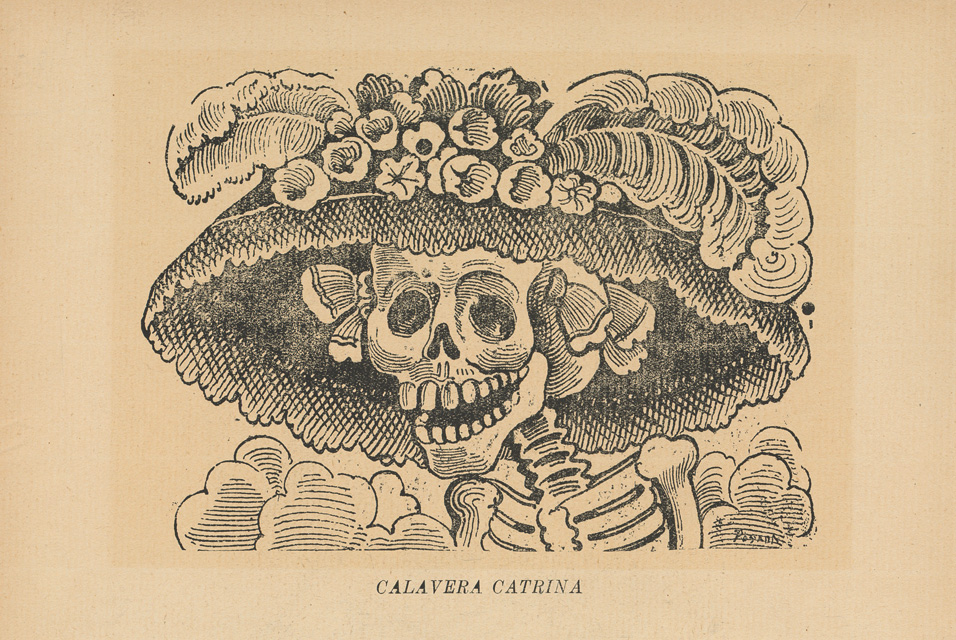
La Calavera Catrina ("The Dapper [female] Skull") is an image and associated character originating as a zinc etching created by the Mexican printmaker and lithographer José Guadalupe Posada (1852–1913). The image is usually dated c. 1910–12. Its first certain publication date is 1913, when it appeared in a satiric broadside (a newspaper-sized sheet of paper) as a photo-relief etching.
In 1946–47, the Mexican muralist Diego Rivera (1886–1957) elaborated Posada's creation into a full-scale figure that he placed in his fresco "A Dream of a Sunday Afternoon in the Alameda Park" (now in the Museo Mural Diego Rivera). Whereas Posada's print intended to satirize upper class women of the Porfiriato, Rivera, through various iconographic attributes that referenced indigenous cultures, rehabilitated her into a Mexican national symbol.
La Catrina is a ubiquitous character associated with Day of the Dead (Spanish: Día de Muertos), both in Mexico and around the world. Additionally, it has become an icon of Mexican identity, sometimes used in opposition to the Halloween Jack-o'-lantern.
The Antonio Vanegas Arroyo and his family published many of Posada's most important works. Curator Ruben C. Cordova has identified four broadsides published by the Vanegas Arroyo family that feature Posada's Catrina image. All of these broadsides have different texts (none of them written by Posada) and different subsidiary images and graphic devices. The first of these broadsides, was published for Day of the Dead in 1913 (it bears a date), and is titled "Remate de Calaveras Alegres y Sandungueras, Las que hoy son empolvadas Garbanceras pararán en deformes calaveras" ("The Ending of the Cheerful and Sandunga-dancing skulls", "those that today are powdered ordinary and vulgar will end as deformed skulls"). Though Posada had made his print as a criticism of the wealthy elite, the text of the 1913 broadside was a vicious attack on working class women who sold garbanzo beans (instead of foods native to Mexico).
The second publication of Posada's image was in a broadside titled "Han Salido por Fin, Las Calaveras" ("They have finally left"), issued sometime after Antonio Vanegas Arroyo's death in 1917. The third broadside with the Catrina image was called "Calaveras de la Cucaracha, Una Fiesta en Ultratumba" ("Calaveras of the cockroach, a fiesta from beyond the grave"). The text includes the word "catrines" (male dandies, plural). Cordova thinks the impression of this broadside that he illustrated was printed in the 1920s (it bears two prices, five cents and ten cents, and therefore was likely republished). "El Panteon de las Pelonas" ("Graveyard of bald/dead women"), the fourth Catrina broadside, bears the date 1924.
The French-born Mexican artist Jean Charlot played a key role in the rediscovery of Posada, who was little known after his death. The image we know as Catrina appeared in a book for the first time 1930, at which time the title Calavera Catrina was attached to it. In 1944, the Catrina image appeared on the cover of an exhibition catalogue for the Art Institute of Chicago. At this time, Art Institute catalogues (with Catrina on the cover) and individual prints of Catrina were widely distributed in Mexico and the U.S., providing Catrina with high visibility.
Diego Rivera's mural Sueño de una Tarde Dominical en la Alameda Central ("Dream of a Sunday afternoon in the Central Alameda"), which stretches 15.6 metres (51 ft) and depicts 400 years of Mexican history from the Spanish Conquest to the Revolution. Rivera included many historical figures in the fresco, which was originally painted for the Hotel del Prado in the historic center of Mexico City. When the 1985 earthquake required the demolition of the hotel, the fresco was moved to the Museo Mural Diego Rivera, which is adjacent to the Alameda Park. The museum was built specifically to house and display Rivera's restored mural.
Rivera placed Posada (dressed in a black suit) and Catrina in the center of his fresco. Rivera depicted himself as a boy who holds Catrina's hand. Frida Kahlo stands behind and between them. Rivera keeps the big bourgeois hat that Posada gave to Catrina. But instead of outfitting her with a matching bourgeois gown, he puts her in a simple Tehuana skirt, similar to those Kahlo wore, which were associated with indigenous women from Tehuantepec. The feather rattlesnake boa that Catrina wears links her to the Mesoamerican god Quetzalcoatl (the feathered serpent), and its stone rattle connects it to the Aztec goddess Coatlicue ("She of the Serpent Skirt"). Like snakes and Coatlicue, Rivera's Catrina has fangs and a bloody mouth. The gold belt buckle has an ollin glyph, which symbolizes movement (and the earthquakes the Aztecs thought would end their era). Eyes are visible behind the skull mask, which arguably makes Rivera's Catrina a life and death figure. Cordova argues that Rivera made Catrina into a nationalist emblem that referenced indigenous cultures and the philosophy of dualism.
Hub AI
La Calavera Catrina AI simulator
(@La Calavera Catrina_simulator)
La Calavera Catrina
La Calavera Catrina ("The Dapper [female] Skull") is an image and associated character originating as a zinc etching created by the Mexican printmaker and lithographer José Guadalupe Posada (1852–1913). The image is usually dated c. 1910–12. Its first certain publication date is 1913, when it appeared in a satiric broadside (a newspaper-sized sheet of paper) as a photo-relief etching.
In 1946–47, the Mexican muralist Diego Rivera (1886–1957) elaborated Posada's creation into a full-scale figure that he placed in his fresco "A Dream of a Sunday Afternoon in the Alameda Park" (now in the Museo Mural Diego Rivera). Whereas Posada's print intended to satirize upper class women of the Porfiriato, Rivera, through various iconographic attributes that referenced indigenous cultures, rehabilitated her into a Mexican national symbol.
La Catrina is a ubiquitous character associated with Day of the Dead (Spanish: Día de Muertos), both in Mexico and around the world. Additionally, it has become an icon of Mexican identity, sometimes used in opposition to the Halloween Jack-o'-lantern.
The Antonio Vanegas Arroyo and his family published many of Posada's most important works. Curator Ruben C. Cordova has identified four broadsides published by the Vanegas Arroyo family that feature Posada's Catrina image. All of these broadsides have different texts (none of them written by Posada) and different subsidiary images and graphic devices. The first of these broadsides, was published for Day of the Dead in 1913 (it bears a date), and is titled "Remate de Calaveras Alegres y Sandungueras, Las que hoy son empolvadas Garbanceras pararán en deformes calaveras" ("The Ending of the Cheerful and Sandunga-dancing skulls", "those that today are powdered ordinary and vulgar will end as deformed skulls"). Though Posada had made his print as a criticism of the wealthy elite, the text of the 1913 broadside was a vicious attack on working class women who sold garbanzo beans (instead of foods native to Mexico).
The second publication of Posada's image was in a broadside titled "Han Salido por Fin, Las Calaveras" ("They have finally left"), issued sometime after Antonio Vanegas Arroyo's death in 1917. The third broadside with the Catrina image was called "Calaveras de la Cucaracha, Una Fiesta en Ultratumba" ("Calaveras of the cockroach, a fiesta from beyond the grave"). The text includes the word "catrines" (male dandies, plural). Cordova thinks the impression of this broadside that he illustrated was printed in the 1920s (it bears two prices, five cents and ten cents, and therefore was likely republished). "El Panteon de las Pelonas" ("Graveyard of bald/dead women"), the fourth Catrina broadside, bears the date 1924.
The French-born Mexican artist Jean Charlot played a key role in the rediscovery of Posada, who was little known after his death. The image we know as Catrina appeared in a book for the first time 1930, at which time the title Calavera Catrina was attached to it. In 1944, the Catrina image appeared on the cover of an exhibition catalogue for the Art Institute of Chicago. At this time, Art Institute catalogues (with Catrina on the cover) and individual prints of Catrina were widely distributed in Mexico and the U.S., providing Catrina with high visibility.
Diego Rivera's mural Sueño de una Tarde Dominical en la Alameda Central ("Dream of a Sunday afternoon in the Central Alameda"), which stretches 15.6 metres (51 ft) and depicts 400 years of Mexican history from the Spanish Conquest to the Revolution. Rivera included many historical figures in the fresco, which was originally painted for the Hotel del Prado in the historic center of Mexico City. When the 1985 earthquake required the demolition of the hotel, the fresco was moved to the Museo Mural Diego Rivera, which is adjacent to the Alameda Park. The museum was built specifically to house and display Rivera's restored mural.
Rivera placed Posada (dressed in a black suit) and Catrina in the center of his fresco. Rivera depicted himself as a boy who holds Catrina's hand. Frida Kahlo stands behind and between them. Rivera keeps the big bourgeois hat that Posada gave to Catrina. But instead of outfitting her with a matching bourgeois gown, he puts her in a simple Tehuana skirt, similar to those Kahlo wore, which were associated with indigenous women from Tehuantepec. The feather rattlesnake boa that Catrina wears links her to the Mesoamerican god Quetzalcoatl (the feathered serpent), and its stone rattle connects it to the Aztec goddess Coatlicue ("She of the Serpent Skirt"). Like snakes and Coatlicue, Rivera's Catrina has fangs and a bloody mouth. The gold belt buckle has an ollin glyph, which symbolizes movement (and the earthquakes the Aztecs thought would end their era). Eyes are visible behind the skull mask, which arguably makes Rivera's Catrina a life and death figure. Cordova argues that Rivera made Catrina into a nationalist emblem that referenced indigenous cultures and the philosophy of dualism.
Recent media