Hubbry Logo
search
logo
1773041

Slate industry

logo
Community Hub0 Subscribers
Read side by side
from Wikipedia

The slate industry is the industry related to the extraction and processing of slate. Slate is either quarried from a slate quarry or reached by tunneling in a slate mine. Common uses for slate include as a roofing material, a flooring material, gravestones and memorial tablets, and electrical insulation.

Slate mines are found around the world. 90% of Europe's natural slate used for roofing originates from the Slate Industry in Spain.[1] The major slate mining region in the United Kingdom is the Lake district, with Honister slate mine being the last working slate mine, the only producers of the world famous Westmorland greenslate. In the remainder of Continental Europe and the Americas, Portugal, Italy, Germany, Brazil, the east coast of Newfoundland, the Slate Valley of Vermont, New York, Pennsylvania, and Virginia are important producing regions. The Slate Valley area, centering on a town called Granville in the state of New York is one of the places in the world where colored slate (i.e. slate which is not grey or blue) is obtained. (A fuller account is given in the article Slate: section Slate extraction.)

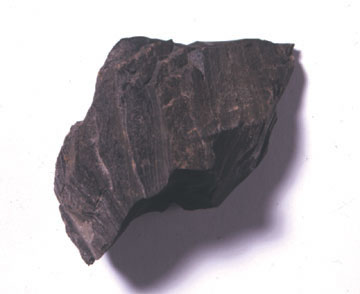
Shale can metamorphose into slate; sometimes the fossils may remain intact

Slate industry in Spain

[edit]

Ninety percent of Europe's natural slate used for roofing originates from the slate industry in Spain,[1] with the region of Galicia being the primary production source.

In Galicia, the larger slate production companies are concentrated in Valdeorras in Ourense, with other important sites being situated in Quiroga, Ortigueira and Mondoñedo.

The slate deposits in this region of northern Spain are over 500 million years old, having formed during the Palaeozoic period. The colour and texture of the slate produced is largely dependent upon the tectonic environment, the source of the sedimentary material from which the slate is comprised, and the chemical and physical conditions prevalent during the sedimentation process. The region has been subjected to periods of volcanism and magmatic activity, leading to a unique geological development.

An important use of Spanish slate is as a roofing material. It is particularly suitable for this purpose as it has a low water absorption index of less than 0.4%, making it very resistant to frost damage and breakage due to freezing. Tiles produced from Spanish slate are usually hung using a unique hook fixing method, which reduces the appearance of weak points on the tile since no holes are drilled, and allows narrower tiles to be used to create roofing features such as valleys and domes. Hook fixing is especially prevalent in areas subject to severe climatic conditions, since there is a greater resistance to wind uplift as the lower edge of the slate is secured.[2]

Slate industry in Wales

[edit]

Background

[edit]

Slate has been quarried in north Wales for almost two millennia with the Segontium Roman fort at Caernarfon being roofed by local slate in the late second century. Export of slate has been carried out for several centuries, which was recently confirmed by the discovery in the Menai Strait of the wreck of a 16th-century wooden ship carrying finished slates.

Large-scale commercial slate mining in North Wales began with the opening of the Cae Braich y Cafn quarry, later to become the Penrhyn Quarry near Bethesda in the Ogwen Valley in 1782. Welsh output was far ahead of other areas and by 1882, 92% of Britain's production was from Wales (451,000 t): the quarries at Penrhyn and Dinorwic produced half of this between them.

The men worked the slate in partnerships of four, six or eight and these were known as "Bargain Gangs". "Bargains" were let by the "Bargain Letter" when a price for a certain area of rock was agreed. Adjustments were made according to the quality of the slate and the proportion of "bad" rock. The first Monday of every month was "Bargain Letting Day" when these agreements were made between men and management. Half the partners worked the quarry face and the others were in the dressing sheds producing the finished slates. In the Glyndyfrdwy mines at Moel Fferna each bargain worked a horizontal stretch of 10 by 15 yards. Duchesses, Marchionesses, Countesses, Viscountesses, Ladies, Small Ladies, Doubles and Randoms were all sizes of slates produced.

Rubblers helped to keep the chambers free from waste: one ton of saleable slate could produce up to 30 tons of waste. It is the mountainous heaps of this very same waste that is perhaps the first thing to strike someone visiting the old regions nowadays. The men had to pay for their ropes and chains, for tools and for services such as sharpening and repairing. Subs (advances) were paid every week, everything being settled up on the "Day of the Big Pay". If conditions had not been good, the men could end up owing the management money. At Moel Fferna a team could produce up to 35 tons of finished slate a week. In 1877 they received about 7 shillings a ton for this. After paying wages for the manager, clerks and 'trammers' the company could make a clear profit of twice this amount. This system was not finally abolished until after the Second World War.

Working methods

[edit]

Early workings tended to be in surface pits, but as the work progressed downwards, it became necessary to work underground. This was often accompanied by the driving of one or more adits to gain direct access to a Level. In some rare instances, such as Moel Fferna, there is no trace of surface workings and the workings were entirely underground.

Chambers were usually driven from the bottom, by means of a "roofing shaft" which was then continued across the width of the chamber: the chamber would then be worked downwards. Slate was freed from the rockface by blasting in shot holes hammered (and later drilled) into the rock.

Slate mines were usually worked in chambers which followed the slate vein, connected via a series of horizontal "Floors" (or "Levels"). The chambers varied in size between mines and were divided by "pillars" or walls which supported the roof. The floors were connected by underground "Inclines" which used wedge-shaped trolleys to move trucks between levels.

In some mines, where slate was worked away below the main haulage floor, the route was maintained through the construction of a wooden bridge across the chamber, often supported from chains attached to the roof above. These bridges could be as much as 100 feet/30 m above the floor below.

Large slab of rock were removed from the chamber, typically on railway wagons, and taken to the mill. The slabs were first sawn to the required size, then split to specific thicknesses - this was done by hand for many centuries using a chisel held at a specific angle to achieve a clean split while maintaining the material's integrity. Finally, the corners of each piece were bevelled to allow water to flow over the slate once in place on the roof. A final inspection and sorting took place before they were packaged for transport.

The process of slate quarrying generates vast amounts of waste rock - often more than 90% of the rock mined was discarded.[3] No chemical processes awerere used in the production, and the waste was disposed at dumps.

Significant mines

[edit]

In North Gwynedd, the large slate producing quarries were usually confined to open-cast workings, sometimes with an adit to gain access to the bottom of the pit:

In the Blaenau Ffestiniog area, most of the workings were underground as the slate veins are steeply angled and open cast workings would require the removal of a massive amount of rock to gain access to the slate. The larger mines in the Ffestiniog area include:

There were also a number of slate mines in the Llangollen area which produced a much darker "black" slate:

Another cluster of mines were found in mid Wales centered on Corris. These all worked a pair of slate veins that ran across the Cambrian mountain range from Tywyn in the west through Corris and Aberllefenni in the Dulas Valley to the mines around Dinas Mawddwy in the east. Slate was also mined in Pembrokeshire in places like Maenclochog.

Remains

[edit]

Most underground slate mines in north Wales were closed by the 1960s although some open-cast quarries have remained open, including the Penrhyn Quarry and the untopping work at Oakeley in Blaenau Ffestiniog. Work also continues at Berwyn near Llangollen. The final large-scale underground working to close was Maenofferen Quarry (which is owned by the Llechwedd tourist mine) in 1999 although opencast quarrying continues at this location.

Many of the mines are now in a state of considerable decay and those that are accessible should not be entered as they are on private property and contain many hidden dangers.

Historical and adventurous underground tours are provided at several mines including Rhiwbach (by Go Below),[citation needed] Llechwedd (Zip World and Llechwedd/Quarry Tours Ltd)[5][6] and Cwmorthin (Go Below).[7]

The lower levels of many mines are now flooded and collapses are commonplace; for example, the hillside above the Rhosydd workings has many pits where the roofs of the chambers below have collapsed.

Other slate producing areas in Great Britain

[edit]
Delabole Quarry in Cornwall

The most significant non-Welsh British slate industry is that of Cornwall and Devon where the Delabole Quarry is thought to be the largest single quarry in the island. Many of these are no longer worked owing to lower costs of extraction in the larger British workings. The quarrying of slate in Cornwall is known to have been carried out from the late mediaeval period and there was a considerable export trade from some of the quarries near the coasts in the 19th century.

Slate has also been quarried at Swithland in Leicestershire.

There are considerable workings in Cumbria. During the last 500 years, much slate extraction has taken place in the Lake District at both surface quarries and underground mines. The major workings are:

  • Broughton Moor
  • Old Man Complex (Coniston); Cove Quarries (south of Coniston Old Man)
  • Elterwater Quarries
  • Hodge Close
  • Honister Slate Mine (including Yew Crag and Dubs)
  • Kentmere Workings
  • Kirkby Moor (Burlington Slate Quarries)
  • Petts, Kirkstone
  • Little Langdale Quarries
  • Skiddaw Slate
  • Tilberthwaite
  • Common Wood, Ulpha

Slate was also quarried in Scotland.[8]

Slate industry in North America

[edit]
Slate quarry at Monson, Maine

Slate was first quarried in the United States as early as 1734 along the Pennsylvania Maryland border; however, it was not until 1785 that the first commercial slate quarry was opened in the United States, by William Docher in Peach Bottom Township, Pennsylvania. Production was limited to that which could be consumed in local markets until the middle of the nineteenth century. The slate industry in the United States has existed in several locations in the country including areas in the western states, however the majority of slate has come from three principal regions along the Great Valley of the Appalachian Mountains. Of those regions, the Taconic Mountains region of Vermont and New York, as well as Lancaster, Lehigh and Northampton counties in Pennsylvania all still have active quarries.

The Pennsylvania Historical and Museum Commission states that in the Slateford Water Gap area the first verified quarry started some time around 1808 . The industry in this region of Pennsylvania spread across the northern edges of both Lehigh and Northampton counties which contain between them the remains of approximately 400 individual quarries. The origins of quarrying in the Lehigh Valley are obscured by conflicting evidence, although it is safest to say that it started near the town of Slateford in the early Nineteenth Century and moved toward Bangor over a fifty-year period. By 1929, the value of slate production in Pennsylvania was approximately 5 million dollars, accounting for almost half of the 11 million dollar value of slate production for the entire United States.[9] Quarries in this region of the country remained active throughout the first quarter of the 20th century producing roofing slate, slate for electrical uses, as well as being the largest producer of school slates and chalkboards in the country. The Slatington Slate Trade report for January 4 of 1880 showed that quarries in the town of Slatington alone had shipped 81,402 squares of roofing slates (over 8 million square feet) as well as 40,486 cases of school slates and 243 cases of blackboards.

The Slate Valley (the district of Granville, New York) is well known for its slate. Slate was quarried in 1839 at Fair Haven, Vermont. An influx of immigrants from the North Wales slate quarrying communities saw a boom in slate production that peaked in the latter half of the 19th century. The slate of the region comes in a variety of colors, notably green, gray, black and red. Some production continued in 2003 with 23 operating full-time mines employing 348 people.[10]

Additionally, one of the oldest quarries in America continues to quarry slate in Buckingham County, Virginia. Their trademark Buckingham Slate has been continually quarried since the 18th century and has a distinct, unfading blue/black color and Mica sheen. Buckingham Slate is used on many Federal buildings in the Washington, D.C. area.

Large scale slate quarrying also took place around the town of Monson, Maine where an extensive series of quarries flourished from the 1860s onwards. A small scale quarrying and dressing operation continues in Monson into the 21st century.

Slate is also found in the Arctic and was used by the Inuit to make the blades for ulus.

Slate industry in Brazil

[edit]

95% of the slate extraction in Brazil comes from Minas Gerais. Slate from this region is formed differently from traditional slate areas such as Galicia. Such products are sedimentary rocks that have split along their original bedding plane, whereas true slate has been subjected to metamorphism and does not split along bedding, but rather along planes associated with the realignment of minerals during metamorphism. This realignment, known as ‘schistosity’, bears no relationship to the original horizontal bedding planes .[11]

The independent Fundación Centro Tecnológico de la Pizarra’s report into the ’Technical properties of Bambui Slate from the State of Minas Gerais (Brazil) to ascertain its compliance with the Standard EN12326’ describes how certain products originating from Brazil on sale in the UK, are not entitled to bear the CE mark. Because such Brazilian products display higher water absorption indexes than those from other areas such as Galicia, this makes them less suitable for use as roofing tiles since the study showed a significant loss of strength when subject to thawing and freezing.[11]

See also

[edit]

References

[edit]

Further reading

[edit]
[edit]
Revisions and contributorsEdit on WikipediaRead on Wikipedia
from Grokipedia
The slate industry involves the quarrying, processing, and commercialization of slate, a fine-grained, foliated metamorphic rock derived from the low-grade regional metamorphism of shale or mudstone, valued for its durability, low water absorption, and ability to split into thin, even sheets.[1] Primarily used in roofing, flooring, wall cladding, and decorative applications such as billiard tables and laboratory surfaces, slate's fire-resistant and weatherproof properties make it a preferred material in construction worldwide.[2] Historically, the industry originated in regions with abundant slate deposits, with large-scale production emerging in northwest Wales during the late 18th century, where quarrying transformed rural landscapes and propelled the area to dominate global roofing slate output, accounting for up to 33% of world production by the late 19th century.[3] This Welsh industry exported slate, mining technologies, and skilled labor to influence developments in Europe, the United States, and beyond, including the adoption of narrow-gauge railways for transport.[3] In the United States, slate quarrying began in the 1780s in Pennsylvania's Slate Belt and expanded in Vermont from 1845, initially for school slates and later for roofing, peaking during the late 19th and early 20th centuries before declining due to economic factors.[4][5] Today, the global slate market is valued at approximately USD 1.7 billion as of 2024 and is projected to grow at a compound annual growth rate (CAGR) of around 5% through 2032, driven by demand in sustainable building materials and renovation projects.[6] Europe holds the largest market share, while Asia Pacific is the fastest-growing region, with major producing countries including China, India, Brazil, and Spain, which together account for the bulk of global output and exports.[7][6] Key players such as Cupa Pizarras in Spain and Vermont Slate Co. in the U.S. emphasize natural slate's environmental benefits, including recyclability and longevity exceeding 100 years in roofing applications.[8]

History

Early History

Slate quarrying dates back to Roman times, with evidence of extraction and use in regions such as Wales and Iberia. In north Wales, slate was quarried over 1,800 years ago and employed in constructing parts of the Roman fort at Segontium in Caernarfon, as well as for roofing and flooring at the 2nd-century bath house in Tremadoc, Gwynedd.[9][10] In Iberia, Roman slates have been identified at archaeological sites like the villa in Valdeorras, Spain, where local quarries supplied roofing materials transported along Roman road networks.[11] During the medieval and Renaissance periods, slate became prominent in Europe for roofing churches and castles due to its durability and weather resistance. Notable examples include the slate roofs installed on Calder Abbey, founded in 1134 in Cumbria, England, and Conway Castle in Wales, constructed starting in 1283.[12] In 1445, over 130,000 slate tiles were ordered for the roofing of Eton College, illustrating the material's growing application in ecclesiastical and educational architecture.[12] Prior to mechanization, slate operations remained small-scale and localized in areas like Wales, often serving regional needs through rudimentary hand tools and shallow excavations. Early trade involved transporting slate via coastal routes and overland paths, with Welsh slate reaching English markets by the 16th and 17th centuries, while Spanish and Italian sources supplied local Mediterranean structures.[13][14] European settlers introduced slate to North America in the 17th century, initially relying on imports for roofing, as seen in the 1662 Virginia General Assembly's approval for 32 houses with slate roofs. Local quarrying began in the 18th century, with the first operations in Pennsylvania's Peach Bottom district around 1734, followed by Vermont's Fair Haven quarry in 1839.[15][15] These early efforts laid the groundwork for expansion into the 19th century's industrial methods.

Industrial Expansion

The slate industry experienced significant expansion during the 19th century, fueled by the Industrial Revolution's demand for durable roofing materials in rapidly growing urban centers and factories across Britain and beyond. The introduction of steam power and rail transport revolutionized extraction and distribution, enabling quarries to scale operations and reach distant markets efficiently. In Wales, the epicenter of production, output surged from modest levels in the early 1800s to over 280,000 tons of roofing slates from Caernarfonshire quarries alone by 1882, culminating in a national peak of approximately 485,000 tons in 1898 with around 17,000 workers employed.[9] Key milestones marked this period of mechanization and innovation. The first steam engine in the Welsh slate industry, installed as a pump at Hafodlas Quarry in the Nantlle Valley in 1807, facilitated deeper excavations and improved water management, while subsequent steam-powered mills emerged in the mid-19th century to process blocks more rapidly. In the United States, early 20th-century advancements included Vincent F. Lake's slate-splitting machine, exhibited in 1913 at the Genuine Washington Slate Company in Pennsylvania, which used high-frequency vibrations to cleave slate along natural planes, reducing reliance on skilled manual labor and enabling thinner, more uniform products from waste material.[16][17] This industrial growth spurred waves of immigration, particularly from Wales to North American slate regions starting in the 1850s, as workers sought better wages amid economic depression and social constraints at home. Skilled Welsh quarrymen settled in Vermont's Slate Valley, where they dominated higher-paying roles and established cultural institutions like 13 Calvinistic Methodist chapels, preserving their language and traditions through eisteddfods and choirs until the mid-20th century. Similar migrations formed communities in Pennsylvania's Slate Belt, including towns like those in the Delta-Cardiff-Whiteford area built between 1850 and 1942 specifically for Welsh slate workers producing Peach Bottom slate, transforming local economies and landscapes.[18][5][19] The World Wars disrupted this momentum, with both conflicts adversely affecting the industry through labor shortages and curtailed private construction, despite some wartime building needs. During World War I, U.S. production plummeted from 835,873 squares in 1916 to 379,817 in 1918 due to minimal demand for slate in defense housing and diversion of workers to essential war efforts. World War II exacerbated this, deeming slate quarrying nonessential and dropping output to 96,220 squares by 1943 as manpower shifted to armed forces and defense industries. Post-WWII, a brief construction boom in 1946 saw temporary recovery to 146,790 squares, but the rise of cheaper synthetic alternatives like asphalt shingles—producing 87.4 million units in 1947 alone—accelerated decline by favoring low-cost housing incompatible with slate's weight and installation demands.[20]

Geology and Resources

Slate Formation

Slate is a fine-grained metamorphic rock derived primarily from the low-grade metamorphism of sedimentary protoliths such as shale or mudstone. This transformation occurs under conditions of moderate heat and directed pressure, typically at temperatures ranging from 150–320°C and pressures of 2–10 kbar, where the original clay minerals recrystallize without significant melting.[21][22] The process involves regional deformation, often associated with tectonic events like mountain-building, leading to the realignment of mineral grains along a preferred orientation. The mineral composition of slate is dominated by quartz (20–60%), illite or muscovite (20–50%), and chlorite (up to 20%), with these phases forming a compact matrix that imparts the rock's characteristic texture.[17] The platy minerals, particularly muscovite and chlorite, align during metamorphism to create slaty cleavage—distinct from the rock's original sedimentary bedding planes—which enables slate to split evenly into thin, durable sheets. This cleavage arises from pressure-induced rearrangement and rotation of particles, often at acute angles to bedding. Slate's suitability for industrial use stems from its physical properties, including low porosity (less than 1%) that resists water absorption and high compressive strength (100–200 MPa) that provides structural integrity.[17] Color variations, such as gray, green, or purple hues, result from impurities like iron oxides (for reddish or purple tones) or carbon (for darker shades), influencing the rock's aesthetic and functional qualities without altering its core metamorphic structure.[17]

Major Deposits

The major slate deposits worldwide are primarily associated with Paleozoic metamorphic formations, resulting from low-grade regional metamorphism of shales and mudstones under tectonic pressures.[23] These deposits are concentrated in ancient orogenic belts, where fine-grained sedimentary rocks have been cleaved into thin, durable layers suitable for exploitation. Europe dominates with the largest known reserves, accounting for approximately 80% of global roofing slate outcrops, while North America and emerging regions like South Asia and South America host smaller but significant formations.[24] In Europe, the Ordovician-Silurian shales of Wales, particularly in the Snowdonia region, form one of the earliest and most historically significant deposits. These shales, part of the Snowdon Syncline and Harlech Dome within the Welsh Basin, underwent intense strain during the Caledonian Orogeny, producing high-quality roofing slates in colors ranging from purple-green to grey-blue.[23] The deposits span Cambrian to Silurian units up to 3,300 feet thick, with key outcrops in Northern Wales near Bethesda and Blaenau Ffestiniog, though many have been depleted due to extensive historical quarrying.[23] Further south, Paleozoic slates in Spain's Galicia and Asturias regions represent the world's premier reserves, primarily from the Middle-Ordovician Luarca Formation and Lower-Cambrian Candana Series within the Ollo de Sapo anticlinorium and Leon-West-Asturian Zone.[25] These formations yield high-grade, low-iron black and grey slates ideal for durable roofing, with principal outcrops in Ourense and León provinces supporting Spain's position as the global leader in tectonic slate reserves, estimated to underpin over 90% of Europe's natural slate supply.[24] Spain's ten major districts, including Valdeorras, La Cabrera, and Los Oscos along the Galicia-Asturias border, host extensive beds of blue-black to grey slate, 3-8 mm thick, with rough to smooth textures that enhance weather resistance.[25][24] North America's key deposits lie in the Appalachian slate belt, spanning Cambrian and Ordovician formations deformed during the Taconic and Alleghenian orogenies. In Vermont, the western belt in Rutland and Bennington counties features a 26-mile sequence of green and purple slates interbedded with quartzites, with notable outcrops at Fair Haven, West Pawlet, and Poultney producing sea-green and black varieties up to 40 feet thick.[17] These slates exhibit slip cleavage and shear zones, contributing to their structural integrity for roofing and mill stock.[17] In Pennsylvania, the Northampton and Lehigh county districts host hard and soft vein slates within a 1,600- to 6,000-foot formation, with major quarries like those at Bangor and Slatington exploiting 27- to 40-foot beds of black and blue slate in synclinal structures.[17] The broader Appalachian region, including parts of Maryland and Virginia, extends these deposits southward, with black unfading slates near Peach Bottom and Arvonia showing low porosity (0.099-0.303%) and high compressive strength up to 20,000 pounds per square inch.[17] While exact reserve figures are limited, North American deposits are focused on smaller, high-quality pockets rather than vast volumes.[24] Emerging deposits in India and Brazil highlight growing diversification in slate resources. In India, Rajasthan holds the country's largest slate reserves, with major outcrops of multi-colored and black slates in the Aravalli-Delhi fold belt, suitable for dimension stone and decorative applications.[26] These Precambrian to Paleozoic formations include splittable varieties like Raja red slate, though quality varies due to inconsistent metamorphism.[27] In Brazil, the Minas Gerais region features metalutite deposits—low-metamorphic grade equivalents of slate—in grey-green hues, prized for decorative uses owing to their matte finish and color variations.[24] These Proterozoic formations, located between Brasília and Rio de Janeiro, support about 95% of Brazil's slate output, with reserves emphasizing aesthetic rather than structural roofing grades.[28] Exploration for untapped slate deposits relies on geophysical surveys, including magnetic and gravity methods to delineate metamorphic anomalies in sedimentary basins, complemented by seismic profiling to map cleavage planes and fault structures.[29] These techniques help identify exploitable extensions of known formations, such as buried Ordovician shales beneath overburden in the Appalachians or Iberian Peninsula.[29]

Production Processes

Extraction Methods

Slate extraction primarily employs two methods: open-pit quarrying and underground mining, selected based on deposit depth, geology, and economic factors. Open-pit quarrying dominates in regions with accessible surface deposits, while underground mining is used for deeper seams to minimize surface disruption.[30] Open-pit quarrying involves bench mining, where slate beds are accessed through stepped excavations typically 10-20 meters deep. In Spain, a leading producer, large blocks are extracted using mechanical methods such as diamond wire saws or chain saws for precise cuts, supplemented by explosives or mechanical rippers to loosen overburden and fracture the rock along natural cleavages. This approach allows for efficient removal of blocks weighing several tons, which are then lifted via cranes or trucks for transport.[31][32][33] Underground mining, prevalent in areas like Wales, utilizes a room-and-pillar system to create stable chambers while leaving slate pillars for support. Historically, extraction relied on manual tools such as wedges and chisels driven into cleavage planes to split blocks, a labor-intensive process dating back to pre-1800 techniques. Modern operations incorporate hydraulic jacks for lifting and splitting, along with diamond wire saws for cutting, improving efficiency and precision. Roof stability is critical, with pillars designed to withstand overburden pressure and prevent collapses, often monitored through geotechnical assessments.[30][34][35] Equipment evolution has transformed slate extraction from rudimentary manual methods to mechanized systems. Prior to the 19th century, workers used hand-held wedges hammered into drilled holes to exploit the rock's natural fissility. By the early 20th century, channeling machines and early wire saws emerged, but contemporary practices favor diamond-impregnated wire saws for dust-free, high-speed cutting and hydraulic splitters for controlled block separation, reducing waste and enhancing safety.[36][37] Yield factors significantly impact extraction economics, as only 20-30% of quarried material typically yields usable slate due to irregular fractures and waste blocks generated during splitting. The remaining material is often repurposed as aggregate or fill. Post-extraction, blocks undergo initial processing to prepare for further fabrication.[38]

Processing Techniques

After extraction from quarries, raw slate blocks are transported to processing facilities where they undergo a series of steps to transform them into usable products, beginning with splitting along natural cleavage planes to exploit the material's foliated structure. Primary splitting typically involves hand-cleaving using mallets and chisels to divide blocks into thinner slabs, a labor-intensive method that preserves the slate's integrity while following its inherent layering; alternatively, hydraulic presses or machines provide more uniform splits for larger-scale production.[39][40] Following splitting, the slabs are cut and sized to precise dimensions using diamond-tipped saws or gang saws in a two-step process: first, blocks are sawn into strips, then cross-cut into rectangles, with waste trimmed to minimize material loss, often achieving less than 10% discard through efficient blade alignment. For roofing applications, common sizes include tiles measuring 30 cm by 20 cm, ensuring compatibility with standard installation patterns while maintaining structural uniformity.[39][40] Surface finishing enhances the slate's aesthetic and functional properties without chemical treatments, relying on mechanical processes to achieve desired textures. Honing with abrasive pads produces a smooth, matte surface for flooring or cladding, while flaming involves torching the slate with a gas burner followed by rapid cooling to create a non-slip, textured finish; natural riven surfaces, achieved by minimal processing, retain the rough, split appearance ideal for traditional roofing. These methods ensure the slate's natural durability and purity are maintained throughout fabrication.[40] Quality grading occurs throughout processing and at the final stage, adhering to standards such as EN 12326, which specifies tolerances for dimensions and performance to guarantee product reliability. Key metrics include thickness variation limited to ±35% of nominal value for individual slates (often achieving ±1 mm in calibrated tiles), water absorption below 0.6% to prevent weathering, and edge straightness within ±5 mm, with slates inspected for defects like cracks or inclusions before packaging.[41][42]

Uses and Applications

Construction and Roofing

Slate has been a preferred material in construction for centuries due to its durability and aesthetic appeal, particularly in roofing where it provides long-lasting protection against environmental elements. In roofing applications, natural slate tiles are quarried and split into thin, uniform pieces that interlock to form a watertight barrier, often chosen for its ability to withstand harsh weather conditions without deteriorating.[43] Roofing slates typically range in size from 20x10 cm for smaller, more intricate installations to 50x30 cm for larger coverage areas, allowing flexibility in design while maintaining structural integrity. These slates are installed on roof pitches with a minimum of 20° (or 4:12) to ensure proper water runoff and wind resistance, with steeper pitches preferred for optimal performance; overlaps are secured using nails or hooks to prevent shifting.[44][43] A properly installed slate roof boasts a lifespan exceeding 100 years, attributed to its high resistance to freeze-thaw cycles, where the material absorbs minimal moisture—often less than 0.25%—preventing cracking during temperature fluctuations.[45][43][46] Beyond roofing, slate serves prominent roles in architectural elements such as flooring, cladding, and paving, offering a non-slip surface and timeless appearance in both interior and exterior settings. Historic examples include the slate roofing and cladding on structures like the U.S. Capitol and surrounding Capitol Hill buildings, where it contributes to the enduring neoclassical style. In modern eco-buildings, slate is integrated into sustainable designs, such as rainscreen facades on residential complexes that enhance energy efficiency through natural insulation properties. Decorative variants, like textured or colored slates, add visual interest to these applications without compromising functionality.[47][48][49] Key advantages of slate in construction include its fireproof nature, classified as Class A1 under European standards for non-combustibility, making it ideal for fire-prone areas as it neither ignites nor propagates flames. Additionally, slate is fully recyclable at the end of its life, with salvaged tiles often reused in repairs or new projects, reducing waste in construction cycles. The material's weight typically ranges from 25 to 40 kg/m² depending on thickness and size, providing stability but requiring reinforced substructures. Installation costs for slate roofing average $10 to $30 per square foot as of 2025, reflecting the labor-intensive process but offset by its longevity and low maintenance needs.[50][51][52][45][53] Standards governing slate in construction, such as ASTM C406, ensure quality through tests for breaking load (minimum 575 lbf for Grade S1 premium slates), water absorption limits (≤0.25% for S1 and ≤0.36% for S2 durable slates), and depth of softening (≤0.002 inches for S1), guaranteeing performance in demanding environments.[54][54]

Other Industrial Uses

Slate's durability, flatness, and resistance to warping have made it a preferred material for gaming and educational surfaces beyond its primary role in construction. In billiards, polished slate slabs, typically 19 mm thick, form the bed of pool tables, providing a level playing surface essential for accurate ball roll. The first slate pool table was introduced in 1826 by John Thurston, who sought a stable alternative to wooden beds that distorted over time.[55] Similarly, since the early 19th century, slate has been used for blackboards in classrooms, evolving from individual student slates—affordable substitutes for paper and ink in the 1800s—to large wall-mounted panels by the mid-19th century, facilitating group instruction in reading, writing, and mathematics across elementary and higher education settings.[56][57] The material's low electrical conductivity and fireproof nature have supported its application in industrial electrical components, particularly in the early 20th century when slate served as the base for switchboards and relay controls due to its insulating properties.[58] In chemical environments, slate's inertness to acids and other corrosives has positioned it as a traditional choice for laboratory countertops and bench tops, offering reliable resistance in settings requiring frequent exposure to harsh substances without degradation.[59] Slate's aesthetic appeal, stemming from its fine grain and color variations, extends to decorative and artistic applications, including memorial plaques, jewelry, and sculptures. Engraved slate plaques and headstones leverage the stone's smooth carvability for lasting tributes, with designs often incorporating relief carvings or inscriptions.[60] In jewelry, slate cabochons and pendants provide a matte, earthy texture, suitable for minimalist pieces that highlight natural patterns. Colored varieties, such as Brazilian multicolor slate with its vivid grays, greens, and purples, are employed in art for pigments and decorative elements, enhancing visual depth in paintings and mosaics.[61][62] Emerging applications capitalize on slate's thermal stability, with polished slabs increasingly used as backings in solar panel systems to manage heat dissipation and improve efficiency in photovoltaic installations. Systems like Thermoslate integrate natural slate with solar collectors, harnessing the material's low thermal conductivity (approximately 2.2 W/mK perpendicular to cleavage) to produce heating or hot water while maintaining structural integrity.[63][64]

Major Producing Regions

Europe

Europe plays a pivotal role in the global slate industry, serving as the leading producer and exporter of high-quality natural roofing slate. Spain dominates production within the continent, accounting for the majority of output, while the United Kingdom maintains a significant historical and ongoing presence, particularly in Wales. Other countries like Italy and France contribute on a smaller scale, focusing on regional or specialized applications. Europe leads global production, with Spain accounting for approximately 35% of the EU's share.[65] Spain is the world's top slate producer, with annual output reaching approximately 500,000-520,000 tons in recent years (e.g., 2020s estimates), primarily from the Galicia region in the northwest, where 90% of the European Union's roofing slate originates. The area's geological formations, including the Truchas synclinorium and Caurel syncline, provide optimal conditions for extracting tectonic natural slate, formed over 450 million years ago and metamorphosed between 300 and 350 million years ago. Leading companies such as Cupa Pizarras, which operates 24 quarries and 29 processing plants across Spain, produce approximately 190,000 metric tons annually, emphasizing sustainable practices and quality standards that exceed international benchmarks. This regional dominance has positioned Spain as a key supplier for global markets, particularly in construction and heritage restoration projects.[66][67][68][69] In the United Kingdom, slate production is concentrated in Wales, with historic sites like the Penrhyn Quarry—once the world's largest in the 19th century—reaching peak output in the 1890s when the industry employed around 17,000 workers and produced nearly 500,000 tons annually. Today, production has scaled down to approximately 25,000-30,000 tons per year as of 2020, mainly from active quarries in North Wales and the Lake District, supporting cladding, decorative, and roofing applications. The Slate Landscape of Northwest Wales, encompassing quarries, mills, and transport infrastructure, was designated a UNESCO World Heritage Site in 2021, highlighting its cultural and industrial significance from the 18th to 20th centuries. Despite reduced volumes, UK slate remains valued for its durability and aesthetic qualities in domestic and export markets.[70][71][72] Italy's slate production, centered in the Piedmont region, is minor and geared toward ornamental and local building uses, drawing from alpine geological deposits similar to those in neighboring areas. France also maintains limited domestic output, with production well below 10,000 tons annually, though it consumes 190,000 to 210,000 tons yearly, relying heavily on imports for its robust construction sector. These contributions, combined with Spain and the UK's efforts, underscore Europe's enduring leadership in slate quality and trade innovation.[73][74]

North America

In North America, the slate industry has historically centered on specialized production in the United States and smaller-scale operations in Canada, influenced by early European immigrants, particularly Welsh quarrymen who arrived in the mid-19th century and brought expertise to emerging deposits.[75] Unlike larger global producers, North American output has focused on high-quality, colored varieties for premium applications, with production peaking in the early 20th century before declining due to cheaper substitutes like asphalt and asbestos-cement shingles.[76] In the United States, Vermont and Pennsylvania have been the primary production hubs. Vermont's Slate Valley, spanning areas like Castleton, Poultney, and Fair Haven, features notable quarries such as the Eagle Quarry, which yields purple slate often interbedded with green ribbons or spots from Cambrian formations, alongside unfading green slates prized for their color retention in roofing and architectural uses.[77] Pennsylvania's Slate Belt in Northampton County, including sites near Bangor and Pen Argyl, produced durable gray and green slates, becoming the world's largest slate region by 1903 and accounting for about half of U.S. output in the early 1900s.[38] U.S. slate production reached its peak around 1900-1902, with approximately 1.4 million squares (equivalent to roughly 200,000 short tons, based on standard roofing slate weights of 1,400-1,600 pounds per square) extracted annually, driven by demand for roofing and structural materials.[20] Output has since contracted sharply, falling below 1 million squares by 1915 due to labor shortages and the rise of synthetic alternatives, and stabilizing at around 5,000 tons per year in recent decades as a niche market.[76][20] Canada's slate industry remains modest, concentrated in Newfoundland where black slate from Ordovician formations near Burgoynes Cove supports small-scale quarrying for roofing and ornamental uses. Operations, such as those by North Country Slate (formerly Newfoundland Slate Inc.), began in 1990 but faced interruptions, with production ceasing in 1998 before limited revival, emphasizing durable, non-fading black varieties.[78][79][80] Key companies like Vermont Slate Company and American Slate (now integrated with Vermont Slate) dominate the modern North American market, specializing in premium architectural slates sourced from Vermont quarries, including unfading greens and purples for high-end roofing, siding, and custom projects that highlight durability and aesthetic variety.[81][82] Since the early 2000s, the industry has seen a modest revival, with producers branding slate as a sustainable alternative to synthetic materials amid growing demand for eco-friendly, long-lasting roofing that reduces landfill waste and energy use over centuries-long lifespans, countering earlier declines from asbestos-based substitutes.[83][76][84]

South America and Other Regions

In South America, Brazil stands as the primary producer of slate, with significant deposits located in the states of Minas Gerais and Rio Grande do Sul. These regions yield distinctive colorful varieties, such as gold and green slates, which are prized for their aesthetic appeal and durability in flooring applications. Brazilian slate production is estimated at over 200,000 tons annually based on historical data (e.g., exports of 203,000 tons in 2005), with much of it exported to international markets for use in residential and commercial flooring as of the 2020s.[85][86][87][88][89] Beyond South America, India has emerged as a key player in slate production, particularly in Rajasthan and Andhra Pradesh, where low-cost extraction supports growing domestic demand in the construction sector. Rajasthan, in particular, contributes substantially to India's dimension stone output, including slate, with production focused on affordable materials for local building projects. India's slate output is around 50,000 tons annually, reflecting steady expansion driven by urbanization and infrastructure development.[90][91] In Asia, China is developing its slate industry, with emerging operations in Guangxi province showing promise for future growth despite ongoing challenges related to quality consistency. Projections indicate potential production reaching 100,000 tons by 2030, positioning China to expand its role in global supply chains.[73][92] Other regions contribute on a smaller scale; in Australia, Tasmania hosts minor slate deposits with limited commercial extraction, primarily for niche applications. In Africa, South Africa is in the exploratory phase for slate resources, with feasibility studies indicating potential for future development but no significant output to date.[93]

Recent Developments (2021-2025)

As of 2025, the European slate industry faces increasing scrutiny under the EU Green Deal, promoting sustainable quarrying practices to reduce environmental impacts. In Wales, the 2021 UNESCO designation has spurred heritage tourism and minor production incentives. Globally, demand for natural slate has grown with renovation projects, though supply chain disruptions from 2022-2024 affected exports from Spain and Brazil.

Economic and Market Overview

Historical Economics

The slate industry underwent significant economic expansion during the 19th century, particularly in Wales, where it became a cornerstone of the regional economy. By the 1890s, the Welsh slate sector employed approximately 17,000 workers and produced nearly 500,000 tonnes of slate annually, accounting for about one-third of global roofing slate output and driving substantial trade and local prosperity.[3] In the United States, slate valleys in regions such as Pennsylvania's Lehigh and Northampton Counties, eastern New York, and western Vermont emerged as key economic hubs, with production surging from 367,857 squares in 1879 to over 1.2 million squares by 1904, valued at more than $6 million in 1903 and supporting ancillary industries like milling and transportation.[77] Trade networks positioned slate as a vital commodity, with Welsh exports peaking at 79,900 tons in 1889—78% of all British slate shipments—extending to markets in the Americas, Europe, and beyond to meet demand for roofing and construction materials.[94] Prices for Welsh slate reflected this growth, rising from around 27 shillings and 6 pence per ton in 1805 to 45 shillings by 1825, stabilizing thereafter amid increasing production efficiency, though transport costs to major ports like London declined from 35 shillings per ton in 1805 to 15 shillings in 1845.[95] These networks not only boosted revenues but also facilitated the industry's integration into global supply chains, with U.S. slate similarly exported to regions like Hawaii and Guam by the late 19th century.[77] The sector's growth was marked by boom-bust cycles, exacerbated by overproduction and economic downturns; in the 1890s, a severe recession in the building trade led to reduced demand, prompting closures such as the temporary shutdown of the Penrhyn Quarry in 1899 and widespread unemployment in Wales.[96][97] In the U.S., the 1893 economic crisis similarly hit the slate industry hard, causing quarry slowdowns and strikes in the Slate Valley, while social costs included the rise of company towns where workers faced tied housing and limited mobility, as seen in Pennsylvania's slate districts.[98][99] Profits from the industry funded critical infrastructure in producing regions, including narrow-gauge railways in Wales like the Ffestiniog Railway, built in the 1830s to transport slate to coastal ports and spurring further industrial development.[100] In the U.S., slate revenues supported railroad expansions in Pennsylvania's Slate Belt, enhancing connectivity and enabling larger-scale operations by the late 19th century.[77] The global slate market is valued at approximately $1.67 billion in 2024 and is projected to reach $2.45 billion by 2032, growing at a compound annual growth rate (CAGR) of 4.9% from 2025 onward, with estimates for 2025 around $1.24 billion.[6][101] This expansion is largely driven by increasing demand for sustainable building materials, particularly in green construction projects that qualify for certifications like LEED, where natural slate earns credits for its low environmental impact and durability compared to synthetic alternatives.[102] The emphasis on eco-friendly materials aligns with global sustainability goals, boosting slate's use in roofing and cladding for commercial and residential buildings seeking energy efficiency and reduced carbon footprints. Despite this growth, the industry faces significant challenges from competition with cheaper synthetic tiles and asphalt shingles, which offer easier installation and lower upfront costs, thereby eroding slate's market share in cost-sensitive segments.[103] Additionally, labor shortages in traditional quarrying regions, exacerbated by an aging workforce and the physically demanding nature of slate extraction and processing, hinder production scalability and increase operational costs.[104] These issues are compounded by supply chain disruptions and fluctuating raw material prices, prompting producers to seek innovative solutions to maintain competitiveness. Innovations in automated processing technologies, such as robotic leveling and AI-assisted quarrying, have improved operational efficiency through reduced manual labor and optimized material handling.[105] Furthermore, recycling initiatives are gaining traction, with waste slate being repurposed into aggregates for road construction and concrete production, minimizing landfill use and supporting circular economy principles.[106] These advancements help address waste generation, which can account for a substantial portion of quarried material. Looking ahead, the slate industry anticipates robust growth in Asia, where rapid urbanization and infrastructure development are expected to increase the region's dominant share, driven by expanding construction sectors in countries like China and India.[107] This shift contrasts with historical peaks in Europe and North America during the 19th and 20th centuries, underscoring a transition toward emerging markets for future demand.

Environmental and Social Dimensions

Environmental Impacts

Slate quarrying, primarily conducted in open-pit operations, disrupts local habitats by altering landscapes across sites typically spanning several hectares, leading to loss of vegetation and wildlife corridors. Dust emissions from cutting and blasting processes contribute to air pollution, with particulate matter (PM10) levels often exceeding the WHO guideline of 50 µg/m³ near active sites, with measurements up to 415 µg/m³ at 100 m during dry seasons, though mitigation measures like water suppression can reduce this impact.[108][109][110] Slate extraction typically relies on dry mechanical methods, requiring relatively minimal water compared to wet-processed materials.[108][110] Waste management in the slate industry addresses the high volume of byproducts, where 85-96% of extracted material often becomes waste from cutting and shaping; however, up to 70% of this quarry waste is repurposed as aggregate fill for roads, embankments, or site restoration, minimizing landfill use. The carbon footprint of slate production is relatively low at approximately 35 kg CO₂e per ton for efficient operations, compared to 103 kg CO₂e per ton for concrete tiles, due to limited energy-intensive processing and potential zero-waste protocols.[111][112] Slate offers environmental positives as a natural, non-toxic material that is fully recyclable at end-of-life, where discarded tiles can be crushed into aggregate for new construction without chemical leaching. Quarry reclamation efforts enhance these benefits, transforming exhausted sites into public spaces; for instance, Welsh operations like those at Braichgoch in Corris have been restored into landscaped areas supporting biodiversity and recreation.[113] Regulatory frameworks in the European Union guide mitigation, with directives such as the Ambient Air Quality Directive (2008/50/EC) imposing limits on silica dust emissions from quarrying to protect air quality, typically capping respirable crystalline silica at 0.1 mg/m³ over eight hours. Modern operations increasingly incorporate biodiversity offsets, requiring compensation for habitat loss through protected areas or restoration projects to comply with the Habitats Directive (92/43/EEC).[114][115]

Social and Labor Aspects

The slate industry's historical labor conditions in the 19th century were marked by significant dangers, particularly in Welsh quarries and mines, where workers faced wet, cold environments, low wages, and high risks of respiratory diseases from silica dust inhalation. Slate miners in Britain, including those in North Wales, experienced elevated mortality rates primarily due to silicosis caused by siliceous rock dust. Studies of mid-20th-century cohorts, reflecting long-term effects from earlier exposures, found that approximately one-third of slate workers exhibited signs of pneumoconiosis, underscoring the pervasive health hazards of the era. Child labor was common in slate quarries, with children performing hazardous tasks until reforms intervened; the Mines Act of 1842 prohibited underground work for children under 10, and the formation of the North Wales Quarrymen's Union in 1874 further advocated for improved conditions and rights.[116][117][118][119] In the modern slate industry, employment focuses on skilled roles such as hand-splitting slate tiles, which require precision and expertise passed down through generations. In Spain, a leading producer, labor unions have played a key role in enhancing workplace safety, contributing to improved safety through agreements on health protocols and training. These unions, including those affiliated with national confederations like CCOO and UGT, ensure compliance with EU standards, reducing incidents in Galicia's slate quarries. The industry's economic contributions bolster local communities by providing stable livelihoods, though challenges like mechanization continue to evolve workforce dynamics.[120][121] Community impacts from the slate industry have been profound, with quarry closures leading to depopulated areas and ghost towns, such as West Castleton in Vermont's Slate Valley region, where the decline of operations in the 20th century left abandoned structures and economic stagnation. In Wales, the industry's cultural heritage endures through events like the Gwyl Lechi (Festival of Slate), which celebrates slate-working traditions, craftsmanship, and community identity with demonstrations, music, and historical exhibits. Immigration has shaped the workforce's diversity; in the United States, Welsh skilled laborers arrived in the 19th century to develop Slate Valley quarries, joined by Italian immigrants who provided essential labor in Pennsylvania's Slate Belt, fostering multicultural enclaves. Similarly, Brazil's slate production in regions like Minas Gerais reflects the country's broader multicultural workforce, drawing from diverse ethnic backgrounds in the ornamental stone sector.[122][123][5][38][124]

References

User Avatar
No comments yet.