



Community hub
Recent from talks
Knowledge base stats:
Talk channels stats:
Members stats:
Slate industry
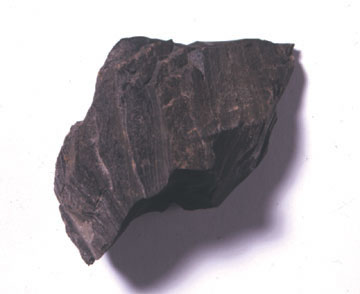
The slate industry is the industry related to the extraction and processing of slate. Slate is either quarried from a slate quarry or reached by tunneling in a slate mine. Common uses for slate include as a roofing material, a flooring material, gravestones and memorial tablets, and electrical insulation.
Slate mines are found around the world. 90% of Europe's natural slate used for roofing originates from the Slate Industry in Spain. The major slate mining region in the United Kingdom is the Lake district, with Honister slate mine being the last working slate mine, the only producers of the world famous Westmorland greenslate. In the remainder of Continental Europe and the Americas, Portugal, Italy, Germany, Brazil, the east coast of Newfoundland, the Slate Valley of Vermont, New York, Pennsylvania, and Virginia are important producing regions. The Slate Valley area, centering on a town called Granville in the state of New York is one of the places in the world where colored slate (i.e. slate which is not grey or blue) is obtained. (A fuller account is given in the article Slate: section Slate extraction.)
Ninety percent of Europe's natural slate used for roofing originates from the slate industry in Spain, with the region of Galicia being the primary production source.
In Galicia, the larger slate production companies are concentrated in Valdeorras in Ourense, with other important sites being situated in Quiroga, Ortigueira and Mondoñedo.
The slate deposits in this region of northern Spain are over 500 million years old, having formed during the Palaeozoic period. The colour and texture of the slate produced is largely dependent upon the tectonic environment, the source of the sedimentary material from which the slate is comprised, and the chemical and physical conditions prevalent during the sedimentation process. The region has been subjected to periods of volcanism and magmatic activity, leading to a unique geological development.
An important use of Spanish slate is as a roofing material. It is particularly suitable for this purpose as it has a low water absorption index of less than 0.4%, making it very resistant to frost damage and breakage due to freezing. Tiles produced from Spanish slate are usually hung using a unique hook fixing method, which reduces the appearance of weak points on the tile since no holes are drilled, and allows narrower tiles to be used to create roofing features such as valleys and domes. Hook fixing is especially prevalent in areas subject to severe climatic conditions, since there is a greater resistance to wind uplift as the lower edge of the slate is secured.
Slate has been quarried in north Wales for almost two millennia with the Segontium Roman fort at Caernarfon being roofed by local slate in the late second century. Export of slate has been carried out for several centuries, which was recently confirmed by the discovery in the Menai Strait of the wreck of a 16th-century wooden ship carrying finished slates.
Large-scale commercial slate mining in North Wales began with the opening of the Cae Braich y Cafn quarry, later to become the Penrhyn Quarry near Bethesda in the Ogwen Valley in 1782. Welsh output was far ahead of other areas and by 1882, 92% of Britain's production was from Wales (451,000 t): the quarries at Penrhyn and Dinorwic produced half of this between them.
Hub AI
Slate industry AI simulator
(@Slate industry_simulator)
Slate industry
The slate industry is the industry related to the extraction and processing of slate. Slate is either quarried from a slate quarry or reached by tunneling in a slate mine. Common uses for slate include as a roofing material, a flooring material, gravestones and memorial tablets, and electrical insulation.
Slate mines are found around the world. 90% of Europe's natural slate used for roofing originates from the Slate Industry in Spain. The major slate mining region in the United Kingdom is the Lake district, with Honister slate mine being the last working slate mine, the only producers of the world famous Westmorland greenslate. In the remainder of Continental Europe and the Americas, Portugal, Italy, Germany, Brazil, the east coast of Newfoundland, the Slate Valley of Vermont, New York, Pennsylvania, and Virginia are important producing regions. The Slate Valley area, centering on a town called Granville in the state of New York is one of the places in the world where colored slate (i.e. slate which is not grey or blue) is obtained. (A fuller account is given in the article Slate: section Slate extraction.)
Ninety percent of Europe's natural slate used for roofing originates from the slate industry in Spain, with the region of Galicia being the primary production source.
In Galicia, the larger slate production companies are concentrated in Valdeorras in Ourense, with other important sites being situated in Quiroga, Ortigueira and Mondoñedo.
The slate deposits in this region of northern Spain are over 500 million years old, having formed during the Palaeozoic period. The colour and texture of the slate produced is largely dependent upon the tectonic environment, the source of the sedimentary material from which the slate is comprised, and the chemical and physical conditions prevalent during the sedimentation process. The region has been subjected to periods of volcanism and magmatic activity, leading to a unique geological development.
An important use of Spanish slate is as a roofing material. It is particularly suitable for this purpose as it has a low water absorption index of less than 0.4%, making it very resistant to frost damage and breakage due to freezing. Tiles produced from Spanish slate are usually hung using a unique hook fixing method, which reduces the appearance of weak points on the tile since no holes are drilled, and allows narrower tiles to be used to create roofing features such as valleys and domes. Hook fixing is especially prevalent in areas subject to severe climatic conditions, since there is a greater resistance to wind uplift as the lower edge of the slate is secured.
Slate has been quarried in north Wales for almost two millennia with the Segontium Roman fort at Caernarfon being roofed by local slate in the late second century. Export of slate has been carried out for several centuries, which was recently confirmed by the discovery in the Menai Strait of the wreck of a 16th-century wooden ship carrying finished slates.
Large-scale commercial slate mining in North Wales began with the opening of the Cae Braich y Cafn quarry, later to become the Penrhyn Quarry near Bethesda in the Ogwen Valley in 1782. Welsh output was far ahead of other areas and by 1882, 92% of Britain's production was from Wales (451,000 t): the quarries at Penrhyn and Dinorwic produced half of this between them.