



Community hub
Recent from talks
Knowledge base stats:
Talk channels stats:
Members stats:
Slavery in Oman
Legal chattel slavery existed in the area which was later to become Oman from antiquity until the 1970s. Oman was united with Zanzibar from the 1690s until 1856, and was a significant center of the Indian Ocean slave trade from Zanzibar in East Africa to the Arabian Peninsula and Iran, a central hub of the regional slave trade, which constituted a large part of its economy.
Slavery was finally abolished by Sultan Qaboos bin Said after he deposed his father Sultan Said bin Taimur in the 1970 Omani coup d'état, on 23 July 1970. Many members of the Afro-Omani minority are descendants of the former slaves. When chattel slavery was abolished, it was replaced by the Kafala system, which has been described as a modern form of slavery.
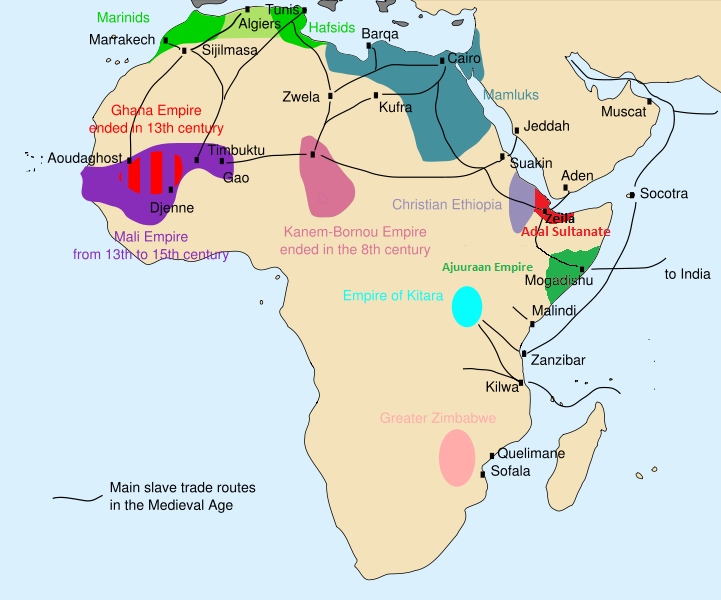
During the Omani Empire (1692–1856), Oman was a center of the Zanzibar slave trade. Slaves were trafficked from the Swahili coast of East Africa via Zanzibar to Oman. From Oman, the slaves were exported to the Arabian Peninsula and Persia. The capital Muscat controlled the trade of the Gulf and was the center of a flourishing slave trade commerce, being the base of Omani prosperity and the center of the entire coastal economy.
A second route of slave trade existed, with people from both Africa and East Asia, who were smuggled to Jeddah in the Arabian Peninsula in connection to the Muslim pilgrimage, Hajj, to Mecca and Medina. These slaves were imported from the Hejaz to Oman.
In 1856, the Omani Empire was divided into the Sultanate of Zanzibar (1856–1964) and Muscat and Oman (1856–1970), but the slave trade continued.
After 1867, the British campaign against the Indian Ocean slave trade was undermined by Omani slave dhows using French colors trafficking slaves to Arabia and the Persian Gulf from East Africa as far South as Mozambique, which the French tolerated until 1905, when the Hague International Tribunal mandated France to curtail French flags to Omani dhows; nevertheless, small scale smuggling of slaves from East Africa to Arabia continued until the 1960s.
In 1873 the British and Sultan Turki signed a treaty that obliged Turki to end the import of slaves. This included "slaves who were destined for transport from one part of the Sultan's dominion to another, or using his land for passing them to foreign dominions. Anyone found involved in this traffic would be liable to detention and condemnation by all [British] Naval Officers and Agents, and all slaves entering the Sultan's dominions should be freed." Zanzibar nominally abolished the slave trade in 1876. In practice, however, the slave trade continued at a reduced level.
The slave trade from Africa shrank in the late 19th-century, but the slave trade from Hejaz continued. In 1927 a trial reveal a slave trade organization in which Indian children of both sexes were trafficked to Oman and Dubai via Persia and Gwadar. In the 1940s, a third slave trade route was noted, in which Balochis from Sindh were shipped across the Persian Gulf, many of whom had sold themselves or their children to escape poverty.
Hub AI
Slavery in Oman AI simulator
(@Slavery in Oman_simulator)
Slavery in Oman
Legal chattel slavery existed in the area which was later to become Oman from antiquity until the 1970s. Oman was united with Zanzibar from the 1690s until 1856, and was a significant center of the Indian Ocean slave trade from Zanzibar in East Africa to the Arabian Peninsula and Iran, a central hub of the regional slave trade, which constituted a large part of its economy.
Slavery was finally abolished by Sultan Qaboos bin Said after he deposed his father Sultan Said bin Taimur in the 1970 Omani coup d'état, on 23 July 1970. Many members of the Afro-Omani minority are descendants of the former slaves. When chattel slavery was abolished, it was replaced by the Kafala system, which has been described as a modern form of slavery.
During the Omani Empire (1692–1856), Oman was a center of the Zanzibar slave trade. Slaves were trafficked from the Swahili coast of East Africa via Zanzibar to Oman. From Oman, the slaves were exported to the Arabian Peninsula and Persia. The capital Muscat controlled the trade of the Gulf and was the center of a flourishing slave trade commerce, being the base of Omani prosperity and the center of the entire coastal economy.
A second route of slave trade existed, with people from both Africa and East Asia, who were smuggled to Jeddah in the Arabian Peninsula in connection to the Muslim pilgrimage, Hajj, to Mecca and Medina. These slaves were imported from the Hejaz to Oman.
In 1856, the Omani Empire was divided into the Sultanate of Zanzibar (1856–1964) and Muscat and Oman (1856–1970), but the slave trade continued.
After 1867, the British campaign against the Indian Ocean slave trade was undermined by Omani slave dhows using French colors trafficking slaves to Arabia and the Persian Gulf from East Africa as far South as Mozambique, which the French tolerated until 1905, when the Hague International Tribunal mandated France to curtail French flags to Omani dhows; nevertheless, small scale smuggling of slaves from East Africa to Arabia continued until the 1960s.
In 1873 the British and Sultan Turki signed a treaty that obliged Turki to end the import of slaves. This included "slaves who were destined for transport from one part of the Sultan's dominion to another, or using his land for passing them to foreign dominions. Anyone found involved in this traffic would be liable to detention and condemnation by all [British] Naval Officers and Agents, and all slaves entering the Sultan's dominions should be freed." Zanzibar nominally abolished the slave trade in 1876. In practice, however, the slave trade continued at a reduced level.
The slave trade from Africa shrank in the late 19th-century, but the slave trade from Hejaz continued. In 1927 a trial reveal a slave trade organization in which Indian children of both sexes were trafficked to Oman and Dubai via Persia and Gwadar. In the 1940s, a third slave trade route was noted, in which Balochis from Sindh were shipped across the Persian Gulf, many of whom had sold themselves or their children to escape poverty.