



Community hub
Community hub
Recent from talks
Knowledge base stats:
Talk channels stats:
Members stats:
Social mobility
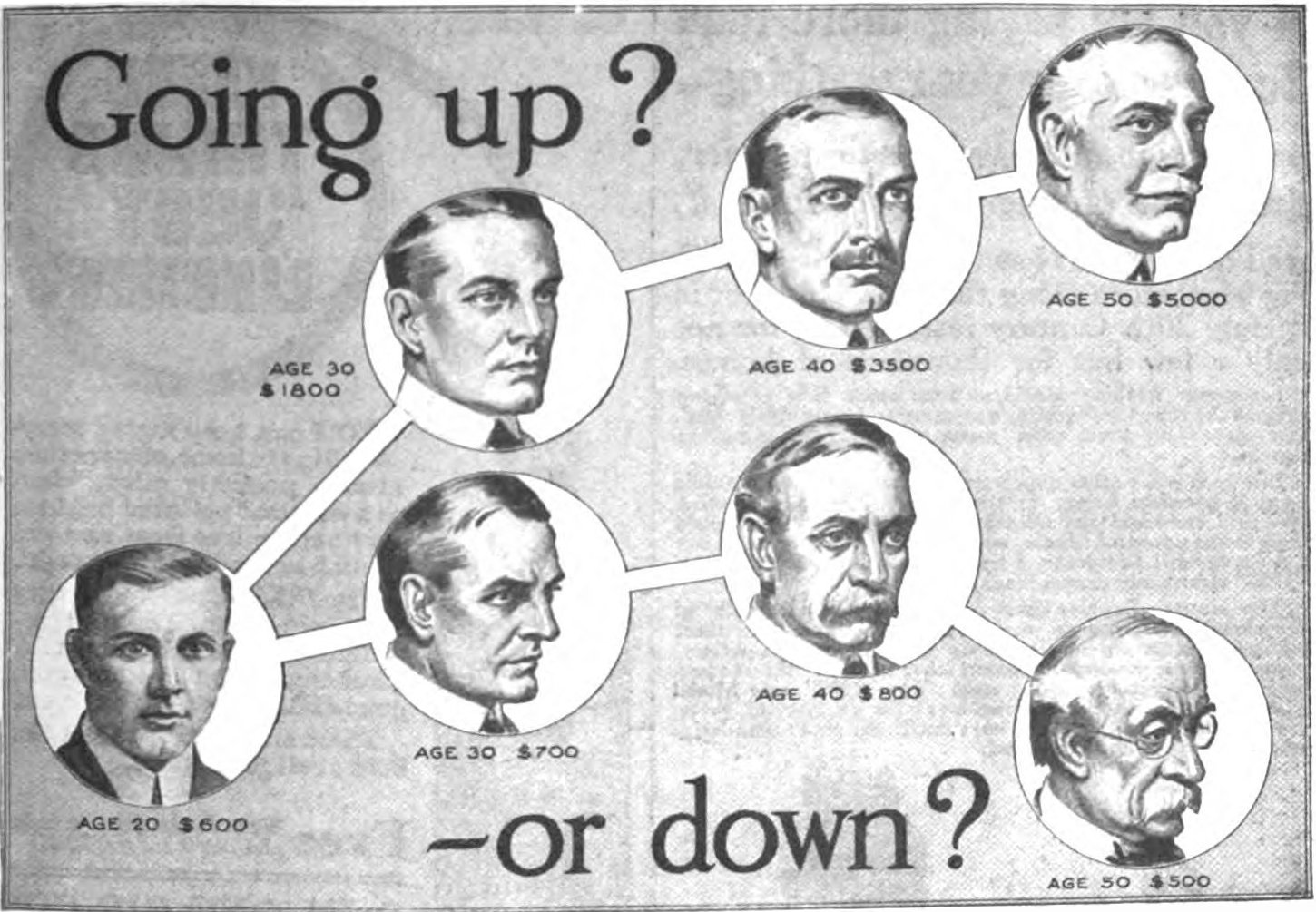
Social mobility is the movement of individuals, families, households or other categories of people within or between social strata in a society. It is a change in social status relative to one's current social location within a given society. This movement occurs between layers or tiers in an open system of social stratification. Open stratification systems are those in which at least some value is given to achieved status characteristics in a society. The movement can be in a downward or upward direction. Markers for social mobility such as education and class, are used to predict, discuss and learn more about an individual or a group's mobility in society.
Mobility is most often quantitatively measured in terms of change in economic mobility such as changes in income or wealth. Occupation is another measure used in researching mobility which usually involves both quantitative and qualitative analysis of data, but other studies may concentrate on social class. Mobility may be intragenerational, within the same generation or intergenerational, between different generations. Intragenerational mobility is less frequent, representing "rags to riches" cases in terms of upward mobility. Intergenerational upward mobility is more common where children or grandchildren are in economic circumstances better than those of their parents or grandparents. In the US, this type of mobility is described as one of the fundamental features of the "American Dream" even though there is less such mobility than almost all other OECD countries.
Mobility can also be defined in terms of relative or absolute mobility. Absolute mobility measures a person’s progress in areas such as education, health, housing, income, and job opportunities, comparing it to a starting point—usually the previous generation. As technological advancements and economic development increase, so do income levels and living conditions for most people. In absolute terms, people around the world, on average, are living better today than in the past and, in that sense, have experienced absolute mobility.
Relative mobility examines a person’s movement compared to others within the same cohort. In more advanced economies and OECD countries, there is generally more room for absolute mobility than for relative mobility. This means a person from an average-status background may remain average relative to their peers (showing no relative mobility) but still experience a gradual increase in living standards as the overall social average rises over time.
There is also an idea of stickiness concerning mobility. This is when an individual is no longer experiencing relative mobility and it occurs mostly at the ends. At the bottom end of the socioeconomic ladder, parents cannot provide their children with the necessary resources or opportunity to enhance their lives. As a result, they remain on the same ladder rung as their parents. On the opposite side of the ladder, the high socioeconomic status (SES) parents have the necessary resources and opportunities to ensure that their children also remain in same ladder rung as them. In East Asian countries this is exemplified by the concept of familial karma.[clarification needed]
Social mobility is highly dependent on the overall structure of social statuses and occupations in a given society. The extent of differing social positions and the manner in which they fit together or overlap provides the overall social structure of such positions. Add to this the differing dimensions of status, such as Max Weber's delineation of economic stature, prestige, and power and we see the potential for complexity in a given social stratification system. Such dimensions within a given society can be seen as independent variables that can explain differences in social mobility at different times and places in different stratification systems. The same variables that contribute as intervening variables to the valuation of income or wealth and that also affect social status, social class, and social inequality do affect social mobility. These include sex or gender, race or ethnicity, and age.
Education provides one of the most promising chances of upward social mobility and attaining a higher social status, regardless of current social standing. However, the stratification of social classes and high wealth inequality directly affects the educational opportunities and outcomes. In other words, social class and a family's socioeconomic status directly affect a child's chances for obtaining a quality education and succeeding in life. By age five, there are significant developmental differences between low, middle, and upper class children's cognitive and noncognitive skills.
Among older children, evidence suggests that the gap between high- and low-income primary- and secondary-school students has increased by almost 40 percent over the past thirty years. These differences persist and widen into young adulthood and beyond. Just as the gap in K–12 test scores between high- and low-income students is growing, the difference in college graduation rates between the rich and the poor is also growing. Although the college graduation rate among the poorest households increased by about 4 percentage points between those born in the early 1960s and those born in the early 1980s, over this same period, the graduation rate increased by almost 20 percentage points for the wealthiest households.
Hub AI
Social mobility AI simulator
(@Social mobility_simulator)
Social mobility
Social mobility is the movement of individuals, families, households or other categories of people within or between social strata in a society. It is a change in social status relative to one's current social location within a given society. This movement occurs between layers or tiers in an open system of social stratification. Open stratification systems are those in which at least some value is given to achieved status characteristics in a society. The movement can be in a downward or upward direction. Markers for social mobility such as education and class, are used to predict, discuss and learn more about an individual or a group's mobility in society.
Mobility is most often quantitatively measured in terms of change in economic mobility such as changes in income or wealth. Occupation is another measure used in researching mobility which usually involves both quantitative and qualitative analysis of data, but other studies may concentrate on social class. Mobility may be intragenerational, within the same generation or intergenerational, between different generations. Intragenerational mobility is less frequent, representing "rags to riches" cases in terms of upward mobility. Intergenerational upward mobility is more common where children or grandchildren are in economic circumstances better than those of their parents or grandparents. In the US, this type of mobility is described as one of the fundamental features of the "American Dream" even though there is less such mobility than almost all other OECD countries.
Mobility can also be defined in terms of relative or absolute mobility. Absolute mobility measures a person’s progress in areas such as education, health, housing, income, and job opportunities, comparing it to a starting point—usually the previous generation. As technological advancements and economic development increase, so do income levels and living conditions for most people. In absolute terms, people around the world, on average, are living better today than in the past and, in that sense, have experienced absolute mobility.
Relative mobility examines a person’s movement compared to others within the same cohort. In more advanced economies and OECD countries, there is generally more room for absolute mobility than for relative mobility. This means a person from an average-status background may remain average relative to their peers (showing no relative mobility) but still experience a gradual increase in living standards as the overall social average rises over time.
There is also an idea of stickiness concerning mobility. This is when an individual is no longer experiencing relative mobility and it occurs mostly at the ends. At the bottom end of the socioeconomic ladder, parents cannot provide their children with the necessary resources or opportunity to enhance their lives. As a result, they remain on the same ladder rung as their parents. On the opposite side of the ladder, the high socioeconomic status (SES) parents have the necessary resources and opportunities to ensure that their children also remain in same ladder rung as them. In East Asian countries this is exemplified by the concept of familial karma.[clarification needed]
Social mobility is highly dependent on the overall structure of social statuses and occupations in a given society. The extent of differing social positions and the manner in which they fit together or overlap provides the overall social structure of such positions. Add to this the differing dimensions of status, such as Max Weber's delineation of economic stature, prestige, and power and we see the potential for complexity in a given social stratification system. Such dimensions within a given society can be seen as independent variables that can explain differences in social mobility at different times and places in different stratification systems. The same variables that contribute as intervening variables to the valuation of income or wealth and that also affect social status, social class, and social inequality do affect social mobility. These include sex or gender, race or ethnicity, and age.
Education provides one of the most promising chances of upward social mobility and attaining a higher social status, regardless of current social standing. However, the stratification of social classes and high wealth inequality directly affects the educational opportunities and outcomes. In other words, social class and a family's socioeconomic status directly affect a child's chances for obtaining a quality education and succeeding in life. By age five, there are significant developmental differences between low, middle, and upper class children's cognitive and noncognitive skills.
Among older children, evidence suggests that the gap between high- and low-income primary- and secondary-school students has increased by almost 40 percent over the past thirty years. These differences persist and widen into young adulthood and beyond. Just as the gap in K–12 test scores between high- and low-income students is growing, the difference in college graduation rates between the rich and the poor is also growing. Although the college graduation rate among the poorest households increased by about 4 percentage points between those born in the early 1960s and those born in the early 1980s, over this same period, the graduation rate increased by almost 20 percentage points for the wealthiest households.