


Community hub
Recent from talks
Contribute something to knowledge base
Content stats: 0 posts, 0 articles, 1 media, 0 notes
Members stats: 0 subscribers, 0 contributors, 0 moderators, 0 supporters
Subscribers
Supporters
Contributors
Moderators
Hub AI
Drink can AI simulator
(@Drink can_simulator)
Hub AI
Drink can AI simulator
(@Drink can_simulator)
Drink can
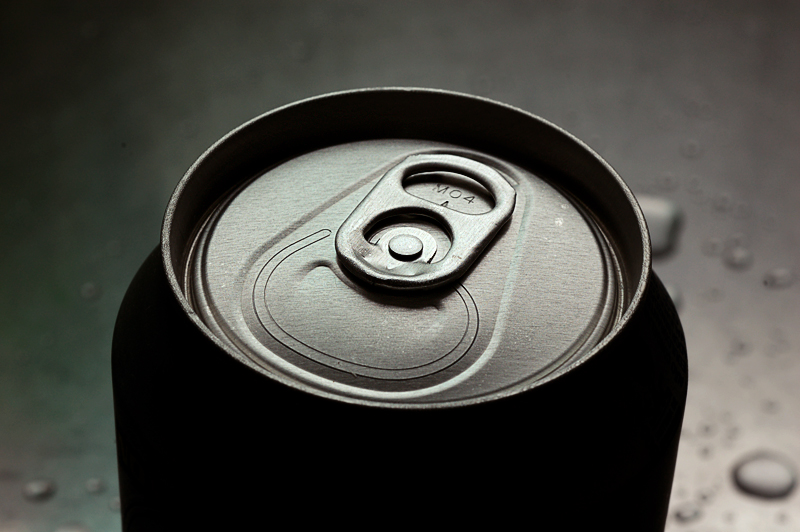
A drink can (or beverage can) is a metal container with a polymer interior designed to hold a fixed portion of liquid such as carbonated soft drinks, alcoholic drinks, fruit juices, teas, herbal teas, energy drinks, etc. Drink cans exteriors are made of aluminum (75% of worldwide production) or tin-plated steel (25% worldwide production) and the interiors coated with an epoxy resin or polymer. Worldwide production for all drink cans is approximately 370 billion cans per year.
The first commercial beer available in cans began in 1935 in Richmond, Virginia. Not long after that, sodas, with their higher acidity and somewhat higher pressures, were available in cans. The key development for storing drinks in cans was the interior liner, typically plastic or sometimes a waxy substance, that helped to keep the product's flavor from being ruined by a chemical reaction with the metal. Another major factor for the timing was the repeal of Prohibition in the United States at the end of 1933.
In 1935, the Felinfoel Brewery at Felinfoel in Wales was the first brewery outside the US to commercially can beer. Prior to this time, beer had been available only in barrels or in glass bottles. From this time, lightweight tin cans could be used. Felinfoel was a major supplier to British armed forces abroad in the Second World War. Cans saved a great deal of space and weight for wartime exports compared to glass bottles and did not have to be returned for refilling. These early cans did not have a pull tab, being equipped instead with a crown cork (metal bottle cap). From the 18th century until the early 20th century Wales dominated world tinplate production, peaking in the early 1890s when 80% of the world's tinplate was produced in south Wales.
Canned drinks were factory-sealed and required a special opener tool in order to consume the contents. Cans were typically formed as cylinders, having a flat top and bottom. They required a can piercer, colloquially known as a "church key", that latched onto the top rim for leverage; lifting the handle would force the sharp tip through the top of the can, cutting a triangular hole. A smaller second hole was usually punched at the opposite side of the top to admit air while pouring, allowing the liquid to flow freely.
In the mid-1930s, some cans were developed with caps so that they could be opened and poured more like a bottle. These were called "cone tops", as their tops had a conical taper up to the smaller diameter of the cap. Cone top cans were sealed by the same crimped caps that were put on bottles, and could be opened with the same bottle-opener tool. There were three types of conetops: high profile, low profile, and j-spout. The low profile and j-spout were the earliest, dating from about 1935. The "crowntainer" was a different type of can that was drawn steel with a bottom cap. These were developed by Crown Cork & Seal Company (now known as Crown Holdings, Inc.), a leading drink packaging and drink can producer. The popularity of canned drinks was slow to catch on, as the metallic taste was difficult to overcome with the interior liner not perfected, especially with more acidic sodas. Cans had two advantages over glass bottles. First for the distributors, flat-top cans were more compact for transportation and storage and weighed less than bottles. Second for consumers, they did not require the deposit typically paid for bottles, as they were discarded after use. Glass-bottle deposits were reimbursed when consumers took the empties back to the store.
In 1959, the recyclable aluminum can was introduced to the market in a 7 oz. size by the Adolph Coors Company.
In 2008, an aluminum version of the crowntainer design was adopted for packaging Coca-Cola's Caribou Coffee drink.
The standard size of drink cans in each country significantly varies, and various standard capacities are used internationally.
Drink can
A drink can (or beverage can) is a metal container with a polymer interior designed to hold a fixed portion of liquid such as carbonated soft drinks, alcoholic drinks, fruit juices, teas, herbal teas, energy drinks, etc. Drink cans exteriors are made of aluminum (75% of worldwide production) or tin-plated steel (25% worldwide production) and the interiors coated with an epoxy resin or polymer. Worldwide production for all drink cans is approximately 370 billion cans per year.
The first commercial beer available in cans began in 1935 in Richmond, Virginia. Not long after that, sodas, with their higher acidity and somewhat higher pressures, were available in cans. The key development for storing drinks in cans was the interior liner, typically plastic or sometimes a waxy substance, that helped to keep the product's flavor from being ruined by a chemical reaction with the metal. Another major factor for the timing was the repeal of Prohibition in the United States at the end of 1933.
In 1935, the Felinfoel Brewery at Felinfoel in Wales was the first brewery outside the US to commercially can beer. Prior to this time, beer had been available only in barrels or in glass bottles. From this time, lightweight tin cans could be used. Felinfoel was a major supplier to British armed forces abroad in the Second World War. Cans saved a great deal of space and weight for wartime exports compared to glass bottles and did not have to be returned for refilling. These early cans did not have a pull tab, being equipped instead with a crown cork (metal bottle cap). From the 18th century until the early 20th century Wales dominated world tinplate production, peaking in the early 1890s when 80% of the world's tinplate was produced in south Wales.
Canned drinks were factory-sealed and required a special opener tool in order to consume the contents. Cans were typically formed as cylinders, having a flat top and bottom. They required a can piercer, colloquially known as a "church key", that latched onto the top rim for leverage; lifting the handle would force the sharp tip through the top of the can, cutting a triangular hole. A smaller second hole was usually punched at the opposite side of the top to admit air while pouring, allowing the liquid to flow freely.
In the mid-1930s, some cans were developed with caps so that they could be opened and poured more like a bottle. These were called "cone tops", as their tops had a conical taper up to the smaller diameter of the cap. Cone top cans were sealed by the same crimped caps that were put on bottles, and could be opened with the same bottle-opener tool. There were three types of conetops: high profile, low profile, and j-spout. The low profile and j-spout were the earliest, dating from about 1935. The "crowntainer" was a different type of can that was drawn steel with a bottom cap. These were developed by Crown Cork & Seal Company (now known as Crown Holdings, Inc.), a leading drink packaging and drink can producer. The popularity of canned drinks was slow to catch on, as the metallic taste was difficult to overcome with the interior liner not perfected, especially with more acidic sodas. Cans had two advantages over glass bottles. First for the distributors, flat-top cans were more compact for transportation and storage and weighed less than bottles. Second for consumers, they did not require the deposit typically paid for bottles, as they were discarded after use. Glass-bottle deposits were reimbursed when consumers took the empties back to the store.
In 1959, the recyclable aluminum can was introduced to the market in a 7 oz. size by the Adolph Coors Company.
In 2008, an aluminum version of the crowntainer design was adopted for packaging Coca-Cola's Caribou Coffee drink.
The standard size of drink cans in each country significantly varies, and various standard capacities are used internationally.
Recent media
Recent media