
Recent from talks
Soft Machine
Knowledge base stats:
Talk channels stats:
Members stats:
Soft Machine
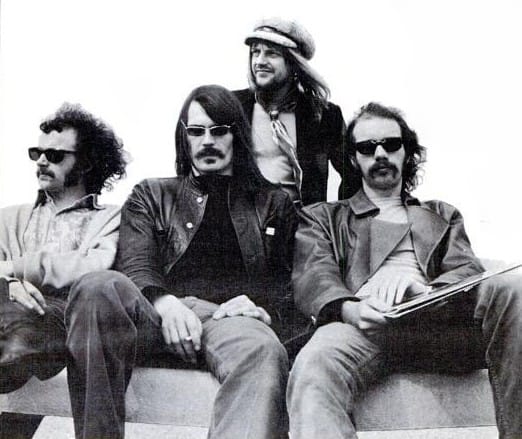
Soft Machine are an English rock band from Canterbury, Kent. The band were formed in 1966 by Mike Ratledge, Robert Wyatt, Kevin Ayers, Daevid Allen and Larry Nowlin. Soft Machine were central in the Canterbury scene; they became one of the first British psychedelic acts, and later helped pioneer progressive and jazz rock. Soft Machine's lineup has undergone many changes, and has included Andy Summers, Hugh Hopper, Elton Dean, John Marshall, Karl Jenkins, Roy Babbington and Allan Holdsworth. As of 2025[update], the current lineup consists of John Etheridge, Theo Travis, Fred Thelonious Baker and Asaf Sirkis. The band's name originates from William S. Burroughs's novel The Soft Machine.
The band originated with its predecessor, The Wilde Flowers. After forming, Soft Machine originally dabbled with psychedelic pop, releasing their debut studio album, The Soft Machine, in 1968, alongside the single "Joy of a Toy". The band's progressive roots stemmed from their second studio album, Volume Two (1969). The band fully established their signature sound with the album's Third (1970) and Fourth (1971). By 1971, Soft Machine became a purely instrumental band. This transition was followed by the 1972 album Fifth, and the 1973 albums Six and Seven. In 1975, the band released their eight studio album, Bundles, followed by their then-final studio album, Softs (1976). In 1978, the group broke up.
In 1980, the band briefly reunited and released their tenth studio album, Land of Cockayne, in 1981. After breaking up again, and briefly reuniting in 1984, the group Soft Machine Legacy was formed in 2004, and released three studio albums, including their self-titled debut (2006), Steam (2007), and Burden of Proof (2013). The "Legacy" suffix was dropped in 2015, and they released two studio albums, Hidden Details (2018) and Other Doors (2023). Though they have achieved little commercial success, critics consider Soft Machine to have been influential in rock music. Dave Lynch at AllMusic called them "one of the most influential underground bands of their era".
In mid-1966, Mike Ratledge (keyboards), Robert Wyatt (drums, vocals), Kevin Ayers (bass, vocals), Daevid Allen (guitar) and Larry Nowlin (guitar) formed Soft Machine, who were billed as The Soft Machine up to 1969 or 1970. Allen and Wyatt first played together in 1963 as part of the Daevid Allen Trio, and were occasionally accompanied by Ratledge. In 1964, Wyatt and Ayers were founder members of The Wilde Flowers; by 1966, they had both left that band and rejoined Allen to form the short-lived band Mister Head, which also included Nowlin. The four members soon joined with Ratledge to form the Soft Machine. Ayers suggested the band's name, which comes from William S. Burroughs's novel The Soft Machine (1961). The band became a quartet when Nowlin departed in September 1966.
During late 1966 and early 1967, the Soft Machine became involved in the early UK underground scene. Along with Pink Floyd, they became one of the major resident bands at the UFO Club, and played other London clubs like the Speakeasy and Middle Earth. According to Wyatt, the Soft Machine received negative reactions when playing at venues other than these underground clubs; this led to their penchant for long tracks and segued tunes because continuously playing deprived their audiences chances to boo them. In February 1967, the band released their first single "Love Makes Sweet Music" on Polydor Records.
In April 1967, the Soft Machine recorded nine demo songs with producer Giorgio Gomelsky in De Lane Lea Studios; due to a dispute over studio costs, these tracks were unreleased for several years. Polydor later released these demos in 1972 as Jet Propelled Photographs. Later in 1967, the band began touring in mainland Europe, becoming especially popular in France. When returning from a tour of France in August, Allen, an Australian, was denied re-entry to the UK, so the group continued as a trio while Allen returned to Paris to form Gong.
The Soft Machine, who shared the same management as the Jimi Hendrix Experience, supported them on two North American tours during 1968. The band signed to Probe Records and recorded their eponymous first album in New York City in April at the end of the first tour, though it was not released until December. In London, guitarist Andy Summers, later of the Police, joined the Soft Machine. The band's new line-up began a US tour with some headlining shows before supporting Hendrix in August and September 1968. By the time the Hendrix tour began, Summers had been fired at Ayers' insistence. Ayers himself departed amicably after the final tour date at the Hollywood Bowl in September, and the Soft Machine disbanded. Wyatt stayed in the US to record solo demos while Ratledge returned to London and began composing.
In December 1968, to fulfil contractual obligations, Wyatt and Ratledge re-formed the Soft Machine with their former road manager Hugh Hopper replacing Ayers on bass. Hopper, like Ayers and Wyatt, was a founding member of The Wilde Flowers. In 1969, the Soft Machine recorded their second album Volume Two, which started a change to jazz fusion. The album fulfilled the band's contract with Probe and they signed with CBS Records by the beginning of 1970. In May 1969, the Soft Machine played as the uncredited backing band on two tracks of The Madcap Laughs, the debut solo album of Pink Floyd's Syd Barrett. Shortly after the Barrett recording, Hopper's brother Brian Hopper, another Wilde Flowers co-founder, joined the Soft Machine on saxophone. Around this time, the band recorded the soundtrack for a multimedia show called Spaced, which ran in London for five days in mid 1969. The soundtrack was commercially released in 1996 by Cuneiform Records. In October 1969, following Brian Hopper's departure, the Soft Machine expanded to a septet; Wyatt, Ratledge and Hugh Hopper added a four-piece horn section composed of the saxophonists Elton Dean and Lyn Dobson, cornet player Mark Charig and trombonist Nick Evans. After two months, Charig and Evans departed the band.
Hub AI
Soft Machine AI simulator
(@Soft Machine_simulator)
Soft Machine
Soft Machine are an English rock band from Canterbury, Kent. The band were formed in 1966 by Mike Ratledge, Robert Wyatt, Kevin Ayers, Daevid Allen and Larry Nowlin. Soft Machine were central in the Canterbury scene; they became one of the first British psychedelic acts, and later helped pioneer progressive and jazz rock. Soft Machine's lineup has undergone many changes, and has included Andy Summers, Hugh Hopper, Elton Dean, John Marshall, Karl Jenkins, Roy Babbington and Allan Holdsworth. As of 2025[update], the current lineup consists of John Etheridge, Theo Travis, Fred Thelonious Baker and Asaf Sirkis. The band's name originates from William S. Burroughs's novel The Soft Machine.
The band originated with its predecessor, The Wilde Flowers. After forming, Soft Machine originally dabbled with psychedelic pop, releasing their debut studio album, The Soft Machine, in 1968, alongside the single "Joy of a Toy". The band's progressive roots stemmed from their second studio album, Volume Two (1969). The band fully established their signature sound with the album's Third (1970) and Fourth (1971). By 1971, Soft Machine became a purely instrumental band. This transition was followed by the 1972 album Fifth, and the 1973 albums Six and Seven. In 1975, the band released their eight studio album, Bundles, followed by their then-final studio album, Softs (1976). In 1978, the group broke up.
In 1980, the band briefly reunited and released their tenth studio album, Land of Cockayne, in 1981. After breaking up again, and briefly reuniting in 1984, the group Soft Machine Legacy was formed in 2004, and released three studio albums, including their self-titled debut (2006), Steam (2007), and Burden of Proof (2013). The "Legacy" suffix was dropped in 2015, and they released two studio albums, Hidden Details (2018) and Other Doors (2023). Though they have achieved little commercial success, critics consider Soft Machine to have been influential in rock music. Dave Lynch at AllMusic called them "one of the most influential underground bands of their era".
In mid-1966, Mike Ratledge (keyboards), Robert Wyatt (drums, vocals), Kevin Ayers (bass, vocals), Daevid Allen (guitar) and Larry Nowlin (guitar) formed Soft Machine, who were billed as The Soft Machine up to 1969 or 1970. Allen and Wyatt first played together in 1963 as part of the Daevid Allen Trio, and were occasionally accompanied by Ratledge. In 1964, Wyatt and Ayers were founder members of The Wilde Flowers; by 1966, they had both left that band and rejoined Allen to form the short-lived band Mister Head, which also included Nowlin. The four members soon joined with Ratledge to form the Soft Machine. Ayers suggested the band's name, which comes from William S. Burroughs's novel The Soft Machine (1961). The band became a quartet when Nowlin departed in September 1966.
During late 1966 and early 1967, the Soft Machine became involved in the early UK underground scene. Along with Pink Floyd, they became one of the major resident bands at the UFO Club, and played other London clubs like the Speakeasy and Middle Earth. According to Wyatt, the Soft Machine received negative reactions when playing at venues other than these underground clubs; this led to their penchant for long tracks and segued tunes because continuously playing deprived their audiences chances to boo them. In February 1967, the band released their first single "Love Makes Sweet Music" on Polydor Records.
In April 1967, the Soft Machine recorded nine demo songs with producer Giorgio Gomelsky in De Lane Lea Studios; due to a dispute over studio costs, these tracks were unreleased for several years. Polydor later released these demos in 1972 as Jet Propelled Photographs. Later in 1967, the band began touring in mainland Europe, becoming especially popular in France. When returning from a tour of France in August, Allen, an Australian, was denied re-entry to the UK, so the group continued as a trio while Allen returned to Paris to form Gong.
The Soft Machine, who shared the same management as the Jimi Hendrix Experience, supported them on two North American tours during 1968. The band signed to Probe Records and recorded their eponymous first album in New York City in April at the end of the first tour, though it was not released until December. In London, guitarist Andy Summers, later of the Police, joined the Soft Machine. The band's new line-up began a US tour with some headlining shows before supporting Hendrix in August and September 1968. By the time the Hendrix tour began, Summers had been fired at Ayers' insistence. Ayers himself departed amicably after the final tour date at the Hollywood Bowl in September, and the Soft Machine disbanded. Wyatt stayed in the US to record solo demos while Ratledge returned to London and began composing.
In December 1968, to fulfil contractual obligations, Wyatt and Ratledge re-formed the Soft Machine with their former road manager Hugh Hopper replacing Ayers on bass. Hopper, like Ayers and Wyatt, was a founding member of The Wilde Flowers. In 1969, the Soft Machine recorded their second album Volume Two, which started a change to jazz fusion. The album fulfilled the band's contract with Probe and they signed with CBS Records by the beginning of 1970. In May 1969, the Soft Machine played as the uncredited backing band on two tracks of The Madcap Laughs, the debut solo album of Pink Floyd's Syd Barrett. Shortly after the Barrett recording, Hopper's brother Brian Hopper, another Wilde Flowers co-founder, joined the Soft Machine on saxophone. Around this time, the band recorded the soundtrack for a multimedia show called Spaced, which ran in London for five days in mid 1969. The soundtrack was commercially released in 1996 by Cuneiform Records. In October 1969, following Brian Hopper's departure, the Soft Machine expanded to a septet; Wyatt, Ratledge and Hugh Hopper added a four-piece horn section composed of the saxophonists Elton Dean and Lyn Dobson, cornet player Mark Charig and trombonist Nick Evans. After two months, Charig and Evans departed the band.
Recent media