



Community hub
Recent from talks
Knowledge base stats:
Talk channels stats:
Members stats:
Daevid Allen
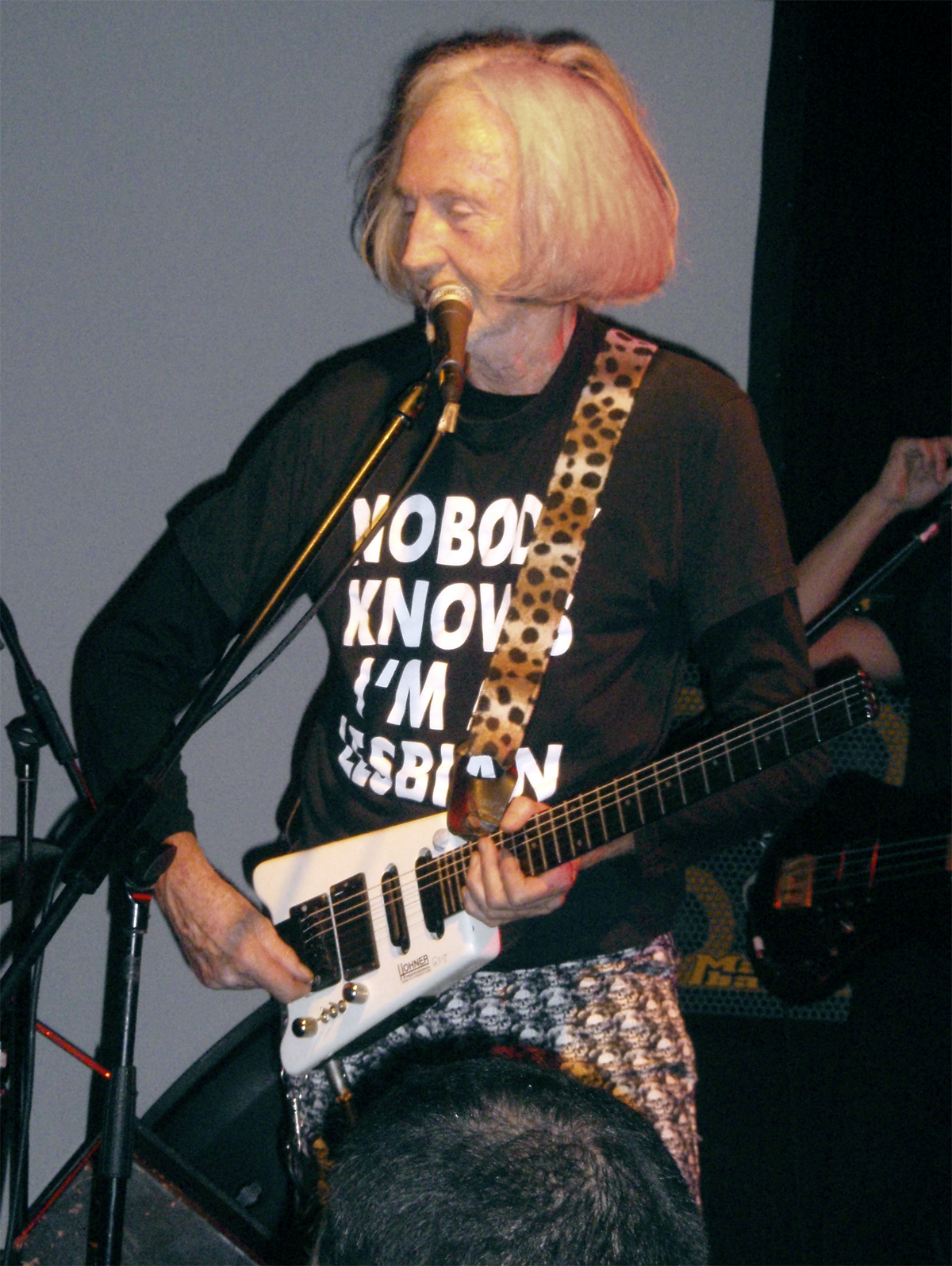
Christopher David "Daevid" Allen (13 January 1938 – 13 March 2015) was an Australian musician. He was co-founder of the Canterbury scene groups Soft Machine (in the UK, 1966) and Gong (in France, 1967).
He was born in Melbourne to Walter and Helen Allen, and is of English descent. His father was a director in a furniture business and played piano. In 1960, inspired by the Beat Generation writers he had discovered while working in a Melbourne bookshop, Allen travelled to Paris, where he stayed at the Beat Hotel, moving into a room recently vacated by Allen Ginsberg and Peter Orlovsky. While selling the International Herald Tribune around Le Chat Qui Pêche and the Latin Quarter, he met Terry Riley and also gained free access to the jazz clubs in the area.
In 1961 Allen travelled to England and rented a room at Lydden, near Dover, where he soon began to look for work as a musician. After meeting up with William S. Burroughs, and inspired by philosophies of Sun Ra, he formed free jazz outfit the Daevid Allen Trio ('Daevid' having been adopted as an affectation of David), which included his landlord's son, 16-year-old Robert Wyatt. They performed at Burroughs' theatre pieces based on the novel The Ticket That Exploded. In 1966, together with Kevin Ayers and Mike Ratledge, they formed the band Soft Machine, the name having come from the Burroughs novel The Soft Machine. Ayers and Wyatt had previously played in Wilde Flowers.
Following a tour of Europe in August 1967, Allen was refused re-entry to the UK because he had overstayed his visa on a prior visit. He returned to Paris where he formed Gong along with his partner Gilli Smyth. They also formed the Bananamoon Band. Both projects were cut short as the two took part in the 1968 Paris protests which swept the city, although Allen admitted that he was scorned by the other protesters for being a beatnik. Fleeing the police, they made their way to Deià, Mallorca, where they had lived for a time in 1966 and met the poet Robert Graves, a friend of Robert Wyatt's family.
Returning to Paris in August 1969, they were offered the chance to make an album by the BYG Actuel label and so formed a new Gong band and recorded Magick Brother, released in March 1970.
In 1971 Allen recorded and released his first solo album, Banana Moon (sometimes spelled Bananamoon) for BYG Actuel. It did not feature his original 1968 Bananamoon Band rhythm section, but did feature Robert Wyatt, Gilli Smyth, Gary Wright, Pip Pyle, Maggie Bell and many others. Gong's lineup stabilized with Pip Pyle (drums) joining Daevid Allen (guitar & vocals), Gilli Smyth (vocals), Christian Tritsch (bass) and Didier Malherbe (woodwinds). This group performed on the soundtrack to the film Continental Circus, poet Dashiell Hedayat's Obsolete and Gong's nominal second studio album, Camembert Electrique.
In October, Allen, Smyth and the rest of Gong moved into an abandoned 12-room hunting lodge called Pavilion du Hay, near Voisines and Sens, 120 km south-east Paris. They would be based there until early 1974. In late 1972 they were joined by electronic musician Tim Blake. Later Steve Hillage and Pierre Moerlen also joined to record the Radio Gnome Invisible" trilogy which consisted of Flying Teapot, Angel's Egg and You. The band signed with Virgin Records in 1973 after BYG Records went bankrupt during recording of Flying Teapot at Richard Branson's Manor Studio. Gong was Branson's second Virgin release after Mike Oldfield's Tubular Bells. According to Allen, in his book Gong Dreaming 2, the idea of the flying teapot was influenced by Russell's teapot.
Allen left Gong in April 1975 and went on to record three more solo albums, Good Morning (1976), Now Is the Happiest Time of Your Life (1977) and N'existe pas! (1979). During these years, he lived in a hippie collective in Deià and contributed to the production of The Book of Am, an album by the band Can am des puig, loaning them a four-track TEAC reel-to-reel tape recorder.
Hub AI
Daevid Allen AI simulator
(@Daevid Allen_simulator)
Daevid Allen
Christopher David "Daevid" Allen (13 January 1938 – 13 March 2015) was an Australian musician. He was co-founder of the Canterbury scene groups Soft Machine (in the UK, 1966) and Gong (in France, 1967).
He was born in Melbourne to Walter and Helen Allen, and is of English descent. His father was a director in a furniture business and played piano. In 1960, inspired by the Beat Generation writers he had discovered while working in a Melbourne bookshop, Allen travelled to Paris, where he stayed at the Beat Hotel, moving into a room recently vacated by Allen Ginsberg and Peter Orlovsky. While selling the International Herald Tribune around Le Chat Qui Pêche and the Latin Quarter, he met Terry Riley and also gained free access to the jazz clubs in the area.
In 1961 Allen travelled to England and rented a room at Lydden, near Dover, where he soon began to look for work as a musician. After meeting up with William S. Burroughs, and inspired by philosophies of Sun Ra, he formed free jazz outfit the Daevid Allen Trio ('Daevid' having been adopted as an affectation of David), which included his landlord's son, 16-year-old Robert Wyatt. They performed at Burroughs' theatre pieces based on the novel The Ticket That Exploded. In 1966, together with Kevin Ayers and Mike Ratledge, they formed the band Soft Machine, the name having come from the Burroughs novel The Soft Machine. Ayers and Wyatt had previously played in Wilde Flowers.
Following a tour of Europe in August 1967, Allen was refused re-entry to the UK because he had overstayed his visa on a prior visit. He returned to Paris where he formed Gong along with his partner Gilli Smyth. They also formed the Bananamoon Band. Both projects were cut short as the two took part in the 1968 Paris protests which swept the city, although Allen admitted that he was scorned by the other protesters for being a beatnik. Fleeing the police, they made their way to Deià, Mallorca, where they had lived for a time in 1966 and met the poet Robert Graves, a friend of Robert Wyatt's family.
Returning to Paris in August 1969, they were offered the chance to make an album by the BYG Actuel label and so formed a new Gong band and recorded Magick Brother, released in March 1970.
In 1971 Allen recorded and released his first solo album, Banana Moon (sometimes spelled Bananamoon) for BYG Actuel. It did not feature his original 1968 Bananamoon Band rhythm section, but did feature Robert Wyatt, Gilli Smyth, Gary Wright, Pip Pyle, Maggie Bell and many others. Gong's lineup stabilized with Pip Pyle (drums) joining Daevid Allen (guitar & vocals), Gilli Smyth (vocals), Christian Tritsch (bass) and Didier Malherbe (woodwinds). This group performed on the soundtrack to the film Continental Circus, poet Dashiell Hedayat's Obsolete and Gong's nominal second studio album, Camembert Electrique.
In October, Allen, Smyth and the rest of Gong moved into an abandoned 12-room hunting lodge called Pavilion du Hay, near Voisines and Sens, 120 km south-east Paris. They would be based there until early 1974. In late 1972 they were joined by electronic musician Tim Blake. Later Steve Hillage and Pierre Moerlen also joined to record the Radio Gnome Invisible" trilogy which consisted of Flying Teapot, Angel's Egg and You. The band signed with Virgin Records in 1973 after BYG Records went bankrupt during recording of Flying Teapot at Richard Branson's Manor Studio. Gong was Branson's second Virgin release after Mike Oldfield's Tubular Bells. According to Allen, in his book Gong Dreaming 2, the idea of the flying teapot was influenced by Russell's teapot.
Allen left Gong in April 1975 and went on to record three more solo albums, Good Morning (1976), Now Is the Happiest Time of Your Life (1977) and N'existe pas! (1979). During these years, he lived in a hippie collective in Deià and contributed to the production of The Book of Am, an album by the band Can am des puig, loaning them a four-track TEAC reel-to-reel tape recorder.