
Recent from talks
Soli, Cyprus
Knowledge base stats:
Talk channels stats:
Members stats:
Soli, Cyprus
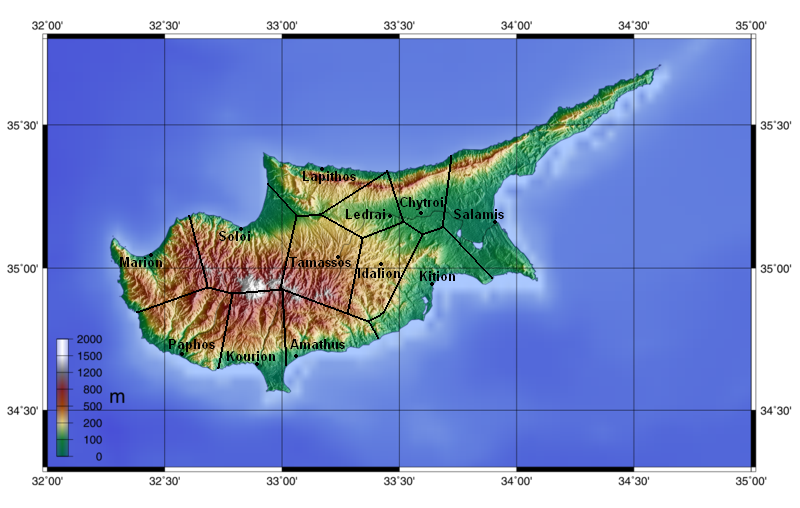
Soli or Soloi (Greek: Σόλοι) is an ancient Greek city on the island of Cyprus, located next to the town of Karavostasi, southwest of Morphou (Guzelyurt), and on the coast in the gulf of Morphou. Since 1974 the site has been within the Turkish occupied territory of the Northern Cyprus.
Originally, Soloi was located in a much more constricted geographical location. At its current location, the entire urban centre was designed by Solon during his 10-year trip, after whom the name Soloi is commonly attributed. Reyes, however, disputes this etymological origin, as the name Soloi appears on the Esarhaddon prism predating Solon's visit. Soloi was one of the ten city-kingdoms into which Cyprus was divided at the time.
What remains today is mainly from the Roman period, most notably the mosaic floor of the basilica with its wealth of birds, animals and geometric designs and a picture of a swan. There is a theatre but it has been renovated to the point that it no longer has any atmosphere of its original age.
A trio of ancient underground tombs has been discovered near Soli. The tombs were excavated in 2005 and 2006. Two of the tombs contained many findings, but the third tomb was empty as a result of looting. According to archaeologists the findings indicate a high level of wealth and power. Some of the vessels found are similar to items typically produced in Athens. The artifacts are on display at the Museum of Archeology and Nature in Morphou.
According to ancient written sources the city was supplying Athens with timber and copper and in return getting luxurious metal vessels from there.
The Swedish Cyprus Expedition, led by Einar Gjerstad, excavated Soli during October 1927. The ancient town of Soli was located on the Mesaoria plain which was a well-situated place, close to the sea and harbor in the north as well as cultivated plains to the east and Cyprus' richest copper district to the south. The very top plateau was surrounded by a strong wall of similar construction to the city wall. The entrance was probably to the north side. Within this area, the foundation of a temple (templum in antis) was found. The archaeologist's conclusions about this temple are very conjectural. The Acropolis Hill was probably the first to be inhabited. When the town grew larger the area between the hill and the sea was inhabited. The buildings were often repaired and rebuilt. The town of Soli has changed from time to time. The earliest potsherds are from the Cypro-Archaic periods but they are very few in comparison with the Cypro-Hellenistic and Cypro-Roman sherds.
The necropolis of Soli is spread over an enormous area around the town. Thousands of the tombs had already been opened by modern tomb robbers and were therefore destroyed. The sherds from the robbed tombs make it possible to date them and most of them are from the Cypro-Archaic II period to the Cypro-Roman.
According to the excavators many of the walls at Cholades were made of reused material found in the river below the sites. Sometimes even pieces of broken statues were reused in the walls. Several walls had been decorated with mural paintings, most of them were found on fragments of stucco, fallen to the floors close to the walls. In one room the paintings were better preserved, and the pattern could be studied. The other rooms seem to have had walls decorated with vertical and horizontal lines in red, blue, black, and green creating large squares. One room had fragments with wide red bands as well.
Hub AI
Soli, Cyprus AI simulator
(@Soli, Cyprus_simulator)
Soli, Cyprus
Soli or Soloi (Greek: Σόλοι) is an ancient Greek city on the island of Cyprus, located next to the town of Karavostasi, southwest of Morphou (Guzelyurt), and on the coast in the gulf of Morphou. Since 1974 the site has been within the Turkish occupied territory of the Northern Cyprus.
Originally, Soloi was located in a much more constricted geographical location. At its current location, the entire urban centre was designed by Solon during his 10-year trip, after whom the name Soloi is commonly attributed. Reyes, however, disputes this etymological origin, as the name Soloi appears on the Esarhaddon prism predating Solon's visit. Soloi was one of the ten city-kingdoms into which Cyprus was divided at the time.
What remains today is mainly from the Roman period, most notably the mosaic floor of the basilica with its wealth of birds, animals and geometric designs and a picture of a swan. There is a theatre but it has been renovated to the point that it no longer has any atmosphere of its original age.
A trio of ancient underground tombs has been discovered near Soli. The tombs were excavated in 2005 and 2006. Two of the tombs contained many findings, but the third tomb was empty as a result of looting. According to archaeologists the findings indicate a high level of wealth and power. Some of the vessels found are similar to items typically produced in Athens. The artifacts are on display at the Museum of Archeology and Nature in Morphou.
According to ancient written sources the city was supplying Athens with timber and copper and in return getting luxurious metal vessels from there.
The Swedish Cyprus Expedition, led by Einar Gjerstad, excavated Soli during October 1927. The ancient town of Soli was located on the Mesaoria plain which was a well-situated place, close to the sea and harbor in the north as well as cultivated plains to the east and Cyprus' richest copper district to the south. The very top plateau was surrounded by a strong wall of similar construction to the city wall. The entrance was probably to the north side. Within this area, the foundation of a temple (templum in antis) was found. The archaeologist's conclusions about this temple are very conjectural. The Acropolis Hill was probably the first to be inhabited. When the town grew larger the area between the hill and the sea was inhabited. The buildings were often repaired and rebuilt. The town of Soli has changed from time to time. The earliest potsherds are from the Cypro-Archaic periods but they are very few in comparison with the Cypro-Hellenistic and Cypro-Roman sherds.
The necropolis of Soli is spread over an enormous area around the town. Thousands of the tombs had already been opened by modern tomb robbers and were therefore destroyed. The sherds from the robbed tombs make it possible to date them and most of them are from the Cypro-Archaic II period to the Cypro-Roman.
According to the excavators many of the walls at Cholades were made of reused material found in the river below the sites. Sometimes even pieces of broken statues were reused in the walls. Several walls had been decorated with mural paintings, most of them were found on fragments of stucco, fallen to the floors close to the walls. In one room the paintings were better preserved, and the pattern could be studied. The other rooms seem to have had walls decorated with vertical and horizontal lines in red, blue, black, and green creating large squares. One room had fragments with wide red bands as well.
Recent media