Hubbry Logo
SwanSwanMain
Open search
Swan
Community hub
Swan
logo
8 pages, 0 posts
0 subscribers
Be the first to start a discussion here.
Swan
Swan
from Wikipedia

Swan
Temporal range: Late MioceneHolocene[1][2]
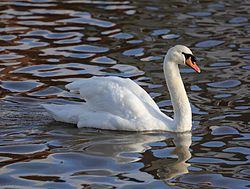
Mute swan (Cygnus olor)
Scientific classification Edit this classification
Kingdom: Animalia
Phylum: Chordata
Class: Aves
Order: Anseriformes
Family: Anatidae
Subfamily: Anserinae
Genus: Cygnus
Garsault, 1764
Type species
Anas olor[3]
(now Cygnus olor)
Gmelin, 1789
Species

6 living, see text.

Synonyms

Cygnanser Kretzoi, 1957

Swans are birds of the genus Cygnus within the family Anatidae. The swans' closest relatives include geese and ducks. Swans are grouped with the closely related geese in the subfamily Anserinae, forming the tribe Cygnini. Sometimes, they are considered a distinct subfamily, Cygninae. They are the largest waterfowl and are often among the largest flighted birds in their range.

There are six living and many extinct species of swan; in addition, there is a species known as the coscoroba swan, which is no longer considered one of the true swans. Swans usually mate for life, although separation sometimes occurs, particularly following nesting failure, and if a mate dies, the remaining swan will take up with another. The number of eggs in each clutch ranges from three to eight.[4]

Taxonomy and terminology

[edit]

The genus Cygnus was introduced in 1764 by the French naturalist François Alexandre Pierre de Garsault.[5][6] The English word swan, akin to the German Schwan, Dutch zwaan, and Swedish svan, is derived from the Indo-European root *swen(H) ('to sound, to sing').[7][8]

Mute swan family with five cygnets swimming
Mute swan (Cygnus olor) family with five cygnets swimming on a lake in Romania

Young swans are known as cygnets, from Old French cigne or cisne (diminutive suffix et 'little'), from the Latin word cygnus, a variant form of cycnus 'swan', itself from the Greek κύκνος kýknos, a word of the same meaning.[9][10][11] An adult male is a cob, from Middle English cobbe (leader of a group); an adult female is a pen.[12] A group of swans is called a bevy[citation needed] or a wedge.[13]

Description

[edit]
A mute swan landing on water; due to the size and weight of most swans, large areas of open land or water are required to successfully take off and land.

Swans are the largest extant members of the waterfowl family Anatidae and are among the largest flying birds.[14] The largest living species, including the mute swan, trumpeter swan, and whooper swan, can reach a length of over 1.5 m (59 in) and weigh over 15 kg (33 lb). Their wingspans can be over 3.1 m (10 ft).[15] Compared to the closely related geese, they are much larger and have proportionally larger feet and necks.[16] Adults also have a patch of unfeathered skin between the eyes and bill. The sexes are alike in plumage, but males are generally bigger and heavier than females.[12] The biggest species of swan ever was the extinct Cygnus falconeri, a flightless giant swan known from fossils found on the Mediterranean islands of Malta and Sicily; its disappearance is thought to have resulted from extreme climate fluctuations or the arrival of superior predators and competitors.[17]

The Northern Hemisphere species of swan have pure white plumage, while the Southern Hemisphere species are mixed black and white. The Australian black swan (Cygnus atratus) is completely black except for the white flight feathers on its wings; the chicks of black swans are light grey. The South American black-necked swan has a white body with a black neck.[18]

The legs of most swans are typically a dark blackish-grey colour, except for the South American black-necked swan, which has pink legs. Bill colour varies: the four subarctic species have black bills with varying amounts of yellow, and all the others are patterned red and black. Although birds do not have teeth, swans, like other Anatidae, have beaks with serrated edges that look like small jagged "teeth" as part of their beaks, which are used for catching and eating aquatic plants and algae, as well as molluscs, small fish, frogs, and worms.[19] In the mute swan and black-necked swan, both sexes have a fleshy lump at the base of their bills on the upper mandible, known as the knob, which is larger in males and is condition-dependent, changing seasonally.[20][21]

Distribution and movements

[edit]
Whooper swans migrate from Iceland, Greenland, Scandinavia, and northern Russia to Europe, Central Asia, China, and Japan.

Swans are generally found in temperate environments, rarely occurring in the tropics. Four (or five) species occur in the Northern Hemisphere, one species is found in Australia, one extinct species was found in New Zealand and the Chatham Islands, and one species is distributed in southern South America. They are absent from tropical Asia, Central America, northern South America and the entirety of Africa. One species, the mute swan, has been introduced to North America, Australia and New Zealand.[16]

Several species are migratory, either wholly or partly so. The mute swan is a partial migrant, being resident over areas of Western Europe but wholly migratory in Eastern Europe and Asia. The tundra swan is wholly migratory, and the whooper swan and trumpeter swan are almost entirely migratory.[16] There is some evidence that the black-necked swan is migratory over part of its range, but detailed studies have not established whether these movements constitute long- or short-range migration.[22]

Behaviour

[edit]
Courting swan on the Danube river
Swans with nest and eggs at Lake Constance
An adult mute swan (Cygnus olor) with cygnets in Vrelo Bosne, Sarajevo, Bosnia and Herzegovina

Swans feed in water and on land. They are almost entirely herbivorous, although they may eat small amounts of aquatic animals. In the water, food is obtained by up-ending or dabbling, and their diet is composed of the roots, tubers, stems, and leaves of aquatic and submerged plants.[16]

Mute swan threatens a photographer in Toyako, Japan.

A familiar behaviour of swans is that they mate for life and typically bond even before they reach sexual maturity. Trumpeter swans, for example, can live as long as 24 years and only start breeding at the age of 4–7, forming monogamous pair bonds as early as 20 months.[23] "Divorce", though rare, does occur; one study of mute swans shows a 3% rate for pairs that breed successfully and 9% for pairs that do not.[24] The pair bonds are maintained year-round, even in gregarious and migratory species like the tundra swan, which congregate in large flocks in the wintering grounds.[25]

Swans' nests are on the ground near water and about a metre (3') across. Unlike many other ducks and geese, the male helps with the nest construction and will also take turns incubating the eggs.[26] Alongside the whistling ducks, swans are the only anatids that will do this. The average egg size (for the mute swan) is 113 × 74 mm (4+12 x 3 in), weighing 340 g (12 oz), in a clutch size of 4 to 7, with an incubation period of 34–45 days.[27] Swans are highly protective of their nests. They will viciously attack anything that they perceive as a threat to their chicks, including humans; one man was suspected to have drowned in such an attack.[28][29] Swans' intraspecific aggressive behaviour is shown more frequent than interspecific behaviour for food and shelter. The aggression with other species is shown more in tundra swans.[30]

Systematics and evolution

[edit]
Black swans mating in Canberra, Australia
Trumpeter and whooper swans, with hybrid offspring
Black swans, trumpeter swans, a black-necked swan, and a whooper swan in a mixed-species enclosure, Hyderabad

Evidence suggests that the genus Cygnus evolved in Europe or western Eurasia during the Miocene, spreading all over the Northern Hemisphere until the Pliocene. When the southern species branched off is not known. The mute swan is closest to the Southern Hemisphere Cygnus;[31] its habits of carrying the neck curved (not straight) and the wings fluffed (not flush) as well as its bill colour and knob indicate that its closest living relative is the black swan. Given the biogeography and appearance of the subgenus Olor, it seems likely that these are of a more recent origin, as evidenced shows by their modern ranges (which were mostly uninhabitable during the last ice age) and great similarity between the taxa.[1]

Phylogeny

[edit]
Cygnus
(Sthenelides)

C. melancoryphus (Black-necked swan)

(Chenopis)

C. atratus (Latham, 1790) (Black swan)

(Cygnus)

C. olor (Gmelin, 1789) (Mute swan)

(Olor)

C. buccinator (Richardson, 1832) (Trumpeter swan)

C. cygnus (Linnaeus, 1758) (Whooper swan)

C. columbianus (Ord, 1815) (Tundra swan)[32]

Species

[edit]

Genus Cygnus

Subgenus Image Scientific name Common name Description Distribution
Subgenus Cygnus Cygnus olor Mute swan Eurasian species that occurs across Europe into southern Russia, China, and the Russian Maritime Territory, at lower latitudes compared to the whooper swan and Bewick's swan. According to the British Ornithologists' Union, recent fossil records show that Cygnus olor is among the oldest bird species still extant; it has been upgraded to "native" status in several European countries since this bird has been found in fossil and bog specimens dating back thousands of years. While being common temperate Eurasian birds, often derived from semi-domesticated flocks, they are now naturalised in the United States and elsewhere. Europe into southern Russia, China, and the Russian Maritime Territory; introduced populations in North America, Japan, Australasia, and southern Africa.
Subgenus Chenopis Cygnus atratus Black swan Nomadic with erratic migration patterns dependent upon climatic conditions. Black plumage and a red bill. Australia, introduced into New Zealand and the Chatham Islands, with additional smaller introductions in Europe, the United States, Japan and China.
Subgenus Sthenelides Cygnus melancoryphus Black-necked swan South America
Subgenus Olor Cygnus cygnus Whooper swan Breeds in Iceland and subarctic Europe and Asia, migrating to temperate Europe and Asia in winter
Cygnus buccinator Trumpeter swan The largest North American swan. Very similar to the whooper swan (and sometimes treated as a subspecies of it). It was hunted almost to extinction but has since recovered. North America
Cygnus columbianus Tundra swan Breeds on the Arctic tundra and winters in more temperate regions of Eurasia and North America. It consists of two forms, generally regarded as subspecies, although some authorities treat them as separate species.[33]
  • Bewick's swan Cygnus (columbianus) bewickii is the Eurasian form that migrates from Arctic Russia to western Europe and eastern Asia (China, Korea, Japan) in winter.
  • Whistling swan Cygnus (columbianus) columbianus is the North American form.
North America, Eurasia

The coscoroba swan (Coscoroba coscoroba) from South America, the only species in its genus, is not a true swan. Its phylogenetic position is not fully resolved; it is in some aspects more similar to geese and shelducks.[34]

Hybrids
Mute x Whooper Swan
Trumpeter × Whooper Swan
Trumpeter × Mute Swan
Trumpeter × Tundra Swan

Fossil record

[edit]

The fossil record of the genus Cygnus is quite impressive, although allocation to the subgenera is often tentative; as indicated above, at least the early forms probably belong to the C. olor – Southern Hemisphere lineage, whereas the Pleistocene taxa from North America would be placed in Olor. Several prehistoric species have been described, mostly from the Northern Hemisphere. In the Mediterranean, the leg bones of the giant swan (C. falconeri) were found on the islands of Malta and Sicily; it may have been over 2 metres from tail to bill, which was taller (though not heavier) than the contemporary local dwarf elephants (Palaeoloxodon falconeri).

†New Zealand swan (C. sumnerensis)
  • Subgenus Chenopis
    • New Zealand swan, Cygnus sumnerensis, an extinct species related to the black swan of Australia
  • Other subgenera (see above):
    • Cygnus atavus (Fraas 1870) Mlíkovský 1992 [Anas atava Fraas 1870; Anas cygniformis Fraas 1870; Palaelodus steinheimensis Fraas 1870; Anser atavus (Fraas 1870) Lambrecht 1933; Anser cygniformis (Fraas 1870) Lambrecht 1933] (Middle Miocene of Germany)
    • Cygnus csakvarensis Lambrecht 1933 [Cygnus csákvárensis Lambrecht 1931a nomen nudum; Cygnanser csakvarensis (Lambrecht 1933) Kretzoi 1957; Olor csakvarensis (Lambrecht 1933) Mlíkovský 1992b] (Late Miocene of Hungary)
    • †Dwarf swan (Cygnus equitum) Bate 1916 sensu Livezey 1997 [Anser equitum (Bate 1916) Brodkorb 1964; Cygnus (Olor) equitum Bate 1916 sensu Northcote 1988a] (Middle – Late Pleistocene of Malta and Sicily, Mediterranean)
    • Giant swan (Cygnus falconeri) Parker 1865 sensu Livezey 1997a [Cygnus melitensis Falconer 1868; Palaeocygnus falconeri (Parker 1865) Oberholser 1908] (Middle Pleistocene of Malta and Sicily, Mediterranean)
    • Cygnus hibbardi Brodkorb 1958 (?Early Pleistocene of Idaho, U.S.)
    • Cygnus lacustris (De Vis 1905) [Archaeocycnus lacustris De Vis 1905] (Late Pleistocene of the Lake Eyre region, Australia)
    • Cygnus liskunae (Kuročkin 1976) [Anser liskunae Kuročkin 1976] (Middle Pliocene of western Mongolia)
    • Cygnus mariae Bickart 1990 (Late Miocene of Florida and Early Pliocene of Arizona, USA)[35][36]
    • Cygnus paloregonus Cope 1878 [Anser condoni Schufeldt 1892; Cygnus matthewi Schufeldt 1913] (Middle Pleistocene of west-central U.S.)
    • Cygnus verae Boev 2000 (Early Pliocene of Bulgaria)[37]
    • Cygnus sp. Louchart et al. 1998 (Early Pleistocene of Turkey)[38]
    • Cygnus sp. (Pleistocene of Australia)[39][40]
  • Other genera

The supposed fossil swans "Cygnus" bilinicus and "Cygnus" herrenthalsi were, respectively, a stork and some large bird of unknown affinity (due to the bad state of preservation of the referred material).[41]

In culture

[edit]

European motifs

[edit]

Many of the cultural aspects refer to the mute swan of Europe. Perhaps the best-known story about a swan is the fairy tale "The Ugly Duckling". Swans are frequently regarded as symbols of love or fidelity, owing to their enduring and seemingly monogamous pair bonds. Swans feature prominently in two Wagner operas, Lohengrin and Parsifal.[42][43]

As food

[edit]

Swan meat was regarded as a luxury food in England during the reign of Elizabeth I. A recipe for baked swan survives from that time: "To bake a Swan[,] scald it and take out the bones, and parboil it, then season it very well with Pepper, Salt and Ginger, then lard it, and put it in a deep Coffin of Rye Paste with store of Butter, close it and bake it very well, and when it is baked, fill up the Vent-hole with melted Butter, and so keep it; serve it in as you do the Beef-Pie."[44] Swans being raised for food were sometimes kept in swan pits.

The Illustrious Brotherhood of Our Blessed Lady, a religious confraternity that existed in 's-Hertogenbosch in the late Middle Ages, had "sworn members", also called "swan-brethren" because they used to donate a swan for the yearly banquet.

A common misconception holds that the British monarch owns all the swans in the United Kingdom and is uniquely permitted to eat them.[45][46]

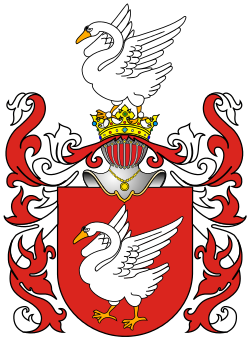
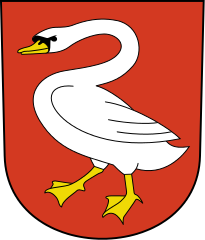
Heraldry

[edit]

Ancient Greece and Rome

[edit]

Swans feature strongly in mythology. In Greek mythology, the story of Leda and the Swan recounts that Helen of Troy was conceived in a union of Zeus disguised as a swan and Leda, Queen of Sparta.[47] Four different men (Cycnus, Cycnus, Cycnus, and Cycnus) are said to have been transformed into swans by the gods.

Other references in classical literature include the belief that, upon death, the mute swan would sing beautifully — hence the phrase "swan song".[48]

The mute swan is one of Apollo's sacred birds, associated both with light and with the concept of a "swan song". Apollo is often shown riding a chariot pulled by, or made of, swans during his ascension from Delos.

In the second century, the Roman poet Juvenal made a sarcastic reference to a good woman being a "rare bird, as rare on earth as a black swan" (black swans being completely unknown in the Northern Hemisphere until Dutch explorers reached Australia in the 1600s), from which comes the Latin phrase rara avis ("rare bird").[49]

Irish lore and poetry

[edit]

The Irish legend of the Children of Lir is about a stepmother who transformed her children into swans for 900 years.[50]

In the legend The Wooing of Etain, the king of the Sidhe (subterranean-dwelling, supernatural beings) transforms himself and the most beautiful woman in Ireland, Etain, into swans to escape from the king of Ireland and Ireland's armies. The swan has recently been depicted on an Irish commemorative coin.

Swans are also present in Irish literature in the poetry of W. B. Yeats; "The Wild Swans at Coole" has a heavy focus on the mesmerising characteristics of the swan. Yeats also recounts the myth of Leda and the Swan in the poem of the same name.

Nordic lore

[edit]

In Norse mythology, two swans drink from the sacred Well of Urd in the realm of Asgard, home of the gods. According to the Prose Edda, the water of this well is so pure and holy that all things that touch it turn white, including this original pair of swans and all others descended from them. The poem Volundarkvida, or the Lay of Volund, part of the Poetic Edda, also features swan maidens.

In the Finnish epic Kalevala, a swan lives in the Tuoni River located in Tuonela, the underworld realm of the dead; according to the story, whoever killed a swan would perish as well. Jean Sibelius composed the Lemminkäinen Suite based on the Kalevala, with the second piece entitled Swan of Tuonela (Tuonelan joutsen). Today, five flying swans are the symbol of the Nordic countries; the whooper swan (Cygnus cygnus) is the national bird of Finland,[51] and the mute swan is the national bird of Denmark.[52]

Swan Lake ballet

[edit]

The ballet Swan Lake is one of the most canonical classical ballets. Based on the 1875–76 score by Pyotr Ilyich Tchaikovsky, the most promulgated choreographic version was created by Marius Petipa and Lev Ivanov (1895), the premiere of which was danced by the Imperial Ballet at the Mariinsky Theatre in Saint Petersburg. The ballet's lead dual roles of Odette (white swan)/Odile (black swan) represent good and evil,[53] and they are among the most challenging roles created in Romantic classical ballet. The ballet is included in the repertories of ballet companies worldwide.[54]

Christianity

[edit]
Saint Hugh of Lincoln with a swan

A swan is one of the attributes of St. Hugh of Lincoln, based on the story of a swan that was devoted to him.[55]

Spanish language literature

[edit]

In Latin American literature, the Nicaraguan poet Rubén Darío (1867–1916) consecrated the swan as a symbol of artistic inspiration by drawing attention to the constancy of swan imagery in Western culture, beginning with the rape of Leda and ending with Wagner's Lohengrin. Darío's most famous poem in this regard is Blasón – "Coat of Arms" (1896), and his use of the swan made it a symbol for the Modernismo poetic movement that dominated Spanish language poetry from the 1880s until the First World War. Such was the dominance of Modernismo in Spanish language poetry that the Mexican poet Enrique González Martínez attempted to announce the end of Modernismo with a sonnet provocatively entitled Tuércele el cuello al cisne – "Wring the Swan's Neck" (1910).

Hinduism

[edit]

In Hinduism, swans are revered and likened to saintly persons who live in the world without attachment, much like a swan's feather stays dry in water. The Sanskrit word for swan is hamsa and the "Raja Hamsam" or the Royal Swan is the vehicle of the Devi Saraswati, which symbolises the Sattva Guna ("purity par excellence"). The swan, if offered a mixture of milk and water, is said to be able to drink the milk alone. Therefore, Saraswati, the goddess of knowledge, is seen riding the swan because the swan thus symbolizes Viveka, i.e. prudence and discrimination between the good and the bad or between the eternal and the transient; this is seen as a great quality, as shown by this Sanskrit verse:

haṁsaḥ śveto bakaḥ śvetaḥ ko bhedo bakahaṁsayoḥ ।
kṣīranīraviveke tu haṁso haṁsaḥ bako bakaḥ ॥
The swan is white, the crane is white, what is the difference between the swan and the crane?
During discriminating between water and milk, the swan is a swan while the crane is a crane!

As mentioned several times in the Vedic literature, persons who have attained great spiritual capabilities are sometimes called Paramahamsa ("Supreme Swan") on account of their spiritual grace and ability to travel between various spiritual worlds. In the Vedas, swans are said to reside on Lake Manasarovar during the summer and to migrate to Indian lakes for the winter; they are also believed to possess some powers, such as the ability to eat pearls.

Indo-European religions

[edit]

Swans are intimately associated with the divine twins in Indo-European religions, and it is thought that in Proto-Indo-European times, swans were a solar symbol associated with the divine twins and the original Indo-European sun goddess.[56]

See also

[edit]

References

[edit]
[edit]
Revisions and contributorsEdit on WikipediaRead on Wikipedia
from Grokipedia
Swans are large waterfowl belonging to the genus Cygnus within the family , which also includes ducks and geese, and the order . They are characterized by their elongated necks, predominantly white in adults, heavy bodies, and strong, fully webbed feet adapted for and wading in aquatic habitats. As one of the heaviest flying birds, swans exhibit graceful, slow wingbeats in flight and are highly territorial during breeding, often forming lifelong monogamous pairs. The genus Cygnus encompasses six extant , primarily distributed across temperate and arctic regions of the , as well as and . Notable include the (C. buccinator), the largest native North American waterfowl reaching up to 6 feet in length and over 25 pounds; the (C. columbianus), a long-distance migrant breeding in ; the (C. olor), an introduced Eurasian now widespread in known for its bright orange bill and aggressive behavior; the (C. cygnus); the (C. atratus) native to ; and the (C. melancoryphus) native to . Other exhibit similar vegetarian diets focused on aquatic , though juveniles also consume and small . Swans inhabit shallow wetlands, lakes, rivers, and coastal marshes, where they dabble for food by tipping their heads underwater or submerging entirely. They breed in isolated northern areas, constructing large nests from aquatic vegetation, and families remain cohesive for extended periods, with offspring sometimes staying with parents for up to five years to learn migration routes. Conservation challenges include habitat loss, , and hybridization, though populations like the have rebounded through reintroduction efforts from near-extinction in the early . Globally, swan populations total around 1.5–1.6 million individuals across the species as of 2019.

Taxonomy and systematics

Terminology and classification

Swans are large waterbirds belonging to the genus within the subfamily of the family , which encompasses ducks, geese, and swans, in the order . Their closest relatives are the geese (tribes Anserini and Brantingini) and, more distantly, the ducks (subfamily ), sharing adaptations for aquatic foraging and flight. The genus Cygnus was formally introduced in 1764 by the French naturalist François Alexandre Pierre de Garsault in his illustrated work Les figures des plantes et animaux d'usage en médecine, décrits dans la Matière Médicale de la Pharmacopée de Paris, aligning with the Linnaean system that placed swans under the order . This nomenclature established Cygnus as the primary genus for the "true swans," distinguishing them from other waterfowl based on morphology such as their elongated necks and predominantly white in adults. True swans of the genus Cygnus are distinguished from superficially similar in the genus Coscoroba, such as the coscoroba swan (Coscoroba coscoroba), which was historically grouped with swans but is not a true swan. Phylogenetic analyses using DNA sequence data, including mitochondrial and nuclear genes, place Coscoroba as basal to the or sister to the (e.g., with the , Cereopsis novaehollandiae), rather than within Cygnus. This genetic evidence highlights in body form, as Coscoroba exhibit swan-like size and habits but differ in skeletal and molecular traits. Swan terminology includes specific terms for sexes and life stages: an adult male is called a cob, derived from Middle English for a leader; an adult female is a pen; and a young swan is a cygnet, from the Old French cigne. Regional names vary, such as "whistling swan" historically applied to the North American subspecies of the tundra swan (Cygnus columbianus columbianus), reflecting its high-pitched call during flight.

Phylogeny and evolution

Swans, belonging to the genus Cygnus, form a monophyletic within the Anserinae of the , with their closest relatives being the true geese of the genus Anser. This phylogenetic relationship is supported by both morphological analyses of skeletal and characters and molecular data from sequences, which consistently place Cygnus as the to Anser within Anserinae. The divergence of Anserinae (encompassing swans and geese) from the duck occurred approximately 20–25 million years ago during the late to early , marking a significant split in waterfowl . The evolutionary origin of the genus Cygnus is traced to the epoch, likely in or western , from where it underwent primarily into the . This radiation was facilitated by key adaptations, such as elongated necks that enhance foraging efficiency in aquatic environments by allowing access to submerged without fully submerging the body. Molecular studies from the 1990s through the 2020s, including analyses of mitochondrial control regions and nuclear genes, have reinforced the of Cygnus, incorporating species like the (C. melancoryphus) within the despite occasional morphological debates about its placement. These genetic investigations highlight a relatively recent diversification within Cygnus, with interspecies divergences occurring over the past 5–10 million years. Hybridization among swan species adds complexity to phylogenetic reconstructions, as can blur lineage boundaries and introduce reticulate patterns. For instance, hybrids between the (C. olor) and (C. buccinator) have been documented in the wild, exhibiting intermediate and vocalizations. Such interbreeding, prevalent in up to 30–40% of species pairs, implies ongoing genetic exchange that may confound strictly bifurcating trees, necessitating phylogenomic approaches to disentangle ancient and contemporary . This hybridization potential underscores the dynamic nature of swan , particularly in regions of .

Species

There are seven recognized living swan , six in the genus Cygnus and one in the closely related genus Coscoroba, which is sometimes considered an honorary swan due to morphological and genetic differences. These species exhibit distinct plumage patterns, bill shapes, and vocalizations that aid in identification, with native ranges spanning the Northern and Southern Hemispheres. All are currently assessed as Least Concern by the , though some populations face local threats or are invasive outside their native ranges. The (Cygnus cygnus) is identified by its predominantly white , long -and-black bill with a squared-off patch, and resonant whooping call. It is native to northern , breeding from across and to eastern , and wintering in , southern , and occasionally . The global population is estimated at 264,600 individuals as of 2023, showing stable to increasing trends in most regions. The (C. columbianus), also known as Bewick's swan in its Eurasian and swan in , features white with a small yellow triangular spot at the bill base and a high-pitched call in flight. It breeds in the Arctic tundra of and , from to , wintering along coastal areas of the Pacific and Atlantic. The global population is estimated at 332,000–352,000 individuals as of 2023, though 2024 surveys indicate a 53% decline in the Eastern Population (from ~138,000 to ~64,000), with overall trends stable and North American numbers increasing per recent assessments. The (C. buccinator), 's largest native waterbird, is distinguished by its all-black bill, straight neck held upright, and deep trumpeting call resembling a . It is native to western , breeding in wetlands from to the and wintering in the and inland river valleys. The was estimated at 50,000 mature individuals in 2015, with more recent breeding estimates around 63,000 and continued growth reported through reintroduction efforts at an average annual rate of 6.6%. The (C. olor) has white , an orange bill with a prominent black knob at the base, and a curved neck often held in an S-shape; it is largely silent except for wing noise in flight. Native to and central Asia, it has been widely introduced to , , and , where it is often considered invasive and managed through in some areas. The global population is 461,300–522,400 individuals as of 2023, reflecting expansion in introduced ranges. The (C. atratus) stands out with its entirely black , white flight feathers visible in flight, and bright bill; it holds its neck in a shallow S-curve while swimming. It is native to and introduced to and , primarily inhabiting freshwater wetlands and estuaries. The population is estimated at 100,000–1,000,000 individuals, with stable numbers in its native range. The (C. melancoryphus) displays white body contrasting with a black head and neck, accented by a red orbital ring and fleshy caruncle at the bill base. It is endemic to southern , breeding in southern , , , and , and wintering northward to and in Andean wetlands. The global population is 25,900–101,800 individuals, based on country-specific estimates showing relative stability. The coscoroba swan (Coscoroba coscoroba), the smallest and most goose-like swan, has pure white , a pinkish bill and legs, and a short, upright ; it produces a high-pitched . Native to southern , it breeds in temperate grasslands and wetlands from southern to , migrating northward to and in winter. The population is estimated at 10,000–25,000 individuals as of 2023, remaining stable despite habitat pressures.

Fossil record

The fossil record of swans reveals a lineage originating in the late , approximately 25 million years ago, with primitive forms exhibiting early waterfowl characteristics such as robust limb bones adapted for aquatic lifestyles. The Cygnavus, known from deposits in and , represents one of the earliest swan-like anseriforms, featuring a mix of basal anatid traits including a relatively straight bill and strong tarsometatarsi suited to wading environments. These fossils indicate swans diverged from other and geese during this period, with Cygnavus formosus from the of displaying a distal indicative of a large, goose-sized body form. During the Miocene, swan diversification accelerated in Europe, with the genus Cygnus emerging around 11.6 million years ago in the Tortonian stage, spreading from western Eurasia to other continents via migration routes. Fossils from European sites, including a swan-sized anseriform from the late Oligocene/early Miocene of France (Paranyroca sp.), highlight adaptations for longer-distance flight and broader habitat use, while records from Chad document Afrocygnus in late Miocene Africa, suggesting early intercontinental dispersal. In North America, Pliocene deposits from Nebraska yield Presbychen species, gooselike swans with elongated bills foreshadowing modern filter-feeding mechanisms, indicating a parallel diversification in the New World by about 5 million years ago. Extinct giant species from the Pleistocene underscore insular gigantism in isolated populations. Cygnus falconeri, from Middle Pleistocene deposits in and (approximately 700,000 to 126,000 years ago), reached an estimated body length of 180 cm, standing height of up to 187 cm, and weight of 16 kg—substantially larger than modern swans like the (Cygnus olor)—with robust legs for terrestrial foraging and reduced flight capability, likely due to island dwarfism in co-occurring . Another localized form, the New Zealand pouwa or (Cygnus sumnerensis), known from subfossil remains up to the 17th century, exhibited bulky, near-flightless morphology adapted to habitats before human-induced extinction around AD 1450. Fossils from , including Late Glacial remains assignable to early Cygnus forms, suggest similar regional without widespread post-Pleistocene losses. Fossil evidence illuminates key evolutionary transitions in swans, including the loss of ancestral teeth in favor of lamellate bills for filter-feeding, evident in Cygnus specimens with specialized mandibular structures for sieving aquatic vegetation and . No major global swan extinctions occurred after the Pleistocene, with losses confined to localized populations influenced by habitat changes or arrival, preserving the core diversity into the present.

Physical characteristics

Anatomy and morphology

Swans are among the largest waterfowl in the family , characterized by their substantial size and robust build adapted for aquatic and aerial lifestyles. The (Cygnus olor), for example, measures up to 1.7 meters in length, weighs as much as 15 kilograms in males, and possesses a reaching 2.4 meters, making it one of the heaviest flying birds. is pronounced, with males (cobs) generally larger and heavier than females (pens), averaging 10–12.2 kg compared to 8–10 kg, which aids in territorial displays and pair bonding. This size variation extends across species, such as the (Cygnus buccinator), which can reach lengths of 1.5–1.8 meters and weights up to 13.6 kg in males. Key anatomical features include an elongated, S-curved that can extend up to 1 meter in length, enabling swans to reach submerged vegetation while maintaining . Broad, webbed feet propel them efficiently through , with fully providing strong for and wading. Strong, broad wings support sustained flight, with cruising speeds of 50–60 km/h facilitated by powerful anchored to the . Sensory adaptations enhance foraging efficiency, including excellent binocular vision that allows precise depth perception for locating food in aquatic environments. The bill features comb-like lamellae along the edges, which function as a filter-feeding mechanism to strain small organisms and plant matter from water or mud. Skeletal adaptations, such as a prominent keeled sternum, provide attachment points for large flight muscles, supporting the demands of long-distance migration despite their size. In the wild, swans can live up to 20–30 years, though average lifespans are typically 9–20 years influenced by predation and quality, with some individuals reaching up to 26 years or more. Cygnets hatch flightless and remain so for 3–4 months until fledging, during which they depend on parental protection while developing their wing feathers and musculature.

Plumage variation

Swans exhibit notable regional differences in plumage coloration, reflecting adaptations to their environments. Species from the Northern Hemisphere, such as the whooper swan (Cygnus cygnus) and mute swan (Cygnus olor), display predominantly pure white feathers, which are thought to provide camouflage against snowy landscapes in their breeding grounds. In contrast, the Southern Hemisphere black swan (Cygnus atratus) has largely black body plumage with white flight feathers, a pattern linked to variations in melanin production that may enhance feather durability through structural reinforcement. These color differences are genetically influenced, with studies identifying key loci like MC1R contributing to the melanin-based pigmentation in darker forms. Juvenile swans, or cygnets, typically hatch with grey or light brown downy that differs markedly from adults, serving as initial in habitats. This juvenile coloration gradually molts to the adult pattern over 1-2 years, with the process involving sequential replacement that aligns with growth and environmental integration. Adults undergo an annual wing molt, shedding and regrowing all primary in a synchronized event that lasts 4-6 weeks, during which they become temporarily flightless and more vulnerable to predators. Distinctive bill and leg colors further aid in species identification and reveal subtle . For instance, the features a bright red bill with a pale tip and greyish-black legs, while the (Cygnus buccinator) has an entirely black bill and dark legs. In the mute swan, the orange bill is topped by a black knob that enlarges more prominently in males during the breeding season, signaling reproductive status. Rare plumage exceptions include leucistic variants, which lack typical pigmentation and appear partially or fully white, occurring at low frequencies such as 1.8-13% in some populations. Melanistic forms are even less common, though documented in isolated cases. Hybrids between species, particularly in introduced populations like those around the , often display intermediate mixing, such as patchy white-and-black patterns resulting from interbreeding expansions.

Distribution and habitat

Global distribution

Swans exhibit a predominantly distribution, with four to five species native to and . The (Cygnus cygnus) breeds across the boreal zones of , ranging from in the west to Kamchatka in the east, supporting a global population estimated at 264,600 individuals ( 2023). The (Cygnus columbianus) occupies tundra habitats spanning both and , with a global breeding population of approximately 280,000 birds (Partners in Flight, recent) that undertake extensive migrations across the region. In , the (Cygnus buccinator) is native primarily to western areas, including , , and parts of the , where its population has recovered to about 76,000 individuals as of 2015. The (Cygnus olor), native to Europe and , has the broadest native range among these, extending from to eastern , with a global population estimated at 461,300–522,400 individuals ( 2023). In the , swan distributions are more restricted, with three species confined to specific continents. The (Cygnus atratus) is endemic to , where it inhabits wetlands across the mainland, supporting a native population estimated between 100,000 and 1,000,000 individuals ( 2006). The (Cygnus melancoryphus) occurs natively in southern , from southeastern through , , and to and the , with regional population estimates totaling around 92,000 birds (including 50,000 in and 20,000 each in and ; Scott & Carbonell 1986, updated in Mitchell 2020). Similarly, the coscoroba swan (Coscoroba coscoroba) is native to southern , favoring lowland and coastal wetlands from and northward, with a global population of 10,000 to 25,000 individuals ( 2023). Several swan species have established introduced populations outside their native ranges, often through ornamental releases in the . The has formed populations in since the late 1800s, particularly along the Atlantic and coasts, as well as in and , contributing significantly to its overall numbers. The has been introduced to , where it now maintains a population of about 50,000 birds (2011), and to parts of , though established wild groups there remain small and localized.

Migration and movements

Swans exhibit a range of migratory behaviors depending on species and environmental conditions, with some undertaking long-distance journeys while others remain largely sedentary. The (Cygnus columbianus) is a prominent long-distance migrant, breeding in Arctic tundra regions and traveling up to approximately 6,400 km to wintering grounds along the Atlantic and Pacific coasts of the , such as the area. Similarly, the (Cygnus cygnus) breeds in and migrates southward, with eastern populations routing through the to wintering sites in and , while some western groups extend to and the . In contrast, other species display shorter or more localized movements. The (Cygnus buccinator) in typically makes regional shifts within the continent, such as from breeding areas in the to nearby ice-free waters in winter, rather than extensive migrations. The (Cygnus atratus), native to , is generally sedentary in permanent wetlands, though it may become nomadic during droughts to seek food resources. During migration, swans often fly in V-formations to enhance energy efficiency by drafting behind leading birds, which reduces aerodynamic drag and can save up to 25-30% of flight energy over long distances. These formations enable sustained speeds of up to 80-96 km/h, allowing efficient coverage of vast distances. swans, for instance, rely on key stopover sites like the , where they rest and forage on aquatic vegetation during their journeys. Climate change is influencing swan migration patterns, with warming temperatures prompting shifts such as earlier spring arrivals in for species like the Bewick's swan (a of ), as observed in tracking data through 2025. These adjustments include accelerated travel speeds and altered stopover durations to align with advancing seasonal cues, though long-term sustainability remains uncertain. During these movements, swans preferentially use habitats for refueling, supporting their high-energy flights.

Behavior

Diet and foraging

Swans are primarily herbivorous, consuming a diet dominated by aquatic vegetation such as submerged plants including pondweeds ( spp.), eelgrasses ( spp.), and macroalgae like spp., which can constitute up to 70% of their intake in certain seasons and regions. Adults typically ingest 4–6 kg of wet vegetation per day, equivalent to approximately 25–50% of their body weight depending on species and food availability, to meet high energetic demands for maintenance and migration. Foraging techniques vary by depth and but generally include dabbling at the surface to filter soft plants, upending to reach submerged stems and roots up to 1–1.5 m deep, and occasional diving in like the (Cygnus olor) or (C. buccinator). On land, swans graze on emergent , grasses, and agricultural crops during periods of cover or resource scarcity. Their elongated necks enable access to deeper aquatic resources inaccessible to shorter-necked waterfowl, while the bill's comb-like lamellae allow efficient sieving and straining of from sediment-laden . To aid of fibrous plant material in their toothless gizzards, swans routinely ingest small stones or grit, which grind food mechanically. Although predominantly herbivorous, swans exhibit opportunistic omnivory, particularly during breeding seasons when they consume invertebrates such as insects, mollusks (e.g., snails), and small fish or their eggs, often incidentally attached to vegetation. Seasonal variations influence diet composition; in winter, swans shift toward terrestrial plants like grasses and sedges when aquatic resources are limited by ice, increasing reliance on farmland foraging. High foraging rates by invasive populations, such as in , can lead to of submerged aquatic vegetation, reducing percent cover by up to 75–100% in some affected wetlands and altering dynamics by limiting food for .

Reproduction

Swans exhibit seasonal breeding that corresponds to spring conditions in their respective hemispheres. species, such as the (Cygnus buccinator) and (Cygnus olor), typically initiate breeding from March to June, laying eggs in late April to early May in many regions. In the , species like the (Cygnus atratus) breed primarily from February to , with peak nesting in the austral spring from to November. Clutch sizes generally range from 3 to 8 eggs, with averages of 4–6 across ; for example, trumpeter swans lay 4–6 eggs, while s lay 4–8. Eggs are laid at intervals of 36–48 hours over 1–3 weeks, and incubation begins once the full is complete, lasting 35–42 days, primarily by the female but shared by the male in species like the . Nests consist of large mounds constructed from aquatic vegetation, sticks, and , often measuring up to 3 m in diameter and 1 m high; they are typically built on small islands, peninsulas, or vegetated shorelines surrounded by water for predator protection. Pairs show high site fidelity, frequently reusing and repairing the same nest location in subsequent seasons. Swans defend these sites aggressively against potential threats, including other waterfowl, mammals, and humans, through displays, charges, and vocalizations. Both parents participate in incubation, with the off-duty partner nearby and providing vigilance; cygnets are precocial, departing the nest within 24–48 hours to swim and feed on aquatic plants supplied by adults. Young cygnets are often brooded on the parents' backs during rests or deep-water travel for safety from predators and fatigue. Fledging occurs at 3–5 months, with cygnets achieving flight around 90–170 days post- depending on ; family groups typically persist for up to one year, though in some such as Bewick's swan they can remain cohesive for up to four years, during which learn and migratory routes. Hatching success rates vary from 50% to 80% across populations, influenced by environmental factors and predation; for instance, Yellowstone trumpeter swans achieve about 49% hatching, while mute swans reach 81–89% due to effective parental defense. Eggs face high predation risk from mammals like foxes and raccoons or birds such as crows, though aggressive nest guarding reduces losses in many cases.

Social structure and mating

Swans are renowned for their strong monogamous pair bonds, which often last for life and contribute to their social stability. In species such as the (Cygnus olor), successful breeding pairs exhibit an 82% mate fidelity rate, while unsuccessful pairs show 78% fidelity if both partners survive, with occurring in only about 3% of cases among unsuccessful breeders. Whooper swans (Cygnus cygnus) demonstrate a similarly high level of , with a rate of just 5.8% when the previous mate remains alive, and Bewick's swans (Cygnus columbianus bewickii) show no observed divorces in long-term studies, underscoring the rarity of pair dissolution across swan species. These lifelong partnerships provide mutual support in territory maintenance and offspring care, enhancing . Courtship in swans involves elaborate synchronized displays that reinforce pair bonds and deter rivals. Pairs engage in mutual head-turning and head-dipping behaviors, often accompanied by wing-spreading and bobbing motions to signal commitment and dominance. In trumpeter swans (Cygnus buccinator), these rituals include triumph ceremonies—vocal and postural displays performed after repelling intruders—while mute swans incorporate precopulatory head-dipping to synchronize attempts. Such dances not only facilitate pair formation but also maintain long-term fidelity by periodically reaffirming the bond. Post-breeding, swan family units consist of both parents and their cygnets, which remain together through fledging and often into the following winter, fostering social learning and protection. Families may occasionally merge into creches—communal groups of cygnets supervised by multiple adults—allowing shared vigilance against predators while parents forage. Both sexes actively participate in rearing, with cygnets staying dependent until the next breeding season, after which juveniles integrate into larger flocks. Territorial defense is a cornerstone of swan , with pairs aggressively protecting nesting and foraging areas to secure resources for their units. Mute swans, for instance, defend an average territory of 4.4 acres, using bill thrusts, strikes, and charging displays against intruders, which can include other swans, waterfowl, or even humans approaching nests. Trumpeter swans similarly exhibit biparental , establishing territories through spatial isolation that limits breeding densities to 0.8–2.0 pairs per in tundra swans (Cygnus columbianus). This regulates population levels by preventing overcrowding and , as dominant pairs exclude subordinates from prime habitats. Beyond breeding territories, swans form dynamic flocks during non-breeding periods, particularly in winter, where hundreds or thousands roost communally on open waters for safety and foraging efficiency. In , flocks can number 5,000–15,000 individuals, while trumpeter swans gather in groups of up to 80 at winter sites like Nebraska's Sandhills. These flocks operate under a size-based , with larger, dominant birds—often established pairs—gaining priority access to food and resting spots through subtle displacements and displays. Vocalizations play a key role in flock communication; trumpeter swans produce resonant "oh-OH" honks for coordination and alerts, while whooper and swans use barking or bugling calls to maintain group cohesion during roosting. Mute swans, nearly voiceless, rely instead on hisses and wing hums to signal within the group.

Ecology and conservation

Habitat requirements

Swans are highly dependent on ecosystems for both nesting and , favoring lowland freshwater habitats such as shallow lakes, ponds, lagoons, marshes, reed beds, and slow-flowing rivers. These environments provide the necessary open water for takeoff and landing, with ideal depths ranging from 0.5 to 1 meter to allow access to submerged resources while supporting nest construction on emergent features like islands or lodges. Species like the (Cygnus buccinator) particularly require extensive shallow-water areas, often 3-15 acres in size, to sustain family groups during breeding. Vegetation plays a critical role in swan habitats, with emergent plants such as reeds, rushes, and grasses essential for building large nests—typically 1.5-2 meters high and up to 5 meters wide at the base. Submerged aquatic vegetation, including pondweeds and tubers, forms the bulk of their diet and supports in waters less than 1 meter deep. Some species exhibit tolerance for brackish conditions; for instance, Tundra Swans (Cygnus columbianus) forage in shallow fresh or brackish wetlands, while Mute Swans (Cygnus olor) utilize beds of submergent in moderately saline marshes and estuaries. Swans thrive in temperate to climates where access to ice-free open water is available year-round, particularly during winter when they seek non-freezing ponds or rivers. The demonstrates notable adaptability to urban settings, establishing populations in city parks, retention ponds, and marinas with maintained water bodies and aquatic plants. As primarily herbivorous grazers, swans influence communities by consuming up to 4 kilograms of vegetation daily per individual, which helps control overgrowth and aids across wetlands. They also serve as prey for predators, with cygnets vulnerable to bald and golden eagles, as well as foxes and coyotes, thereby integrating into broader food webs.

Threats and status

Most swan species are classified as Least Concern on the , reflecting stable or increasing populations globally, though some face localized threats. The (Cygnus cygnus) maintains a stable population of approximately 264,600 individuals, with no significant declines observed. Similarly, the (Cygnus columbianus) exhibits stable trends across its North American breeding grounds, supported by consistent winter surveys. The (Cygnus buccinator), once near with fewer than 70 individuals in the early , has recovered substantially through reintroduction efforts, reaching over 63,000 birds continent-wide as of 2015 and continuing to expand its range into 2025. Habitat loss poses a major threat to swan populations, particularly through wetland drainage for agriculture and development; in California, over 90% of historical wetlands have been lost, reducing critical foraging and breeding areas for species like the tundra and trumpeter swans. Highly pathogenic avian influenza (HPAI H5N1) outbreaks from 2022 to 2025 have significantly impacted mute swans (Cygnus olor) in the UK, with the species recording the highest number of positive cases among wild birds in 2021–2022 and continued fatalities reported into 2025, including mass die-offs in waterbird congregations. Lead poisoning from ingested fishing tackle and ammunition remnants affects multiple species, causing neurological damage and death, as documented in local swan populations in 2025. Powerline collisions during migration further exacerbate mortality risks for low-flying species like the whooper and tundra swans. The , native to , is considered invasive in and parts of , where introduced populations displace native waterfowl through aggressive territorial behavior and excessive consumption of submerged aquatic vegetation, potentially outcompeting species such as the . Overpopulation in introduced ranges has led to ecological imbalances, prompting regulatory actions; in 2025, California enacted Assembly Bill 764, allowing year-round take of mute swans starting January 1, 2026, to mitigate their impacts on remnant . alters breeding success by shifting wetland availability and timing, with warmer temperatures potentially reducing suitable nesting sites for Arctic-breeding species like the , though populations remain stable overall.

Conservation efforts

Conservation efforts for swans encompass a range of human-led initiatives aimed at protecting and restoring populations through reintroduction programs, invasive species management, international policy frameworks, and public engagement strategies. In North America, the Trumpeter Swan Society, founded in 1968, has played a pivotal role in reintroducing the trumpeter swan (Cygnus buccinator) across its historical range following near-extinction due to overhunting. Efforts began in the 1960s at sites like Turnbull National Wildlife Refuge in eastern Washington, involving egg collection, captive rearing, and releases that have led to substantial population growth; by 2015, the North American population exceeded 63,000 individuals, with continued expansion documented into 2025 through ongoing restoration partnerships. In Europe, nest protection measures for native swan species, such as the mute swan (Cygnus olor) and whooper swan (Cygnus cygnus), are enforced under the European Union's Birds Directive (Directive 2009/147/EC), which safeguards breeding sites and prohibits disturbance during nesting seasons, complemented by national programs like the UK's Wildlife and Countryside Act 1981 that criminalize nest interference. Management of invasive mute swans in regions where they displace native waterfowl includes non-lethal techniques like egg addling through oiling, which prevents hatching without harming adults. In New York, the state's 2019 Mute Swan Management Plan, with ongoing implementation through 2025, prioritizes egg oiling with and nest destruction to curb and minimize ecological conflicts, with reports indicating effectiveness in reducing numbers. Similarly, in , 2025 legislation (Assembly Bill 764) authorizes licensed hunters to cull mute swans year-round starting January 1, 2026, as a targeted measure to protect in areas like the Delta-Suisun , building on prior containment efforts. These actions are part of broader protocols that emphasize humane and environmentally sound methods. International agreements bolster swan conservation by safeguarding critical wetland habitats. The Ramsar Convention on Wetlands, established in 1971, designates sites of international importance that support swan migration and breeding, such as the Port Phillip Bay (Western Shoreline) and Fraser River Delta Ramsar sites, which provide protected foraging and nesting areas for species like the black swan (Cygnus atratus) and trumpeter swan. Contracting parties commit to wise use and conservation of these ecosystems, directly benefiting swan populations through habitat preservation. Additionally, monitoring programs address emerging health threats; in 2025, the British Trust for Ornithology (BTO) and Royal Society for the Protection of Birds (RSPB) reported heightened avian influenza surveillance, documenting impacts on mute and whooper swans in the UK, with mass mortality events prompting enhanced carcass testing and biosecurity measures at reserves like Ham Wall. The IUCN SSC Swan Specialist Group continues to monitor global populations, with their 2024-2025 report highlighting ongoing threats like heavy metals and calling for enhanced international collaboration. Public education and community involvement further support these efforts. The Trumpeter Swan Society advocates for reducing lead poisoning—a major mortality factor—through campaigns promoting non-toxic and sinker alternatives, collaborating with agencies to affected birds and raise awareness across . In , ecotourism initiatives centered on black swans, such as guided tours in the Swan-Canning and protected habitats like Black Swan Habitat in South Perth, generate funding for conservation while fostering public appreciation and habitat stewardship. These programs highlight the economic and educational value of swans, encouraging sustainable practices that enhance long-term protection.

Cultural significance

Symbolism in mythology and religion

In , the god transformed himself into a swan to seduce the mortal queen Leda, leading to the birth of notable figures such as and the twins . This motif underscores the swan's role as a divine disguise and symbol of transformation and desire in ancient narratives. In Celtic Irish lore, the tale of the portrays four siblings cursed by their jealous stepmother to live as swans for 900 years, enduring trials across Irish waters before regaining human form through the arrival of . This story highlights the swan's association with enchantment, endurance, and the liminal space between human and otherworldly realms in pre-Christian traditions. Indo-European folklore features swan-maidens, ethereal beings who descend from the heavens, shed their feathers to become human, and serve as brides to mortals who steal their plumage, often linking the bird to themes of the soul and the afterlife. In Hinduism, the goddess , embodying knowledge, music, and the arts, rides the hamsa—a mythical bird interpreted as a swan or goose—as her , symbolizing discernment between truth and falsehood. This association elevates the swan as a divine emblem of wisdom and purity in Vedic and later traditions. Within , particularly in Irish contexts, the swan represents light and purity, a symbolism that permeates and , where it evokes spiritual grace and connection to the divine. This motif influenced depictions blending Celtic heritage with Christian , portraying the bird as a harbinger of sanctity. In Australian Aboriginal traditions, black swans feature prominently in Dreamtime stories, inspiring narratives of creation and the natural world across various Indigenous groups, such as the Noongar people who associate the bird with ancestral landscapes and transformation. In ancient Roman religion, swans were sacred to , the goddess of love and beauty, often invoked in rituals and to honor her domain, reflecting the bird's enduring link to and affection.

In literature, arts, and performance

Swans have long been a potent symbol in , often representing transformation, beauty, and the passage of time. In Hans Christian Andersen's The Ugly Duckling, first published in 1843, the story follows a young bird ostracized for its appearance who ultimately transforms into a graceful swan, serving as a metaphor for personal growth, self-acceptance, and the revelation of inner beauty hidden beneath outward differences. This narrative has resonated across cultures, highlighting themes of resilience and identity that extend beyond the avian world. Similarly, in Irish poetry, employed swans to evoke enduring elegance and melancholy reflection on mortality. In his 1917 poem "The Wild Swans at Coole," the unchanging flight of the swans contrasts with the poet's aging and sense of loss, symbolizing timeless perfection and the inexorable flow of life amid seasonal change. Yeats drew from , where swans frequently embody poetic inspiration and ethereal constancy, infusing his work with a lyrical depth that captures the bird's graceful poise. In , incorporated swans into his surrealist poetry and plays, where they often blend motifs of death and exquisite beauty to explore the fragility of existence. Influenced by modernista traditions, Lorca transformed the swan into a of the tormented , merging its serene form with darker undercurrents of surreal imagery that reflect emotional turmoil and transcendence. This duality aligns with Lorca's broader surrealist style, which juxtaposes natural elegance against themes of inevitable decay, as seen in his evocative landscapes and symbolic tableaux. Visual arts from the Renaissance onward have frequently portrayed swans to convey mythological allure and refined poise. Leonardo da Vinci's lost painting Leda and the Swan, composed around 1503–1510 and known through copies and sketches, depicts the Greek myth of Leda's union with in swan form, emphasizing the bird's sensual curves and symbolic fertility in a harmonious natural setting. The work exemplifies , blending classical narrative with anatomical precision to highlight the swan's role as a divine intermediary. By the , Romantic artists shifted focus to swans as emblems of unspoiled grace and emotional , often placing them in misty, luminous landscapes to evoke sublime tranquility and the soul's yearning for harmony with nature. In performance, swans inspire both and music, capturing their fluid motion through and . Pyotr Ilyich Tchaikovsky's , premiered on March 4, 1877, at Moscow's , revolutionized with its score of swirling strings and haunting themes, portraying enchanted swans as tragic figures of and curse under the moonlit lake. The production's iconic white , gliding in synchronized formation, has defined the genre's aesthetic of ethereal vulnerability. Modern revivals continue this legacy; Matthew Bourne's gender-bending interpretation, first staged in 1995 with an all-male swan ensemble, toured the in 2024–2025 to mark its 30th anniversary, intensifying the ballet's exploration of desire and isolation through raw, muscular grace. Complementing this, ' (The Swan), the 13th movement of composed in 1886, features a solo line undulating over rippling accompaniment to mimic a swan's serene glide across , embodying Romantic ideals of poised beauty and quiet introspection.

Heraldry and modern depictions

In , the swan has been a prominent symbol in European coats of arms, particularly as a for noble families. The , Earls of and in medieval , adopted the as their household , with Humphrey de Bohun VII selecting it as a family symbol possibly linked to ancestral legends of the . This swan motif appeared on livery badges, chains, and effigies, influencing later descendants like the Staffords and appearing in royal contexts during the Wars of the Roses. In , the serves as the state of , first documented by Dutch explorer in 1697 when he sighted flocks on the Swan River estuary, leading to its inclusion on the state's and . Swans have featured in historically, especially as a luxury dish in medieval feasts. In , roast swan was a staple at royal banquets, detailed in the 14th-century Forme of Cury cookbook commissioned by King Richard II, where it was prepared stuffed and served with a made from its own entrails. Young swans, known as cygnets, were preferred for their tender meat, often roasted on spits during celebrations in regions like . Today, consumption is rare and restricted due to legal protections; wild mute swans in the UK are safeguarded under the , making it illegal to intentionally kill, injure, or take them without a license, though exceptions may apply to marked swans owned by or specific guilds via . In modern popular culture, swans evoke both grace and intensity. The 2010 film Black Swan, directed by Darren Aronofsky, portrays a ballerina's psychological descent through her role in Swan Lake, blending elegance with themes of rivalry and madness in a thriller starring Natalie Portman. Viral videos often highlight the aggressive behavior of mute swans, capturing territorial chases and attacks on intruders like paddleboarders, contributing to their reputation as formidable urban wildlife. Swans serve as symbols in 2025 conservation efforts against , with outbreaks of H5N1 confirmed in mute swans across the and , prompting campaigns for monitoring and development to protect vulnerable populations. In media, they appear as elegant yet dangerous adversaries, such as the hyper-aggressive "manhunting swans" in the Kenshi, where they stalk players in harsh environments, or the metaphorical antagonist in Black Swan representing internal conflict.

References

Add your contribution
Related Hubs
User Avatar
No comments yet.