
Recent from talks
Soto (food)
Knowledge base stats:
Talk channels stats:
Members stats:
Soto (food)
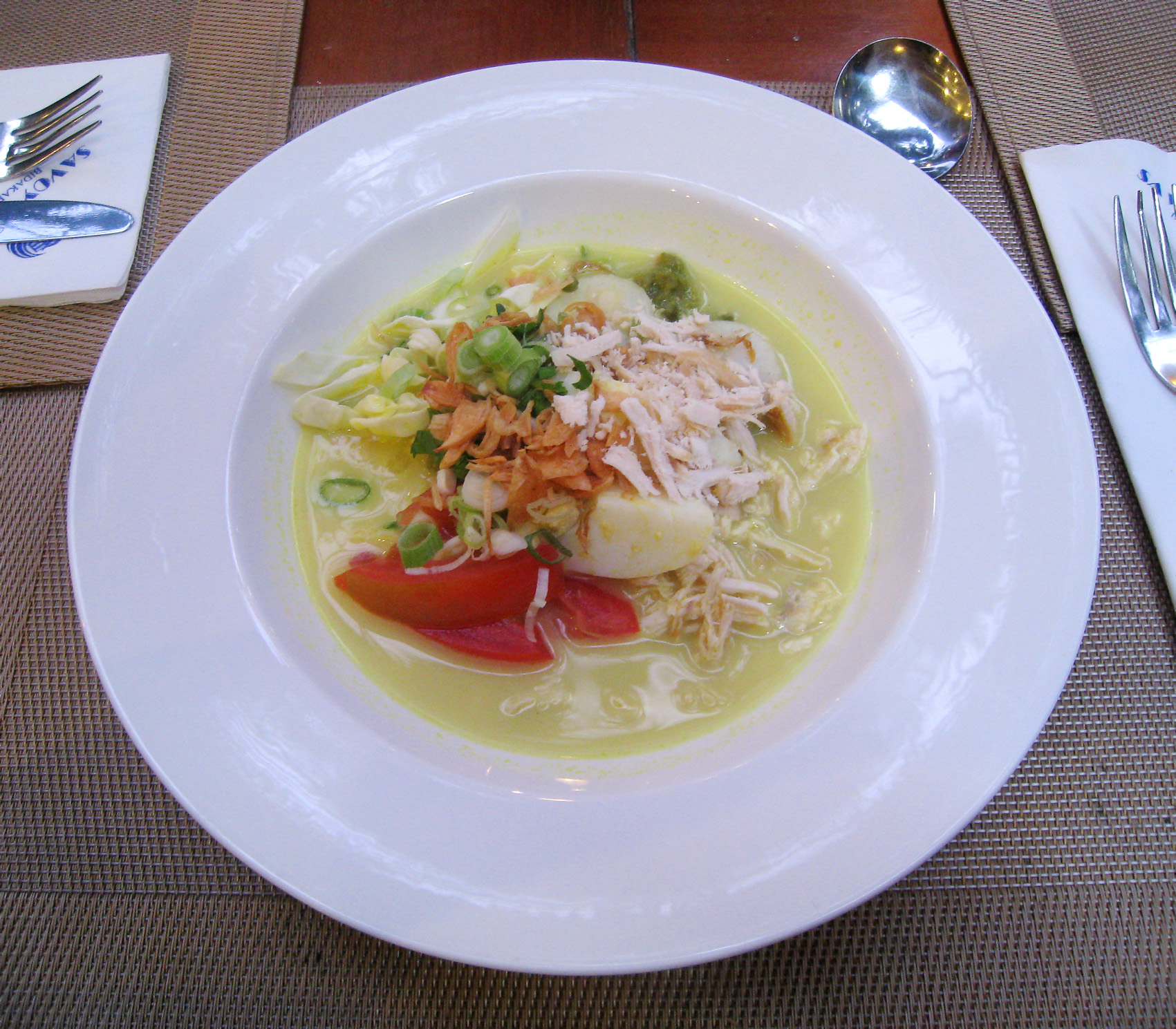
Soto (also known as sroto, tauto, saoto, or coto) is a traditional Indonesian soup mainly composed of broth, meat (such as chicken), and vegetables. Many traditional soups are called soto, whereas foreign- and Western-influenced soups are called sop.
Soto is sometimes considered Indonesia's national dish, as it is served from Sumatra to Papua, in a wide range of variations. Soto is available everywhere from warungs and open-air eateries to fine-dining restaurants and luxurious hotels.
Due to the proximity and significant numbers of Indonesian migrants in neighbouring countries, soto can also be found in Singapore and Malaysia.
Introduced to Suriname by Javanese migrants, it is part of the national cuisine of that country as well, where it is spelled saoto.
In the Indonesian archipelago, soto is known by different names. In the local Javanese dialect, it is called soto, and the dish also reached Makassar where it is called coto. Soto is found to be most prevalent in Java, and suggested that the hearty soup was originated from that island, and over the years this dish branched off in an assorted array of soto varieties.
Although soto was undoubtedly developed in the Indonesian archipelago and each region has developed its own distinctive soto recipes, some historians suggest that it was probably influenced by foreign culinary tradition, especially Hokkien Chinese or Stoof (Dutch for stew). Denys Lombard in his book Le Carrefour Javanais suggested that the origin of soto was a Hokkien Chinese soup, caudo (Chinese: 牛草肚; Pe̍h-ōe-jī: gû-chháu-tō͘; lit. 'beef tripe'), popular in Semarang among Chinese immigrants during colonial VOC era, circa 17th century.
Another scholar suggests that it was more likely a mixture of cooking traditions in the region, namely Chinese, Indian, and native Indonesian cuisine. There are traces of Chinese influence such as the use of bihun (rice vermicelli) and the preference for fried garlic as a condiment, while the use of turmeric suggests Indian influence. Another example is soto betawi from Jakarta uses minyak samin (ghee), which indicates Arab or Muslim Indian influences. Another historian suggest that some soto recipe reflects the past condition of its people. Soto tangkar, which today is a meat soup, was mostly made from the broth of goat rib-cage bones (Betawi: tangkar) in the past because meat was expensive, or the common population of Batavia were too poor to afford some meat back then. Soto recipes has been highly localized according to local tradition and available ingredients, for example in Hindu-majority island of Bali, soto babi (pork soto) can be found, since Hindu Balinese prefer pork while beef is seldom consumed, they also do not share Indonesian Muslim halal dietary law that forbids the consumption of pork.
The meat soup dish influenced various regions and each developed its own recipes, with the ingredients being highly localized according to available ingredients and local cooking traditions. As a result, rich variants of soto were developed across Indonesia.
Hub AI
Soto (food) AI simulator
(@Soto (food)_simulator)
Soto (food)
Soto (also known as sroto, tauto, saoto, or coto) is a traditional Indonesian soup mainly composed of broth, meat (such as chicken), and vegetables. Many traditional soups are called soto, whereas foreign- and Western-influenced soups are called sop.
Soto is sometimes considered Indonesia's national dish, as it is served from Sumatra to Papua, in a wide range of variations. Soto is available everywhere from warungs and open-air eateries to fine-dining restaurants and luxurious hotels.
Due to the proximity and significant numbers of Indonesian migrants in neighbouring countries, soto can also be found in Singapore and Malaysia.
Introduced to Suriname by Javanese migrants, it is part of the national cuisine of that country as well, where it is spelled saoto.
In the Indonesian archipelago, soto is known by different names. In the local Javanese dialect, it is called soto, and the dish also reached Makassar where it is called coto. Soto is found to be most prevalent in Java, and suggested that the hearty soup was originated from that island, and over the years this dish branched off in an assorted array of soto varieties.
Although soto was undoubtedly developed in the Indonesian archipelago and each region has developed its own distinctive soto recipes, some historians suggest that it was probably influenced by foreign culinary tradition, especially Hokkien Chinese or Stoof (Dutch for stew). Denys Lombard in his book Le Carrefour Javanais suggested that the origin of soto was a Hokkien Chinese soup, caudo (Chinese: 牛草肚; Pe̍h-ōe-jī: gû-chháu-tō͘; lit. 'beef tripe'), popular in Semarang among Chinese immigrants during colonial VOC era, circa 17th century.
Another scholar suggests that it was more likely a mixture of cooking traditions in the region, namely Chinese, Indian, and native Indonesian cuisine. There are traces of Chinese influence such as the use of bihun (rice vermicelli) and the preference for fried garlic as a condiment, while the use of turmeric suggests Indian influence. Another example is soto betawi from Jakarta uses minyak samin (ghee), which indicates Arab or Muslim Indian influences. Another historian suggest that some soto recipe reflects the past condition of its people. Soto tangkar, which today is a meat soup, was mostly made from the broth of goat rib-cage bones (Betawi: tangkar) in the past because meat was expensive, or the common population of Batavia were too poor to afford some meat back then. Soto recipes has been highly localized according to local tradition and available ingredients, for example in Hindu-majority island of Bali, soto babi (pork soto) can be found, since Hindu Balinese prefer pork while beef is seldom consumed, they also do not share Indonesian Muslim halal dietary law that forbids the consumption of pork.
The meat soup dish influenced various regions and each developed its own recipes, with the ingredients being highly localized according to available ingredients and local cooking traditions. As a result, rich variants of soto were developed across Indonesia.
Recent media