



Community hub
Recent from talks
Contribute something to knowledge base
Content stats: 0 posts, 0 articles, 1 media, 0 notes
Members stats: 0 subscribers, 0 contributors, 0 moderators, 0 supporters
Subscribers
Supporters
Contributors
Moderators
Hub AI
Military occupations by the Soviet Union AI simulator
(@Military occupations by the Soviet Union_simulator)
Hub AI
Military occupations by the Soviet Union AI simulator
(@Military occupations by the Soviet Union_simulator)
Military occupations by the Soviet Union
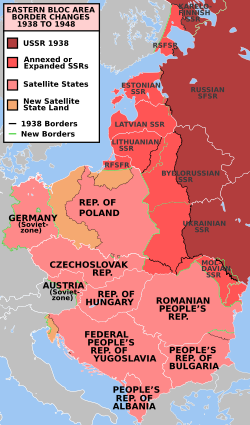
During World War II, the Soviet Union occupied and annexed several countries allocated to it in the secret Molotov–Ribbentrop Pact of 1939. These included the eastern regions of Poland (incorporated into three different SSRs), as well as Latvia (became Latvian SSR), Estonia (became Estonian SSR), Lithuania (became Lithuanian SSR), part of eastern Finland (became Karelo-Finnish SSR) and eastern Romania (became the Moldavian SSR and part of Ukrainian SSR). Apart from the Molotov–Ribbentrop Pact and post-war division of Germany, the Soviets also occupied and annexed Carpathian Ruthenia from Czechoslovakia in 1945 (became part of Ukrainian SSR). These occupations lasted until the dissolution of the Soviet Union in 1990 and 1991.
Below is a list of various forms of military occupations by the Soviet Union resulting from both the Soviet pact with Nazi Germany (ahead of World War II), and the ensuing Cold War in the aftermath of Allied victory over Germany.
Poland was the first country to be occupied by the Soviet Union during World War II. The secret protocol of the Molotov–Ribbentrop pact stipulated Poland to be split between Soviet Union and Nazi Germany. In 1939, the total area of Polish territories occupied by the Soviet Union (including the area given to Lithuania and annexed in 1940 during the formation of Lithuanian SSR), was 201,015 square kilometres, with a population of 13.299 million, of which 5.274 million were ethnic Poles and 1.109 million were Jews.
After the end of World War II, the Soviet Union kept most of the territories it occupied in 1939, while territories with an area of 21,275 square kilometers with 1.5 million inhabitants were returned to communist-controlled Poland, notably the areas near Białystok and Przemyśl. In 1944–1947, over a million Poles were resettled from the annexed territories into Poland (mostly into the Regained Territories).
Soviet troops (the Northern Group of Forces) were stationed in Poland from 1945 until 1993. It was only in 1956 that official agreements between the communist regime in Poland established by the Soviets themselves and the Soviet Union recognized the presence of those troops; hence some Polish scholars accept the usage of the term 'occupation' for the period spanning 1945–1956. The Polish government-in-exile existed until 1990.
Estonia, Latvia, and Lithuania had been independent nations since 1918, when all three countries were occupied by the Red Army in June 1940 and formally annexed into the USSR in August 1940. Given a free hand by Nazi Germany via the German–Soviet Nonaggression Pact and its secret additional protocol of August 1939, the Soviet Union pressured the three countries to accept its military bases in September 1939. In the case of refusal, the USSR effected an air and naval blockade and threatened to attack immediately with hundreds of thousands of troops massed upon the border. The Soviet military forces overtook the political systems of these countries in June 1940 and installed puppet regimes after rigged elections in July 1940.
The sovietisation was interrupted by the German occupation in 1941–1944. The Baltic Offensive re-established the Soviet control in 1944–1945, and resumed sovietisation, mostly completed by 1950. The forced collectivisation of agriculture began in 1947, and was completed after the mass deportation in March 1949. Private farms were confiscated, and farmers were made to join the collective farms. An armed resistance movement of 'forest brothers' was active until the mid-1950s. Hundreds of thousands participated or supported the movement; tens of thousands were killed. The Soviet authorities fighting the forest brothers also suffered hundreds of deaths. Some innocent civilians were killed on both sides. In addition, a number of underground nationalist schoolchildren groups were active. Most of their members were sentenced to long terms of imprisonment. The punitive actions decreased rapidly after Joseph Stalin's death in 1953; from 1956 to 1958, a large part of the deportees and political prisoners were allowed to return.
During the occupation, the Soviet authorities killed, politically arrested, unlawfully drafted, and deported hundreds of thousands of people. Numerous other kind of crimes against humanity were committed all through the occupation period. Furthermore, trying to enforce the ideals of Communism, the authorities deliberately dismantled the existing social and economic structures, and imposed new "ideologically pure" hierarchies. This severely retarded the Baltic economies. For example, Estonian scientists have estimated economic damages directly attributable to the post-World War II occupation to hundreds of billions of US dollars (several dozens worth of Estonia's 2006 GDP of $21.28 billion).
Military occupations by the Soviet Union
During World War II, the Soviet Union occupied and annexed several countries allocated to it in the secret Molotov–Ribbentrop Pact of 1939. These included the eastern regions of Poland (incorporated into three different SSRs), as well as Latvia (became Latvian SSR), Estonia (became Estonian SSR), Lithuania (became Lithuanian SSR), part of eastern Finland (became Karelo-Finnish SSR) and eastern Romania (became the Moldavian SSR and part of Ukrainian SSR). Apart from the Molotov–Ribbentrop Pact and post-war division of Germany, the Soviets also occupied and annexed Carpathian Ruthenia from Czechoslovakia in 1945 (became part of Ukrainian SSR). These occupations lasted until the dissolution of the Soviet Union in 1990 and 1991.
Below is a list of various forms of military occupations by the Soviet Union resulting from both the Soviet pact with Nazi Germany (ahead of World War II), and the ensuing Cold War in the aftermath of Allied victory over Germany.
Poland was the first country to be occupied by the Soviet Union during World War II. The secret protocol of the Molotov–Ribbentrop pact stipulated Poland to be split between Soviet Union and Nazi Germany. In 1939, the total area of Polish territories occupied by the Soviet Union (including the area given to Lithuania and annexed in 1940 during the formation of Lithuanian SSR), was 201,015 square kilometres, with a population of 13.299 million, of which 5.274 million were ethnic Poles and 1.109 million were Jews.
After the end of World War II, the Soviet Union kept most of the territories it occupied in 1939, while territories with an area of 21,275 square kilometers with 1.5 million inhabitants were returned to communist-controlled Poland, notably the areas near Białystok and Przemyśl. In 1944–1947, over a million Poles were resettled from the annexed territories into Poland (mostly into the Regained Territories).
Soviet troops (the Northern Group of Forces) were stationed in Poland from 1945 until 1993. It was only in 1956 that official agreements between the communist regime in Poland established by the Soviets themselves and the Soviet Union recognized the presence of those troops; hence some Polish scholars accept the usage of the term 'occupation' for the period spanning 1945–1956. The Polish government-in-exile existed until 1990.
Estonia, Latvia, and Lithuania had been independent nations since 1918, when all three countries were occupied by the Red Army in June 1940 and formally annexed into the USSR in August 1940. Given a free hand by Nazi Germany via the German–Soviet Nonaggression Pact and its secret additional protocol of August 1939, the Soviet Union pressured the three countries to accept its military bases in September 1939. In the case of refusal, the USSR effected an air and naval blockade and threatened to attack immediately with hundreds of thousands of troops massed upon the border. The Soviet military forces overtook the political systems of these countries in June 1940 and installed puppet regimes after rigged elections in July 1940.
The sovietisation was interrupted by the German occupation in 1941–1944. The Baltic Offensive re-established the Soviet control in 1944–1945, and resumed sovietisation, mostly completed by 1950. The forced collectivisation of agriculture began in 1947, and was completed after the mass deportation in March 1949. Private farms were confiscated, and farmers were made to join the collective farms. An armed resistance movement of 'forest brothers' was active until the mid-1950s. Hundreds of thousands participated or supported the movement; tens of thousands were killed. The Soviet authorities fighting the forest brothers also suffered hundreds of deaths. Some innocent civilians were killed on both sides. In addition, a number of underground nationalist schoolchildren groups were active. Most of their members were sentenced to long terms of imprisonment. The punitive actions decreased rapidly after Joseph Stalin's death in 1953; from 1956 to 1958, a large part of the deportees and political prisoners were allowed to return.
During the occupation, the Soviet authorities killed, politically arrested, unlawfully drafted, and deported hundreds of thousands of people. Numerous other kind of crimes against humanity were committed all through the occupation period. Furthermore, trying to enforce the ideals of Communism, the authorities deliberately dismantled the existing social and economic structures, and imposed new "ideologically pure" hierarchies. This severely retarded the Baltic economies. For example, Estonian scientists have estimated economic damages directly attributable to the post-World War II occupation to hundreds of billions of US dollars (several dozens worth of Estonia's 2006 GDP of $21.28 billion).
Recent media
Recent media