Hubbry Logo
search
logo
1387934

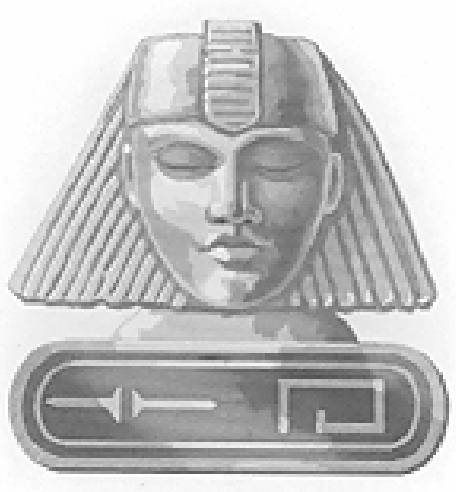
Sphinx Head

logo
Community Hub0 Subscribers
Read side by side
from Wikipedia

The Sphinx Head Society is the oldest senior honor society at Cornell University. Sphinx Head recognizes Cornell senior men and women who have demonstrated respectable strength of character on top of dedication to leadership and service at Cornell University.[1] In 1929 The New York Times held that election into Sphinx Head and similar societies constituted "the highest non-scholastic honor within reach of undergraduates."[2]

Key Information

Founding

[edit]

Sphinx Head was founded on October 11, 1890, by a group of ten men from the senior class.[3][4] The Society was founded to "create and maintain a stronger feeling" for Cornell University and to promote "a closer and stronger friendship among members of the Senior class."[3] The New York Times referred to Sphinx Head as "a secret senior society of the nature of Skull and Bones", a senior honor society at Yale University of which Andrew Dickson White, Cornell University's co-founder and first president, was a member.[5] White encouraged the formation of a secret society system on the Cornell campus.[6]

In 1926, the society built a clubhouse for itself designed to resemble an Egyptian tomb perched halfway down the cliff on the Fall Creek gorge. It sold the building in 1969, and it eventually became the home and office of astronomer Carl Sagan.

Membership

[edit]
Sphinx Head, Class of 1899

Each year, Sphinx Head taps fewer than forty men and women of the senior class for membership. Since the Society's founding, membership has been "reserved for the most respected" members of the senior class.[7] The names of newly tapped Sphinx Heads were published in The New York Times through the 1930s, but are now published exclusively in The Cornell Daily Sun.[8][9][10]

Sphinx Head awards honorary membership to Cornell administrators, faculty, staff, and alumni for their "significant personal and/or professional accomplishment, outstanding leadership, distinguished service to the university, and interest in and commitment to undergraduate student life and development."[1] Notable honorary members of Sphinx Head include Tata Sons Chairman Emeritus Ratan Tata, Atlantic Philanthropies founder Chuck Feeney, and the 12th President of Cornell University, David Skorton.

Symbols and traditions

[edit]
Historic Sphinx Head Tomb

Sphinx Head has "retained an aura of mystery throughout its history on campus", holding some "closely guarded secrets and traditions."[11] Although membership in Sphinx Head is public, the proceedings of the Society remain private.

Activities

[edit]

Since founding the Society, Sphinx Head members have been responsible for starting many long-standing Cornell University traditions such as the annual Dragon Day celebration, the use of "The Big Red" to describe Cornell athletics, as well as Spring Fest, the precursor to the current Slope Day celebration.[7][12]

Notable members

[edit]

Members of Sphinx Head have held many prominent positions within Cornell University serving as presidents, provosts, deans, directors of athletics, Cornell Council members, trustees, and chairpersons of the board of trustees. More than one-third of the presidents of the Cornell University Alumni Association have been members and twenty percent of the chairpersons of the Cornell University Board of Trustees have been affiliated with the Society.[13][14] Names of alumni can be found on the Cornell campus on Bartels Hall, Indimine Athletic Field, Samuel C. Johnson School of Business Management, Robert Kane Track, Jansen Noyes Community Center, Jerome H. Holland International Living Center, Robert Purcell Community Center, Kheel Center for Labor-Management Documentation & Archives, Willard Straight Hall and Upson Hall. Numerous members are also profiled in The 100 Most Notable Cornellians.[15]

References

[edit]
Revisions and contributorsEdit on WikipediaRead on Wikipedia
from Grokipedia
The Sphinx Head Society is the oldest senior honor society at Cornell University, founded in 1890 to recognize fourth-year undergraduates who demonstrate exceptional strength of character, leadership, and dedication to service on campus.[1][2] Operating as a secretive yet prestigious group, it selects fewer than 40 members annually from the senior class, emphasizing humility and contributions to the university community, and now includes both men and women.[1][3] Historically, Sphinx Head was founded to foster unity among seniors.[4] The society became known for its involvement in shaping campus traditions, including the organization of events like Dragon Day—an annual architecture students' procession featuring a dragon effigy—and Spring Fest, a major outdoor celebration that continues to draw large crowds.[1] In 1925, the group constructed a distinctive, tomb-like meeting hall at 900 Stewart Avenue in Ithaca, designed in an Egyptian Revival style to evoke mystery and permanence, which served as their headquarters until 1969 when it was sold, later repurposed as the home and office of astronomer Carl Sagan, and in December 2024 sold to a private owner.[1][5][6] After a period of dormancy following the sale, Sphinx Head was revived in the early 2000s, maintaining its focus on service while adapting to modern campus needs; it remains active as of 2025.[1][7] Beyond student recognition, the society periodically honors faculty, alumni, and community members for distinguished contributions to Cornell, such as leadership in academia or alumni engagement; notable examples include historian Maria Cristina Garcia and alumna Renee T. Alexander for their service roles.[2] Members commit to uplifting the campus through events, philanthropy, and networking, often operating discreetly to preserve the society's enigmatic tradition while promoting ethical leadership.[8][3]

History

Founding

Sphinx Head was founded in 1890 as the oldest senior honor society at Cornell University, established by a group of senior students from the Class of 1890 to recognize outstanding leadership, character, and service among male undergraduates.[9][2] The society's initial purpose centered on fostering unity and honoring those who exemplified these qualities in a secretive framework, reflecting the era's traditions of exclusive campus organizations.[1] Early meetings of Sphinx Head were conducted in secrecy on the Cornell campus, emphasizing the organization's commitment to discretion and exclusivity from its inception.[10] The name draws from the mythical Sphinx, evoking themes of wisdom, enigma, and guardianship that aligned with the society's goals of selecting and nurturing campus leaders.[1] Over time, Sphinx Head has evolved to include women and honorary members alongside its traditional focus on seniors.[2]

Development and milestones

Following its founding, Sphinx Head expanded its annual membership intake in the early 1900s to reflect the rapid growth of Cornell's student body, which had increased from around 2,000 students in 1900 to over 5,000 by 1920. This adjustment allowed the society to recognize a broader range of senior leaders, with tapping numbers reaching approximately 30-40 members per year by the 1920s, as evidenced by a 1929 election of 36 members.[11][12] A key milestone came in 1926 with the acquisition and construction of a dedicated headquarters at 900 Stewart Avenue, known as the Sphinx Head Tomb or later Cornelliana, designed in Egyptian Revival style as a windowless, subterranean meeting space to symbolize the society's secrecy and prestige.[10] This structure served as the primary gathering place for decades, hosting initiations and events until its sale in 1969.[6] After the sale, the society entered a period of dormancy lasting approximately 30 years, before being revived in the early 2000s.[1] During World War I and World War II, Sphinx Head members actively supported war efforts through military service and campus initiatives, with hundreds of alumni serving as officers and contributing to Cornell's ROTC programs and veteran commemorations; notable examples include Hyman Josefson '41, a decorated WWII hero and society member whose name is inscribed on Cornell's war memorial.[10][13][14] In the 1970s, Sphinx Head transitioned to co-educational status in alignment with Cornell University's full gender integration following the admission of women to all colleges in 1870 but expanded access in the post-Title IX era, tapping its first female members around 1974 amid broader societal shifts toward inclusivity. This change ensured the society reflected the diverse undergraduate population, with early women members like Renee Alexander '74, Mary Berens '74, and Kristen Rupert '74 later recognized for their contributions. The society also began awarding honorary memberships to faculty, staff, and distinguished alumni in the mid-20th century to honor significant service to Cornell, a practice continuing into modern times; in 2007, ten faculty and staff were inducted for their impact on undergraduate life, and in 2010, four individuals—including history professor Maria Cristina Garcia and the aforementioned '74 alumnae—were elected for leadership and dedication to the university community.[2][15]

Membership

Selection criteria and process

The selection criteria for Sphinx Head membership center on a holistic assessment of candidates' demonstrated leadership, strength of character, dedication to service, and contributions to the Cornell University community.[15][3][9] The induction process is invitational and secretive, with current members tapping select juniors each spring who have distinguished themselves through these qualities, typically formalizing membership during the senior year.[15][16] Annually, the society inducts fewer than 40 undergraduates, alongside occasional honorary members from faculty, staff, and alumni recognized for similar leadership and service.[1][15] Established in 1890 as Cornell's oldest senior honor society, the core selection process has maintained consistency over time, though it later adapted to include women undergraduates.[1]

Composition and inclusivity

Sphinx Head was established in 1890 as an all-male senior honor society at Cornell University, mirroring the male-only traditions of many early collegiate organizations despite Cornell's coeducational status since its founding. For much of its early history, membership was exclusively male, focusing on senior men recognized for leadership and service. The society began incorporating women in the latter half of the 20th century, marking a key shift toward broader inclusivity. Undergraduate women were first admitted in the late 1990s, with Elizabeth Macaulay-Lewis (class of 1998) as the first known female undergraduate member.[](https://www.gc.cun y.edu/sites/default/files/2022-12/Elizabeth-Macaulay-CV-2023.pdf) Alumnae from earlier classes, such as Renee T. Alexander, Mary F. Berens, and Kristen Rupert (all class of 1974), were later honored as honorary members in 2010 for their leadership and service.[2] Today, Sphinx Head taps both men and women from the senior class, reflecting ongoing commitment to gender inclusivity in its selection of undergraduates distinguished by character and dedication to Cornell.[17] The society's membership as of 2015 comprises approximately 2,000 living alumni, active undergraduate members, and honorary inductees from faculty, staff, and distinguished alumni.[9] Honorary membership serves to honor non-students for exceptional contributions to Cornell, often in groups; for instance, in 2007, ten faculty and staff members were elected for their significant service to the university community.[15] These inductees, numbering in the dozens over the years, enhance the society's role in celebrating diverse forms of leadership beyond traditional student pathways.[2]

Symbols and traditions

Insignia and iconography

The primary symbol of the Sphinx Head Society is its insignia, depicting a profile of a sphinx, which was adopted in 1890 upon the society's founding. The sphinx is rooted in ancient Egyptian iconography and symbolizes guardianship and intellectual mystery, qualities aligned with the society's emphasis on leadership and character.[18] Other elements of the society's iconography include a gold pin featuring the sphinx motif, worn by members as a discreet emblem of affiliation, as documented in Cornell's Rare and Manuscript Collections.[19] In practice, the insignia is prominently displayed on the Cornelliana house, originally constructed in 1926 as the society's Egyptian Revival "tomb" clubhouse with carved limestone elements evoking ancient motifs. The core sphinx profile has remained unaltered since its initial depiction in the 1891 Cornellian yearbook.

Rituals and secrecy

Sphinx Head's internal culture is defined by a profound commitment to secrecy, which has been a cornerstone since its founding in 1890. Members are bound by a pledge of lifelong confidentiality concerning the society's operations, rituals, and member lists, ensuring that internal matters remain shielded from public view. This veil of secrecy extends to all proceedings, with no official disclosures ever made about meetings or decisions.[1] The initiation ritual marks a pivotal moment for new members, typically selected in their senior year. This private ceremony occurs in the society's historic meeting place, known as the Sphinx Head Tomb or Cornelliana house at 900 Stewart Avenue, a windowless structure designed to evoke an ancient Egyptian tomb. The rite involves symbolic oaths taken before a ceremonial altar in a large, unadorned room illuminated by flickering six-foot candelabras that cast dramatic shadows on the walls, testing the inductees' character and dedication. Membership identities are kept secret until graduation, at which point members publicly reveal their affiliation by carrying walking canes emblazoned with sphinx symbols.[20][21][10] Annual traditions reinforce this secretive ethos through closed-door meetings and exclusive alumni reunions, where discussions and activities are conducted without external observation or documentation. These gatherings, often held in private settings, utilize discreet methods of communication to maintain confidentiality. The society's former tomb served as the primary venue for such events until its sale in 1969, after which practices continued in adapted locations following a revival in the early 2000s.[20][1] While the emphasis on secrecy has cultivated deep bonds and a sense of elite camaraderie among members, it has occasionally invited criticism for fostering exclusivity. In the 20th century, particularly during periods of social change at Cornell, the society's practices drew scrutiny; for instance, in 1920, representatives from Sphinx Head and the rival Quill and Dagger publicly assailed coeducation as a failure in a report published by the New York Times, advocating restrictions that highlighted concerns over inclusivity. Originally limited to men, the society now includes women in its membership.[22][2]

Activities

Campus leadership roles

Sphinx Head has played a pivotal role in establishing and sustaining key traditions that define Cornell University's campus culture, particularly through its early members' involvement in student-led initiatives. Since its founding in 1890, the society has been instrumental in the perpetuation of Dragon Day, an annual parade originating in 1901 where first-year architecture students construct and march a massive dragon across campus to celebrate the start of spring and architectural creativity.[1][23] Similarly, Sphinx Head contributed to the creation of Spring Fest, an early 20th-century event that served as the precursor to the modern Slope Day celebration, fostering community and end-of-year festivities among undergraduates.[1] In the 20th and 21st centuries, members of Sphinx Head have continued to exert influence on campus life by taking on prominent behind-the-scenes roles in event coordination and cultural activities. The society selects its members primarily from the senior class, enabling them to advise and support major student initiatives informally.[15][16] Through these efforts, Sphinx Head has shaped Cornell's student governance and traditions, promoting unity and excellence without overt visibility. Modern examples include involvement in senior legacy projects that preserve institutional heritage, such as tradition revivals and campus-wide commemorations.[1]

Philanthropy and service initiatives

Sphinx Head Society maintains a commitment to philanthropy and service initiatives that emphasize anonymous giving and community upliftment, in keeping with its secretive traditions. As a recognized community service organization at Cornell University, the society organizes unpublicized projects aimed at supporting the campus and local Ithaca area, fostering leadership through humble contributions without seeking public credit.[3][8] Key initiatives include fundraising efforts for Cornell scholarships and student aid. For instance, the society participates in annual Cornell Giving Day campaigns, where members collectively solicit donations to bolster university programs and causes, such as those enhancing campus life and accessibility. These drives have demonstrated tangible impact, with one campaign raising $1,333 from 16 donors to support broad student initiatives.[8] Additionally, the Adams Sphinx Head Scholarship, established in 1956 by Spencer L. Adams, provides two annual awards prioritizing society members based on academic merit, extracurricular involvement, and financial need, exemplifying targeted support for educational advancement.[24] Honorary members often drive endowments for faculty support, reinforcing the society's role in sustaining academic excellence and public engagement. Overall, these efforts underscore a focus on long-term societal impact, with the society continuing its discreet contributions as of 2024.[8]

Notable members

Prominent alumni

Sphinx Head has produced numerous influential alumni who have achieved prominence in business, the arts, and public service, often crediting their Cornell leadership experiences for fostering lifelong networks and skills. In the arts, actor Dan Duryea (Class of 1928), known for his iconic roles in film noir classics such as The Little Foxes (1941) and Ministry of Fear (1944), was elected to the society, where he honed dramatic skills through campus theater and debate. Ornithologist and bird artist Louis Agassiz Fuertes (Class of 1897), dubbed the "father of modern bird art" for his lifelike illustrations used in John James Audubon's style and featured in publications like Birds of New York, was also a member, with his Cornell studies in architecture and natural history aligning with the society's focus on intellectual and communal contributions. In business, Robert T. Tishman (Class of 1937), co-founder of Tishman Realty & Construction and a pioneer in modern real estate development who built landmark structures like the Equitable Building in New York City, belonged to Sphinx Head. His undergraduate role as editor of the Cornell Widow humor magazine and society membership underscored early leadership that propelled his career in transforming urban skylines and philanthropy toward Cornell. Prominent alumni like these have extended their society's legacy through robust networks that bolster Cornell's fundraising efforts, such as historical drives by Sphinx Head graduates to construct society facilities and ongoing support for university initiatives. Membership ties are frequently highlighted in alumni honors and obituaries, reinforcing the society's role in sustaining Cornell's institutional vitality.

Honorary inductees

The Sphinx Head Society maintains a tradition of recognizing non-undergraduate contributors—such as faculty, staff, and alumni—who exemplify outstanding leadership and distinguished service to Cornell University through honorary membership.[15][16] These honorees are selected based on criteria including significant personal or professional accomplishments, commitment to undergraduate student life and development, and contributions to the broader Cornell community.[15][9] Notable group inductions highlight this practice. In 2007, ten faculty and staff members were elected for their exemplary contributions to undergraduate student life.[15] The 2009 class included four alumnae: Alice Katz Berglas '66, a longtime class president and alumni ambassador; Myra Maloney Hart '62, a Harvard Business School faculty member and Cornell trustee; Judith H. Monson '69, former U.S. Embassy vice consul and President's Council of Cornell Women chair; and Rebecca Quinn Morgan '60, a foundation president and former New York state senator who has endowed faculty positions.[16] In 2010, the society honored Professor Maria Cristina Garcia, a historian noted for her work on Latino studies, alongside alumnae Renee T. Alexander '74, Mary F. Berens '74, and Kristen Rupert '74.[2] Induction ceremonies for honorary members parallel those for undergraduates, involving a formal tapping process, though details remain aligned with the society's emphasis on recognition rather than secrecy.[9] More recent examples include the 2015 tapping of Deborah Streeter, the Bruce F. Failing Sr. Professor of Personal Enterprise; Eduardo M. Peñalver, then dean of Cornell Law School; and Martin F. Scheinman, founder of the Scheinman Institute on Conflict Resolution.[9] This honorary category reflects broader inclusivity trends within the society, extending recognition to women and diverse contributors since at least the late 2000s.[16]
User Avatar
No comments yet.