Hubbry Logo
SringaraSringaraMain
Open search
Sringara
Community hub
Sringara
logo
8 pages, 0 posts
0 subscribers
Be the first to start a discussion here.
Sringara
Sringara
from Wikipedia
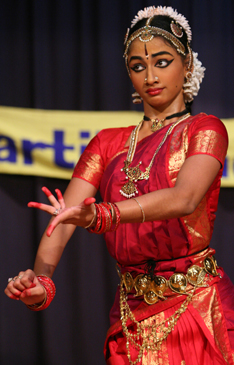
Expression of Sringāra in Bharatanatyam

Sringara (Sanskrit: शृङ्गार, śṛṅgāra) is one of the nine rasas, usually translated as erotic love, romantic love, or as attraction or beauty. Rasa means "flavour", and the theory of rasa is the primary concept behind classical Indian arts including theatre, music, dance, poetry, and sculpture. Much of the content of traditional Indian arts revolves around the relationship between a man and a woman. The primary emotion thus generated is Sringara. The romantic relationship between lover and beloved is a metaphor for the relationship between the individual and the divine.

Classical theater/dancers (i.e. Bharatanatyam, Odissi, Mohiniyattam) refer to Sringara as 'the Mother of all rasas.' Sringara gives scope for a myriad of other emotions including jealousy, fear, anger, compassion, and of course for the expression of physical intimacy. No other Rasa has such a vast scope.

The treatment and performance of Sringara varies on a large scale from the grotesque (as in Koodiyattam) to very refined and subtle (as in some styles of Bharatanatyam, or in Odissi).

The attraction between lover and beloved is a metaphor for the relationship between the individual and the divine, the Nara-Narayana relationship. Natya Shastra lists Vishnu as the presiding deity of the Sringara rasa.

See also

[edit]
[edit]
Revisions and contributorsEdit on WikipediaRead on Wikipedia
from Grokipedia
Śṛṅgāra (Sanskrit: शृङ्गार), also known as the erotic or romantic sentiment, is one of the eight primary rasas (aesthetic flavors) outlined in the ancient Indian treatise Nāṭyaśāstra by Bharata Muni, representing the emotional essence of love, attraction, and union between lovers, presided over by the deity Viṣṇu. It arises from the sthāyibhāva (permanent mood) of rati (delight or love) and is evoked through determinants such as the presence of a beloved, charming conversations, and romantic settings like moonlit gardens or springtime landscapes. Śṛṅgāra encompasses both joyful union (samyoga) and poignant separation (vipralambha), manifesting in dramatic performances, dance, and poetry to convey beauty, youth, and tenderness. In the Nāṭyaśāstra's Chapter VI, Śṛṅgāra is characterized by specific vibhāvas (causes), including personal adornments like garlands, ointments, and ornaments, as well as supporting elements such as sweet sounds and splendid environments that heighten the mood of affection. Its anubhāvas (involuntary reactions) include sidelong glances, smiles, embracing, and graceful limb movements, while vyabhicāribhāvas (transitory states) like anxiety, jealousy, longing, and intoxication add layers of emotional depth, ranging from ecstasy to sorrow. Visually, it is associated with the color light green (śyāma), symbolizing and freshness, and is predominantly expressed through youthful characters, often with the aid of a messenger (dūtī) in scenes of courtship. Śṛṅgāra holds a central place in Indian performing arts, influencing classical dance forms like Bharatanatyam and Kathak, where it is depicted through delicate aṅgahāras (limb movements) and the kaiśikī style of gentle, swaying motions. In later interpretations, it extends to spiritual dimensions, such as bhakti (devotion) in temple dances, where romantic longing can symbolize the soul's yearning for the divine. Its portrayal avoids vulgarity, emphasizing aesthetic relish (rasa) for the sensitive spectator (sahṛdaya), making it a cornerstone of Sanskrit drama and poetry from the epic period onward.

Etymology and Definition

Etymology

The term śṛṅgāra derives from the Sanskrit root śṛṅga, meaning "horn," metaphorically evoking the budding or excited state of love, akin to the emerging horns symbolizing vitality and desire, often linked to Kāmadeva, the deity of erotic love. This connection suggests an origin in ideas of prominence or eminence, with the affix -āra indicating the act of obtaining or enhancing such passion, evolving to encompass adornment and beauty. In early classical Sanskrit literature, śṛṅgāra appears in the Mahābhārata, where it denotes handsomeness or prettiness, describing aesthetic appeal in narrative contexts. By the 3rd century CE, Vātsyāyana's Kāmasūtra details practices of erotic adornment, such as applying , jewelry, and garlands to heighten amorous attraction and physical beauty during intimate encounters. Comparatively, in languages, the term manifests as siṃgāra, retaining connotations of love and decoration, which influenced regional vernaculars such as Hindi's "sringar," commonly referring to romantic embellishment, bridal makeup, or the art of in everyday and cultural contexts. This linguistic progression underscores śṛṅgāra's transition from metaphorical excitement to practical expressions of allure across .

Definition in Indian Aesthetics

In Indian aesthetics, Sringara rasa is translated as "erotic love," "romantic beauty," or "amorous sentiment," capturing the portrayal of attraction, intimacy, and aesthetic pleasure through artistic expression. It evokes a profound sense of delight derived from the union of lovers or the contemplation of , extending beyond mere sensuality to encompass emotional and spiritual fulfillment. Sringara holds a prominent position as one of the nine rasas (navarasa) in Indian , often regarded as the "king of rasas" due to its foundational role in evoking universal human experiences of and harmony. This rasa serves as the basis for other emotional states, providing a versatile framework that underlies much of artistic creation and appreciation in traditions like , , and . At its core, Sringara is evoked through sensory appeals such as sight, sound, and touch—manifesting in elements like graceful movements, melodious music, scenic , and fragrant atmospheres—that stimulate the viewer's or listener's faculties. Unlike mere physical desire, it incorporates emotional depth, fostering a transcendent bliss (ananda) that connects the individual to deeper layers of and universal . The recognition of Sringara's aesthetic universality is prominently highlighted in the 10th-century CE commentaries of , particularly in his Abhinavabharati on Bharata's Natyashastra, where he integrates it into a broader theory of rasa as a subjective, blissful experience accessible to the sensitive spectator (sahrdaya). Abhinavagupta's exposition emphasizes Sringara's role in achieving emotional detachment and savoring the essence of art, solidifying its enduring place in Indian aesthetic philosophy.

Foundations in Natya Shastra

Description and Characteristics

In Bharata Muni's (c. 200 BCE–200 CE), Sringara is described as the rasa of love, representing the erotic sentiment that forms the foundation of aesthetic experience in drama and performance. This rasa evokes delight through harmonious environments such as gardens and pleasant seasons, as well as romantic interactions like mutual glances between lovers. It arises as the most universal and supreme among the rasas, often regarded as the rasa raja due to its ability to encompass and integrate elements of all other sentiments. Key characteristics of Sringara include its fluidity in expression, ranging from subtle longing to ecstatic union, embodied by youthful figures in graceful, composed movements. The rasa is visually associated with the color light green (śyāma), symbolizing freshness and allure, and is linked to the spring season (vasanta), which enhances its themes of renewal and desire. Specific vibhavas, or determinants, that evoke Sringara encompass beautiful settings like blooming gardens, elegant attire including garlands and ornaments, melodious music, and tender exchanges such as loving glances. The presiding deity of Sringara is Vishnu (or Hari), embodying divine love and harmony, which underscores the rasa's role in natya (theatre) as a unifying force that permeates the entire spectrum of human emotions and artistic expression.

Sthayi Bhava and Vibhavas

In the framework of the Natya Shastra, the sthayi bhava, or dominant permanent emotion, underlying Sringara rasa is rati, defined as the innate feeling of love or pleasure arising from the attainment of desired objects. This stable emotional foundation represents the core psychological state that, when artistically stimulated, matures into the aesthetic relish of Sringara, distinguishing it from mere personal sentiment by infusing it with universality. Rati serves as the bedrock for evoking romantic or erotic beauty in performance, ensuring the emotion's persistence amid transient influences. Vibhavas, the causative factors that excite rati, are categorized into alambana (primary determinants) and uddipana (secondary excitants). Alambana vibhavas typically involve the beloved person or dear ones, such as a young and handsome hero or heroine whose presence directly anchors the emotion of love. Uddipana vibhavas encompass environmental or sensory stimulants like moonlight, flowers, pleasant seasons, garlands, unguents, or ornaments that heighten romantic longing, often set against harmonious backdrops free from opposition. These elements collectively determine the context in which rati is aroused, transforming everyday encounters into aesthetically charged moments. The realization of Sringara further involves anubhavas (consequent physical expressions), vyabhicharibhavas (transitory emotions), and sattvika bhavas (involuntary physiological responses). Anubhavas manifest as voluntary reactions to vibhavas, including smiling faces, sweet words, embracing gestures, sidelong glances, rising eyebrows, or sensuous limb movements that visibly convey the burgeoning love. Vyabhicharibhavas add nuance through fleeting states like (irsha), anxiety (chinta), (harsha), or impatience, which temporarily color without overshadowing it, excluding extremes such as or . Sattvika bhavas, arising involuntarily in moments of intense romantic absorption, include (romancha), tears of (ashru), (sweda), or trembling, signaling the emotion's profound somatic impact among the eight such states. The process of rasa realization begins with rati bhava, which, through the synergistic action of vibhavas, anubhavas, vyabhicharibhavas, and sattvika bhavas, undergoes universalization (sadharaṇīkaraṇa), shifting from a personal experience to a depersonalized aesthetic one. This transformation allows the sensitive spectator (sahṛdaya) to empathically partake in the emotion, pervading their heart and mind with Sringara's essence, as the performer's expressions facilitate a shared, transcendent relish beyond individual specificity.

Subtypes

Sambhoga Sringara

Sambhoga Sringara, a primary subtype of the erotic sentiment (Sringara Rasa) outlined in the , embodies the fulfillment of love through physical and emotional union between lovers, manifesting as profound bliss, harmony, and sensory completeness. This aspect arises from the dominant emotional state (sthayi ) of (romantic attachment) when separation is absent, allowing for mutual enjoyment and stability in the relationship. Unlike other forms of love, it emphasizes indulgence in shared joy, where attraction leads seamlessly to embrace and intimacy, evoking a sense of wholeness. Central themes of Sambhoga Sringara revolve around reciprocal desire culminating in , often portrayed as a stable, indulgent experience that heightens emotional and physical pleasure without disruption. It highlights the lovers' harmony, where sensory elements like touch, gaze, and proximity amplify delight, positioning it as the pinnacle of romantic expression in . In classical literature, Sambhoga Sringara finds vivid expression in Kalidasa's Abhijnanasakuntalam, particularly in the early acts where King and Shakuntala's forest encounter unfolds through tender dialogues, garland exchanges, and their eventual union, capturing the rasa's essence of joyful consummation. Similarly, Jayadeva's illustrates this subtype through the intimate reunion of and Krishna in a moonlit grove, where their embraces and ecstatic whispers convey unadulterated bliss and mutual surrender. These depictions underscore the theme's focus on resolved longing turning into shared ecstasy. Artistically, Sambhoga Sringara is evoked in through synchronized, flowing movements and expressive gestures (abhinaya) that mimic lovers' tender interactions, such as entwined poses and radiant facial expressions to convey harmony. In music, it manifests via melodic ragas like Yaman or Kedar, characterized by smooth ascents and lingering notes that mirror and indulgence. Visual representations employ vibrant hues—such as deep reds and golds—in paintings and sculptures to symbolize passion's fulfillment, as seen in miniature illustrations of divine couples.

Vipralambha Sringara

Vipralambha Sringara, a subtype of the erotic sentiment in , embodies the emotional state of love marked by separation, where unfulfilled desire and yearning intensify the romantic experience. According to classical poetics, this rasa arises when lovers are physically or emotionally distanced, evoking a profound that heightens the depth of through and . In the , the foundational treatise on dramaturgy attributed to Bharata Muni (circa 200 BCE–200 CE), Sringara is divided into two primary forms: sambhoga (union) and vipralambha (separation), with the latter focusing on the transient pain of parting that refines love's essence. The key themes of Vipralambha Sringara revolve around physical distance, emotional turmoil, and dreams of reunion, often manifesting as sub-variations such as pūrva-rāga (preliminary attraction before union), māna (separation due to or ), pravāsa (separation caused by travel or distance), and prema-vaicittya (separation arising from or in love). These divisions, elaborated in texts like the Ujjvala-nilamani by (16th century), illustrate how external circumstances or internal conflicts amplify the sthayi bhava of (love), transforming mere absence into a poignant aesthetic force. Unlike the harmonious fulfillment of union, vipralambha underscores the bittersweet elevation of desire through suffering, as noted in later commentaries on Sanskrit drama. Prominent examples appear in , such as the anguish of Radha's separation from Krishna in Jayadeva's (12th century), where verses depict her solitary lament and vivid recollections that intensify her devotion. Similarly, Sita's longing for during her exile in Valmiki's (circa 5th–4th century BCE) exemplifies vipralambha through her expressions of sorrow and hope amid isolation in the forest. These narratives highlight how the rasa conveys universal emotional depth, drawing from epic traditions to portray separation as a catalyst for romantic purification. In , Vipralambha Sringara is evoked through melancholic melodies in Hindustani and , such as ragas like that capture nocturnal yearning, paired with solitary gestures in classical dances like or to convey inner . Dim lighting and sparse staging in further emphasize , allowing performers to externalize the lover's turmoil via anubhavas like tears or sighs, as prescribed in the Natya Shastra's guidelines for rasa realization. This artistic approach not only heightens audience empathy but also distinguishes vipralambha from the celebratory union of sambhoga by infusing romance with a layer of poignant restraint.

Representations in Performing Arts

In Indian Classical Dance

In Indian classical dance, Sringara holds a prominent position as one of the dominant rasas, often forming a major part of the repertoire in forms such as , , and , where it is portrayed through for emotional expression and nritta for rhythmic embodiment. In , Sringara is considered the "king of rasas," central to items like padams and varnams that evoke devotional love, while in , it infuses much of the performance with bhakti-infused romance, and in , it manifests as the "sweetest rasa" through and sequences depicting Krishna's leelas. These expressions draw on subtypes like Sambhoga and Vipralambha as thematic foundations for narrative depth. Techniques for enacting Sringara emphasize nuanced gestures and movements to convey intimacy and longing without overt sensuality. In , mudras such as katakamukha—formed by joining the thumb, index, and middle fingers to depict bracelet-like adornments or holding flowers—along with hastas depicting ornaments and floral offerings, enhance during padam compositions like "Krishna Ni Begane," where the dancer embodies Radha's yearning for Krishna through subtle eye movements and torso undulations. employs fluid poses, with the body curving in three bends to symbolize graceful allure, integrated with expressive hastas and facial nuances in nritta sequences. In , shringarik hastak techniques involve delicate wrist flicks and shoulder isolations to illustrate adornment and romantic coyness, often synchronized with intricate footwork in renditions. The historical evolution of Sringara in these dances traces from temple sculptures depicting erotic yet devotional motifs in ancient sites like and , which inspired early devadasi performances, to modern stage adaptations that prioritize spiritual refinement. Pioneers like played a pivotal role in this shift during the 20th-century revival of , emphasizing a non-sensual, bhakti-oriented Sringara to align the rasa with divine union rather than carnal desire, influencing contemporary pedagogy across forms. Specific examples highlight Sringara's performative vitality, such as sequences from Jayadeva's in , where dancers portray themes of union through languid poses and tender to depict and Krishna's romance, evoking aesthetic transcendence. In , padams like "Krishna Ni Begane" use layered to convey 's separation and longing, blending nritta's rhythmic precision with emotional depth for audience immersion. Kathak's thumris by composers like Bindadin Maharaj further exemplify this, with gat-bhav sequences using shringara hastas to narrate romantic episodes from Krishna lore.

In Theatre and Music

In the tradition of theatre, known as natya, Sringara rasa occupies a central position, particularly in classical dramas where it drives the narrative through evocative dialogues and innovative to heighten romantic tension. Kalidasa's renowned play Abhijnanasakuntalam exemplifies this, portraying the profound romance between King and as the dominant emotional thread, with their encounters in natural settings amplifying the rasa through subtle verbal exchanges that convey longing and attraction, while stage elements like forest motifs underscore the characters' emotional vulnerability. This rasa not only propels the plot toward union but also engages the audience in a shared aesthetic of love's transformative power. The ancient performance style of , a living tradition of drama from , extends Sringara's intensity through its characteristic prolonged and immersive scenes, allowing actors to delve deeply into romantic episodes with meticulous elaboration. In stagings of works like Abhijnanasakuntalam, performers employ extended monologues and gestural narratives to sustain the rasa over hours or nights, creating a hypnotic immersion in themes of desire and reunion that mirrors the emotional depth of the original texts. In Indian classical music, Sringara finds sonic expression through specific ragas and genres that evoke romance and emotional intimacy. Ragas such as Yaman, performed in the evening, generate shringara rasa by blending serene devotion with romantic suggestion, their ascending and descending phrases creating a sense of graceful yearning. Similarly, Bhimpalasi, an afternoon raga from the Kafi thaat, depicts sringara through its soft, romantic mood, using notes like the komal gandhar to convey subtle attraction and tenderness. Genres like and khayal further embody Sringara by narrating the lover's plight, often focusing on viraha (love in separation) with texts that explore longing and eventual union. , a semi-classical form, centers on shringara rasa through intimate, expressive renditions of Radha-Krishna tales or human romance, employing bol-banav () to heighten sensuality and sorrow. In khayal, the performer's allows for vivid depiction of romantic turmoil, with texts drawn from sources that weave divine and earthly , enabling a fluid exploration of emotional nuances. The integration of talas (rhythmic cycles) enhances Sringara's auditory impact, particularly in genres like , where common talas such as or provide a steady yet pulsating framework that syncs with the melody's emotional crescendo. Historically, Mughal court patronage from the onward emphasized such romantic elements in Hindustani , fostering the development of khayal under emperors like and , who supported musicians in blending Persian influences with indigenous expressions of love and devotion. Representative examples include Carnatic krithis by the composer , such as those in ragas like , which blend human sringara with spiritual , portraying divine love as an all-encompassing romance that transcends worldly separation. These compositions, often addressing Lord , use lyrical devotion to evoke anuraaga (affectionate longing), merging personal yearning with cosmic union in a way that resonates across performing traditions.

Depictions in Literature and Visual Arts

In Poetry and Drama

In Sanskrit poetry, Sringara rasa is vividly expressed through metaphors drawn from nature, such as the hovering over the lotus to symbolize the lover's attraction and subtle erotic longing. The Amaru Shataka, a 7th-century anthology of 100 verses attributed to Amaru, exemplifies this by portraying graceful movements akin to a poised in greed over a lotus, evoking the delicate interplay of desire and beauty in romantic encounters. These images infuse the poetry with a refined sensuality, emphasizing over overt physicality. In poetry, Sringara evolves into a devotional mode, particularly in the works of (16th century), where Krishna's lore with the gopis blends romantic yearning with divine love. Surdas's verses in depict Krishna as the enchanting lover, using earthly affection to convey spiritual surrender, thus enriching the sringara tradition with bhakti's transformative depth. This shift highlights how medieval poets repurposed secular erotic motifs to propagate divine union, bridging human passion and transcendent devotion. Poetic devices like alamkaras, especially upama (), play a crucial role in evoking sringara by comparing the beloved's beauty to natural elements such as lotuses or moonlit nights, heightening aesthetic appeal in verse. From classical secular texts to medieval devotional ones, this evolution is evident: early works focus on worldly romance, while later compositions, like those of , infuse similes with spiritual symbolism, elevating sringara from carnal to sacred realms. In drama, Sringara propels narrative through plot devices centered on love, separation, and reunion, as seen in Kalidasa's Abhijnanashakuntalam (5th century CE), where King Dushyanta's encounter with sparks initial attraction, leading to marriage, curse-induced amnesia, and eventual reconciliation that resolves the emotional arc. Regionally, Tamil Sangam literature's akam poems (circa 300 BCE–300 CE) integrate sringara via romantic landscapes, associating five tinais (ecological settings like mountains or seashores) with phases of , such as union in fertile fields or longing in arid deserts, to mirror inner emotional states. Jayadeva's (12th century) stands as a pinnacle of sringara in poetry-drama fusion, with verses alternating between sambhoga (union) and vipralambha (separation) in Radha-Krishna's divine romance, using vivid imagery to evoke erotic yet devotional ecstasy as the dominant rasa. This lyrical narrative, structured in song-like ashtapadis, masterfully balances longing and fulfillment, influencing subsequent literary expressions of love.

In Sculpture, Painting, and Iconography

In Indian sculpture, Sringara rasa is vividly embodied through erotic motifs that celebrate love and union, particularly in the 10th-century temples of the Chandela dynasty in . These World Heritage sites feature intricate mithuna (amorous couple) figures carved on temple exteriors, depicting explicit poses of physical intimacy that symbolize the erotic sentiment of Shringara as a pathway to spiritual transcendence. Comprising only about 10% of the total carvings, these sculptures integrate seamlessly with divine , portraying human passion as harmonious with cosmic order. Gandhara art, flourishing from the 1st to 5th centuries CE in the northwest under Kushan , incorporates narratives from —stories of the Buddha's previous lives—into its Greco-Buddhist reliefs, evoking elements of devotion and emotional bonds akin to aspects of Shringara. Panels on stupas and monasteries illustrate tales like the Vessantara Jataka, where themes of sacrifice and relational dynamics between characters highlight tender emotional ties, blending Hellenistic realism with Indian narrative traditions. Regional variations in further enrich Shringara's expression, as seen in South Indian Chola bronzes from the 10th to 13th centuries, where and (as Uma-Maheshvara) are cast in tender embraces on lotus bases, symbolizing divine conjugal bliss and the rasa's ideal of harmonious love. These portable icons, often adorned with jewelry and serene expressions, served as devotional objects in temple rituals, emphasizing physical and spiritual union. In painting, Mughal miniatures from the 16th to 18th centuries under emperors like and frequently portrayed and Krishna in lush garden settings, capturing moments of intimate union (sambhoga) that evoke Shringara's aesthetic delight. These works, influenced by Persian techniques yet rooted in Vaishnava devotion, depict the divine lovers amid blooming flora and flowing waters, with delicate brushwork conveying emotional depth and romantic reverie. The school, particularly in 18th-century and the Hills, illustrated seasonal longing (vipralambha Shringara) through baramasa series—cyclical paintings of the twelve months—where separated lovers, often inspired by pining for Krishna, express yearning amid nature's changing moods, from monsoon rains to autumn harvests. These vibrant folios, using bold colors and poetic inscriptions, underscore Shringara as a temporal and emotional journey. Iconographic elements in both and reinforce Shringara's themes of and desire, with recurring symbols like the lotus representing purity and sensual emergence, parrots as messengers of (notably in Krishna lore), and mirrors denoting self-admiration and allure. Deity depictions, such as reclining on the cosmic serpent with at his feet or massaging them, embody divine Shringara as eternal companionship and intertwined with affection. These attributes appear across media, from temple friezes to miniature borders, enhancing the rasas's visual poetry.

Cultural and Philosophical Dimensions

Symbolic and Spiritual Interpretations

In Indian philosophical traditions, particularly within , Shringara rasa serves as a profound metaphor for the union between the individual (jivatma) and the supreme divine (paramatma), illustrating the 's innate yearning for transcendence and oneness. This symbolic interpretation elevates the erotic sentiment beyond physical desire, portraying it as a spiritual journey toward non-dual realization, where romantic longing mirrors the ultimate dissolution of separation. Within tantric traditions, Shringara undergoes a transformative process from sensual expression to transcendent realization, where erotic imagery facilitates the practitioner's ascent from worldly attachments to divine ecstasy. Tantric texts and practices, such as those embedded in temple , depict Shringara as a pathway to awaken inner energies, symbolizing the harmonious union of and that leads to enlightenment. The spiritual dimension of Shringara finds elevation in the , exemplified by Mirabai's poetic expressions of love for Krishna, which blend romantic fervor with devotional surrender, known as Shringara-bhakti. Mirabai's verses portray this love as a path to divine intimacy, transcending social norms and emphasizing ecstatic union with the deity. Similarly, the philosopher interprets rasa, including Shringara, as camatkara—a spiritual relish that evokes transcendent wonder, akin to the bliss of beyond ordinary emotions. Culturally, Shringara embodies playful divine romance in festivals like , where the revelry of colors and music celebrates the eternal love between and Krishna, symbolizing renewal and cosmic harmony. This symbolism extends to expressions of in traditions, as seen in male devotees' adoption of feminine personas in devotion to female deities. In Adi Shankara's , Shringara facilitates spiritual immersion through amorous devotion to . Historically, Shringara evolved from predominantly erotic depictions in early texts to a devotional motif in , as evident in Jayadeva's , which intertwines physical passion with to signify divine love. This shift influenced practices in tantric-derived traditions, where symbolic unions of energies channel vital forces toward spiritual awakening.

Influence and Modern Adaptations

In contemporary Indian cinema, particularly Bollywood, the principles of sringara rasa have been adapted to evoke romantic longing and fulfillment for mass audiences, often blending traditional emotional aesthetics with modern narratives. Films produced under , such as Dilwale Dulhania Le Jayenge (1995), exemplify this by integrating sringara through song-and-dance sequences that heighten themes of love and separation, drawing on Bharata's rasa theory to create an immersive emotional experience for viewers. This adaptation transforms classical sringara tropes into accessible, picturesque romances set against global backdrops, enhancing the genre's appeal while preserving the rasa's core of erotic and devotional union. In the realm of , fusion approaches in have revitalized sringara through innovative choreography that merges traditional expressions with contemporary sensibilities. Renowned dancer , rooted in the Pandanallur tradition, masterfully portrays sringara-infused narratives in her recitals, such as those depicting intimate emotional depths in pieces like Shringaram, where subtle gestures and poetry evoke the rasa's sensuous harmony. Her works extend classical sringara by incorporating Tamil Sangam poetry, creating a bridge between ancient and modern that emphasizes personal and cultural resonance. Globally, sringara has influenced Western interpretations through translations and adaptations of key texts like Jayadeva's , which vividly depict the rasa through and Krishna's love. Barbara Stoler Miller's 1977 English translation highlights the erotic and devotional layers of sringara, making it accessible to non-Indian audiences and inspiring artistic renditions in literature and performance that parallel Western romantic ideals. Similarly, in yoga 's Western dissemination, sringara manifests as a for the union of opposites—such as sun and moon energies—fostering emotional and spiritual integration in practices that emphasize relational harmony. Feminist scholarship has reinterpreted sringara to challenge patriarchal norms, reframing the rasa as a tool for female empowerment by centering women's agency in romantic narratives. In analyses of Bharatanatyam and related forms like sadir, critics argue that sringara's traditional eroticism can be reclaimed to subvert gender hierarchies, allowing performers to express autonomy beyond devotional subservience. This perspective extends to broader cultural dialogues, where sringara inspires discussions on sexuality and consent, transforming it from a male-gaze construct into a symbol of liberated desire. In , Indian OTT platforms have begun depicting nuanced sringara through series that explore complex romantic dynamics, often blending traditional rasa elements with modern psychological depth. Productions like Shringarika (2025) adapt sringara motifs of , rejection, and to portray empowered female leads, reflecting evolving viewer expectations for layered stories amid India's booming streaming industry. Emerging scholarship since the 2000s highlights gaps in traditional sringara interpretations, particularly in expressions and psychological dimensions. Studies on and note underdeveloped explorations of sringara in non-heteronormative contexts, such as through music and imagery that incorporate identities while invoking the rasa's fluidity. has increasingly applied to studies, examining sringara's physiological impacts on and relational bonding, though comprehensive frameworks remain nascent. These areas signal growing interdisciplinary interest, bridging classical with contemporary identity and discourses.

References

Add your contribution
Related Hubs
User Avatar
No comments yet.