
Recent from talks
Statue of Marduk
Knowledge base stats:
Talk channels stats:
Members stats:
Statue of Marduk
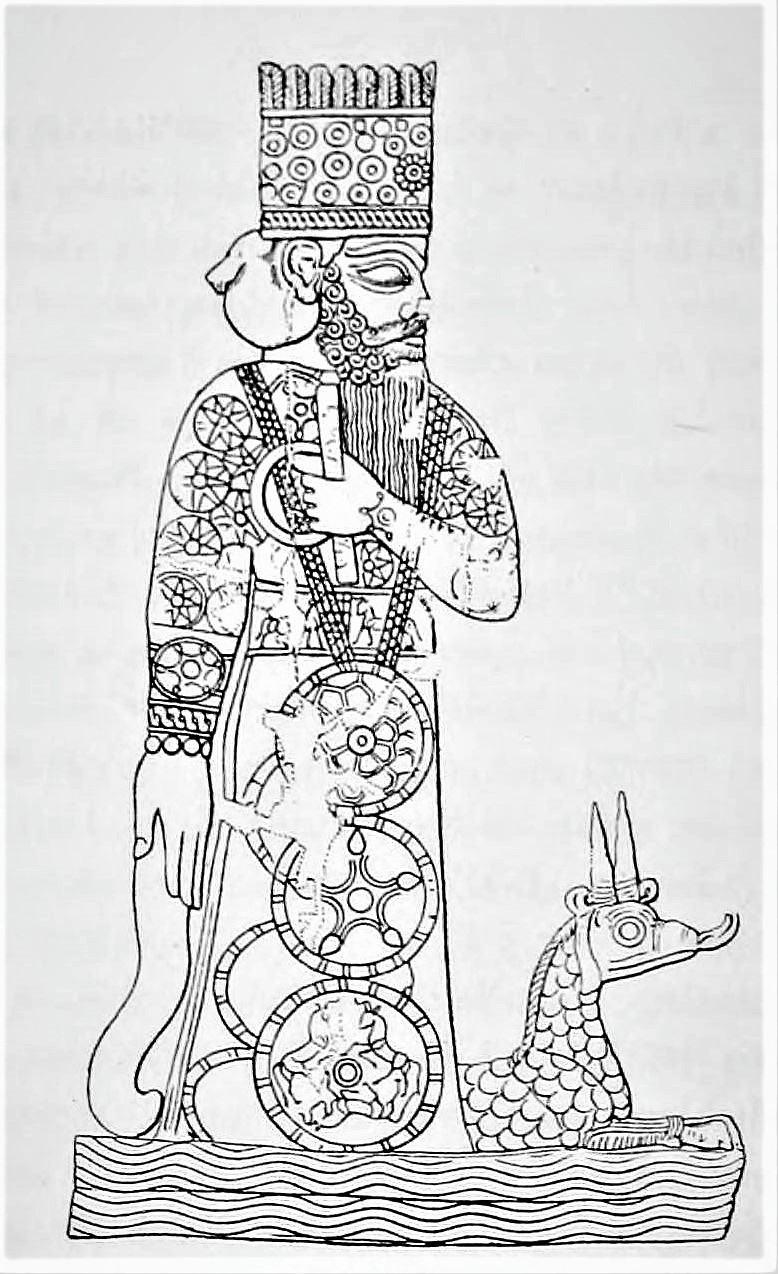
The Statue of Marduk, also known as the Statue of Bêl (Bêl, meaning "lord", being a common designation for Marduk), was the physical representation of the god Marduk, the patron deity of the ancient city of Babylon, traditionally housed in the city's main temple, the Esagila. There were seven statues of Marduk in Babylon, but 'the' Statue of Marduk generally refers to the god's main statue, placed prominently in the Esagila and used in the city's rituals. This statue was nicknamed the Asullḫi and was made of a type of wood called mēsu and covered with gold and silver.
Similar to statues of deities in other cities in Mesopotamia, the Babylonians conflated this statue with their actual god, believing that Marduk himself resided in their city through the statue. As such, the statue held enormous religious significance. It was used during the Babylonian New Year's festival and the kings of Babylon incorporated it into their coronation rituals, receiving the crown "from the hands" of Marduk.
Because of the enormous significance of the statue, it was sometimes used as a means of psychological warfare by Babylon's enemies. Enemy powers such as the Hittites, the Assyrians and the Elamites stole the statue during sacks of the city, which caused religious and political turmoil, as Babylon's traditional rituals could then not be completed. All the foreign kings known to have stolen the statue ended up later being killed by their own family members, something the Babylonians hailed as divine punishment. Returns of the statue, either through the enemies giving it back or through a Babylonian king campaigning and successfully retrieving it, were occasions for great celebrations.
The ultimate fate of the statue is uncertain. A common assumption is that it was destroyed by the Achaemenid Persian king Xerxes I after a Babylonian uprising against his rule in 484 BC, but historical sources used for this assumption could be referring to a completely different statue. The statue's crown was restored by Alexander the Great in 325 BC, meaning it was still in the Esagila at that time. There are a handful of references to later rulers giving gifts "to Marduk" in the Esagila, some from as late as during the time of Parthian rule in Mesopotamia in the 2nd century BC.
Marduk was the patron deity of the city of Babylon, having held this position since the reign of Hammurabi (18th century BC) in Babylon's first dynasty. Although Babylonian worship of Marduk never meant the denial of the existence of the other gods in the Mesopotamian pantheon, it has sometimes been compared to monotheism. The history of worship of Marduk is intimately tied to the history of Babylon itself and as Babylon's power increased, so did the position of Marduk relative to that of other Mesopotamian gods. By the end of the second millennium BC, Marduk was sometimes just referred to as Bêl, meaning "lord".
In Mesopotamian mythology, Marduk was a creator god. Going by the Enûma Eliš, the Babylonian creation myth, Marduk was the son of Enki, the Mesopotamian god of wisdom, and rose to prominence during a great battle between the gods. The myth tells how the universe originated as a chaotic realm of water in which there originally were two primordial deities, Tiamat (salt water, female) and Abzu (sweet water, male). These two gods gave birth to other deities. These deities (including gods such as Enki) had little to do in these early stages of existence and as such occupied themselves with various activities.
Eventually, their children began to annoy the elder gods and Abzu decided to rid himself of them by killing them. Alarmed by this, Tiamat revealed Abzu's plan to Enki, who killed his father before the plot could be enacted. Although Tiamat had revealed the plot to Enki to warn him, the death of Abzu horrified her and she too attempted to kill her children, raising an army together with her new consort Kingu. Every battle in the war was a victory for Tiamat, until Marduk convinced the other gods to proclaim him as their leader and king. The gods agreed, and Marduk was victorious, capturing and executing Kingu and firing a great arrow at Tiamat, killing her and splitting her in two.
With these chaotic primordial forces defeated, Marduk created the world and ordered the heavens. Marduk is also described as the creator of human beings, which were meant to help the gods in defeating and holding off the forces of chaos and thus maintain order on Earth.
Hub AI
Statue of Marduk AI simulator
(@Statue of Marduk_simulator)
Statue of Marduk
The Statue of Marduk, also known as the Statue of Bêl (Bêl, meaning "lord", being a common designation for Marduk), was the physical representation of the god Marduk, the patron deity of the ancient city of Babylon, traditionally housed in the city's main temple, the Esagila. There were seven statues of Marduk in Babylon, but 'the' Statue of Marduk generally refers to the god's main statue, placed prominently in the Esagila and used in the city's rituals. This statue was nicknamed the Asullḫi and was made of a type of wood called mēsu and covered with gold and silver.
Similar to statues of deities in other cities in Mesopotamia, the Babylonians conflated this statue with their actual god, believing that Marduk himself resided in their city through the statue. As such, the statue held enormous religious significance. It was used during the Babylonian New Year's festival and the kings of Babylon incorporated it into their coronation rituals, receiving the crown "from the hands" of Marduk.
Because of the enormous significance of the statue, it was sometimes used as a means of psychological warfare by Babylon's enemies. Enemy powers such as the Hittites, the Assyrians and the Elamites stole the statue during sacks of the city, which caused religious and political turmoil, as Babylon's traditional rituals could then not be completed. All the foreign kings known to have stolen the statue ended up later being killed by their own family members, something the Babylonians hailed as divine punishment. Returns of the statue, either through the enemies giving it back or through a Babylonian king campaigning and successfully retrieving it, were occasions for great celebrations.
The ultimate fate of the statue is uncertain. A common assumption is that it was destroyed by the Achaemenid Persian king Xerxes I after a Babylonian uprising against his rule in 484 BC, but historical sources used for this assumption could be referring to a completely different statue. The statue's crown was restored by Alexander the Great in 325 BC, meaning it was still in the Esagila at that time. There are a handful of references to later rulers giving gifts "to Marduk" in the Esagila, some from as late as during the time of Parthian rule in Mesopotamia in the 2nd century BC.
Marduk was the patron deity of the city of Babylon, having held this position since the reign of Hammurabi (18th century BC) in Babylon's first dynasty. Although Babylonian worship of Marduk never meant the denial of the existence of the other gods in the Mesopotamian pantheon, it has sometimes been compared to monotheism. The history of worship of Marduk is intimately tied to the history of Babylon itself and as Babylon's power increased, so did the position of Marduk relative to that of other Mesopotamian gods. By the end of the second millennium BC, Marduk was sometimes just referred to as Bêl, meaning "lord".
In Mesopotamian mythology, Marduk was a creator god. Going by the Enûma Eliš, the Babylonian creation myth, Marduk was the son of Enki, the Mesopotamian god of wisdom, and rose to prominence during a great battle between the gods. The myth tells how the universe originated as a chaotic realm of water in which there originally were two primordial deities, Tiamat (salt water, female) and Abzu (sweet water, male). These two gods gave birth to other deities. These deities (including gods such as Enki) had little to do in these early stages of existence and as such occupied themselves with various activities.
Eventually, their children began to annoy the elder gods and Abzu decided to rid himself of them by killing them. Alarmed by this, Tiamat revealed Abzu's plan to Enki, who killed his father before the plot could be enacted. Although Tiamat had revealed the plot to Enki to warn him, the death of Abzu horrified her and she too attempted to kill her children, raising an army together with her new consort Kingu. Every battle in the war was a victory for Tiamat, until Marduk convinced the other gods to proclaim him as their leader and king. The gods agreed, and Marduk was victorious, capturing and executing Kingu and firing a great arrow at Tiamat, killing her and splitting her in two.
With these chaotic primordial forces defeated, Marduk created the world and ordered the heavens. Marduk is also described as the creator of human beings, which were meant to help the gods in defeating and holding off the forces of chaos and thus maintain order on Earth.
Recent media