



Community hub
Recent from talks
Knowledge base stats:
Talk channels stats:
Members stats:
Steam car
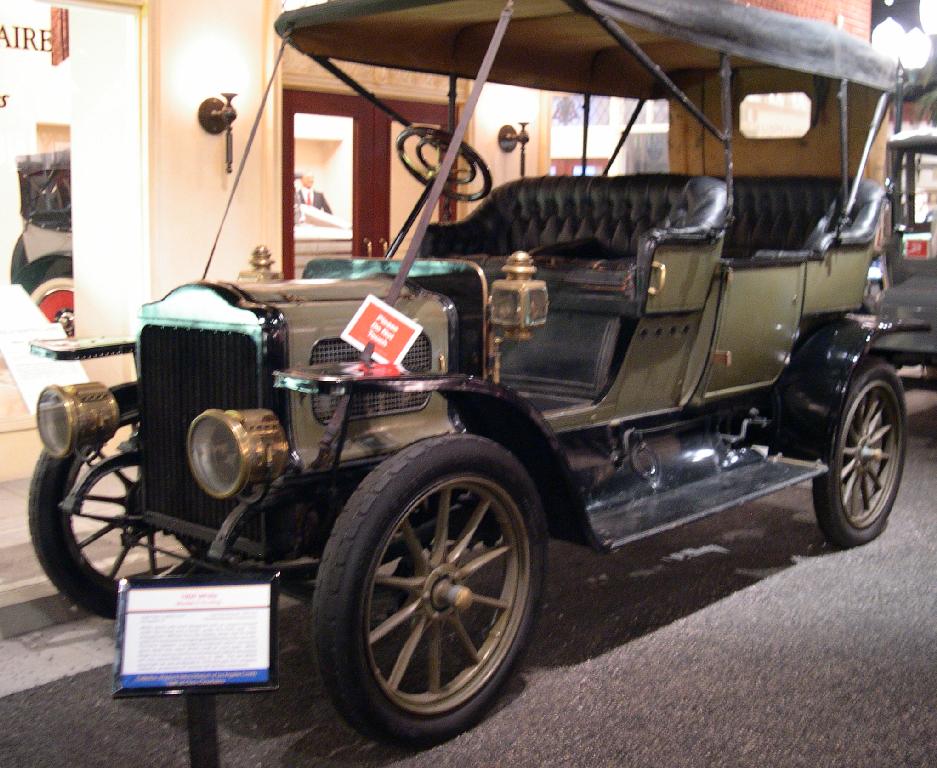
A steam car is a car (automobile) propelled by a steam engine. A steam engine is an external combustion engine (ECE), whereas the gasoline and diesel engines that eventually became standard are internal combustion engines (ICE). ECEs have a lower thermal efficiency, but carbon monoxide production is more readily regulated.
The first experimental steam-powered cars were built in the 18th and 19th centuries, but it was not until after Richard Trevithick had developed the use of high-pressure steam around 1800 that mobile steam engines became a practical proposition. By the 1850s there was a flurry of new steam car manufacturers.
Development was hampered by adverse legislation (the UK Locomotive Acts from the 1860s) as well as the rapid development of internal combustion engine technology in the 1900s, leading to the commercial demise of steam-powered vehicles. Relatively few remained in use after the Second World War. Many of these vehicles were acquired by enthusiasts for preservation.
The search for renewable energy sources has led to an occasional resurgence of interest in using steam technology to power road vehicles.
While gasoline-powered ICE cars have an operational thermal efficiency of 15% to 30%, early automotive steam units were capable of only about half this efficiency.[citation needed] A significant benefit of the ECE is that the fuel burner can be configured for very low emissions of carbon monoxide, nitrogen oxides and unburned carbon in the exhaust, thus avoiding pollution.
The greatest technical challenges to the steam car have focused on its boiler. This represents much of the total mass of the vehicle, making the car heavy (an internal combustion-engined car requires no boiler), and requires careful attention from the driver, although even the cars of 1900 had considerable automation to manage this. The single largest restriction is the need to supply feedwater to the boiler. This must either be carried and frequently replenished, or the car must also be fitted with a condenser, a further weight and inconvenience.
Steam-powered and electric cars outsold gasoline-powered cars in the United States prior to the invention of the electric starter, since internal combustion cars relied on a hand crank to start the engine, which was difficult and occasionally dangerous to use, as improper cranking could cause a backfire capable of breaking the arm of the operator. Electric cars were popular to some extent, but had a short range, and could not be charged on the road if the batteries ran low.
Once working pressure was attained, early steam cars could be instantly driven off with high acceleration, but they typically take several minutes to start from cold, plus time to get the burner to operating temperature. To overcome this, development has been directed toward flash boilers, which heat a much smaller quantity of water to get the vehicle started, and in the case of Doble cars, spark ignition kerosene burners.
Hub AI
Steam car AI simulator
(@Steam car_simulator)
Steam car
A steam car is a car (automobile) propelled by a steam engine. A steam engine is an external combustion engine (ECE), whereas the gasoline and diesel engines that eventually became standard are internal combustion engines (ICE). ECEs have a lower thermal efficiency, but carbon monoxide production is more readily regulated.
The first experimental steam-powered cars were built in the 18th and 19th centuries, but it was not until after Richard Trevithick had developed the use of high-pressure steam around 1800 that mobile steam engines became a practical proposition. By the 1850s there was a flurry of new steam car manufacturers.
Development was hampered by adverse legislation (the UK Locomotive Acts from the 1860s) as well as the rapid development of internal combustion engine technology in the 1900s, leading to the commercial demise of steam-powered vehicles. Relatively few remained in use after the Second World War. Many of these vehicles were acquired by enthusiasts for preservation.
The search for renewable energy sources has led to an occasional resurgence of interest in using steam technology to power road vehicles.
While gasoline-powered ICE cars have an operational thermal efficiency of 15% to 30%, early automotive steam units were capable of only about half this efficiency.[citation needed] A significant benefit of the ECE is that the fuel burner can be configured for very low emissions of carbon monoxide, nitrogen oxides and unburned carbon in the exhaust, thus avoiding pollution.
The greatest technical challenges to the steam car have focused on its boiler. This represents much of the total mass of the vehicle, making the car heavy (an internal combustion-engined car requires no boiler), and requires careful attention from the driver, although even the cars of 1900 had considerable automation to manage this. The single largest restriction is the need to supply feedwater to the boiler. This must either be carried and frequently replenished, or the car must also be fitted with a condenser, a further weight and inconvenience.
Steam-powered and electric cars outsold gasoline-powered cars in the United States prior to the invention of the electric starter, since internal combustion cars relied on a hand crank to start the engine, which was difficult and occasionally dangerous to use, as improper cranking could cause a backfire capable of breaking the arm of the operator. Electric cars were popular to some extent, but had a short range, and could not be charged on the road if the batteries ran low.
Once working pressure was attained, early steam cars could be instantly driven off with high acceleration, but they typically take several minutes to start from cold, plus time to get the burner to operating temperature. To overcome this, development has been directed toward flash boilers, which heat a much smaller quantity of water to get the vehicle started, and in the case of Doble cars, spark ignition kerosene burners.