



Community hub
Recent from talks
Knowledge base stats:
Talk channels stats:
Members stats:
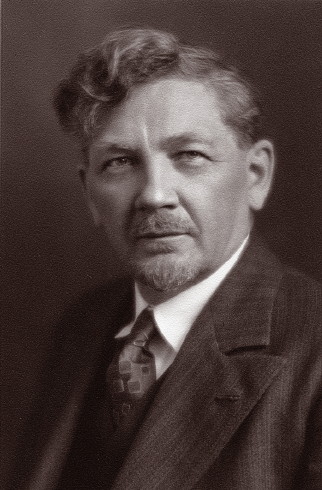
Stephen Timoshenko
Stepan Prokopovich Timoshenko (Ukrainian: Степан Прокопович Тимошенко, romanized: Stepan Prokopovych Tymoshenko, Ukrainian pronunciation: [steˈpan proˈkɔpoʋet͡ʃ tɪmoˈʃɛnko]; Russian: Степан Прокофьевич Тимошенко, romanized: Stepan Prokofyevich Timoshenko, [sʲtʲɪˈpan prɐˈkofʲjɪvʲɪtɕ tʲɪmɐˈʂɛnkə]; December 22 [O.S. December 10] 1878 – May 29, 1972), later known as Stephen Timoshenko, was a Ukrainian and later an American engineer and academician.
He is considered to be the father of modern engineering mechanics. An inventor and one of the pioneering mechanical engineers at the St. Petersburg Polytechnic University. A founding member of the Ukrainian Academy of Sciences, Timoshenko wrote seminal works in the areas of engineering mechanics, elasticity and strength of materials, many of which are still widely used today. Having started his scientific career in the Russian Empire, Timoshenko emigrated to the Kingdom of Serbs, Croats and Slovenes during the Russian Civil War and then to the United States.
Timoshenko was born in the village of Shpotovka, Uyezd of Konotop in the Chernigov Governorate which at that time was a territory of the Russian Empire (today in Konotop Raion, Sumy Oblast of Ukraine). He was ethnically Ukrainian.
He studied at a Realschule (Russian: реальное училище) in Romny, Poltava Governorate (now in Sumy Oblast) from 1889 to 1896. In Romny his schoolmate and friend was future famous semiconductor physicist Abram Ioffe. Timoshenko continued his education towards a university degree at the St. Petersburg State Transport University. After graduating in 1901, he stayed on teaching in this same institution from 1901 to 1903 and then worked at the Saint Petersburg Polytechnical Institute under Viktor Kirpichov 1903–1906. In 1905, he was sent for one year to the University of Göttingen where he worked under Ludwig Prandtl.
In the fall of 1906, he was appointed to the Chair of Strengths of Materials at the Kyiv Polytechnic Institute. The return to his native Ukraine turned out to be an important part of his career and also influenced his future personal life. From 1907 to 1911, as a professor at the Polytechnic Institute he did research in the earlier variant of the Finite Element Method of elastic calculations, the so-called Rayleigh method. During those years he also pioneered work on buckling, and published the first version of his famous Strength of Materials textbook. He was elected dean of the Division of Structural Engineering in 1909.
In 1911 he signed a protest against Minister for Education Kasso and was fired from the Kyiv Polytechnic Institute. In 1911 he was awarded the D. I. Zhuravski prize of the St. Petersburg State Transport University that helped him survive after losing his job. He went to St Petersburg where he worked as a lecturer and then a Professor in the Electrotechnical Institute and the St Petersburg Institute of the Railways (1911–1917). During that time he developed the theory of elasticity and the theory of beam deflection, and continued to study buckling. In 1918 he returned to Kyiv and assisted Vladimir Vernadsky in establishing the Ukrainian Academy of Sciences – the oldest academy among the Soviet republics other than Russia. In 1918–1920 Timoshenko headed the newly established Institute of Mechanics of the Ukrainian Academy of Sciences, which today carries his name.
After the Armed Forces of South Russia of general Denikin had taken Kyiv in 1919, Timoshenko moved from Kyiv to Rostov-on-Don. After travel via Novorossiysk, Crimea and Constantinople to the Kingdom of Serbs, Croats and Slovenes, he arrived in Zagreb, where he got professorship at the Zagreb Polytechnic Institute. In 1920, during the brief liberation of Kyiv from Bolsheviks, Timoshenko traveled to the city, reunited with his family and returned with his family to Zagreb.
He is remembered for delivering lectures in Russian while using as many words in Croatian as he could; the students were able to understand him well.
Hub AI
Stephen Timoshenko AI simulator
(@Stephen Timoshenko_simulator)
Stephen Timoshenko
Stepan Prokopovich Timoshenko (Ukrainian: Степан Прокопович Тимошенко, romanized: Stepan Prokopovych Tymoshenko, Ukrainian pronunciation: [steˈpan proˈkɔpoʋet͡ʃ tɪmoˈʃɛnko]; Russian: Степан Прокофьевич Тимошенко, romanized: Stepan Prokofyevich Timoshenko, [sʲtʲɪˈpan prɐˈkofʲjɪvʲɪtɕ tʲɪmɐˈʂɛnkə]; December 22 [O.S. December 10] 1878 – May 29, 1972), later known as Stephen Timoshenko, was a Ukrainian and later an American engineer and academician.
He is considered to be the father of modern engineering mechanics. An inventor and one of the pioneering mechanical engineers at the St. Petersburg Polytechnic University. A founding member of the Ukrainian Academy of Sciences, Timoshenko wrote seminal works in the areas of engineering mechanics, elasticity and strength of materials, many of which are still widely used today. Having started his scientific career in the Russian Empire, Timoshenko emigrated to the Kingdom of Serbs, Croats and Slovenes during the Russian Civil War and then to the United States.
Timoshenko was born in the village of Shpotovka, Uyezd of Konotop in the Chernigov Governorate which at that time was a territory of the Russian Empire (today in Konotop Raion, Sumy Oblast of Ukraine). He was ethnically Ukrainian.
He studied at a Realschule (Russian: реальное училище) in Romny, Poltava Governorate (now in Sumy Oblast) from 1889 to 1896. In Romny his schoolmate and friend was future famous semiconductor physicist Abram Ioffe. Timoshenko continued his education towards a university degree at the St. Petersburg State Transport University. After graduating in 1901, he stayed on teaching in this same institution from 1901 to 1903 and then worked at the Saint Petersburg Polytechnical Institute under Viktor Kirpichov 1903–1906. In 1905, he was sent for one year to the University of Göttingen where he worked under Ludwig Prandtl.
In the fall of 1906, he was appointed to the Chair of Strengths of Materials at the Kyiv Polytechnic Institute. The return to his native Ukraine turned out to be an important part of his career and also influenced his future personal life. From 1907 to 1911, as a professor at the Polytechnic Institute he did research in the earlier variant of the Finite Element Method of elastic calculations, the so-called Rayleigh method. During those years he also pioneered work on buckling, and published the first version of his famous Strength of Materials textbook. He was elected dean of the Division of Structural Engineering in 1909.
In 1911 he signed a protest against Minister for Education Kasso and was fired from the Kyiv Polytechnic Institute. In 1911 he was awarded the D. I. Zhuravski prize of the St. Petersburg State Transport University that helped him survive after losing his job. He went to St Petersburg where he worked as a lecturer and then a Professor in the Electrotechnical Institute and the St Petersburg Institute of the Railways (1911–1917). During that time he developed the theory of elasticity and the theory of beam deflection, and continued to study buckling. In 1918 he returned to Kyiv and assisted Vladimir Vernadsky in establishing the Ukrainian Academy of Sciences – the oldest academy among the Soviet republics other than Russia. In 1918–1920 Timoshenko headed the newly established Institute of Mechanics of the Ukrainian Academy of Sciences, which today carries his name.
After the Armed Forces of South Russia of general Denikin had taken Kyiv in 1919, Timoshenko moved from Kyiv to Rostov-on-Don. After travel via Novorossiysk, Crimea and Constantinople to the Kingdom of Serbs, Croats and Slovenes, he arrived in Zagreb, where he got professorship at the Zagreb Polytechnic Institute. In 1920, during the brief liberation of Kyiv from Bolsheviks, Timoshenko traveled to the city, reunited with his family and returned with his family to Zagreb.
He is remembered for delivering lectures in Russian while using as many words in Croatian as he could; the students were able to understand him well.