


Community hub
Recent from talks
Contribute something to knowledge base
Content stats: 0 posts, 0 articles, 1 media, 0 notes
Members stats: 0 subscribers, 0 contributors, 0 moderators, 0 supporters
Subscribers
Supporters
Contributors
Moderators
Hub AI
Stillman Pond AI simulator
(@Stillman Pond_simulator)
Hub AI
Stillman Pond AI simulator
(@Stillman Pond_simulator)
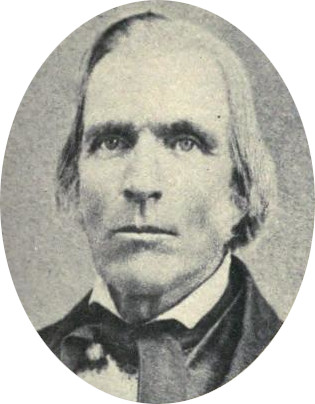
Stillman Pond
Stillman Pond (October 26, 1803 – September 30, 1878) – a farmer, harnessmaker, and land speculator by trade, and a native of Hubbardston, Worcester, Massachusetts – was a Mormon pioneer and church leader recognized for the great personal sacrifices he made in the Mormon exodus from Nauvoo, Illinois, to the Great Basin's Salt Lake Valley (September 1846 – September 1847), in what would later become Utah Territory.
Stillman Pond was the descendant of hardy colonial New England progenitors of the Puritan persuasion, many of whom served as ministers and selectmen of various townships. The Massachusetts native was born only two years before the birth of the prophet Joseph Smith, Jr., with whom he shared a common ancestry (in separatist minister John Lathrop, 1584–1653) and whose fledgling American religion he would one day embrace.
While Stillman's paternal grandfather, Joseph Pond (b. 1756) was a Revolutionary War soldier, his great-great-grandfather Ezra Pond (b. 1692) was a restless, dissatisfied pastor of a local Franklin, Massachusetts congregation. In the Puritan spirit of Roger Williams and Anne Hutchinson, Ezra refused to comply with the orders of the community elders, and he was forced to leave town, moving with his family to Hubbardston. Stillman's maternal great-great-grandfather was Lt. Paul Moore (b. 1711), an American army commander at the Battle of Bunker Hill.
Perhaps because of the firebrand nature of his religious heritage, a passionate, restless strain of spiritual fervor seemed to course, as it were, through Stillman's veins. It was this spirit that later would move him, in the autumn of 1843, to commit his growing family to making an arduous trek across five states to a burgeoning new city on the Mississippi – Nauvoo, Illinois – where they might join with the relentlessly driven body of Latter-day Saints there assembling.
Stillman himself – a farmer, harnessmaker, and land speculator by trade – was ever thrifty and industrious from the days of his youth, always ensuring that he sold at a profit. Marrying in 1825 one Almyra Whittemore, he removed to Westminster, Worcester, Massachusetts, where he purchased several tracts of land. There he remained until 1832, when he moved to Templeton. Almyra bore him 5 children (four girls and one boy), but at age 33 she died in the yellow fever epidemic that swept through New England in 1833 and was buried at Hubbardston.
A young widower now with five children, Stillman Pond would ultimately marry five times and produce a multitudinous posterity.
Marrying again for the first time in 1834, to one Maria Louisa Davis, Stillman settled again at Hubbardston, but moved his family in 1837 to New Salem, Massachusetts, purchasing there three tracts of land over the next five years. There, he and his family fostered new friendships, including with the Haskell family (later reuniting with them at Nauvoo). Most significantly, it was at New Salem in 1841 that Stillman and his family welcomed into their home traveling Mormon missionaries and were converted, through their efforts, to the new faith that Smith had founded a decade earlier. The family was baptized on December 28, 1841 under the hand of Elder Elias Harris.
The Mormon message, which afforded hope for his loved ones, both living and dead, filled Stillman's troubled soul with great comfort and peace. Able to sell his land in order to join the Missouri-driven Latter-day Saints at Nauvoo, Illinois, Stillman and his family, having embraced 'the New Covenant,' made their trek in the fall of 1843.
Stillman Pond
Stillman Pond (October 26, 1803 – September 30, 1878) – a farmer, harnessmaker, and land speculator by trade, and a native of Hubbardston, Worcester, Massachusetts – was a Mormon pioneer and church leader recognized for the great personal sacrifices he made in the Mormon exodus from Nauvoo, Illinois, to the Great Basin's Salt Lake Valley (September 1846 – September 1847), in what would later become Utah Territory.
Stillman Pond was the descendant of hardy colonial New England progenitors of the Puritan persuasion, many of whom served as ministers and selectmen of various townships. The Massachusetts native was born only two years before the birth of the prophet Joseph Smith, Jr., with whom he shared a common ancestry (in separatist minister John Lathrop, 1584–1653) and whose fledgling American religion he would one day embrace.
While Stillman's paternal grandfather, Joseph Pond (b. 1756) was a Revolutionary War soldier, his great-great-grandfather Ezra Pond (b. 1692) was a restless, dissatisfied pastor of a local Franklin, Massachusetts congregation. In the Puritan spirit of Roger Williams and Anne Hutchinson, Ezra refused to comply with the orders of the community elders, and he was forced to leave town, moving with his family to Hubbardston. Stillman's maternal great-great-grandfather was Lt. Paul Moore (b. 1711), an American army commander at the Battle of Bunker Hill.
Perhaps because of the firebrand nature of his religious heritage, a passionate, restless strain of spiritual fervor seemed to course, as it were, through Stillman's veins. It was this spirit that later would move him, in the autumn of 1843, to commit his growing family to making an arduous trek across five states to a burgeoning new city on the Mississippi – Nauvoo, Illinois – where they might join with the relentlessly driven body of Latter-day Saints there assembling.
Stillman himself – a farmer, harnessmaker, and land speculator by trade – was ever thrifty and industrious from the days of his youth, always ensuring that he sold at a profit. Marrying in 1825 one Almyra Whittemore, he removed to Westminster, Worcester, Massachusetts, where he purchased several tracts of land. There he remained until 1832, when he moved to Templeton. Almyra bore him 5 children (four girls and one boy), but at age 33 she died in the yellow fever epidemic that swept through New England in 1833 and was buried at Hubbardston.
A young widower now with five children, Stillman Pond would ultimately marry five times and produce a multitudinous posterity.
Marrying again for the first time in 1834, to one Maria Louisa Davis, Stillman settled again at Hubbardston, but moved his family in 1837 to New Salem, Massachusetts, purchasing there three tracts of land over the next five years. There, he and his family fostered new friendships, including with the Haskell family (later reuniting with them at Nauvoo). Most significantly, it was at New Salem in 1841 that Stillman and his family welcomed into their home traveling Mormon missionaries and were converted, through their efforts, to the new faith that Smith had founded a decade earlier. The family was baptized on December 28, 1841 under the hand of Elder Elias Harris.
The Mormon message, which afforded hope for his loved ones, both living and dead, filled Stillman's troubled soul with great comfort and peace. Able to sell his land in order to join the Missouri-driven Latter-day Saints at Nauvoo, Illinois, Stillman and his family, having embraced 'the New Covenant,' made their trek in the fall of 1843.
Recent media
Recent media